
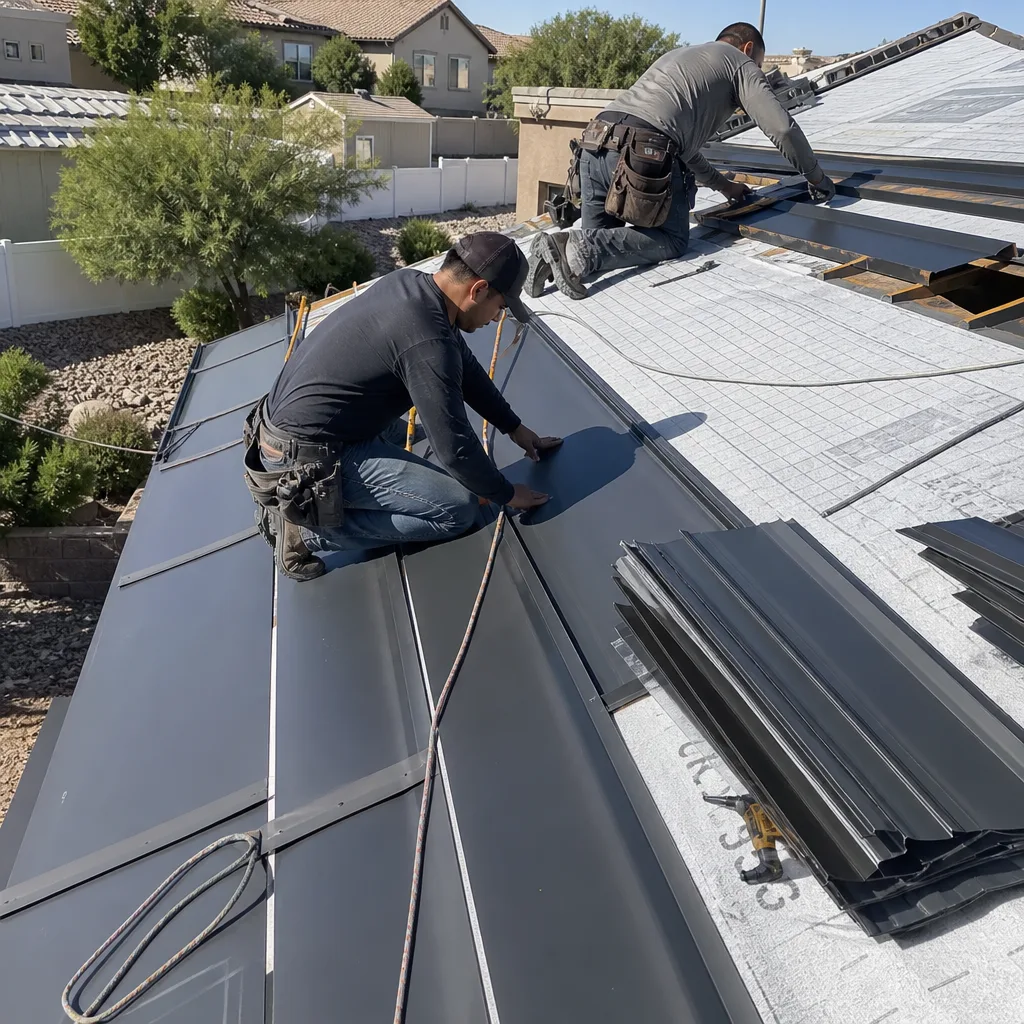
Last updated November 18, 2026
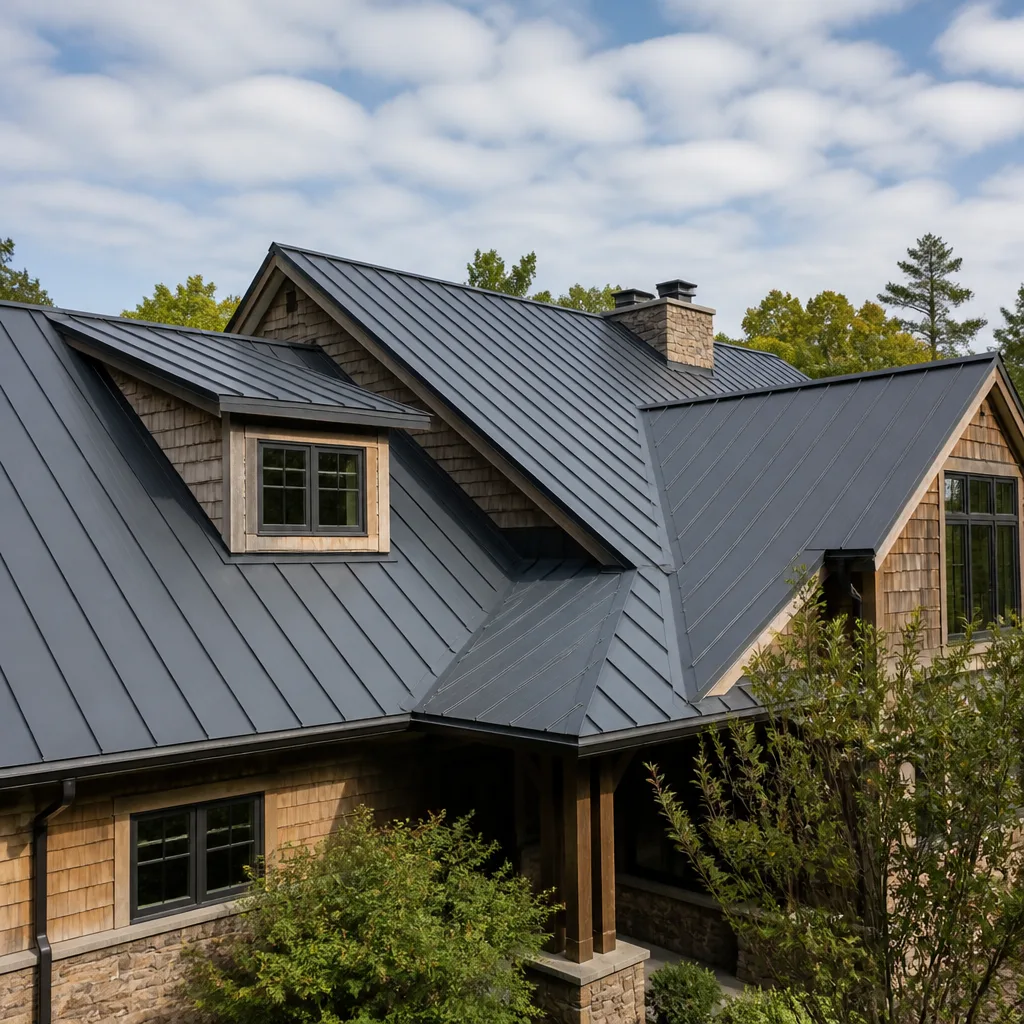 Metal roofing
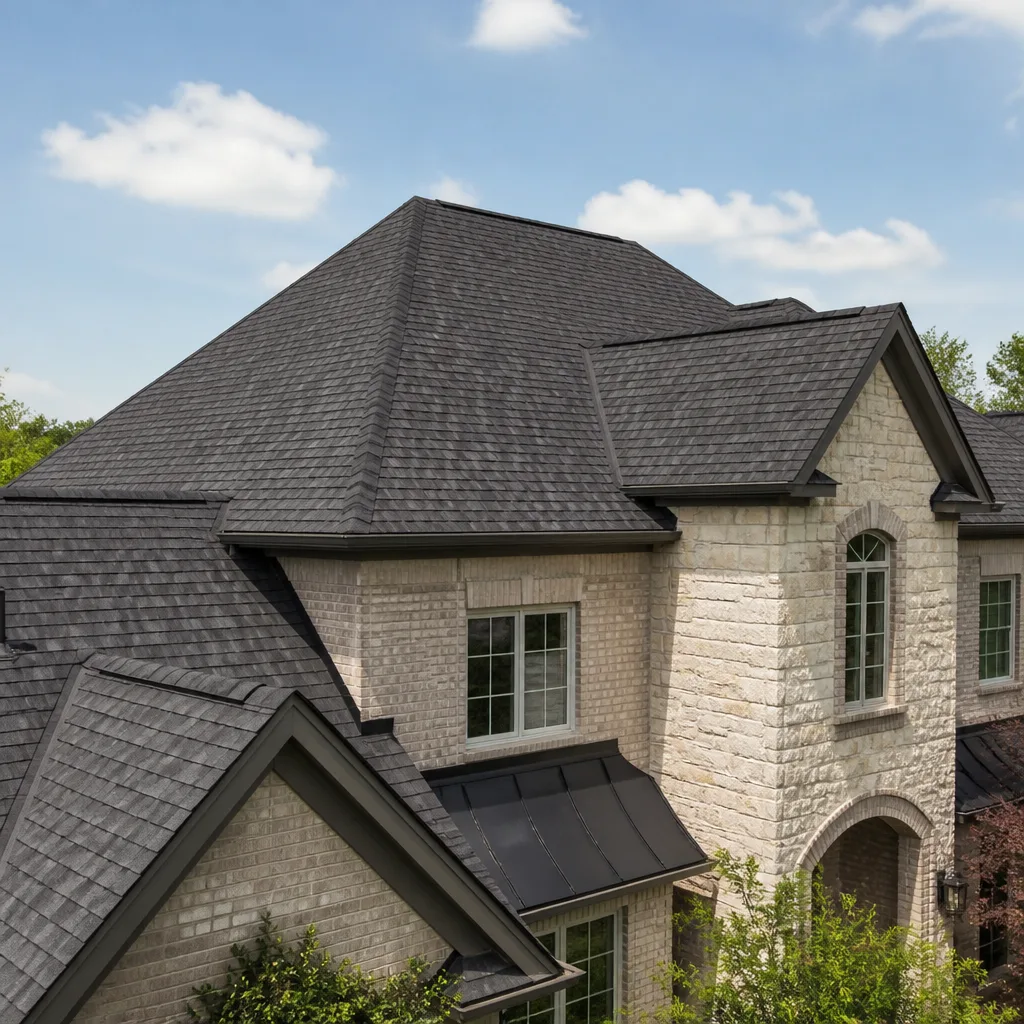 Architectural shingles
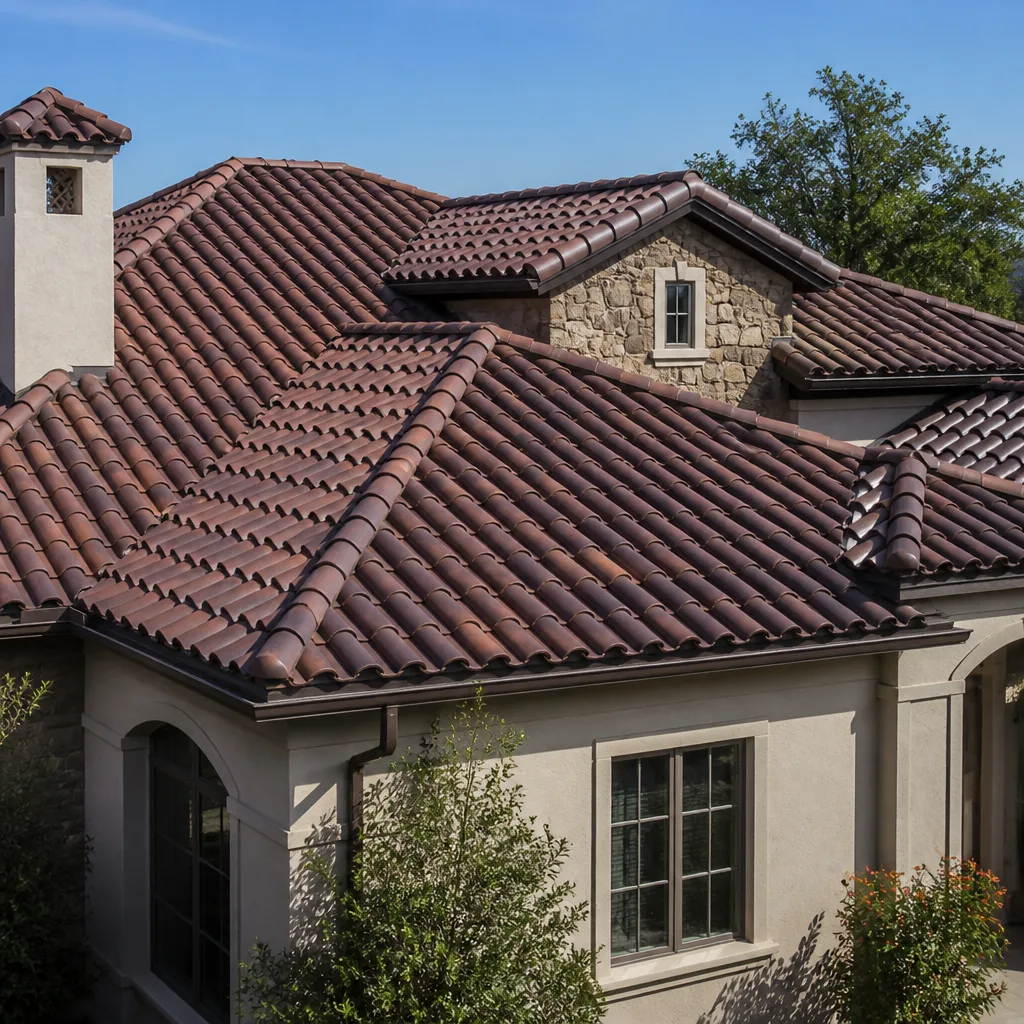 Tile roofing
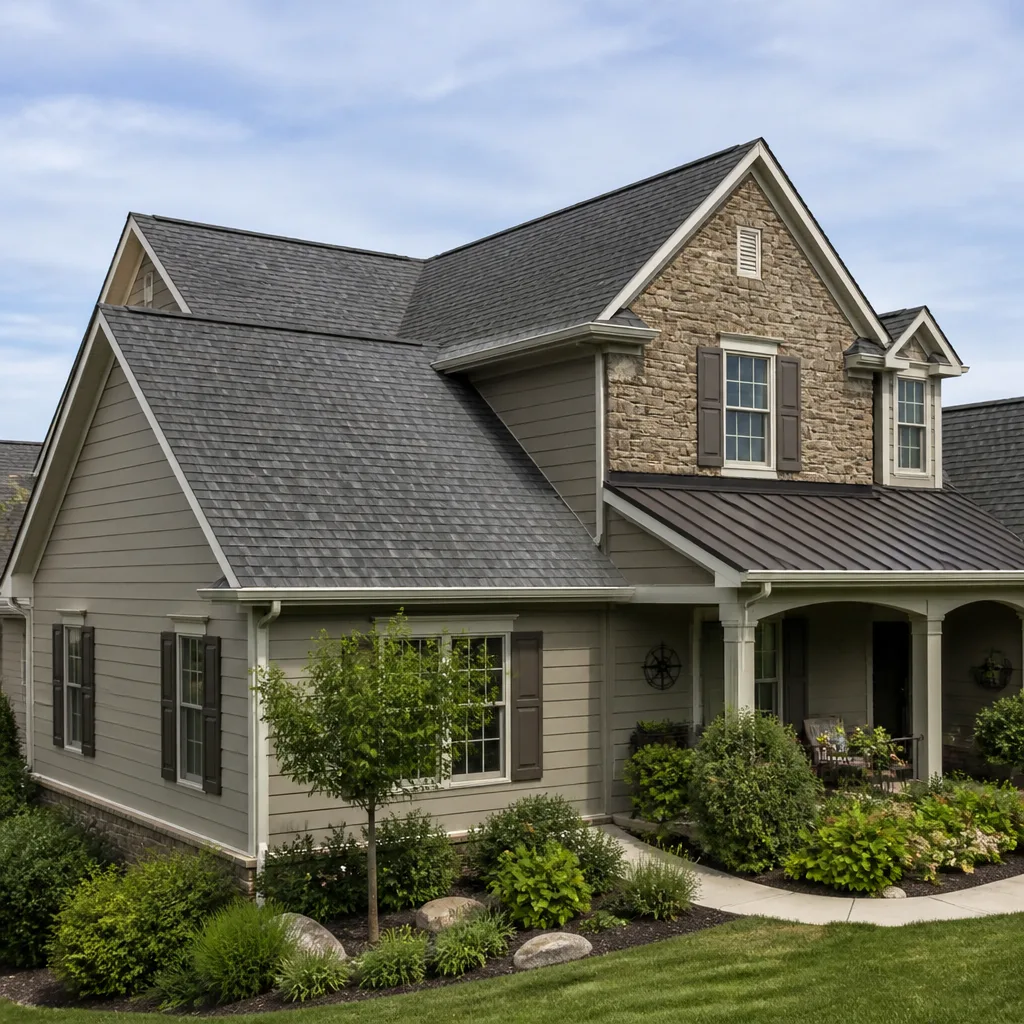 GAF
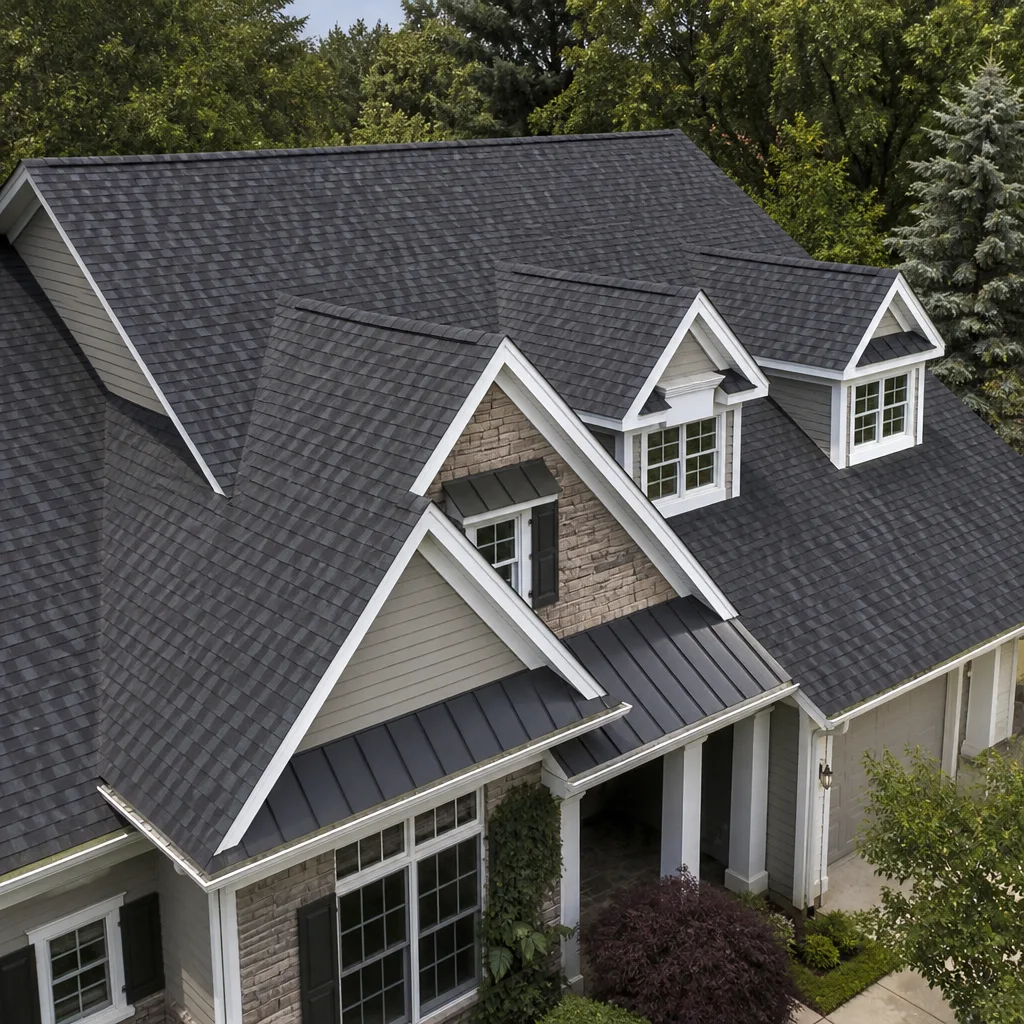 Owens Corning
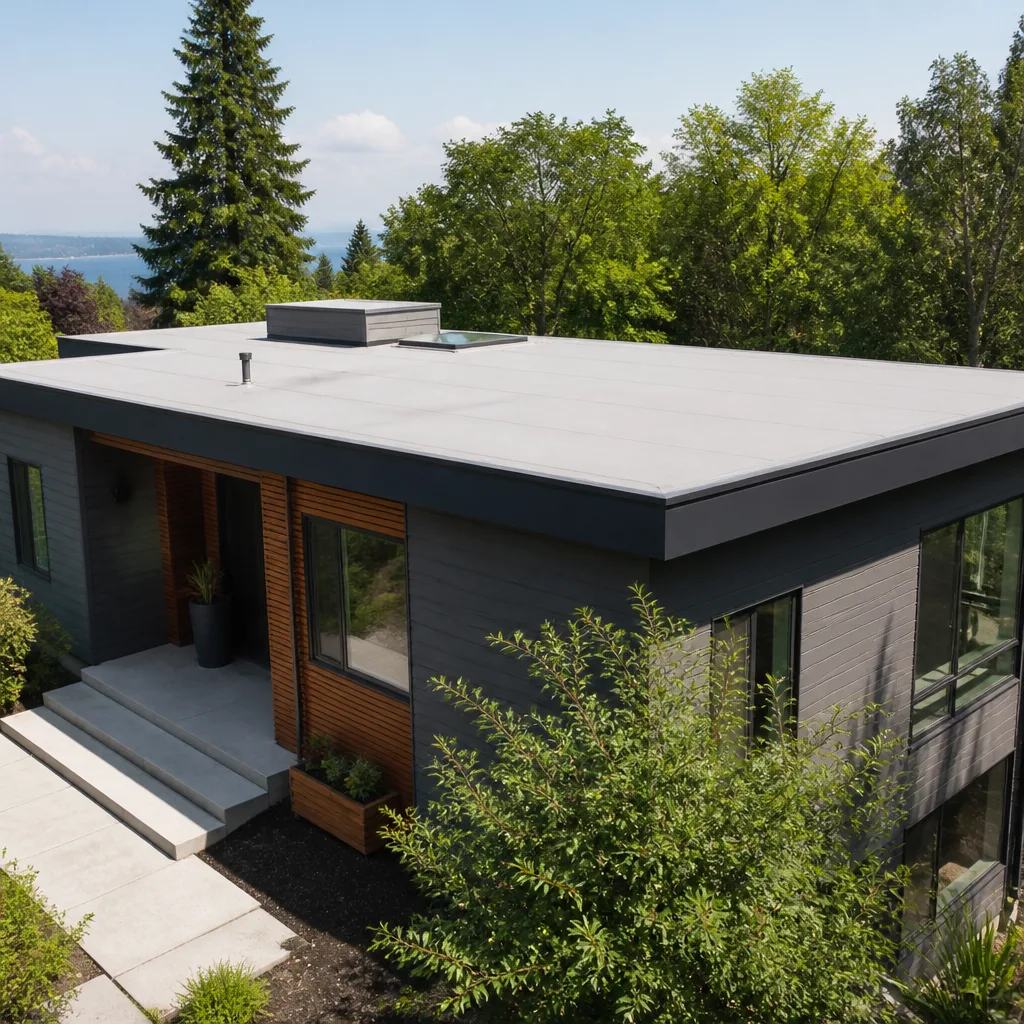 Flat & low-slope
Free roof inspection with deck photos before we talk money - GAF and Owens Corning certified installation
Choosing the Right Roofing Brand: A Buyer’s Guide for Summerlin
Here’s the call we actually get from Summerlin homeowners. It isn’t “Should I use GAF or Owens Corning?” It’s this: “My HOA requires Monier Lifetile Capistrano profile in Weathered Wood, that line was discontinued, and now I’ve got a roofer telling me to just pick a color.” That’s the real brand problem in this market. Not which logo is best. Which tile you can still get, in the right profile, in a color that won’t leave a patchwork scar on your roofline when three of them blow off in fifteen years. This guide walks through how we sort that out in Summerlin, and what to ask before anyone touches your roof.
Quick Answer
For Summerlin, the “best” roofing brand is the one whose product line is still in production, approved by your HOA, rated for our fire zone and UV load, and installable by a contractor who’ll still answer the phone in year twenty. That usually means a major manufacturer like CertainTeet or Owens Corning with deep regional distribution, a color and profile with a documented substitute, and a workmanship warranty from a local roofer you can find. The shingle or tile brand matters far less than the installer behind it.
Styles & brands we work with
- Architectural shingles
- Metal roofing
- Tile roofing
- GAF
- Owens Corning
- Flat & low-slope
Table of Contents
- Why your Summerlin HOA is the first brand decision
- Cross-referencing HOA lists with current product lines
- Manufacturer warranty vs. workmanship warranty
- Concrete tile vs. lightweight concrete tile on older decks
- Underlayment brands: the part that does the real work
- Will that warranty still be honored in year 20?
- Common mistakes to avoid
- Frequently asked questions
Why Your Summerlin HOA Is the First Brand Decision
In Summerlin, brand choice is a permission question before it’s a preference question. The master associations and most village-level HOA design review committees have an approved materials list, and that list is what narrows your field down from every product on the market to maybe six or eight lines. You don’t get to walk into a showroom and pick your favorite. You start with what’s allowed.
That’s not a complaint, it’s the process. The villages and neighborhoods across Summerlin were built under fairly consistent design guidelines, and those guidelines usually specify things like profile (flat, low-profile, or high-profile tile), color family (the browns, greys, and terracottas you see when you drive the 215), and sometimes the exact manufacturer. When we bid a re-roof in Summerlin, the first thing we ask for is the HOA’s approved list, and the second thing we do is cross-check it against what’s actually in production today.
Here’s what most homeowners don’t realize: the list might be ten or fifteen years old. Developers wrote it when the original homes went up. Products get discontinued, manufacturers get acquired, colors get retired. A shortcut worth knowing: the “Weathered Wood” or “Charcoal” on your HOA form might refer to a color name from a line that ended, while the underlying color code still exists in a current line under a different name. That’s a solvable problem, but only if you know how to read the codes.
Before you go shopping brands, pull two documents: your HOA’s current approved materials list, and your architectural submittal requirements. If the list references a specific manufacturer or product line, bring both to your roofer. We’ll help you figure out where that line went. You can also start with our overview of Shepherd & Sons Roofing Summerlin home to see how we approach this market.
Cross-Referencing HOA Lists with Current Product Lines
This is the part that separates a bid that flies through architectural review from one that gets bounced twice. The homeowner with a discontinued Monier Lifetile Capistrano profile in Weathered Wood has a real path forward, but it takes a specific sequence to get there. Here’s how we walk Summerlin homeowners through it.
- Identify the exact profile and color code. The HOA list usually names the manufacturer and profile; the color code may live on the original plans, a developer spec sheet, or the back of a spare tile in your garage. If you don’t have one, sometimes a neighbor does.
- Check the manufacturer’s current line for an approved substitute. Major manufacturers publish cross-reference guides. Boral, CertainTeed, and Owens Corning all run discontinued-product lookup tools or can confirm whether a retired line has a current equivalent in the same profile family.
- Bring the substitute to your HOA’s design review before you sign a contract. Submittal approval is the HOA’s call, not the roofer’s and not the manufacturer’s. Get the approval letter in writing.
- Order a stockpile of replacement pieces now. Ten to fifteen percent overage is cheap insurance. Fifteen years from now when you need three tiles after a wind event, the box in your garage is worth more than any warranty.
- Document the substitution in your file. Keep the approval letter, the manufacturer’s cross-reference, and the product spec sheet together.
Where this gets thorny is when a discontinued line has no documented equivalent the HOA will accept. That happens more often than you’d think. In those cases the review committee may require a full re-roof rather than a partial repair, because a patchwork will show. We’ve seen neighborhoods in The Ridges and Red Rock Country Club where partial tile replacement was denied on appearance grounds. Better to know that before you’ve got a crew on the roof.
Manufacturer Warranty vs. Workmanship Warranty
Every tile brand in Summerlin will tell you about a thirty-year, forty-year, or fifty-year material warranty. Read that language carefully. What a manufacturer’s warranty typically covers is the product itself failing from a manufacturing defect – the shingle delaminating, the tile cracking without impact. It almost never covers installation problems: the wrong nailing pattern, the missing underlayment lap, the flashings that leak because someone cut a corner. Those failures are the contractor’s responsibility, and they’re covered by the contractor’s workmanship warranty.
This is why the name on the tile is less important than the name on the truck. A fifty-year tile installed with a four-inch nailing pattern where the spec calls for six won’t earn its wind rating – the nailing pattern earns the wind rating, not the shingle wrapper. A premium underlayment installed with the wrong overlap won’t shed water in a Summerlin monsoon, no matter whose name is on the roll.
Two things to ask every bidder:
- What’s the workmanship warranty? In writing, how many years, and what does it actually repair – leaks, wind damage, tile slips, or only manufacture defects?
- Who honors it if the contractor is gone? If the answer is a shrug, that tells you something.
A workmanship warranty is only as good as the contractor’s promise to stand behind it. Ours is the 90-Day Done Right Promise – if it’s not done right, we make it right, in writing, on every roofing job. One call brings us back. That’s the layer that actually protects the homeowner, and it’s the one you should scrutinize hardest.
Concrete Tile vs. Lightweight Concrete Tile on Older Decks
Summerlin has a wide age range of housing stock, from homes built in the 1990s to new construction in the last decade. If your home is older, the structural deck underneath the tile may have been designed for a specific weight load, and that matters when you’re picking a replacement brand. Standard concrete tile comes in anywhere from roughly six to ten pounds per square foot installed, depending on profile and thickness. Lightweight concrete tile runs meaningfully lighter – often closer to four to six pounds per square foot – and that gap can be the difference between a re-roof that needs no structural work and one that requires engineering.
If you’re re-covering rather than replacing, and the original tile was lightweight, switching to full-weight tile may require a structural review, engineering stamps, or a thicker deck. The lightweight options from manufacturers like Boral and CertainTeed have improved to the point where color and profile choices are much broader than they were when your home was built, which is good news for Summerlin owners on older decks.
Here’s the practical rule: before you decide on a brand, have the bidder weigh the existing tile or pull the original load spec, and confirm the new product fits within it. A roofer who skips that step is guessing. For homes with more complex weight or profile needs, we sometimes recommend stepping back and looking at the full scope of Roof Replacement & Installation in Summerlin before committing to a tile line.
Underlayment Brands: The Part That Does the Real Work
Everyone talks about the tile. The tile is what you see from the street, and the tile is what the HOA approves. But the tile in Summerlin is a heat shield, not the waterproofing. The underlayment is doing the actual weatherproofing, and it’s the component that fails first in our climate. Between 250 and 300 sunny days a year, temperatures on a tile roof deck can push past 160 degrees, and the UV exposure breaks down cheap underlayment faster than any other single failure mode we see in Summerlin.
The underlayment brand and specification matter more than most homeowners are told. Here’s what to check:
- Fire rating. Summerlin is a Class A fire zone, and the underlayment and membrane assembly need to meet the rating the code calls for. Standard #30 felt often doesn’t meet current specs; ask what’s being installed and why.
- UV and heat tolerance. Look for a manufacturer’s published temperature rating, not a marketing tagline. Synthetics from lines like Owens Corning’s WeatherLock family and comparable CertainTeed and IKO products are made for this exposure; asphalt felts are not.
- Breathability. Tile roofs need to vent moisture out of the assembly. A non-breathable membrane can trap moisture against the deck.
- Ice and water shield coverage in valleys and around penetrations. This matters more than people think even in the desert, where monsoon storms can dump a half-inch in twenty minutes.
If a bidder can’t tell you the exact underlayment brand and product going under your tile, that’s the conversation to have before you sign anything. The tile gets the attention; the underlayment does the work.
Will That Warranty Still Be Honored in Year 20?
This is the question no brand marketing answers directly, and it’s the one that should keep you up at night in year fifteen when a few tiles go missing. There are two things that determine whether a manufacturer’s warranty gets honored decades down the road: the manufacturer’s own business continuity, and the distributor relationship your local contractor maintains.
On the manufacturer’s side, the big names – GAF, CertainTeed, Owens Corning, IKO, Atlas – have been around long enough and are large enough that they’ll almost certainly still be around. That’s part of why we install from those lines. But the warranty claim doesn’t usually go directly from you to the manufacturer. It goes to a distributor, who submits it through a regional rep, who credits a warranty claim. If the local distributor has changed hands or dropped the line, or if the contractor who installed it is gone, that’s a paperwork nightmare.
That’s the practical case for a local contractor with a long relationship to their distributors. When a Summerlin homeowner calls us in year fifteen about a warranty claim, part of what we’re doing is picking up a phone and calling a rep we’ve worked with for years. That relationship doesn’t show up on any marketing sheet. It’s what makes the difference between a warranty that’s a piece of paper and one that actually gets honored.
For metal and specialty products, this distributor question matters even more, because those systems have smaller supply chains. If you’re considering it, our overview of Metal Roofing in Summerlin walks through what to ask in the bid phase.
Common Mistakes to Avoid
- Picking color before confirming HOA submittal. In Summerlin, a color you love that isn’t on the approved list is a non-starter. Get the submittal approved before you order a single piece.
- Skipping the discontinued-product check. Assume any line older than fifteen years may be gone. Confirm it isn’t before you commit.
- Confusing the manufacturer’s warranty with the workmanship warranty. They cover different failures. Ask for both in writing.
- Not stockpiling replacement tile. Ten to fifteen percent overage is the cheapest insurance on your roof. Order it at install, not in year 18.
- Letting the underlayment be an afterthought. The Summerlin UV load will break down cheap felt in a few years. Specify the product, not just “underlayment.”
- Ignoring the weight load on older decks. Concrete tile vs. lightweight concrete tile isn’t a style question. Confirm the load first.
- Hiring a storm chaser with no local address. If the warranty claim happens in year 20, you need someone still in business. Ask where the office is.
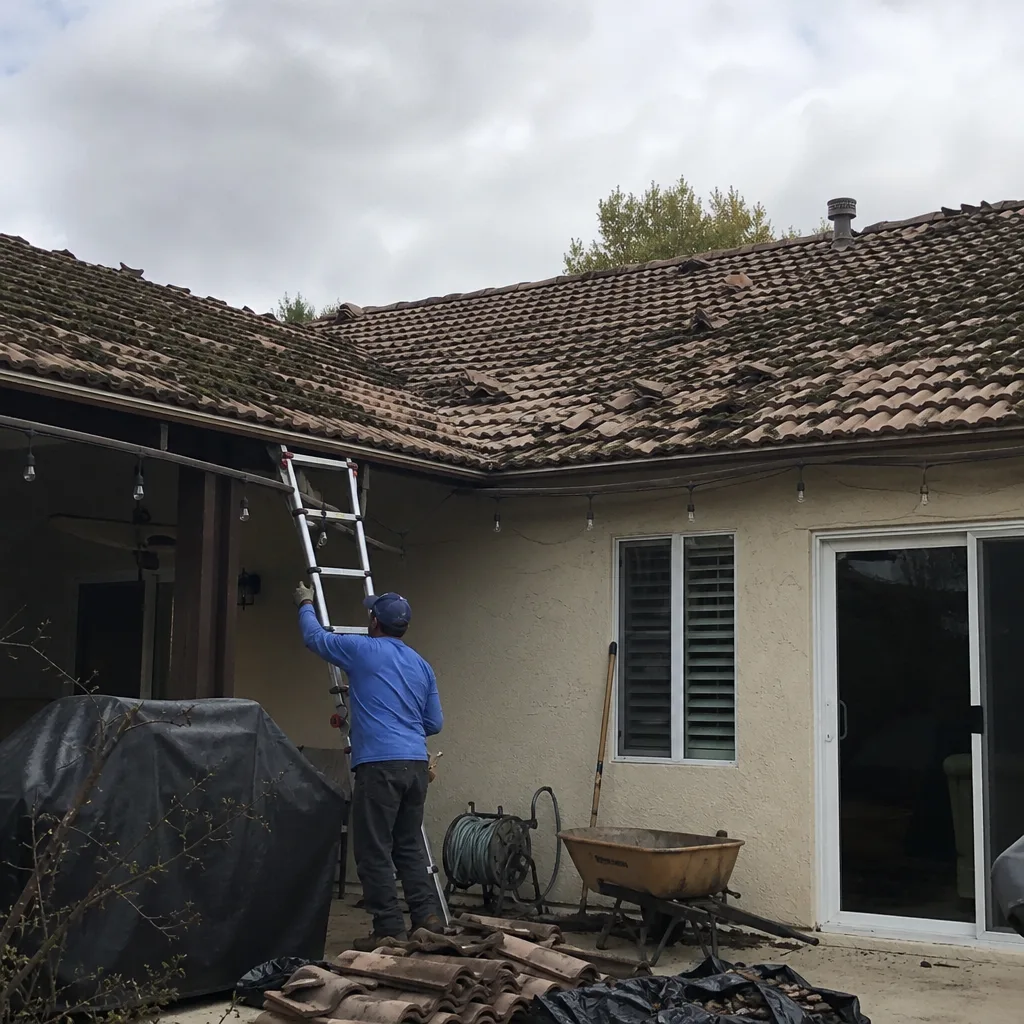
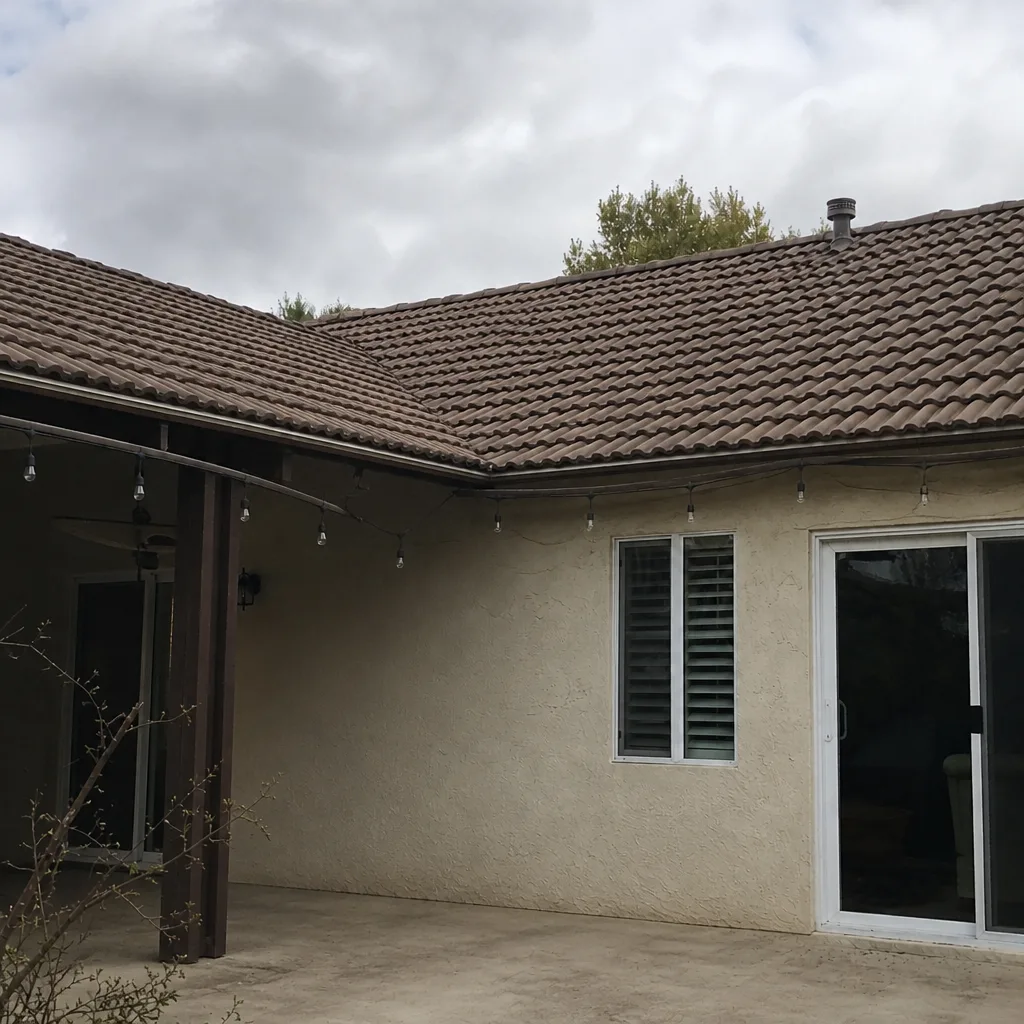
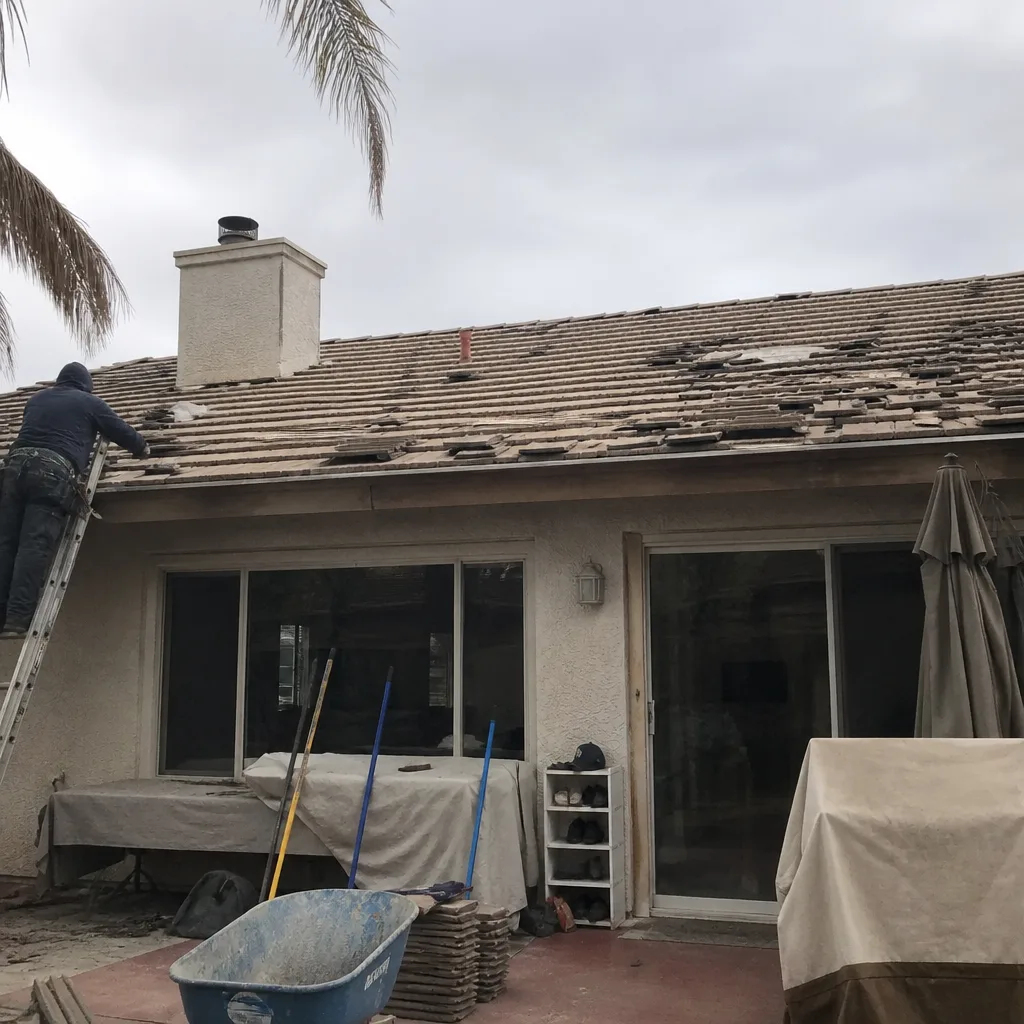
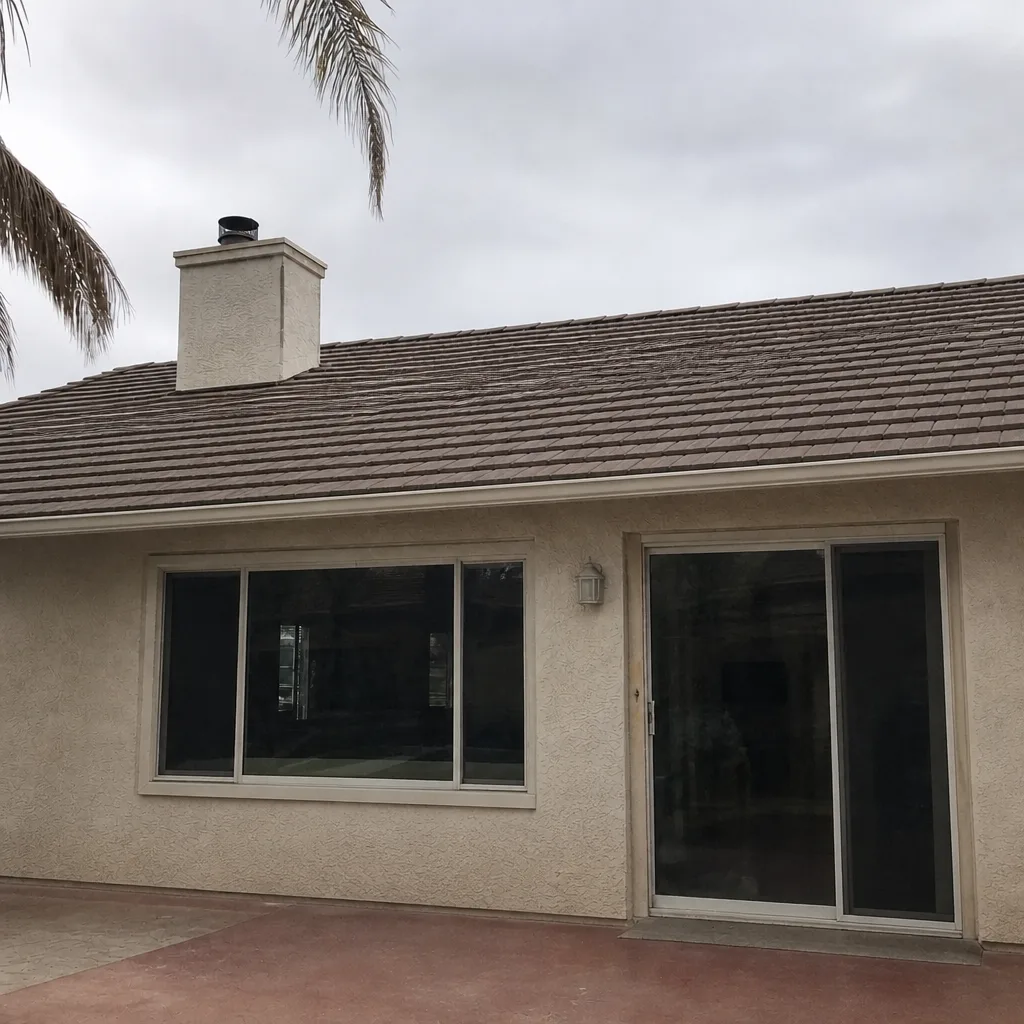
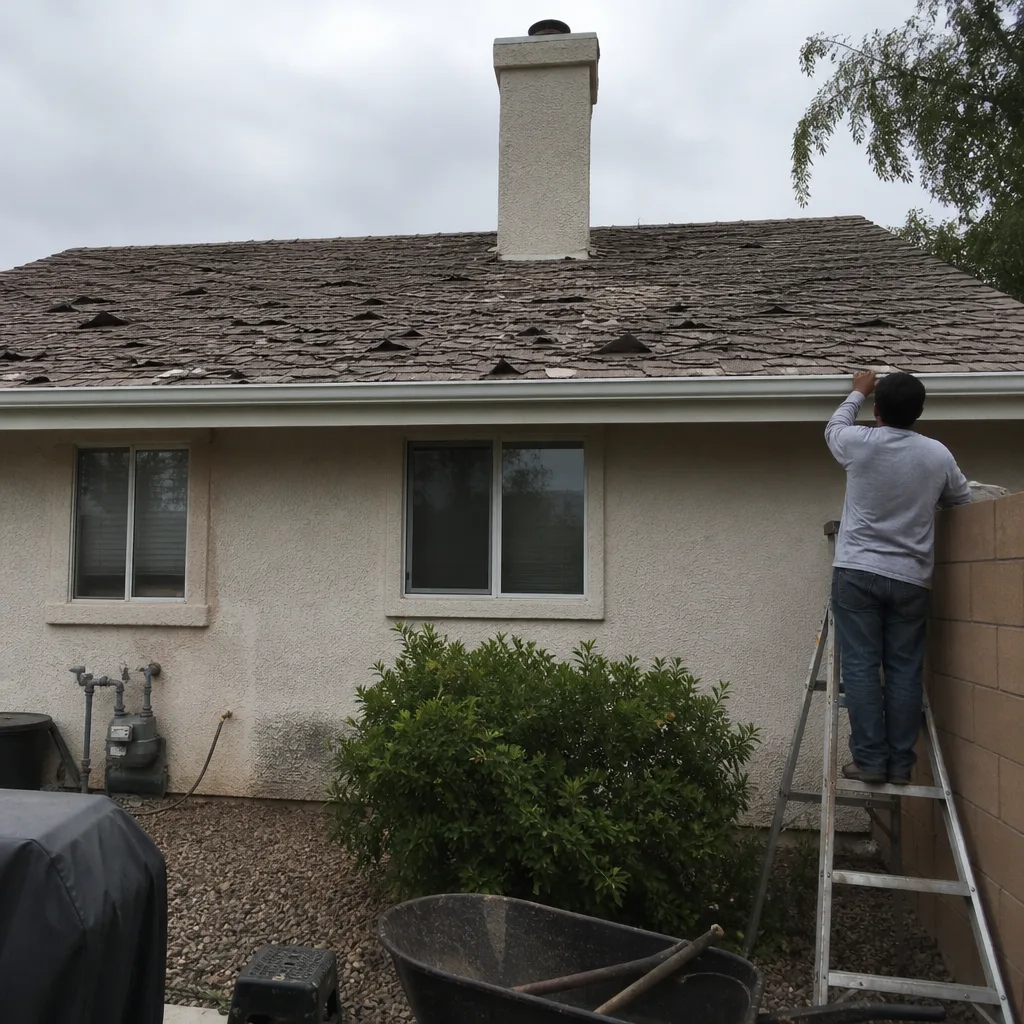
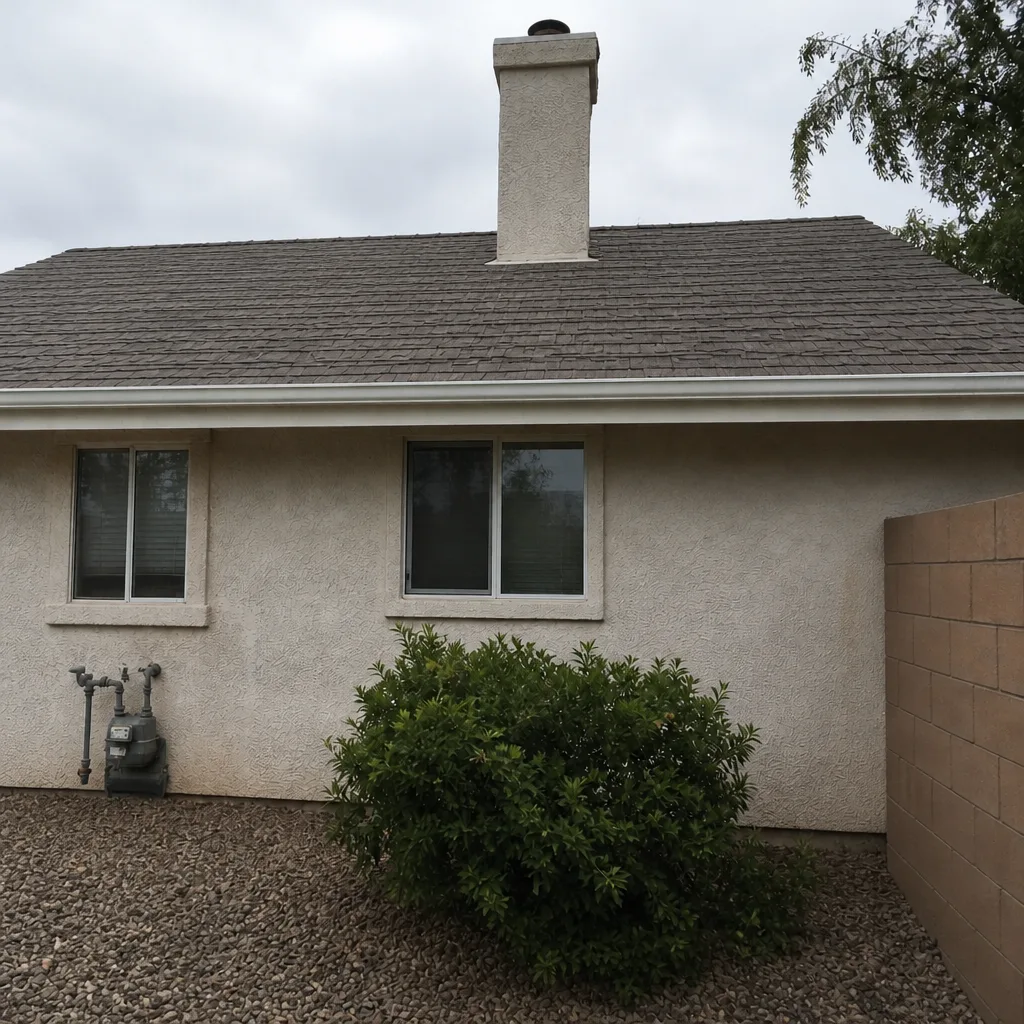
See the difference
 Before
 After
 Before
 After
 Before
 After
When to Call a Professional
If your roofline shows wave, sag, or discoloration; if you’ve found broken or missing tiles after a wind event; if a manufacturer has discontinued your product line and you’re not sure what replaces it; if your HOA has denied a repair and required a full re-roof; or if a warranty claim has been sitting unaddressed for weeks – those are the moments when a local roofer who knows Summerlin can save you a costly wrong turn. We’re licensed, insured, and we install from the major lines because we know how to cross-reference them. Shepherd & Sons Roofing Summerlin offers free estimates in Summerlin – call (844) 951-4545. If you’re still in the diagnostic stage, start with our Roof Repair in Summerlin page for the smaller stuff.
Frequently Asked Questions
The best brand for your Summerlin home is the one your HOA approves, that’s still in production, that fits your deck’s weight load, and that comes with a workmanship warranty from a contractor who’ll still be around in year 20. For most Summerlin homes, that’s a major manufacturer like CertainTeed or Owens Corning in a profile and color your association accepts. Call (844) 951-4545 for a second opinion on any bid – estimates are free.
Your real options are: find a documented substitute from the same manufacturer in the same profile family, get HOA approval for the substitute in writing, or – if no substitute exists – plan for a full re-roof that satisfies architectural review. We cross-reference home association lists against current product lines as a first step on every Summerlin job. Call (844) 951-4545 to walk through your specific line.
You need both, but the workmanship warranty protects you from the more common failure – bad installation. A fifty-year manufacturer’s warranty doesn’t cover a leak from a missed underlayment lap. Ask for the workmanship warranty in writing before you sign, and ask what happens if the contractor is out of business when you call. Call (844) 951-4545 to see what our written promise looks like.
Tile re-roofs in Summerlin typically run from about $10,000 to $25,000 for an average single-family home, depending on roof size, pitch, tile type, and whether structural work is needed. Lightweight concrete tile and standard concrete tile are on different points of that range, and discontinued-line substitutions can add paperwork time. Call (844) 951-4545 for an exact quote – free estimates.
Yes, and it matters more than the tile brand for long-term waterproofing. Summerlin’s UV exposure and heat break down cheap underlayment fast, so specify a synthetic product from a known line (Owens Corning, CertainTeed, IKO) with a published temperature rating. The tile gets the attention; the underlayment does the work.
It shouldn’t, and with a properly scoped bid it won’t. The main causes of price changes are undocumented deck damage, a load issue discovered when the old tile comes off, or a change in product because of a discontinuation. We walk the roof and photograph the deck before any bid, so the number you get is the number we honor. Call (844) 951-4545 for an honest, upfront bid.
The Bottom Line
In Summerlin, brand choice is a process of elimination, not a shopping spree. Start with what your HOA approves, confirm the product is still in production and has a documented substitute if it isn’t, check the weight load if your deck is older, specify the underlayment by name, stockpile replacement pieces, and hold the workmanship warranty to the same standard as the manufacturer’s. The brand on the tile is a data point. The name on the license and the phone number is what your roof will actually run on. Get those two right and the brand question mostly answers itself. For metal or tile decisions, our guides to Metal Roofing in Summerlin and Roof Replacement & Installation in Summerlin go deeper. Start with a free estimate.
Call (844) 951-4545 for a free estimate on your Summerlin roof. We answer live, 24/7, and we’ll bring the deck photos to the table before we ever talk money.
Written by the team at Shepherd & Sons Roofing Summerlin.