
Last updated November 18, 2026
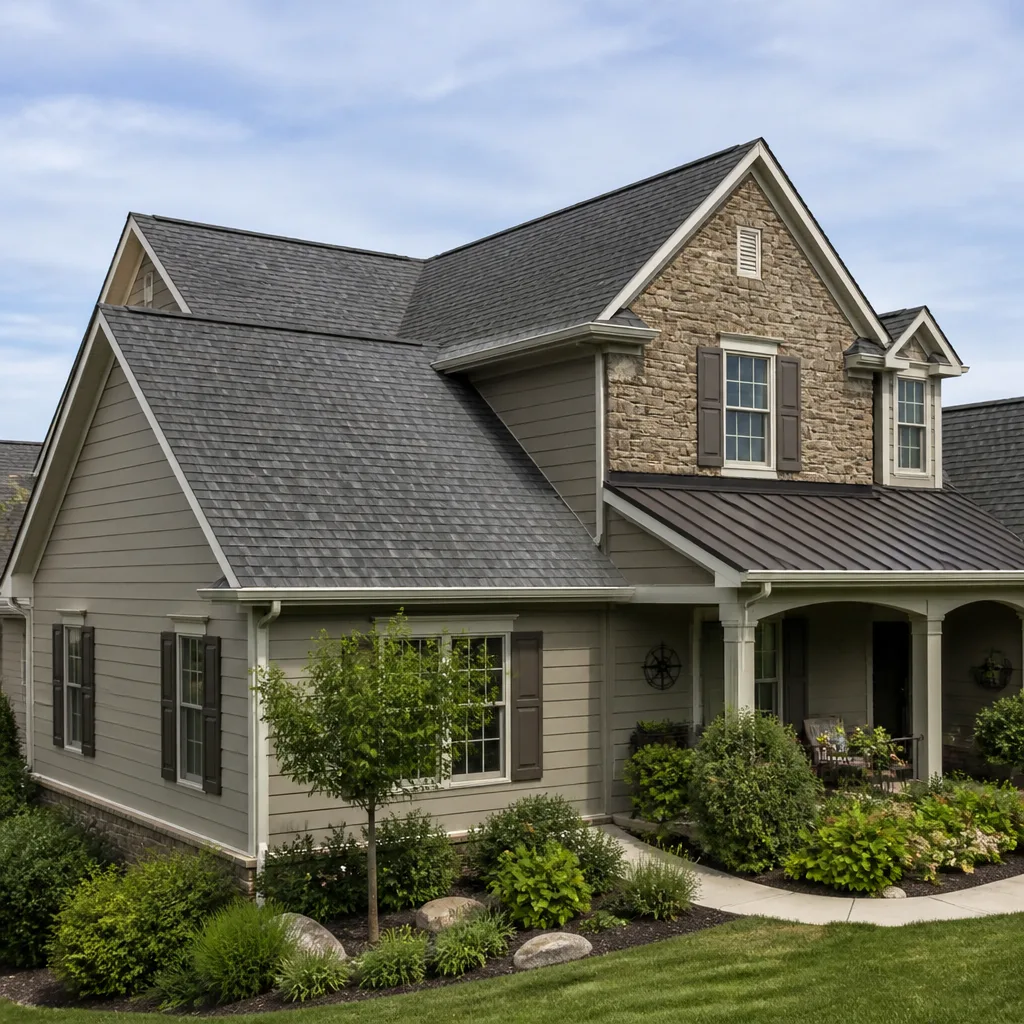
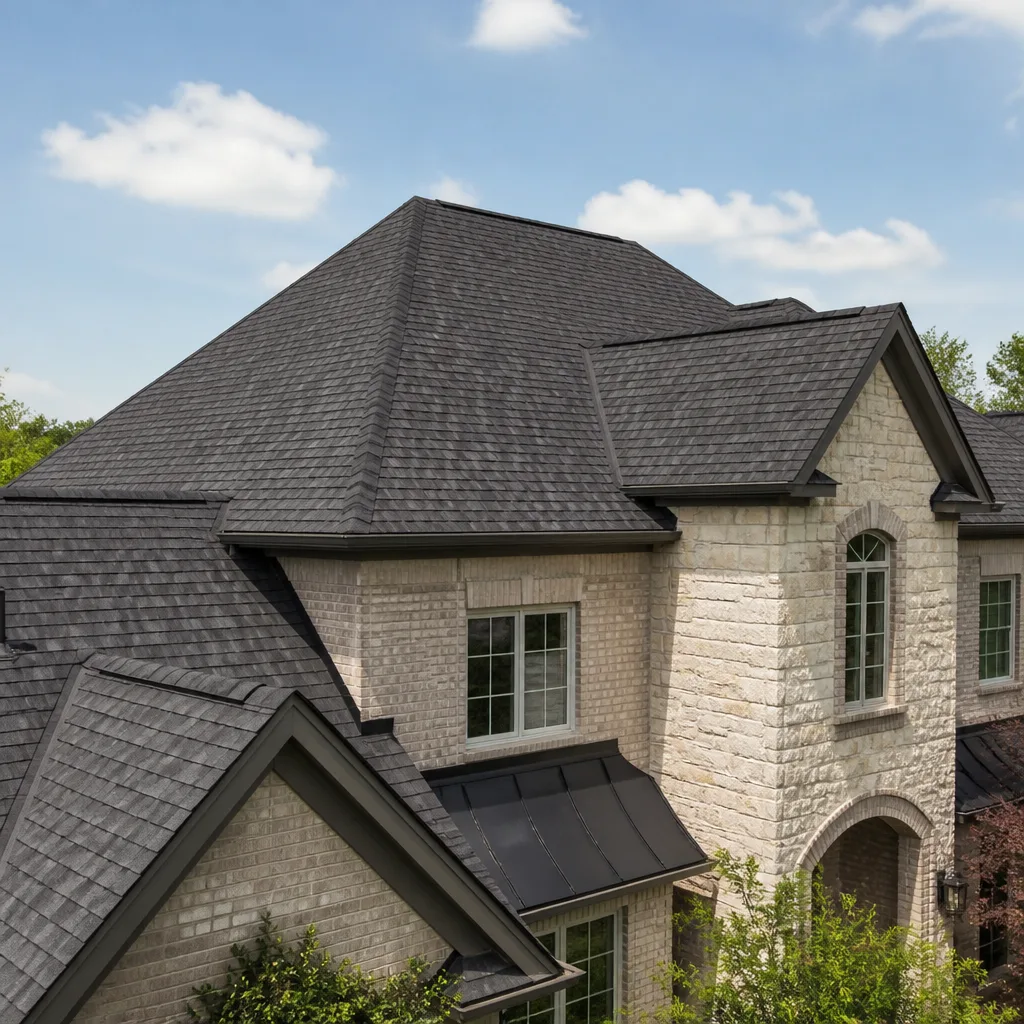 Architectural shingles
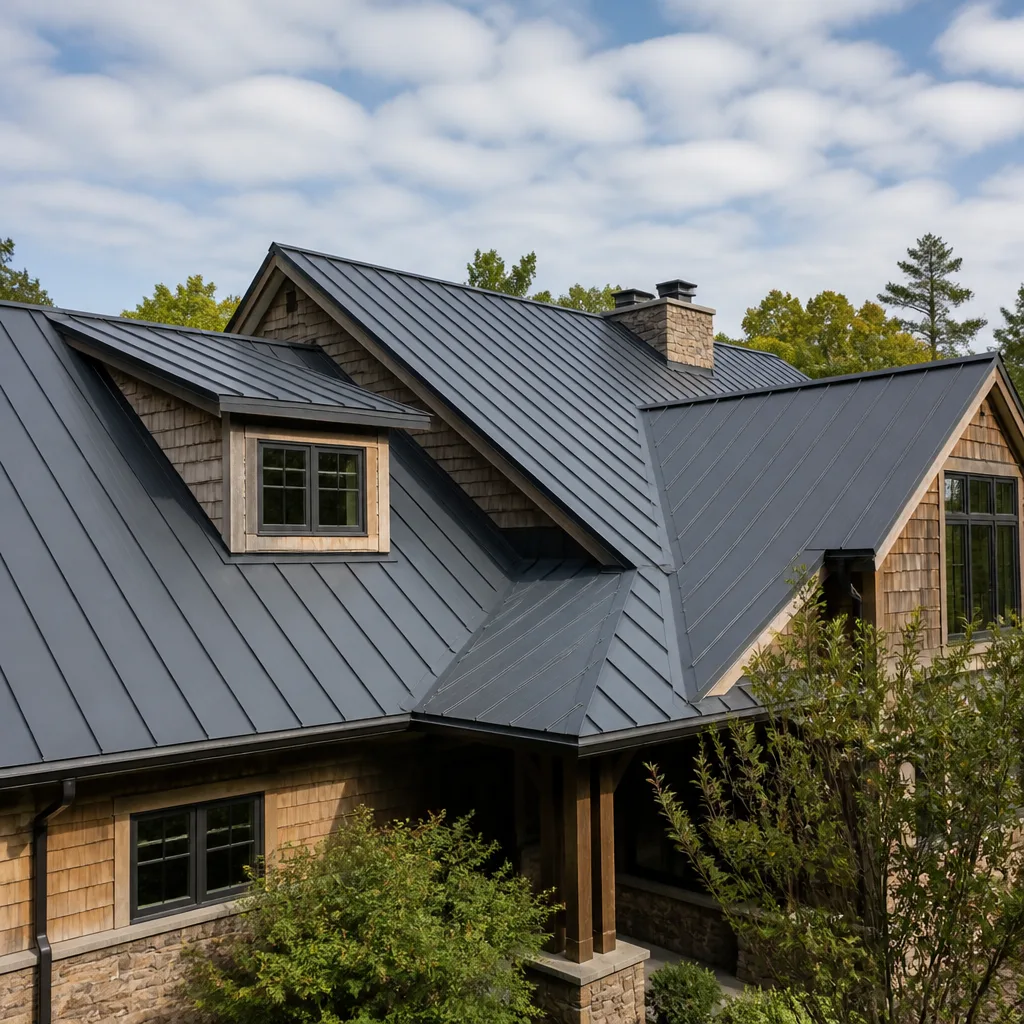 Metal roofing
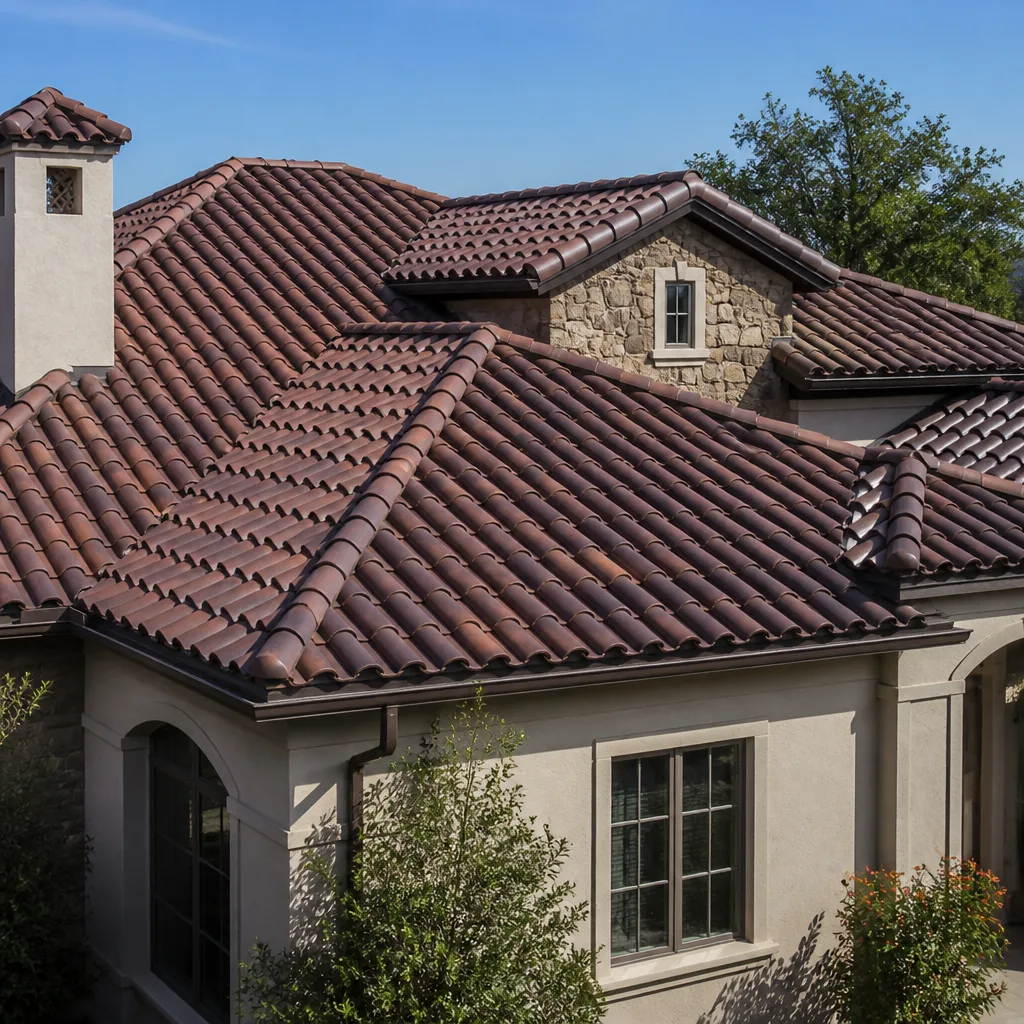 Tile roofing
 GAF
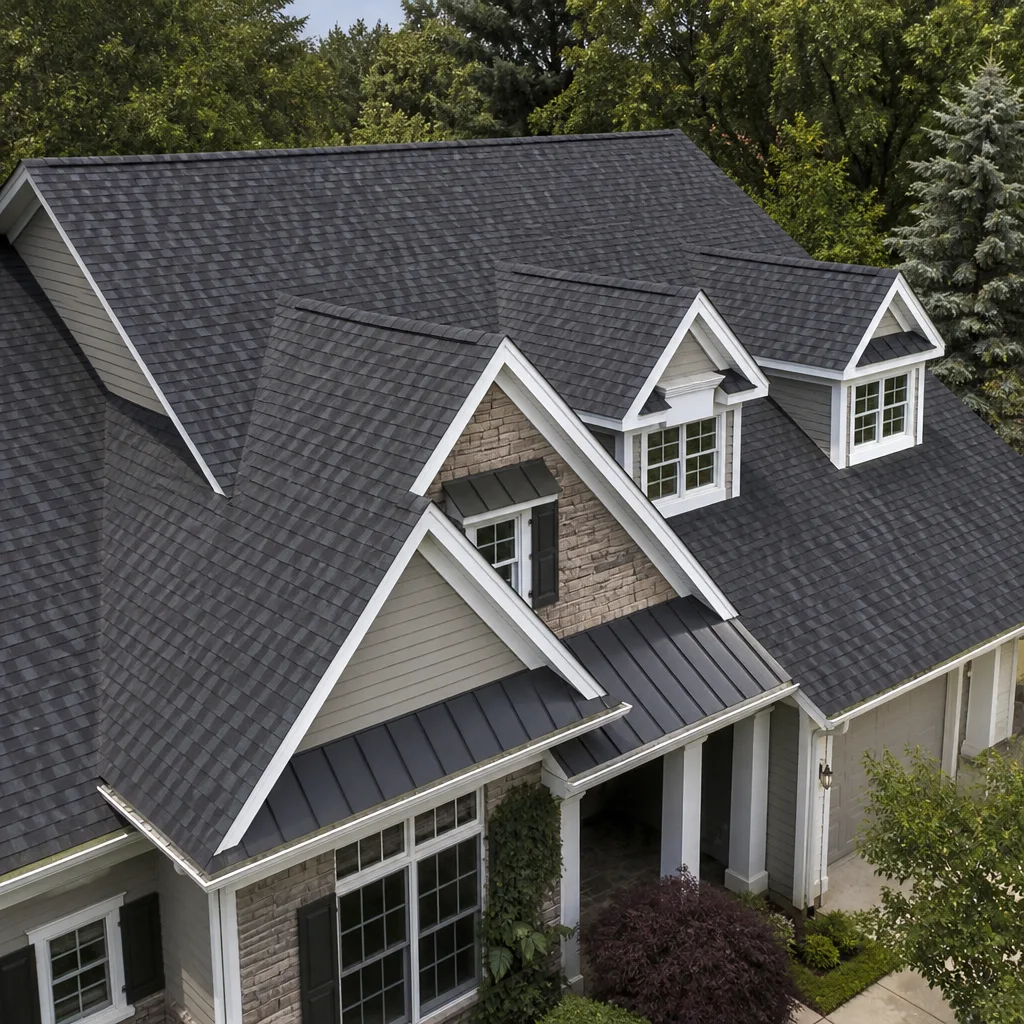 Owens Corning
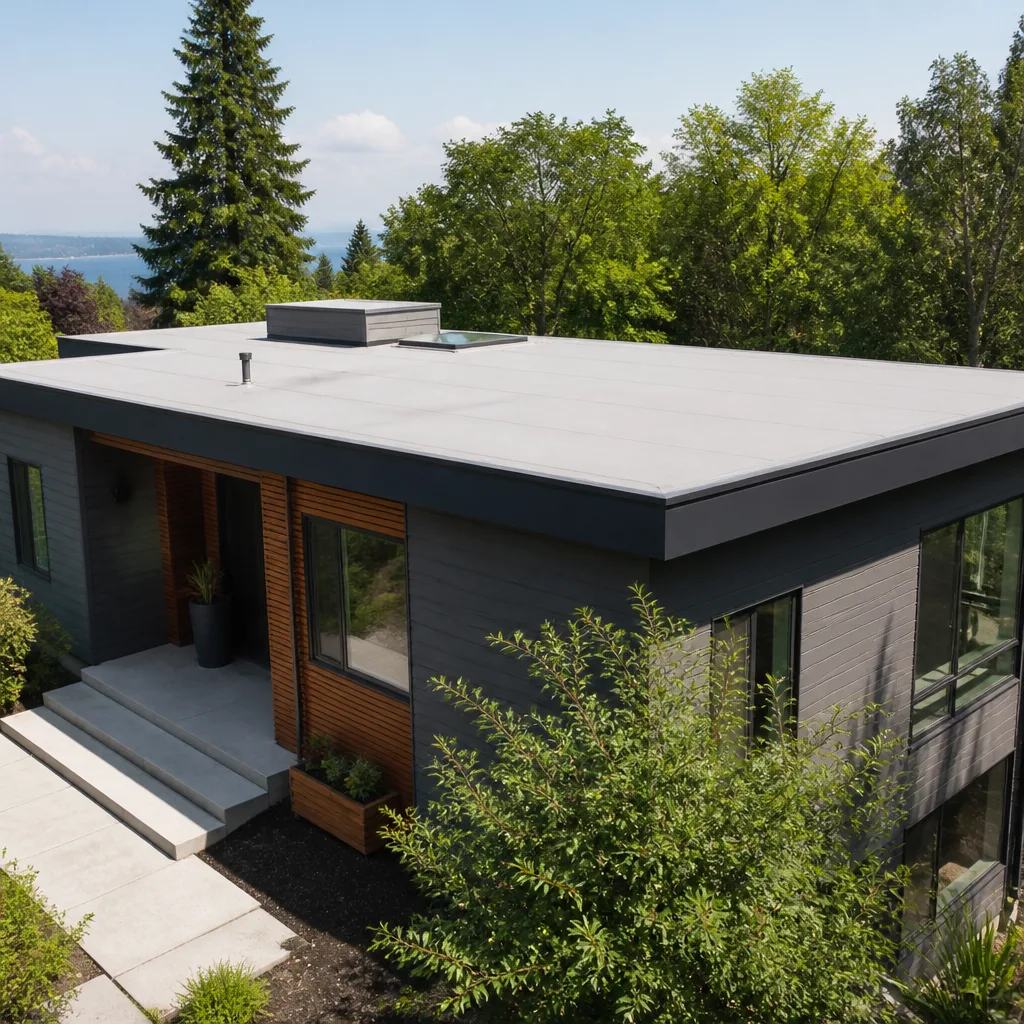 Flat & low-slope
Free roof inspection with deck photos before we talk money - GAF and Owens Corning certified installation
The Complete Roof Repair Guide for Summerlin Homeowners
Summerlin averages 294 sunny days a year – that’s not a selling point for your roof, it’s a countdown clock. UV degradation here runs roughly 30% faster than the national average used in most shingle warranty calculators, and the monsoon months that follow bake in a second round of punishment. What makes Summerlin roofs fail isn’t one weather pattern, it’s the collision of three: relentless Mojave sun, cold desert nights that contract what the day expanded, and concrete tile that dominates the housing stock built through the 90s and 2000s. This guide walks you through how Summerlin roofs actually fail, how to read an inspection before you sign anything, and what to fix before July hits.
Quick Answer
Roof repair in Summerlin usually comes down to three problems: UV-dried sealant and cracked flashing, fasteners that back out from thermal cycling, and concrete tile that’s slipped or cracked after the monsoon. Most minor repairs run a few hundred dollars; anything touching the underlayment on a tile roof runs higher because the tile has to come up first. The right move is a free inspection before the July – September monsoon window, with a written scope and a license number you can verify with the Nevada State Contractors Board.
Styles & brands we work with
- Architectural shingles
- Metal roofing
- Tile roofing
- GAF
- Owens Corning
- Flat & low-slope
Table of Contents
- Why Summerlin’s Thermal Cycling Breaks Roofs
- Concrete, Flat, and Pitched: Repair Logic by Housing Stock
- How to Read a Summerlin Roof Inspection Photo
- The Monsoon Window: What to Fix Before July
- Verifying a Nevada Contractor License on the Spot
- What Roof Repair Costs in Summerlin
- Common Mistakes to Avoid
- When to Call a Professional
Why Summerlin’s Thermal Cycling Breaks Roofs
Summerlin sits at about 3,000 feet, and that elevation is where the trouble starts. A July afternoon can hit 108°F; by 4 a.m. the same roof deck is sitting near 70°F. That’s a 38-degree swing twice a day, every day, for four months. Roofing materials expand and contract with every one of those cycles, and nails, screws, and metal flashing are what eventually give.
This is the part flat-state repair guides miss entirely. A roofer from a mild climate reads “loose fastener” and pictures storm damage. In Summerlin, loose fasteners are a slow-motion failure with a signature: the screw backs out a few thousandths of an inch each cycle, the shingle above it lifts just enough to let grit and UV under the edge, and three summers later you’ve got a fastener that’s holding nothing and a shingle edge that’s dried out from underneath.
What we look for on a Summerlin inspection:
- Ridge cap shingles lifting at the ends – the classic sign fasteners have backed out along the ridge, where the deck gets the most heat.
- Gaps around pipe boots and vents – the sealant collar around a plumbing vent dries and cracks from UV before the boot itself fails.
- Flashing pulled away from the stucco – the metal and the stucco expand at different rates, and the caulk joint between them opens up over a season or two.
- Granule loss concentrated on south and west slopes – the sun-facing planes always go first in Summerlin, and the north slope can look five years younger.
- Nail pops on the deck – invisible from the ground but obvious underfoot, and the first thing a real inspection should check.
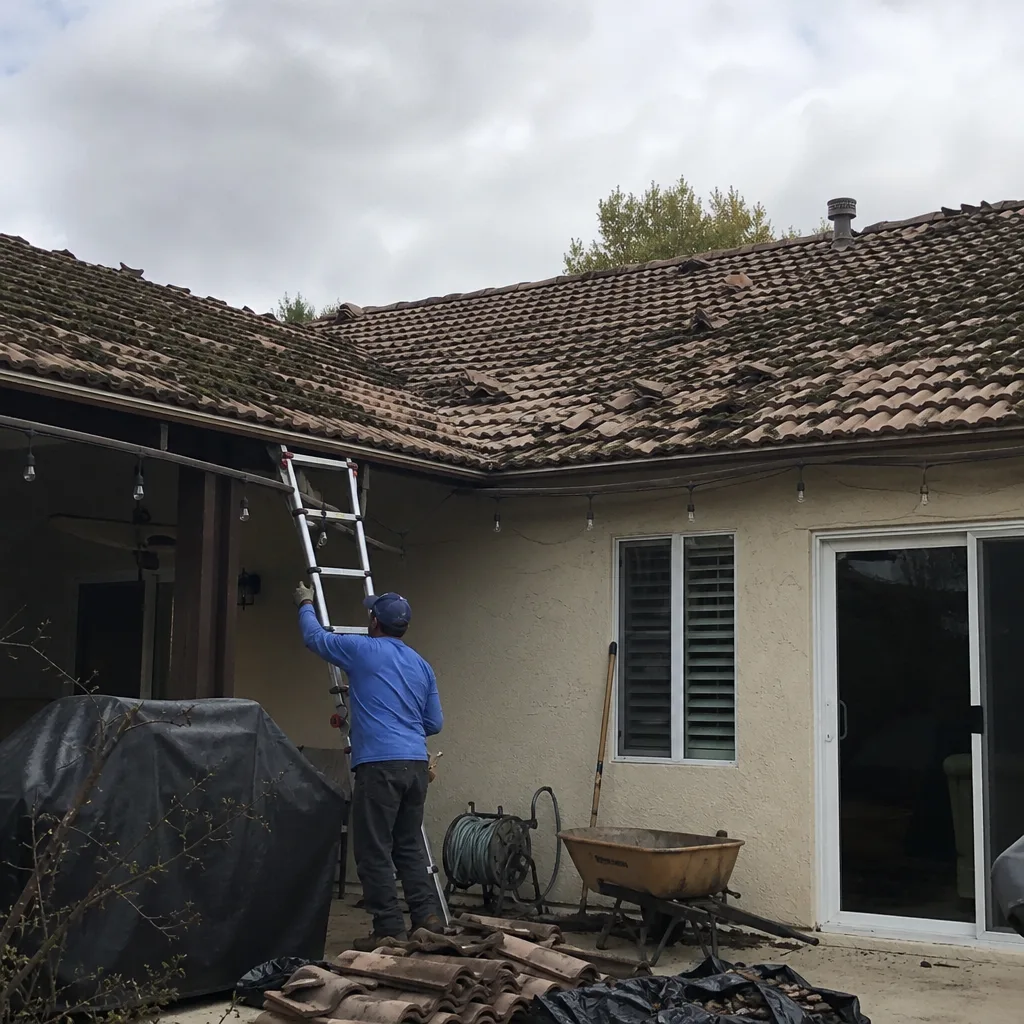
Concrete tile changes the math. The tile itself will outlive most homeowners, but the underlayment beneath it is the actual roof, and in Summerlin’s heat that underlayment dries out faster than in cooler climates. A tile roof that looks perfect from the street can have underlayment that’s finished. That’s why we pull tile and show the deck before we talk money.
Concrete, Flat, and Pitched: Repair Logic by Housing Stock
Most of Summerlin was built between roughly 1990 and 2010, which means most of the housing stock falls into three roof types. Each one repairs differently, and quoting one like the other is how homeowners get surprised.
Concrete tile (the most common in Summerlin’s master-planned villages). The tile is a rain screen and a UV shield, not the waterproof layer. Repairs almost always mean lifting tile, fixing the underlayment or flashing beneath, and resetting the tile. That’s more labor than a shingle patch, which is why tile repairs cost more even when the leak is small. Boral makes tile profiles you’ll see all over Summerlin, and matching an existing profile matters if a repair needs replacement pieces.
Pitched shingle roofs (in the older Summerlin phases and surrounding communities). GAF, CertainTeed, and Owens Corning systems are the common installations. These repair more like the national guides describe, with one desert twist: the underlayment and the shingle need to be a matched system rated for high heat, because a low-grade felt underlayment will fail years before the shingles do in this climate.
Low-slope and flat sections (patios, dormers, additions, and some flat-roof homes). Flat roofs in Summerlin take UV on a horizontal surface, which is the worst-case exposure. Ponding after a monsoon is a flashing and drain problem, not a roofing-material problem. These need the drains and scuppers cleared and the membrane inspected every spring.
Ask any bidder how they’re repairing the roof beneath yours. “We’ll seal it” is not an answer on a tile roof, because the seal is on a layer that isn’t the waterproof one.
How to Read a Summerlin Roof Inspection Photo
A photograph is the one part of a roofing bid you can actually verify with your own eyes. Here’s how to read what a Summerlin inspection should show you, in the order we look at it.
- The deck (under the roofing). Look for soft spots, water staining, delamination of the plywood, or dark outlines around fasteners. Staining that follows a seam is different from staining that’s local to a chimney or a vent. The first is a roof-wide problem; the second is a flashing problem.
- The flashing at walls, chimneys, skylights, and valleys. In Summerlin, flashing failures are the single most common source of a small, stubborn leak. A good photo shows the flashing, the caulk joint, and the stucco edge all in one frame. If the caulk is cracked and the flashing is lifted, you’ve found your leak.
- The ridge cap. Photos of the ridge from above should show whether the cap shingles are flat against the ridge or curling up at the edges. Curling ridge cap in Summerlin almost always means backed-out fasteners, not wind damage.
- The south and west slopes. Compare those against the north slope. Granule loss or UV cracking concentrated on the hot side tells you the roof is failing to the sun, not to age evenly.
- The attic side. A photo from inside the attic is the one thing a bad roofer forgets. Water staining on the rafters and daylight showing through the deck are both visible from underneath, and both change the scope of the repair.
If a bidder won’t send photos of the deck, the flashing, and the attic side, get a second opinion on that written estimate. That’s exactly what our free second-opinion offer is for, and it costs you nothing to compare scopes. You can read more about how our inspection process works on our Roof Repair in Summerlin page.
The Monsoon Window: What to Fix Before July
Summerlin’s monsoon season runs roughly July through September, and that’s when the flash-soaking happens: an inch of rain in an hour onto a roof that’s been baking at 110°F all day. That combination is harder on roofs than a slow three-day rain, because the thermal shock is instant, water finds every crack the heat opened, and the volume overwhelms undersized or clogged drainage.
What we tell Summerlin homeowners to fix before July:
- Any active leak – even a small one, because monsoon rains turn it into a ceiling stain.
- Flashing at walls and skylights – the caulk joint is the weak point. If it’s dry and cracked, it fails when the rain hits.
- Clogged or undersized gutters and downspouts – the most common “roof leak” we see after a monsoon turns out to be gutter overflow backing up under the eave.
- Loose or missing tile – one lifted tile lets water straight to the underlayment during a downpour.
- Any roof over 15 years old with no known repair history – a pre-monsoon inspection is how you find the weak spot before the weather does.
What can wait until October: cosmetic granule wear, a single cracked tile that isn’t over a living space, and full replacement planning on a roof that isn’t leaking. There’s no reason to rush a replacement into the monsoon months.
Verifying a Nevada Contractor License on the Spot
Post-hail season, Summerlin gets a wave of out-of-town roofers with out-of-state plates and a phone number that goes dead in three weeks. The single best thing you can do is verify a license before anyone touches your roof. It takes about two minutes.
- Ask for the license number in writing on the estimate, not just a card. A legitimate contractor has no reason to hide it.
- Look it up on the Nevada State Contractors Board website. Search by the license number and check status, classification, and expiration date.
- Match the name and address on the license to the name on the estimate and the name on the truck. If they don’t line up, ask why.
- Confirm the classification covers residential roofing – a license that covers fencing or general work isn’t the right classification for roof repair.
- Ask for a physical address and a real person to call after the job. “We’ll be in the area next month” is not accountability. “Same address since 1996” is.
This matters in Summerlin more than in most places because the storm-chaser turnover here is unusually high. A master-planned community with newer, denser housing stock after a hail event is exactly the target these outfits look for: plenty of roofs, plenty of homeowners who’ve never filed a roof claim, and a long drive home once the work is done. Our shop has had the same address the whole time, and the license number is published on the estimate – ask the storm chasers where theirs is.
What Roof Repair Costs in Summerlin
Costs vary by which roof type and how deep the damage goes, but here’s the range we see in Summerlin. The most important number is the one below the surface: on a tile roof, the labor to lift and reset tile is usually the larger part of the bill, not the material.
- Single flashing repair (chimney, vent, wall): a few hundred dollars, often under $400 for a straightforward reset and seal.
- Tile repair with underlayment patch: higher than shingle, because tile lift-and-reset labor runs 2-3x the material cost.
- Pipe boot replacement: one of the least expensive repairs, and one of the most common causes of a small leak.
- Localized shingle patch on a pitched roof: modest, assuming the surrounding shingles are still pliable.
- Ridge cap reset or re-nail: labor-dependent, but usually straightforward once the loose fasteners are found.
- Flat-roof membrane repair: priced by the square foot of damage, and any ponding-drain fix is a separate line.
We always give a written, line-item estimate with no change orders, and we publish standing offers that apply whether you call today or in October: $40 off any repair over $200, a free second opinion on any written estimate, and no trip charge inside our own county. If you want a ballpark before a visit, tell us the roof type and the symptom and we can usually narrow it down on the phone.
And if the inspection shows the roof is past repair, we’ll tell you that too – a repair on a roof that’s at end of life just spends money twice. Our Roof Replacement & Installation in Summerlin page covers that decision, and our Shepherd & Sons Roofing Summerlin home page has the full picture of what we do.
Common Mistakes to Avoid
- Sealing a tile roof leak from above. The waterproof layer on a concrete tile roof is the underlayment, not the tile. Sealant smeared across a tile buys you one monsoon season and then fails again, and you’ve still paid for it.
- Choosing a bidder before checking the license. Summerlin’s post-hail churn means a phone-only roofer with an out-of-state plate can be gone before the first rain. Verify the number on the Nevada State Contractors Board site before any work starts.
- Assuming “new roof” because the shingles look bad. Granule loss concentrated on the south slope is normal UV aging in Summerlin, and it doesn’t automatically mean the roof is finished. Get the deck and underlayment checked before anyone quotes a replacement.
- Ignoring the gutters before monsoon season. We see more “roof leaks” in July that turn out to be gutter overflow backing up under the eave than genuine underlayment failures.
- Hiring on a phone estimate. Nobody can price a Summerlin roof without seeing the deck, the flashing, and the attic side. A phone number is a guess, and a guess changes at the door.
- Waiting until the ceiling is stained. A small leak that shows up as a brown ring in August usually started as a flashing crack in March. The earlier the inspection, the smaller the scope.
- Overlooking roof accessories. The gutter, the valley, and the vent all fail before the field of the roof does. A repair quote that ignores them leaves the real leak untouched.
If you’re also considering metal for part of the home, our Metal Roofing in Summerlin page explains how metal handles the UV and thermal cycling differently, which matters when the roof is on a flat or low-slope section.
When to Call a Professional
Some roof problems are genuinely dangerous to touch, and a Summerlin roof is one of them. Concrete tile is heavy, the pitch on most Summerlin homes puts you in real fall territory, and a roof that’s been baking at 108°F all afternoon is hot enough to burn through a glove. Any work that involves walking the roof, pulling tile, or reaching flashing at the ridge or chimney should be done by a trained professional with fall protection and the right gear.
Call us when you see:
- A ceiling stain, a drip, or daylight showing in the attic.
- Cracked, slipped, or missing tile anywhere on the roof.
- Cracked caulk around a chimney, skylight, or vent that you can see from the ground.
- A roof over 15 years old with no known repair history.
- A written estimate from a roofer you haven’t checked out yet and want a second opinion on.
Shepherd & Sons Roofing Summerlin offers free estimates in Summerlin – call (844) 951-4545. A real person answers, 24/7, and we don’t charge a trip fee inside our own county. Same address, same name on the truck, same license number on the estimate.
See the difference
 Before
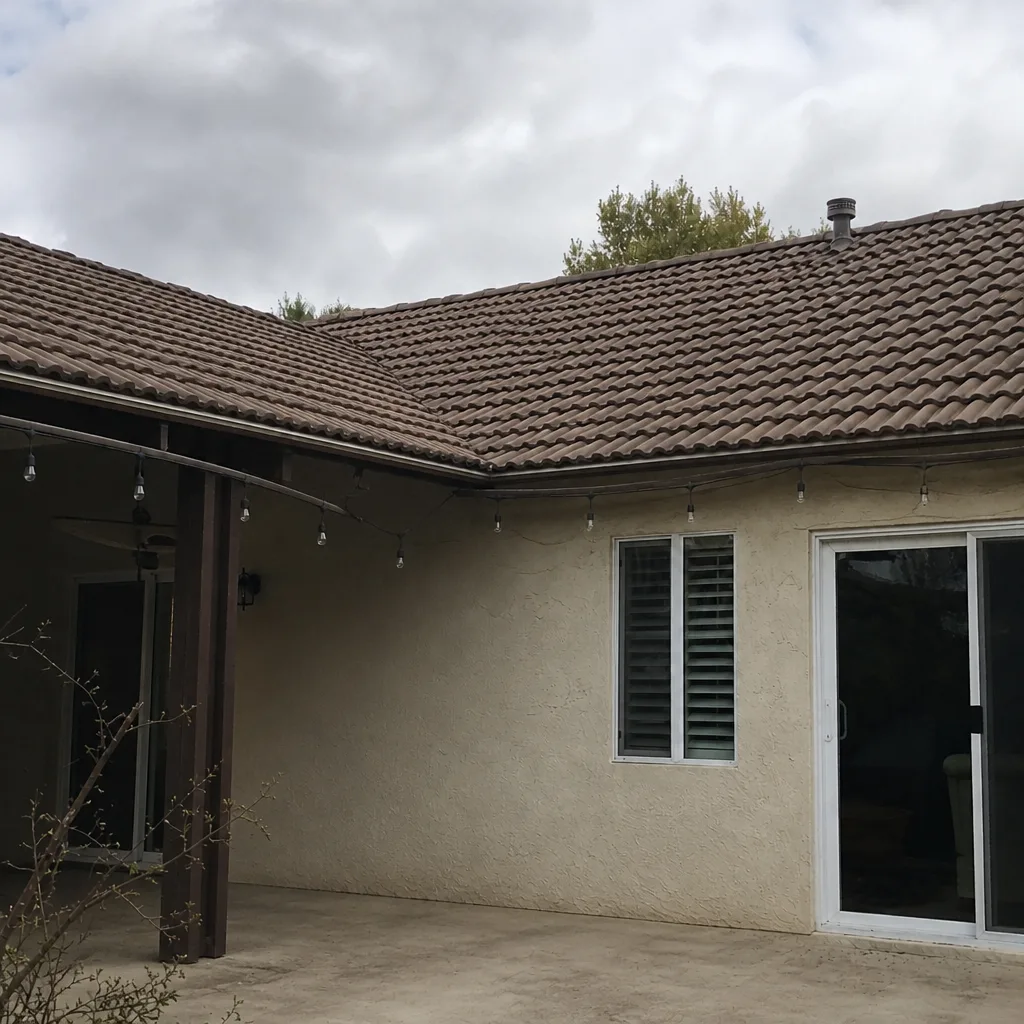 After
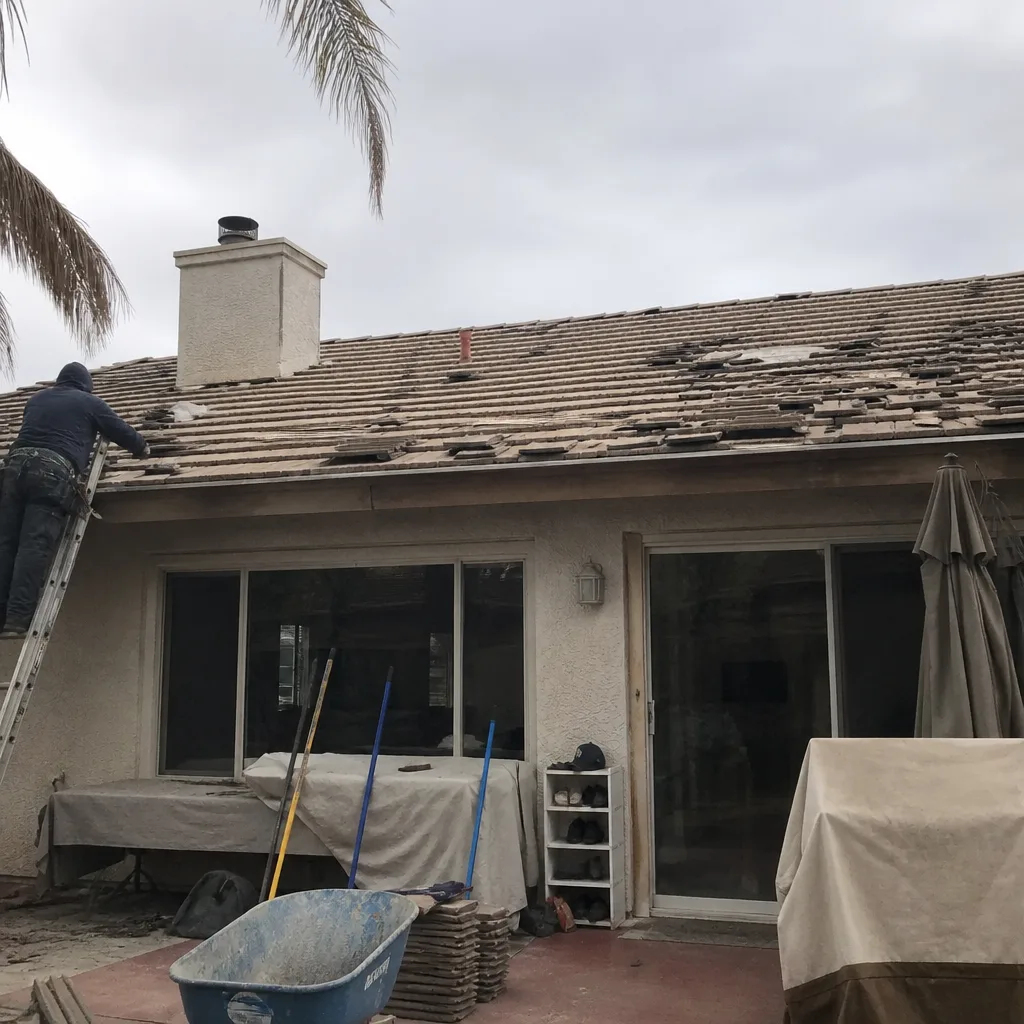 Before
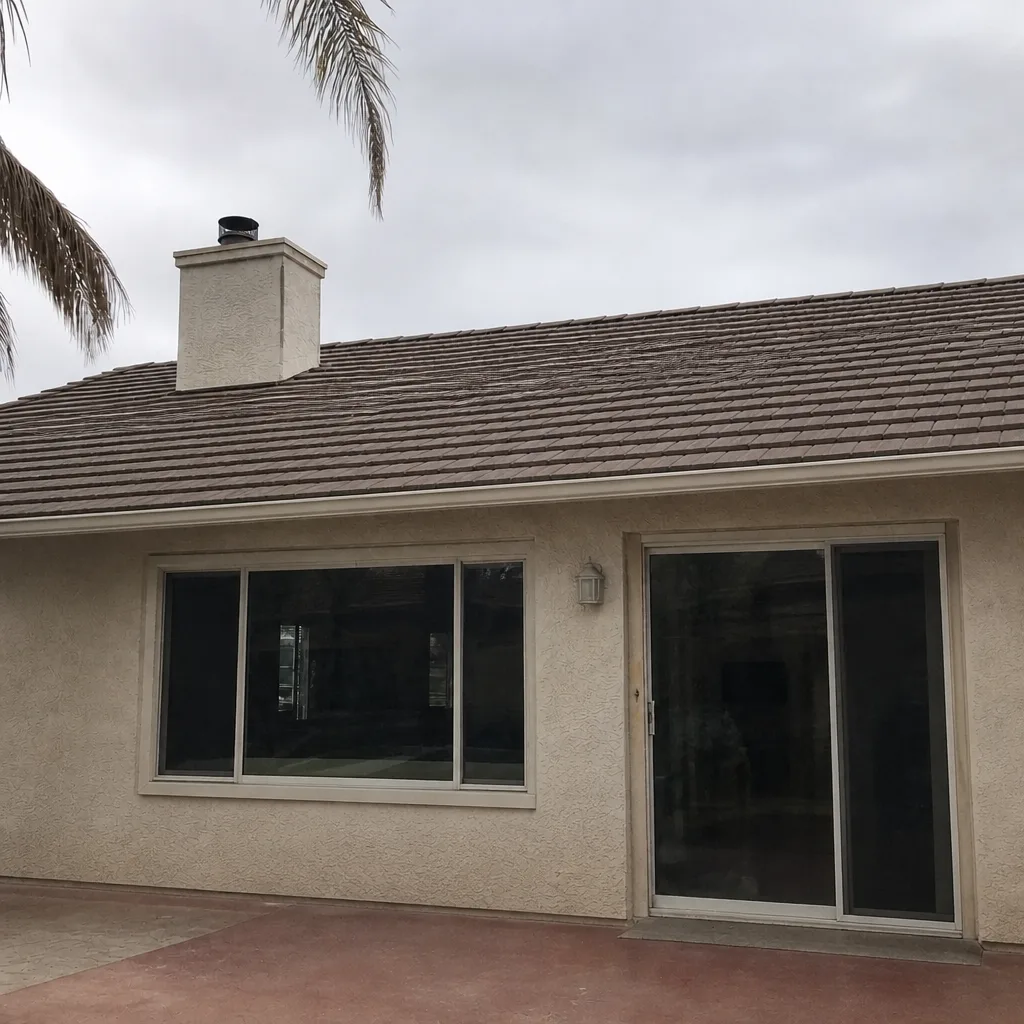 After
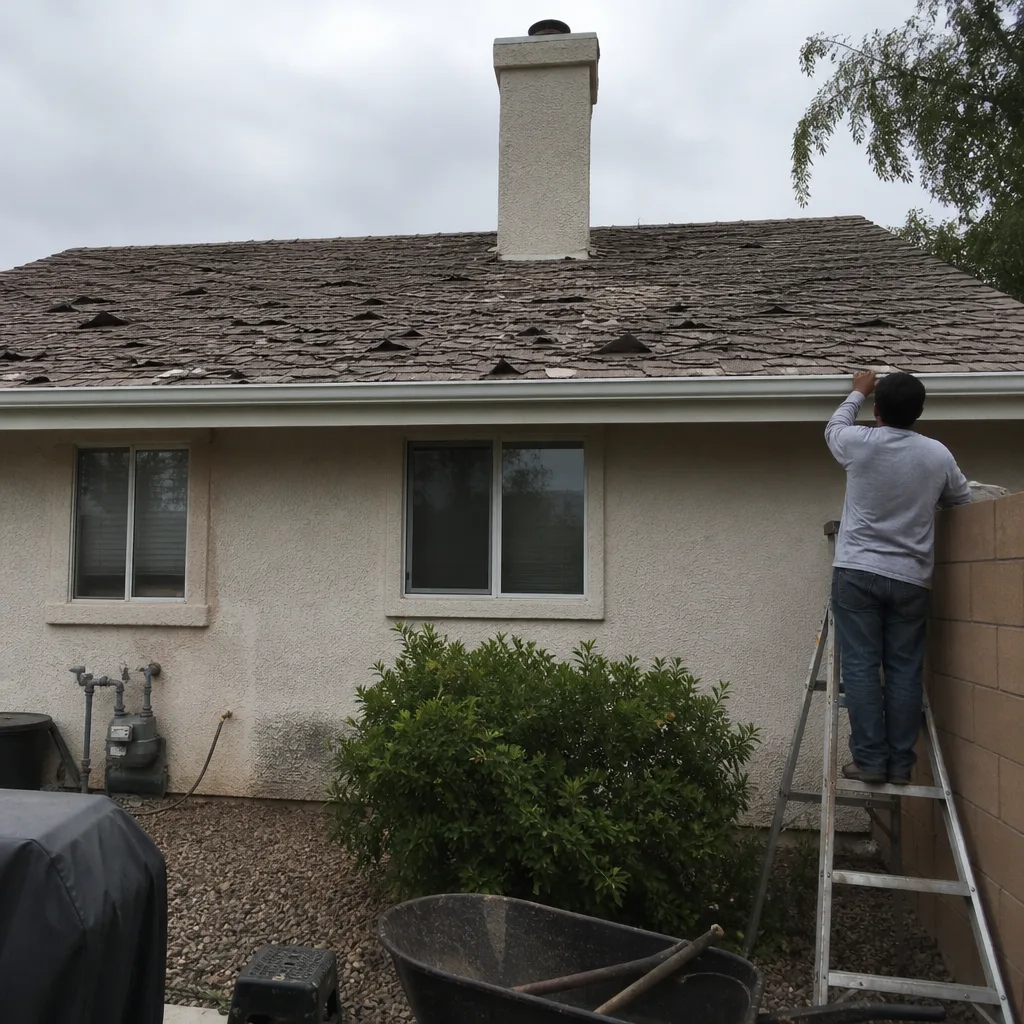 Before
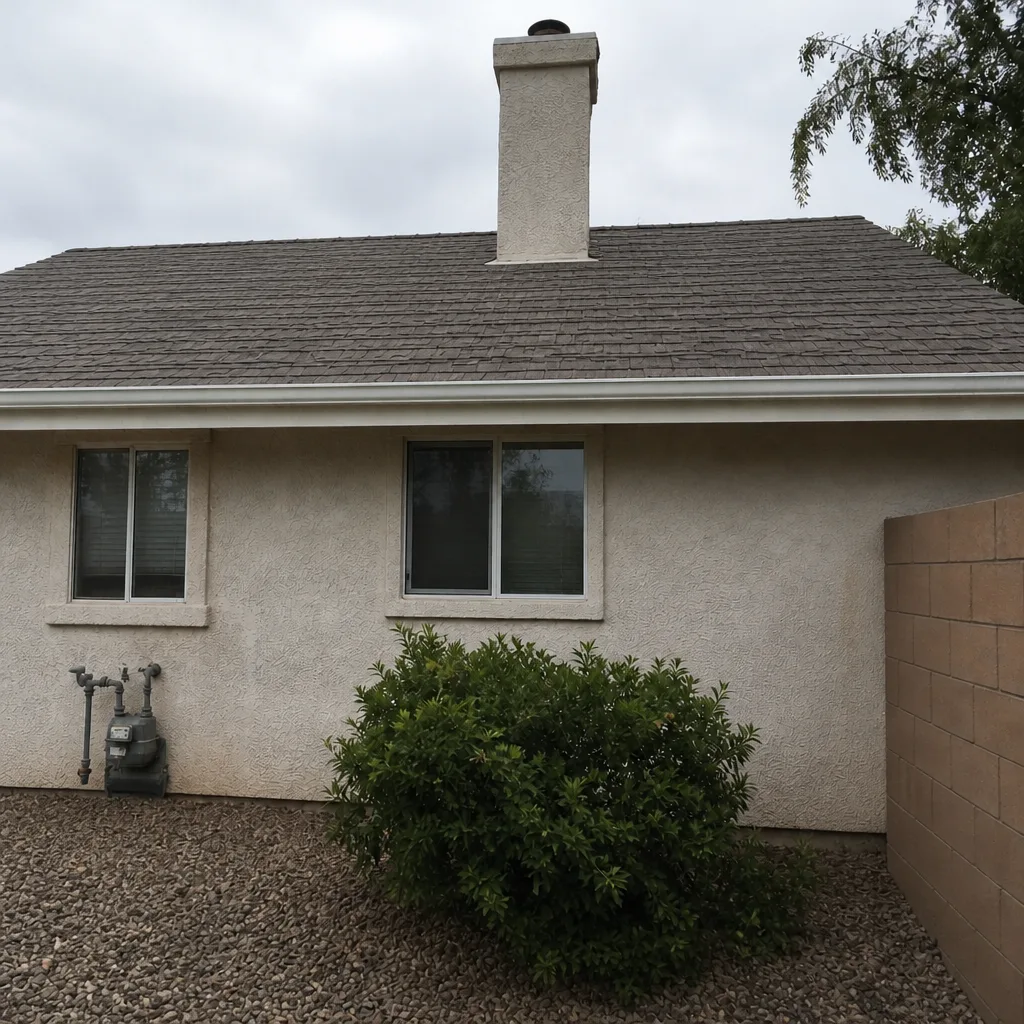 After
Frequently Asked Questions
Most Summerlin roof repairs run from a few hundred dollars for a flashing or pipe-boot fix up to higher four-figure territory when the job requires lifting and resetting concrete tile to get at the underlayment. The biggest cost driver in Summerlin is the tile lift-and-reset labor, not the material. Call (844) 951-4545 for an exact quote – estimates are free.
Late spring is ideal, so the work is done before the July – September monsoon window and before the worst of the summer heat hits. Anything that’s already leaking should be handled as soon as you notice it, regardless of season. A pre-monsoon inspection in April or May catches the flashing and tile problems that a sudden downpour would expose.
Minor repairs like a pipe boot or a flashing reset typically don’t require a permit, but larger projects that touch significant portions of the roofing system, or repairs on a home in an HOA, can. Summerlin’s HOAs often have their own requirements on top of the local jurisdiction’s, so ask the bidder who pulls the permit and whether they’ve worked within your association’s rules before. A local roofer should be able to answer both questions before you sign anything.
Repair is the answer when the damage is localized – flashing, a boot, a handful of tiles, or a section of underlayment. Replacement is the answer when the underlayment on a tile roof is dried out across the whole field, or the shingles have failed to the deck. A photo of the deck and the attic side is how you tell the difference, which is why we won’t price without them. Call (844) 951-4545 and we’ll show you what we find.
Because Summerlin combines intense UV with daily thermal cycling. The sun dries out sealant and underlayment at roughly a faster rate than the national average used in typical warranty calculators, and the 35-40 degree swing between day and night works fasteners loose over time. Roofs in mild climates don’t see that combination, which is why national repair guides often misdiagnose what’s actually happening up there.
If the leak is active and the weather permits, a temporary stop is usually possible, but a proper repair on a Summerlin roof often needs a second visit once the tile is pulled and the deck condition is clear. We’ll tell you on the phone what’s realistic and give you a written scope once we’ve seen it. Call (844) 951-4545 – a live person always answers, including after a storm.
The Bottom Line
Summerlin’s roofs fail to a specific combination – UV, thermal cycling, and heavy concrete tile – and that’s why the generic advice you’ll find on most roofing sites doesn’t fit here. Fix flashing and loose tile before July, read the inspection photos before you sign, and verify the license number on the Nevada State Contractors Board site before any work starts. When you need the work done, get a written scope, a real local address, and a name on the truck that you’ll see again at the hardware store on Saturday. That’s the difference between a repair and a repeat.
If you’d like a second opinion on a written estimate, or a pre-monsoon inspection on a Summerlin roof, call Shepherd & Sons Roofing Summerlin at (844) 951-4545 for a free estimate. A live person answers, day or night, and every job is backed by our written 90-Day Done Right Promise.
Written by the team at Shepherd & Sons Roofing Summerlin.