
Last updated November 18, 2026
 Metal roofing
 Architectural shingles
 Tile roofing
 GAF
 Owens Corning
 Flat & low-slope
Free roof inspection with deck photos before we talk money - GAF and Owens Corning certified installation
The Complete Metal Roofing Guide for Summerlin Homeowners
A standing-seam metal roof rated for 150 mph wind is still a bad choice for your Summerlin home if you pick the wrong profile for a 2:12 pitch. Roughly a third of the homes in this part of the valley sit on exactly that kind of low-slope desert roofline, and most national metal roofing guides are written around steep northern roofs that have nothing to do with the way homes here are built. This guide covers what the other guides skip: which metal profiles actually work on Summerlin roof geometry, how 115°F roof-deck heat changes the panel math, which finishes clear the HOA color boards, and what 25 years of metal really costs compared with tile and asphalt in this market.
Quick Answer
Metal roofing works well in Summerlin, but only if the profile matches your roof pitch and your HOA’s approved palette. Standing seam is the right call for most low-slope desert builds because it hides its fasteners and handles thermal movement; exposed-fastener panels are a budget option with real drawbacks in this heat; stone-coated steel mimics tile and clears most Summerlin HOA rules. Pick the wrong combination and you’ll fight leaks, rejected color approvals, or both.
Styles & brands we work with
- Architectural shingles
- Metal roofing
- Tile roofing
- GAF
- Owens Corning
- Flat & low-slope
Table of Contents
- Which Metal Roofing Profiles Work on Summerlin Roof Geometries?
- Why Thermal Expansion Matters More in Summerlin Than Anywhere Else
- HOA Color Approval: What Passes in Summerlin Master-Planned Communities
- The Metal Roof Noise Myth, Answered
- 25-Year Cost of Ownership: Metal vs. Tile vs. Asphalt
- How a Metal Roof Goes On a Summerlin Home: Step by Step
- Common Mistakes to Avoid
- Frequently Asked Questions
Which Metal Roofing Profiles Work on Summerlin Roof Geometries?
Summerlin roofs come in three basic shapes: steep gable and hip roofs on the estate lots, moderate 4:12 to 6:12 pitches on the tract homes, and low-slope 2:12 sections on porch covers, patio extensions, and the rear elevations of a lot of the two-story builds. Each shape points to a different metal profile. Getting this match right is the single most important decision in the whole project, more important than the color and more important than the brand name on the panel.
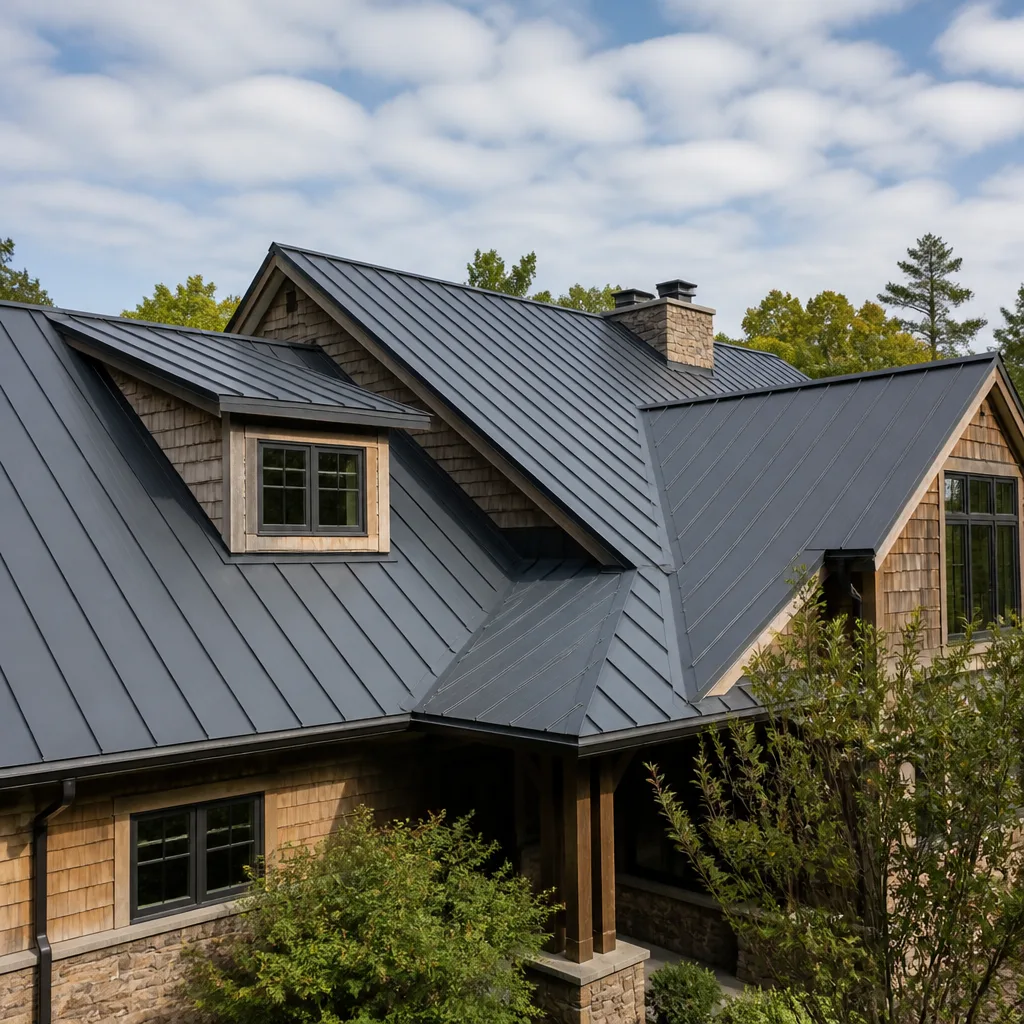
- Standing seam – Concealed fasteners, raised seams, panels that float on clips to handle movement. The best fit for low-slope and moderate pitches. Works down to 1:12 on most systems. Higher material cost, longest service life.
- Exposed-fastener panels – Screws go through the metal in the flat of the panel. Cheaper, faster to install, but every screw is a potential leak point as the metal expands and contracts over 20 years of desert heat. Fine for sheds and shops, a poor choice for a low-slope living-area roof in Summerlin.
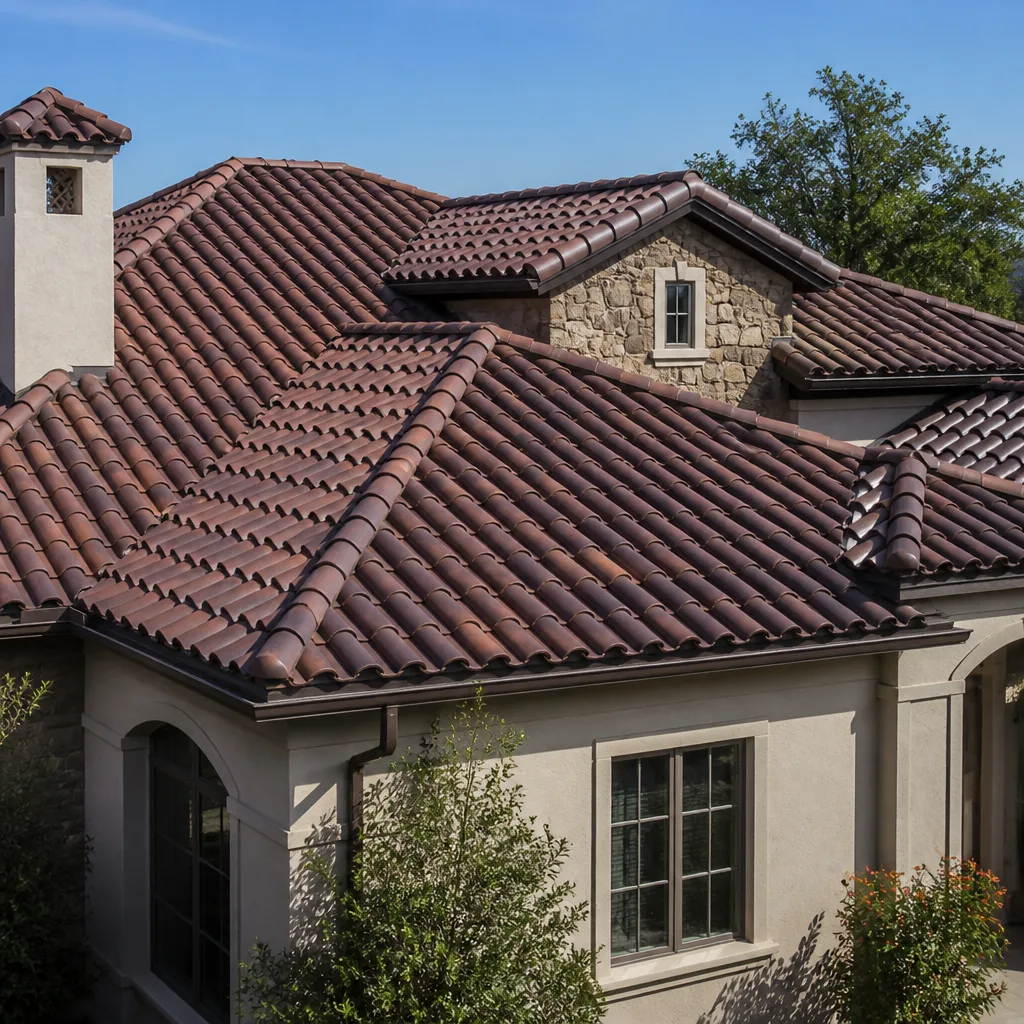
- Stone-coated steel – Steel panels coated with stone granules that mimic barrel tile or shake. Handles moderate pitches, clears most HOA palettes because it looks like tile, and weighs far less than real tile. Good middle path for homes where tile is the neighborhood standard.
On the low-slope rear sections we see across Summerlin, standing seam is the profile that earns its keep. The raised seam sheds water on a shallow pitch where exposed-fastener panels tend to pond and back up. If your home has a mix of pitches, a common situation here, the right answer is often a hybrid: standing seam on the low sections, stone-coated steel on the visible front slope so it matches the tile roofs around you.
Why Thermal Expansion Matters More in Summerlin Than Anywhere Else
Metal moves when it heats and cools. That’s not a defect, it’s physics, and the number that matters is the coefficient of thermal expansion. A steel panel grows about 1/16 inch for every 10 feet of length per 100°F of temperature change. In Summerlin, a dark roof deck can hit 160°F on a July afternoon and drop to 40°F on a January night. That’s a 120-degree swing, every single year.
Do the math on a 20-foot panel and you get roughly 1.5 inches of total movement across the seasons. Now scale that up: a 40-foot run moves about 3 inches. If the installer screws that panel down tight through the metal, the panel has nowhere to go. It oil-cans, it works the fasteners loose, and the seams start to fail around year eight to ten. This is why panel length matters more in Las Vegas than almost anywhere in the country.
The fix is mechanical, not cosmetic:
- Use floating clips, not direct fasteners. Standing seam clips anchor to the deck and let the panel slide. The seam hides the clip and the panel moves freely.
- Control panel length. Long runs get broken up with expansion joints or designed as shorter panels where the roof geometry allows.
- Leave the right gap at terminations. Panels need room to grow at the ridge and eave. A tight fit looks neat and fails early.
- Match clip spacing to the local wind and heat load. Wider clips and more of them on the south and west slopes, which take the worst of the afternoon sun.
We’ve pulled panels off Summerlin roofs that were installed by out-of-state crews after a storm and screwed down hard in a northern pattern that assumed mild summers. Every one of them was oil-canned within a decade. The panel wasn’t bad. The install assumed a climate that doesn’t exist here. When you talk to any bidder, ask how they handle thermal movement and make them explain the clip strategy. A roofer who can’t answer that question hasn’t done many desert metal roofs.
HOA Color Approval: What Passes in Summerlin Master-Planned Communities
Summerlin is a patchwork of master-planned villages, and most of them have architectural review rules that govern roof color and material. Buy a metal roof in a color the association hasn’t approved and you’ll be pulling it off at your own expense. This is the part of the project that trips up homeowners who buy panels online or sign with a contractor who doesn’t work in Summerlin regularly.
In our experience, these finishes clear review most often:
- Earth-tone stone-coated steel – terracotta, taupe, and weathered brown read as tile from the street and pass in nearly every village.
- Muted standing seam in charcoal, bronze, or dark brown – concealed fasteners plus a low-sheen finish look clean and pass in most communities, though some villages restrict bright or reflective metal.
- Matte finishes over glossy – a shiny bright-metal roof draws complaints and gets rejected. Low-gloss Kynar-coated panels in a muted color are the safe bet.
What gets rejected: bright silver, mill-finish aluminum, high-gloss red or blue, and anything that clashes with the village’s dominant tile palette. Some associations also restrict visible fastener lines, which rules out most exposed-fastener panels on street-facing slopes.
Here’s the process that saves you a headache:
- Get the color chips and a sample panel from your contractor before you sign anything. Manufacturer color cards photograph badly; the association wants to see the actual finish.
- Submit the architectural request with the product spec sheet and a photo of a home with the finished roof if you can find one.
- Wait for written approval. Verbal approval from a board member won’t protect you if the next board disagrees.
- Keep the approval letter with your project file. If you ever sell, it’s proof the roof was done to the rules.
A roofer who works Summerlin regularly knows which villages are strict and which finishes clear review. If your contractor shrugs at the HOA question, that’s a warning sign.
The Metal Roof Noise Myth, Answered
Metal on a properly sheathed Summerlin home is no louder than asphalt in rain. That’s the short answer, and it’s true because the roof assembly matters far more than the surface material. A metal panel over solid decking, underlayment, and attic insulation deadens sound the same way an asphalt shingle does. The old “tin roof in a hailstorm” reputation comes from barns and sheds with exposed metal over open framing and no sheathing at all, which is nothing like how a home is built.
And here’s the part that makes the whole debate almost irrelevant in Summerlin: we barely get rain. What we do get is wind, and a solid metal roof over proper sheathing is quieter in a windstorm than a loose asphalt roof with failing shingles flapping. If you’re worried about noise, ask the contractor about the sheathing and underlayment spec. That’s where the quiet lives.
25-Year Cost of Ownership: Metal vs. Tile vs. Asphalt
Manufacturer brochures compare metal to asphalt over 50 years and count a metal roof’s full lifespan against asphalt replaced every 20. That math flatters metal and ignores the way roofs actually get replaced in Summerlin. Here’s a more honest 25-year comparison based on realistic replacement cycles in this market. Actual bids vary with the roof’s size, pitch, and complexity, so treat these as planning ranges, not quotes.
- Asphalt shingle – Installed cost runs lower than metal or tile. In Summerlin’s heat and UV, a standard shingle roof typically lasts 15 to 20 years, so a 25-year horizon usually means one replacement plus a mid-life repair cycle. Lowest up-front cost, most replacements over time.
- Concrete tile – Higher installed cost than asphalt. Tile holds up well to Summerlin sun and lasts far longer, but it’s heavy, and broken tiles underfoot or after a hailstorm mean periodic repair. The 25-year cost lands between asphalt and metal.
- Standing seam metal – Highest up-front cost of the three. Installed correctly with floating clips, it lasts 40 to 50 years, needs almost no maintenance, and reflects heat. On a 25-year horizon you buy it once. That’s where the numbers tip in its favor.
The takeaway is simple. Asphalt is cheapest on day one and most expensive over 25 years because you buy it twice. Tile sits in the middle. Metal costs the most up front and wins on cost of ownership if you plan to stay in the house. If you’re selling in five years, asphalt often makes more sense. If this is your forever home in Summerlin, metal earns its price. For a deeper look at how replacement pricing compares, our Roof Replacement & Installation in Summerlin page breaks down the line items, and our Metal Roofing in Summerlin page covers the material options in more depth.
How a Metal Roof Goes On a Summerlin Home: Step by Step
The install is where a metal roof succeeds or fails, more than the panel itself. Here’s the sequence the crew on your roof should follow, and it’s the sequence you should ask any bidder to walk you through before you sign:
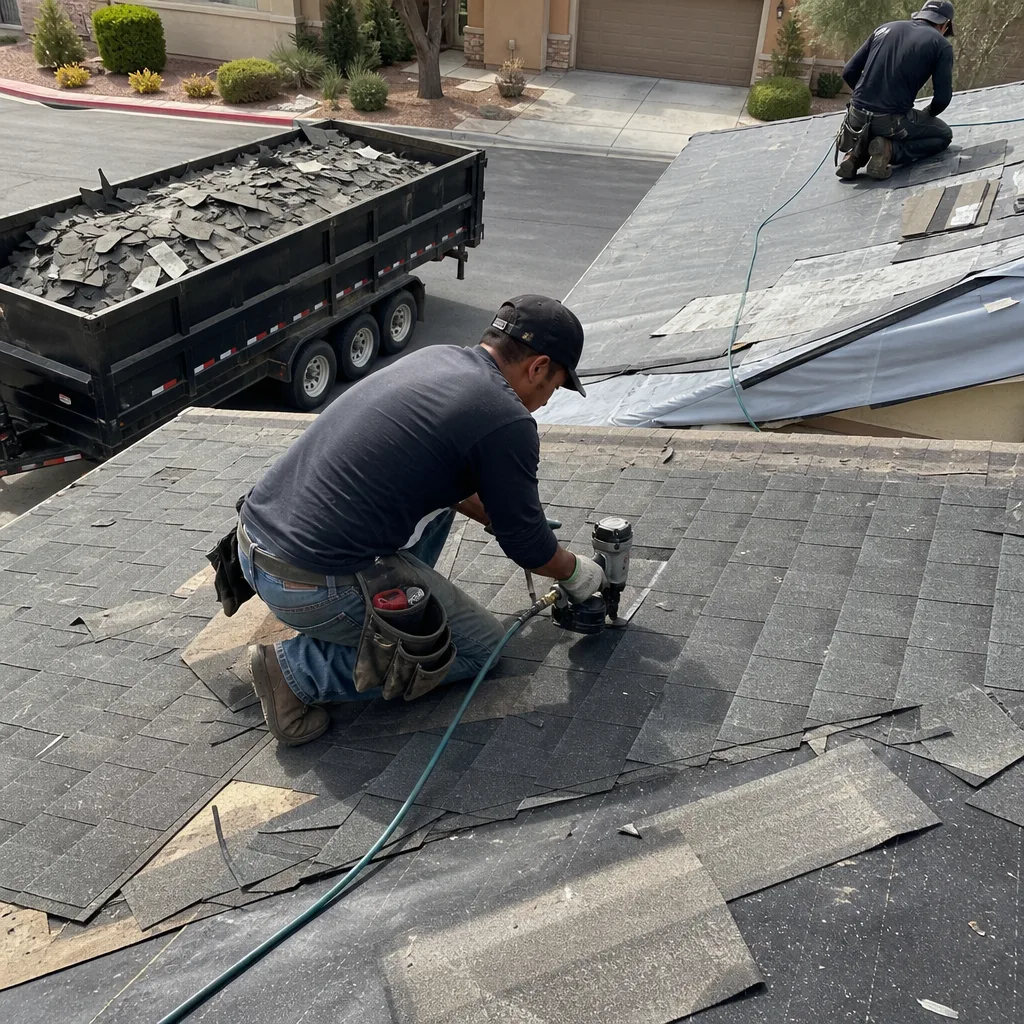
- Tear-off and deck inspection. Old roofing comes off, and the deck gets checked for soft spots, rot, and proper nailing. We show you photos of the deck before we talk money, because the deck tells you what the job really is.
- Underlayment. A high-temp synthetic underlayment goes down over the deck. In Summerlin heat, standard felt breaks down early, so the underlayment spec matters.
- Flashing and trim. Valley, eave, and penetration flashing get set before the panels go on. This is where most leaks start, so it’s where the careful work happens.
- Clip and panel install. Floating clips go down at the spacing for the local wind and heat load, then the panels lock in and float.
- Ridge, hips, and terminations. Ridge caps and end pieces go on with the right gaps for thermal movement.
- Final walk and cleanup. Magnets sweep for screws, the roof gets inspected seam by seam, and we walk it with you.
Every metal job we do carries the same written 90-Day Done Right Promise: if something isn’t right, one call brings us back. If you’ve got a written bid from another contractor and you’re not sure about it, we offer a free second opinion and we’ll tell you straight whether the spec is sound. For repairs or smaller metal sections, our Roof Repair in Summerlin page covers the common fixes. You can also see the full range of what we do on our Shepherd & Sons Roofing Summerlin home page.
Common Mistakes to Avoid
- Choosing a steep-slope profile for a low-slope roof. An exposed-fastener panel screwed down on a 2:12 section in Summerlin will pond and leak within a few years. Match the profile to the pitch, not to the price tag.
- Buying panels before the HOA approves the color. A rejected finish means pulling a brand-new roof. Get written approval first, every time.
- Letting a crew screw panels down tight. In Summerlin heat, that panel oil-cans and fails. Floating clips and the right panel length let it move.
- Skipping the high-temp underlayment. Standard felt breaks down fast in desert heat. The underlayment spec is part of a real metal bid.
- Hiring a storm chaser with a phone number and no local address. They come through after a hail event, install fast, and leave. Ask where their shop is and look up the license.
- Comparing only up-front cost. A cheaper asphalt roof you replace twice costs more than a metal roof you buy once. Plan for the years you’ll own the house.
- Ignoring the deck. A great panel on a soft deck is still a bad roof. Demand deck photos before you talk price.
See the difference
 Before
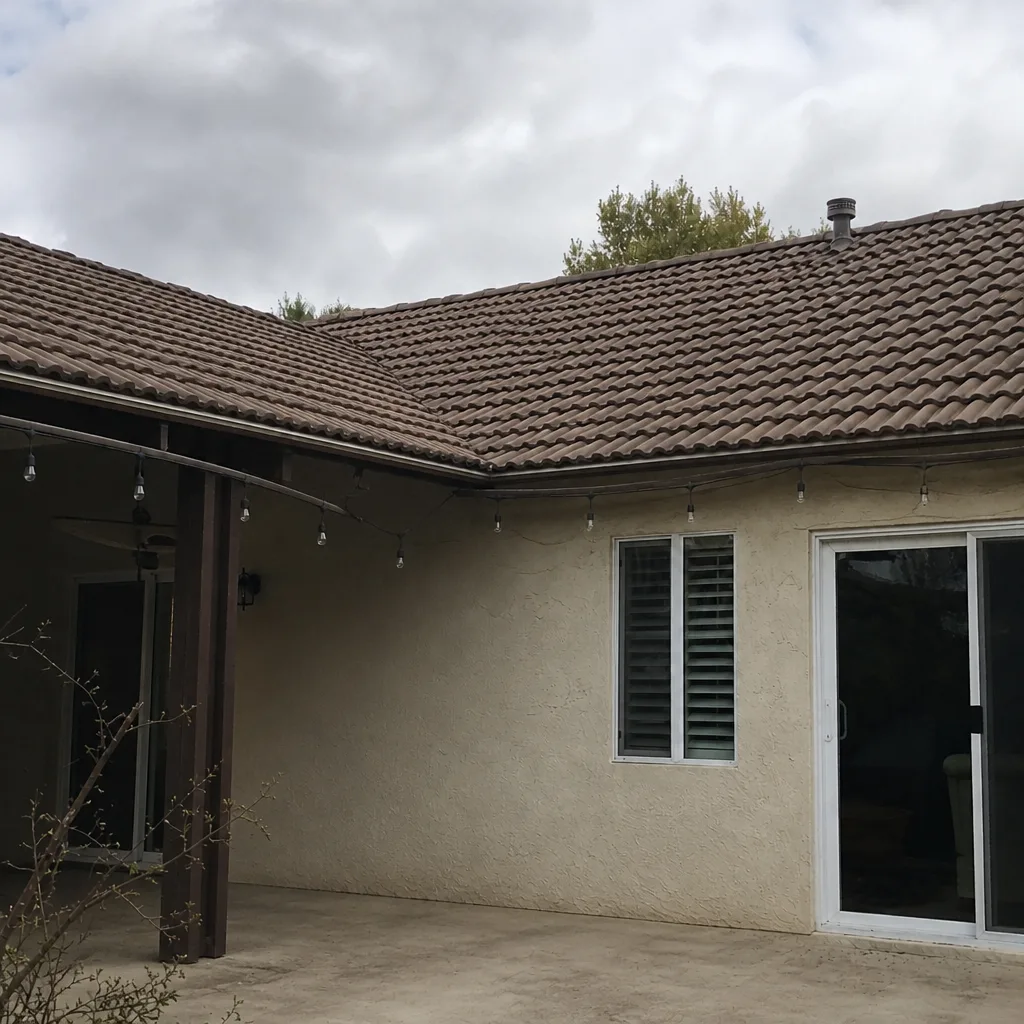 After
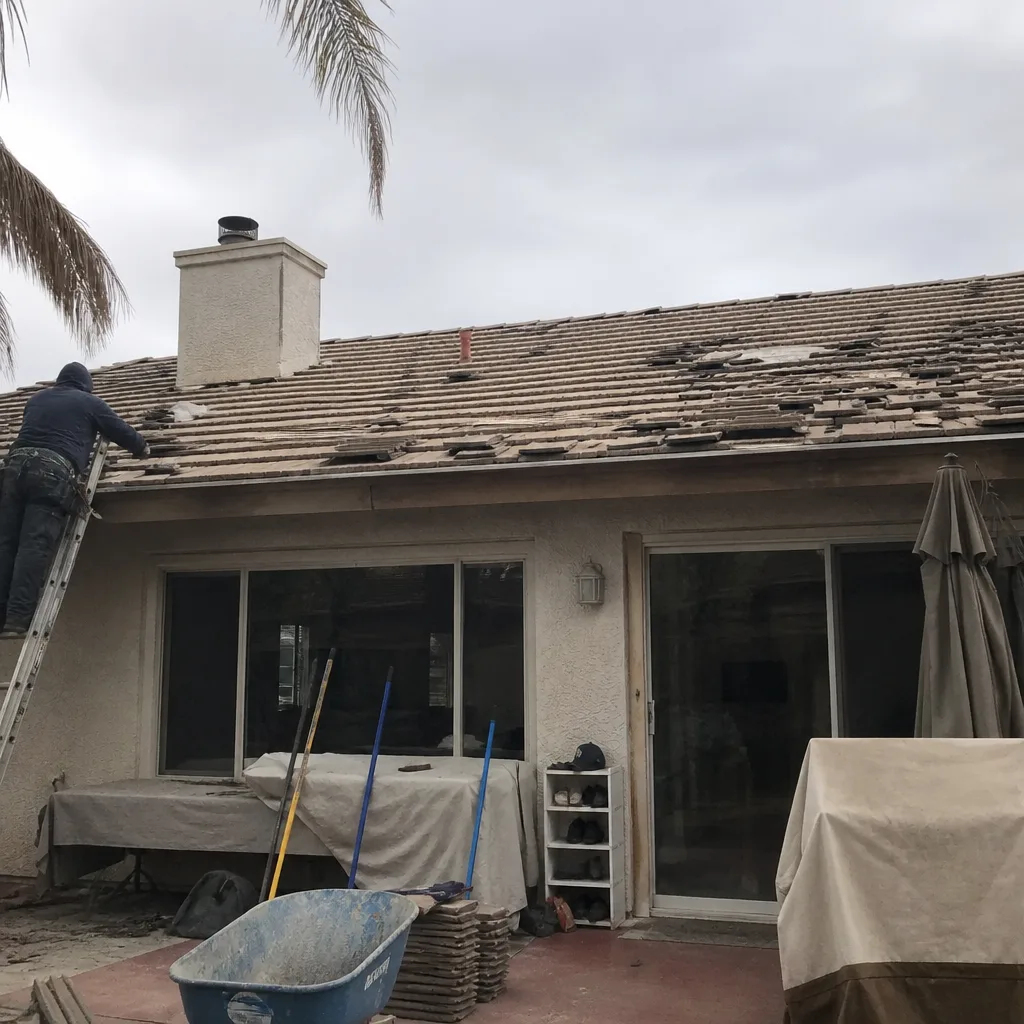 Before
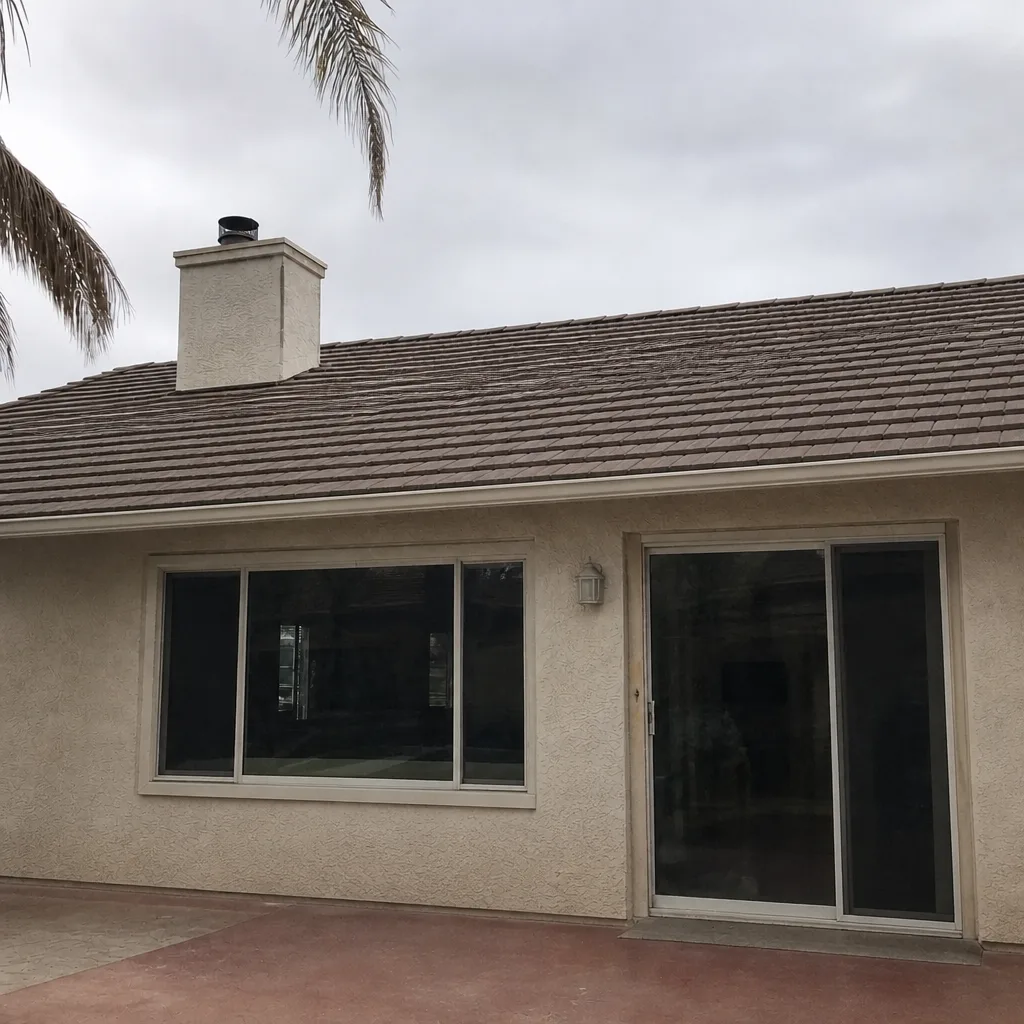 After
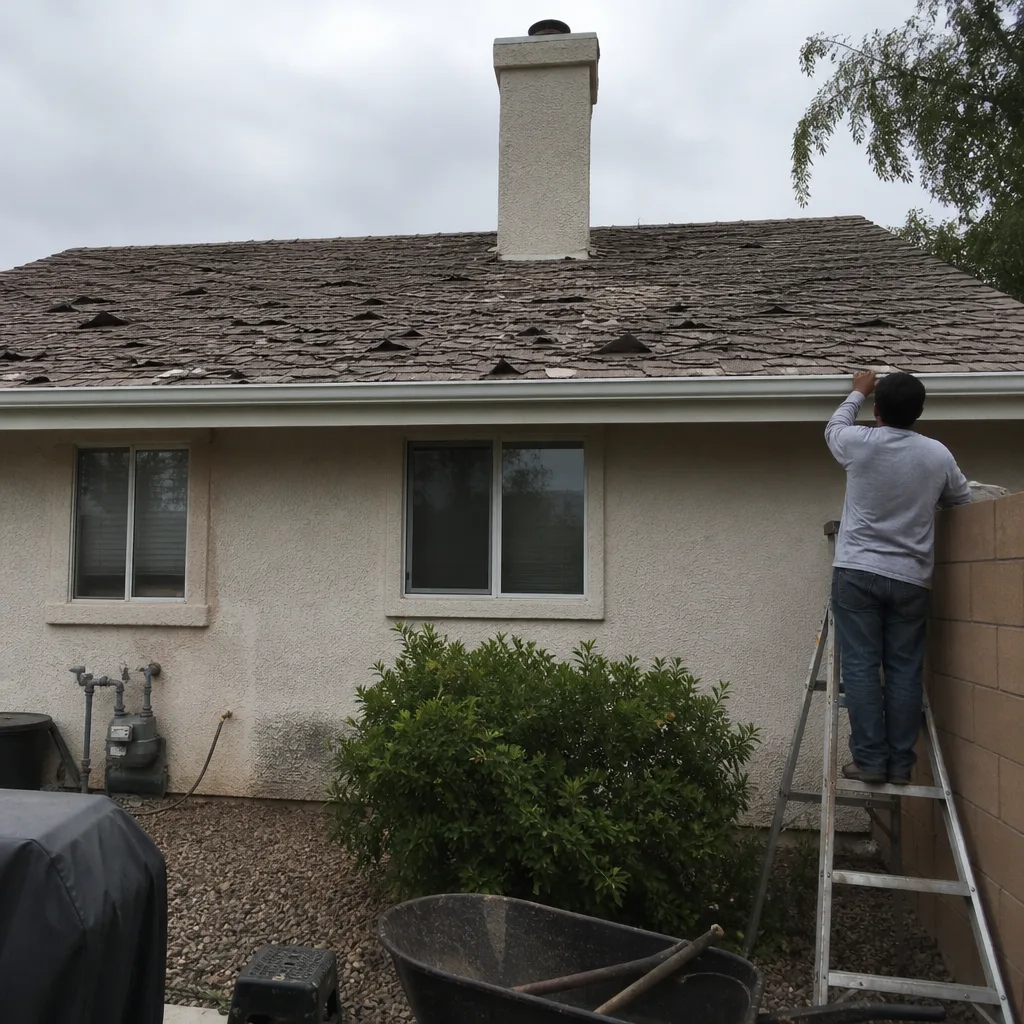 Before
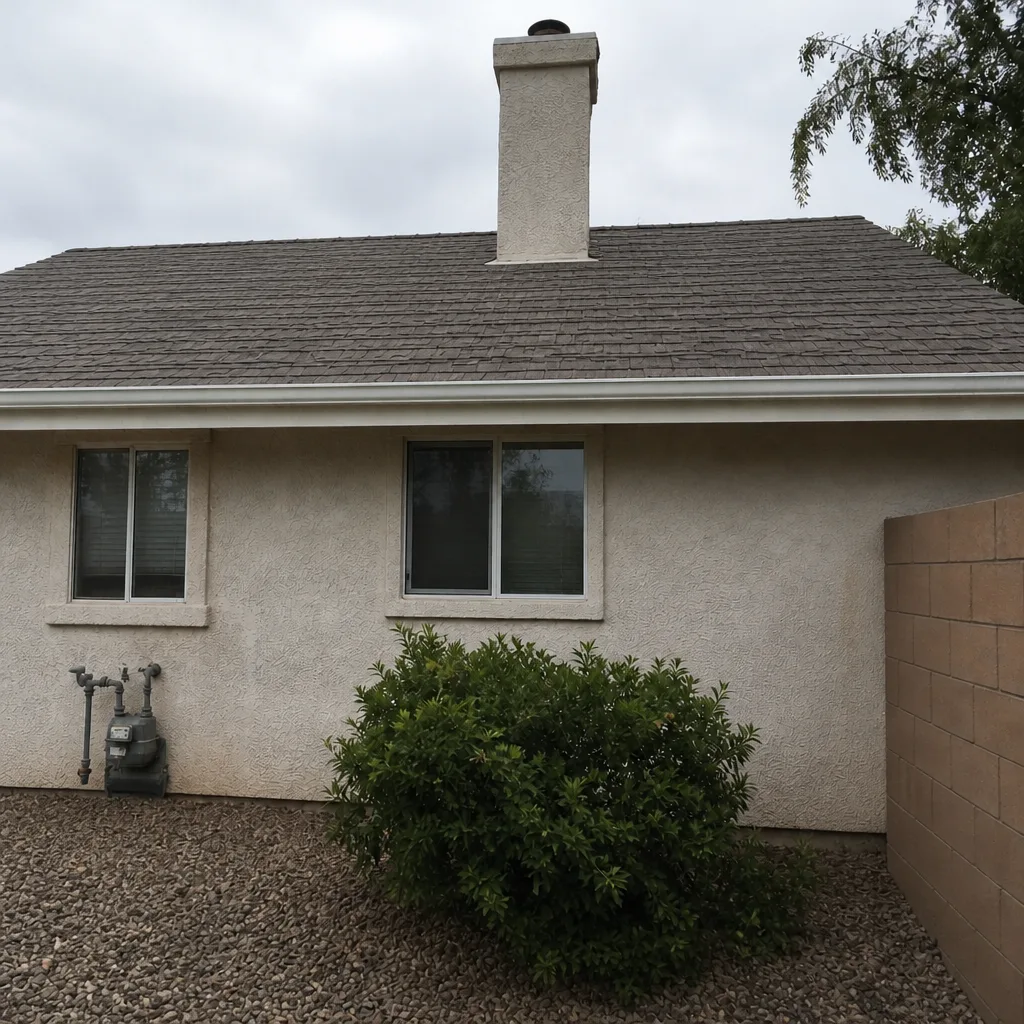 After
When to Call a Professional
Metal roofing is heavy, sharp, and installed at height, and the panel and clip work that makes a Summerlin roof last is genuinely skilled labor. Call a professional if your roof is low-slope and ponding, if you see oil-canning or lifted seams on an existing metal roof, if a panel has pulled loose at the eave, or if your HOA has flagged your roof color. A failed seam or a fastener backing out is a small repair caught early and a big one after a windstorm. And if any bidder wants to sell you panels before the HOA signs off, walk away. Shepherd & Sons Roofing Summerlin offers free estimates in Summerlin. Call (844) 951-4545 and a live person will pick up, day or night.
Frequently Asked Questions
Standing seam with concealed floating clips is the best choice for a low-slope Summerlin roof, because it sheds water on shallow pitches and handles thermal movement without oil-canning. Exposed-fastener panels are a budget option but the screws become leak points as the metal expands and contracts in the heat. Ask any bidder how they handle movement on a low-slope section before you sign.
Most Summerlin HOA villages approve metal roofing in earth tones, muted charcoal, bronze, or a stone-coated steel that reads as tile from the street. Bright silver, mill finish, and high-gloss colors get rejected. Submit color samples and a product spec sheet for written approval before you buy any panels. A local roofer knows which villages are strict, so lean on that.
No. Metal over solid decking, underlayment, and attic insulation is about as quiet as asphalt in rain. The loud “tin roof” reputation comes from exposed metal on open framing, which is nothing like a home roof. And Summerlin gets very little rain anyway, so noise isn’t the issue some guides make it out to be.
A metal roof deck in Summerlin can reach 150°F to 160°F on a July afternoon, which is why panel length and clip strategy matter so much here. The good news is a properly installed metal roof reflects heat and can lower attic temperatures compared with a dark asphalt roof. The install has to account for the heat swing, and that’s what separates a 4-year roof from a 40-year one.
Metal roofing in Summerlin costs more up front than asphalt or tile, and the price depends on roof size, pitch, profile, and HOA-required finishes. Standing seam runs higher than stone-coated steel. The honest way to price it is a written line-item bid after someone looks at your actual roof, not a phone estimate. Call (844) 951-4545 for a free estimate, and we’ll show you the deck photos before we talk money.
A correctly installed standing seam roof should last 40 to 50 years in Summerlin’s climate. Stone-coated steel typically runs 30 to 40. The key is that the panel matches the roof pitch, the underlayment is rated for desert heat, and the clips let the metal move. Get the install wrong and you’ll be back on the roof in a decade.
The Bottom Line
Metal roofing can be the best roof on a Summerlin home, or a costly mistake, and the difference isn’t the brand on the panel. It’s whether the profile fits your roof geometry, whether the clip and panel-length strategy accounts for 160°F summer decks and 120-degree annual swings, and whether the finish clears your HOA in writing before you buy. Get those three right and a metal roof can outlast asphalt twice over and win on 25-year cost. Get them wrong and you’ll be pulling panels. If you’d rather not guess, get a straight answer from someone local. Call Shepherd & Sons Roofing Summerlin at (844) 951-4545 for a free estimate, and a real person will answer.
Written by the team at Shepherd & Sons Roofing Summerlin.