
Last updated November 18, 2026
 Metal roofing
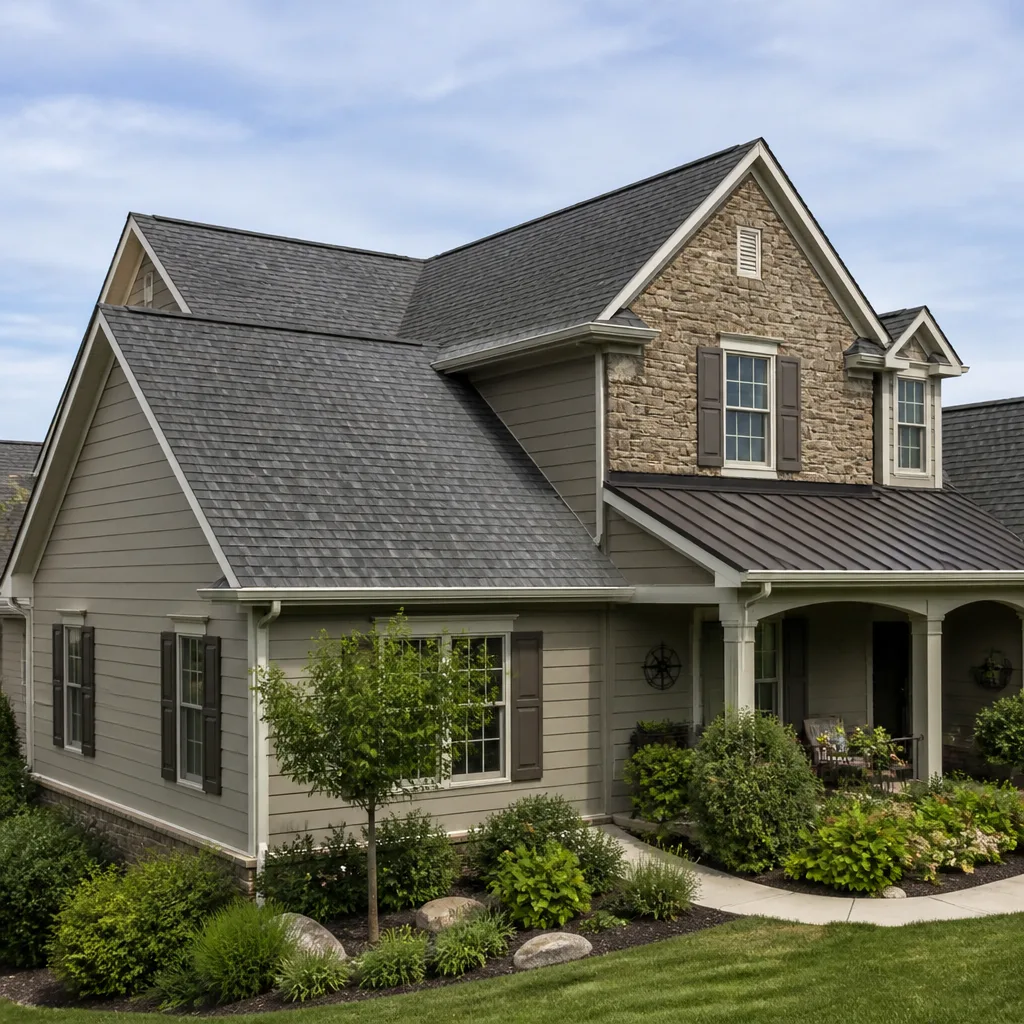
 Architectural shingles
 Tile roofing
 GAF
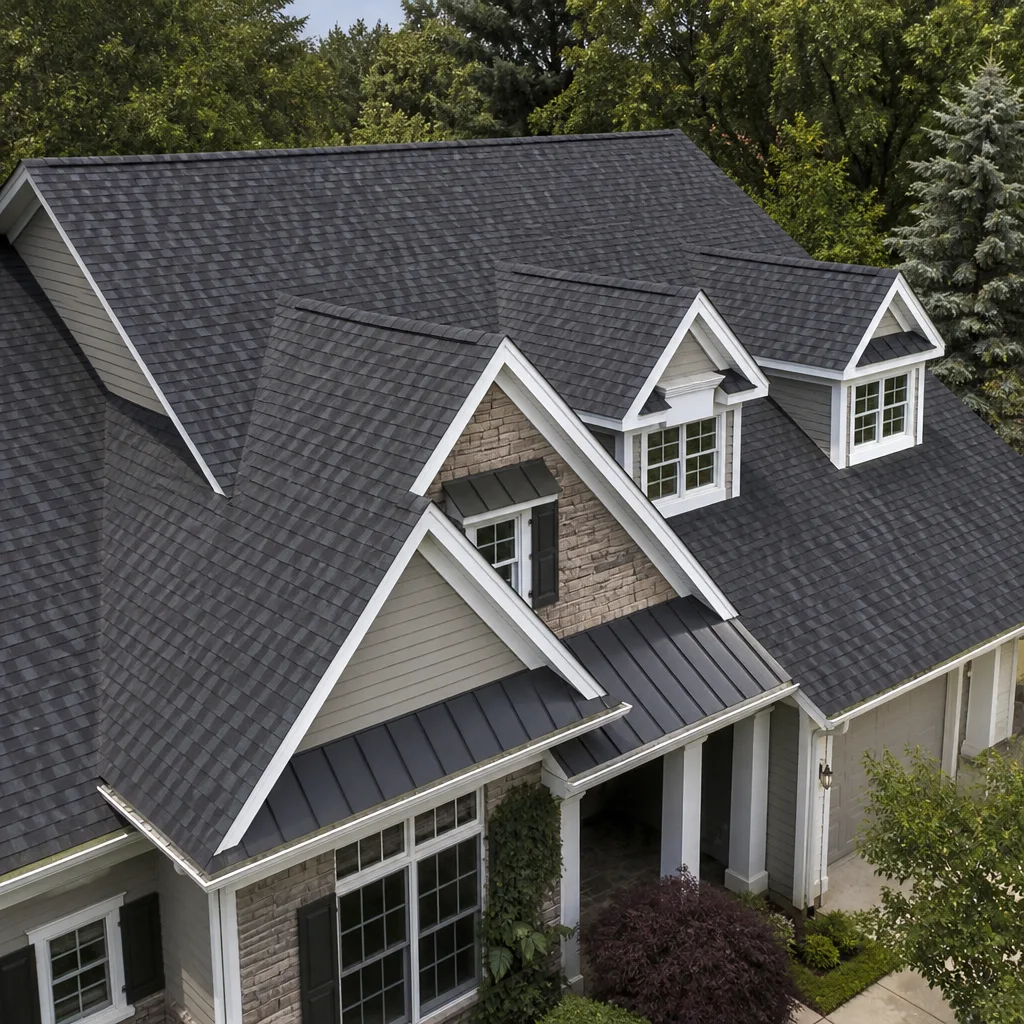 Owens Corning
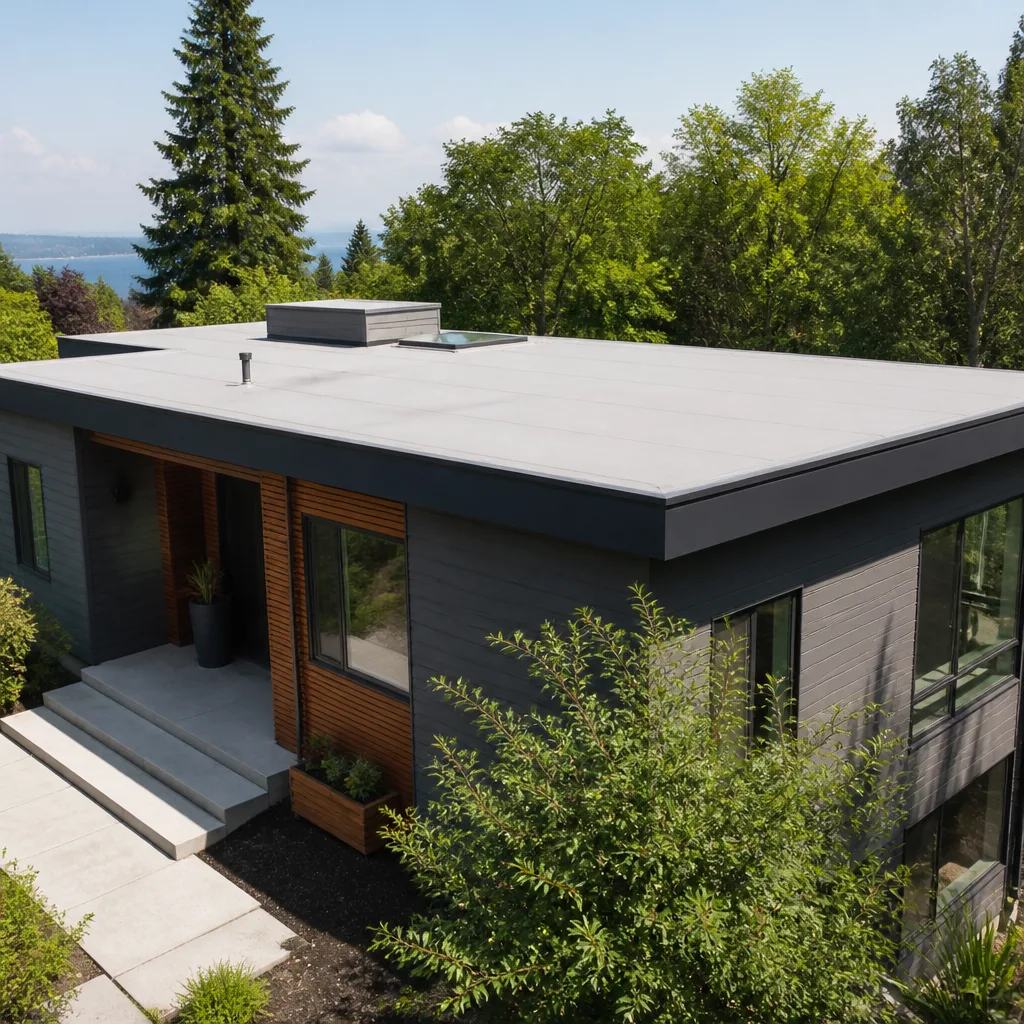 Flat & low-slope
Free roof inspection with deck photos before we talk money - GAF and Owens Corning certified installation
The Complete Guide to Roofing in Summerlin
Most roofing guides written for “Las Vegas” don’t mention that Summerlin sits roughly 600 feet higher than the Strip, catches measurably more wind coming off the Spring Mountains, and answers to HOA architectural committees that can make you tear off a brand-new roof that never got pre-approved. That’s the gap this guide fills. Summerlin isn’t a suburb with a Las Vegas zip code bolted on; it’s its own climate, its own design-review environment, and its own set of rules. Below you’ll find how the elevation and west-facing lots change what your roof endures, the HOA step that comes before the city permit, what a legitimate concrete tile re-roof actually looks like, the hail-season contractor cycle to watch for, and honest timelines by square footage.
Quick Answer
Roofing in Summerlin has to account for three things a generic Nevada guide skips: higher elevation and UV load than central Las Vegas, concrete tile that dominates the streetscapes and needs proper underlayment and flashing rather than a surface patch, and an HOA architectural approval that must happen before the city permit. A full tile re-roof on a typical Summerlin home usually runs several days to a couple of weeks depending on square count and pitch, not the “one to three days” number you’ll hear on the phone. Get your HOA approval and a written, line-item estimate before anyone touches your roof.
Styles & brands we work with
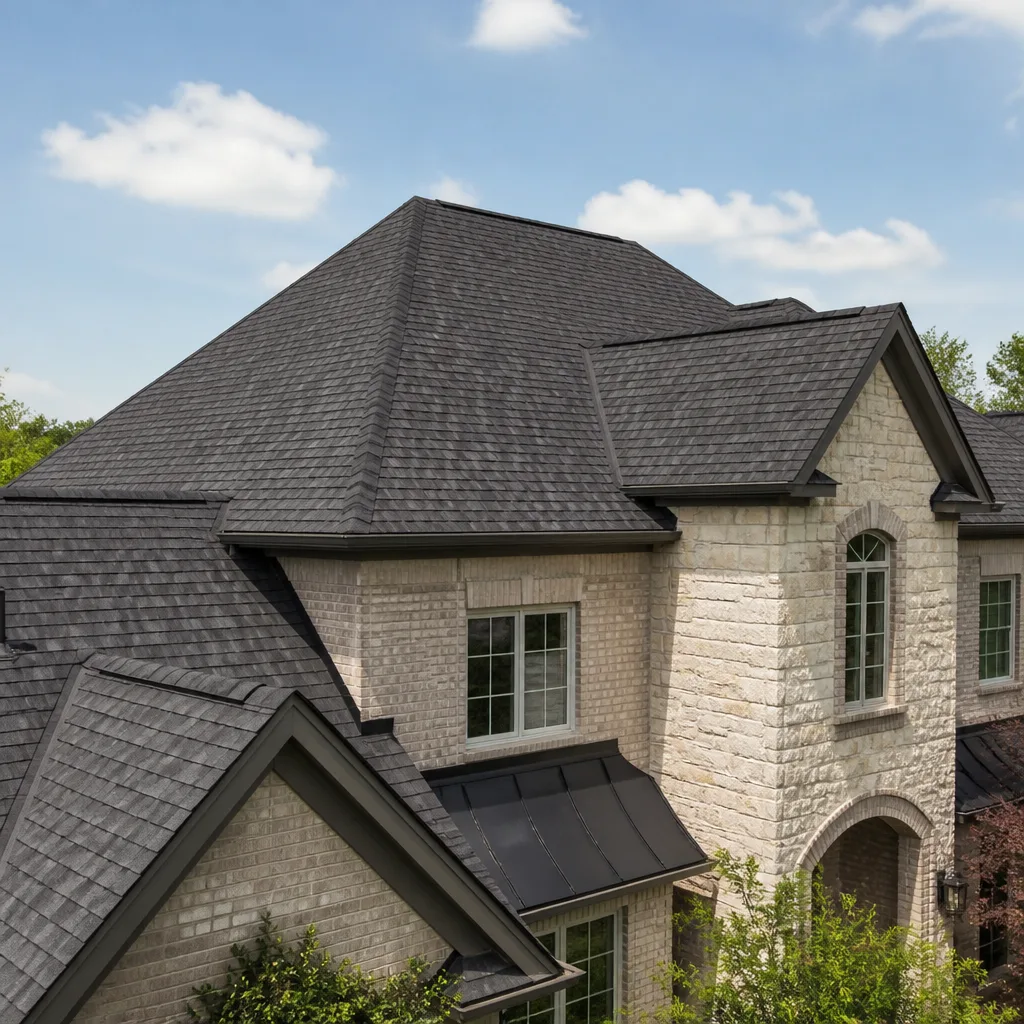
- Architectural shingles
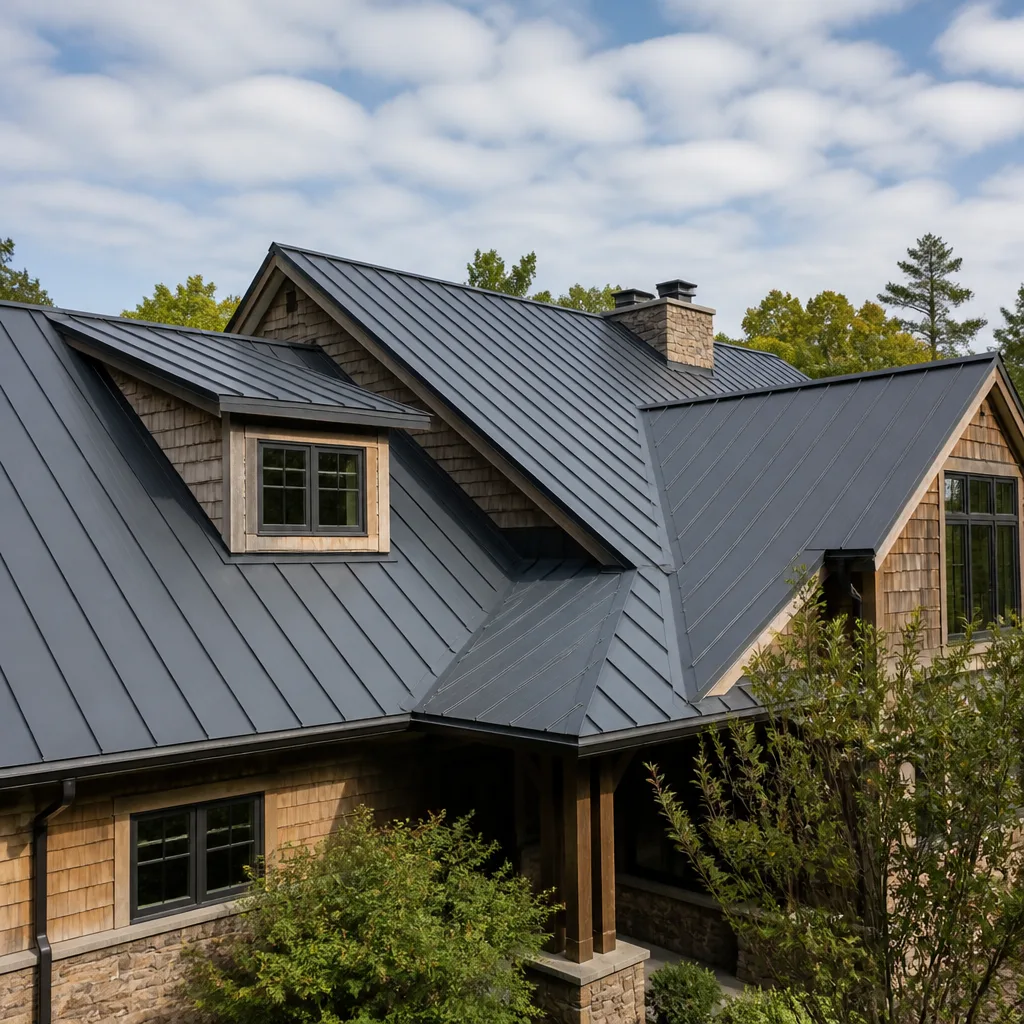
- Metal roofing
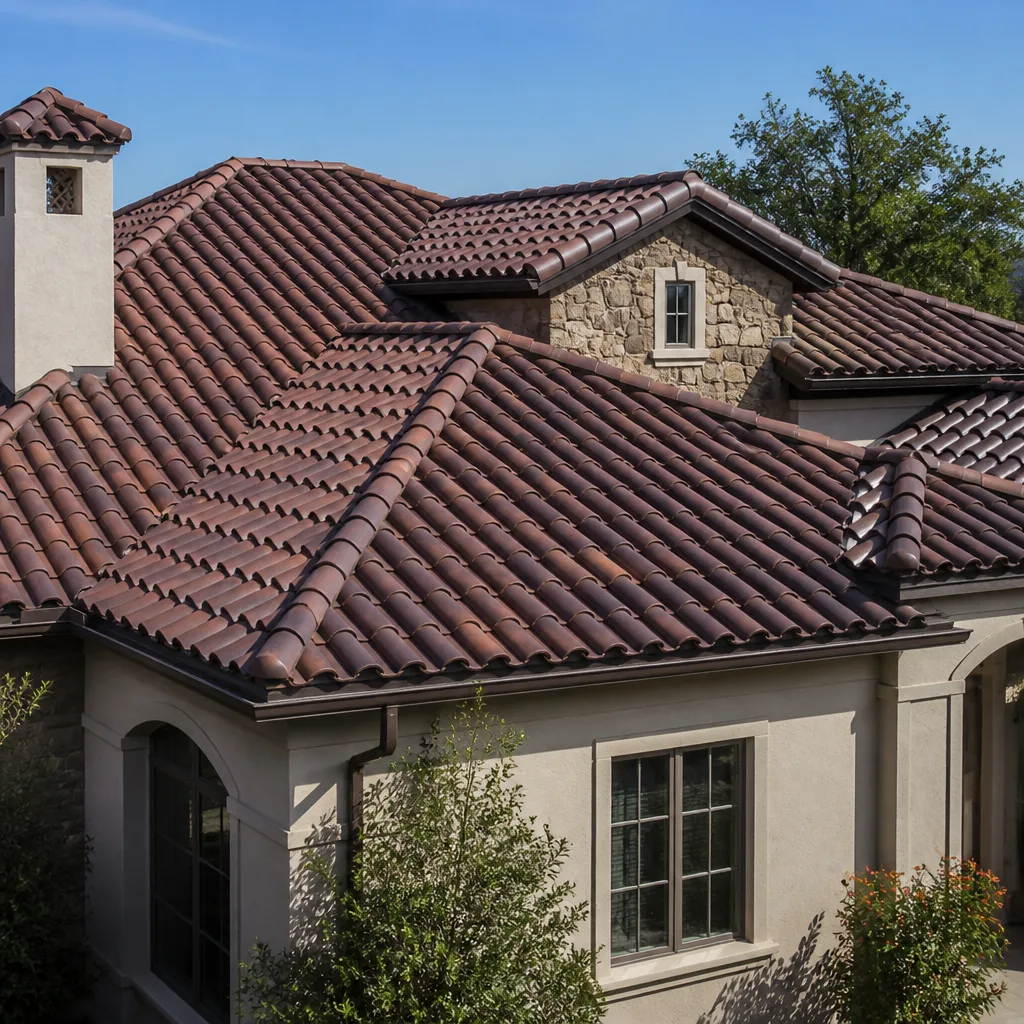
- Tile roofing
- GAF
- Owens Corning
- Flat & low-slope
Table of Contents
- Why Summerlin’s Climate Is Harder on Roofs Than Las Vegas
- The HOA Approval That Comes Before the Permit
- Why Concrete Tile Dominates Summerlin Streetscapes
- The Storm-Chaser Cycle and the License Check That Filters Them
- Real Project Timelines for Summerlin Homes
- Matching Materials to Summerlin Conditions
- How to Inspect Your Own Roof Between Professionals
Why Summerlin’s Climate Is Harder on Roofs Than Las Vegas
Summerlin sits higher than the valley floor, and that elevation matters more than most homeowners realize. The air is a touch cooler on average, but the sun is more direct, and the wind that funnels off the mountains hits west- and southwest-facing roof planes harder. A roof that faces the afternoon sun in Summerlin takes a UV beating that a shaded or north-facing plane never sees. That’s why two houses on the same street, built the same year with the same tile, can be in completely different condition.
The bigger story is thermal cycling. Summerlin routinely pushes past 105°F in July and drops into the 40s on winter nights. That daily expansion and contraction works on every seam, fastener, and sealant on the roof. Underlayment that’s cheap or thin will crack and lose its water-shedding ability years before the tile above it shows a problem. In our experience, the underlayment is what fails first in Summerlin, not the tile, and you can’t see it until water is already in the attic.
What that means for your roof:
- Underlayment choice matters more than tile choice. A premium synthetic underlayment handles thermal cycling far better than organic felt, which dries out and tears over time in this heat.
- West-facing planes age fastest. If your home’s main slope faces west or southwest, expect that side to show wear first and budget for it.
- Attic ventilation is not optional. A hot, poorly vented attic cooks the underside of the deck and shortens the life of everything above it.
- Flashing at wall intersections takes the most stress. That’s where thermal movement opens gaps first.
If you’re seeing interior stains or missing tile after a wind event, that’s usually a job for roof repair in Summerlin rather than a full replacement. A good roofer will tell you which one you actually need.
The HOA Approval That Comes Before the Permit
Here’s the step that catches out-of-town contractors every single time: in most Summerlin villages, your HOA architectural review committee has to approve the roofing material, color, and profile before the city will issue a permit. Skip that step and you can end up with a finished roof the HOA orders you to remove. That’s a second tear-off and a second dumpster, paid by you, on a roof that was brand new a month earlier.
Every Summerlin village runs its own design guidelines, and they’re not identical. A tile profile that’s fine in one village may be off the approved list two streets over. Colors get matched to the neighborhood palette. Some villages are strict about visible underlayment color during construction; others care about how the ridge caps look from the street.
Here’s the order that keeps you out of trouble:
- Pull your village’s current architectural guidelines before you pick a material or a color.
- Submit the roofing application to your HOA with the product spec sheet and color sample. Approval usually takes a couple of weeks, sometimes longer.
- Get the written HOA approval in hand. Don’t let anyone start based on a verbal “you’re fine.”
- Apply for the city permit with the HOA approval attached.
- Schedule the tear-off only after both are approved.
Ask any contractor you’re considering whether they’ve worked inside your specific village’s approval process. A roofer who’s never dealt with your HOA committee is learning on your dime. When it’s time for a full replacement, our guide to roof replacement and installation in Summerlin walks through the approval and permit sequence in more detail.
Why Concrete Tile Dominates Summerlin Streetscapes
Drive through just about any Summerlin neighborhood and you’ll see concrete tile: barrel, flat, or a low-profile mix. The Mediterranean and desert-contemporary designs that shaped the community lean on tile, and the HOAs tend to keep it that way. Tile also happens to perform well in this climate. It sheds the intense sun, it’s fire-resistant, and a well-installed tile roof can last decades.
But tile is where a lot of “cheap” roofing goes wrong. The tile itself is durable; the system underneath is what fails. A legitimate tile re-roof means lifting or removing the old tile, inspecting and repairing the deck, laying new underlayment across the whole roof, replacing any cracked or broken tile, and re-flashing the penetrations. A surface patch, by contrast, might glue down loose tile and call it done. It looks fine for a season. It fails in year three when the old underlayment underneath gives out and the tile is still sitting there looking innocent.
What separates a real tile re-roof from a patch:
- Full underlayment replacement across the entire roof, not just the visible problem area.
- Deck inspection for soft spots, dry rot, and failed fasteners before anything goes back down.
- New flashing at valleys, walls, skylights, and pipe boots rather than reused, bent-up old metal.
- Proper tile attachment for the wind zone, so a monsoon gust doesn’t peel the field.
When it’s done right, the tile you see is the last thing that matters. Everything that keeps water out is under it.
The Storm-Chaser Cycle and the License Check That Filters Them
After a good monsoon hailstorm rolls through the valley, the out-of-state trucks show up within days. They knock doors, hand out flyers, and quote a price that sounds great on the driveway. Then they’re gone, and the number on the contract turns out to be the deposit, not the job. We’ve watched this cycle repeat across the valley for years. It’s the single most common way Summerlin homeowners get burned.
The good news is that a five-minute check filters most of them out. Here’s what to ask before you sign anything:
- A physical local address. Not a PO box, not a motel, not “we’re staying nearby.” A real office you could drive past.
- A license number you can look up yourself. Write it down and verify it with the state before anyone gets on your roof. A legitimate roofer hands it over without blinking.
- Proof of insurance and bonding for the crew that will actually be on your roof.
- A written, line-item estimate that separates materials, labor, tear-off, and disposal. If the number only exists on the back of a business card, walk away.
- Ask where they were last monsoon season. A local roofer can tell you which neighborhoods they worked in. A storm chaser can’t.
The name on the truck should match the name on the license. If it doesn’t, that’s your answer.
Real Project Timelines for Summerlin Homes
“One to three days” is the answer every contractor gives on the phone, and it’s rarely true for a full tile re-roof in Summerlin. Tile is heavier, slower to handle, and needs careful removal and resetting, especially on steeper pitches. Here’s a realistic picture based on the homes we see across the community. These are working estimates for planning, not quotes; your actual timeline depends on pitch, access, weather, and how much deck repair turns up once the old roof is off.
- Small home, roughly 1,500 – 2,000 sq ft, single-story, low pitch: typically 3 to 5 working days for a full tile re-roof once materials are on site.
- Mid-size home, roughly 2,500 – 3,000 sq ft: usually 5 to 8 working days.
- Larger two-story home, 3,500 sq ft and up, complex roofline: often 8 to 12 working days, sometimes longer with valleys and multiple roof planes.
- Asphalt shingle re-roof, comparable size: generally faster than tile, often 2 to 4 working days, because the material is lighter and installs quicker.
- Metal roofing: varies widely by panel type and profile; plan for a longer install window than shingle and a different prep process.
Add lead time on top of install time. HOA approval can take a couple of weeks, permits take time, and material ordering isn’t instant. Plan the whole project in weeks, not days. If you’re considering a metal system, our page on metal roofing in Summerlin covers the timeline and product options in more depth.
Matching Materials to Summerlin Conditions
Summerlin roofs deal with intense UV, big daytime swings, wind off the mountains, and the occasional hailstorm. The material you choose should be picked for those conditions, not just for looks. Here’s how the common options stack up for this specific climate.
- Concrete tile: The Summerlin default and HOA-friendly in most villages. Excellent sun and fire performance, long service life, and the underlayment underneath is what you’re really replacing when the time comes.
- Asphalt shingles: Solid performers when you choose a heavier architectural shingle rated for high wind. Modern products from Owens Corning, IKO, and Atlas handle this heat better than the builder-grade shingles of twenty years ago. The nailing pattern and installation quality matter more than the wrapper.
- Metal: Reflects heat well, sheds wind-driven rain, and lasts a long time. Some Summerlin villages have specific rules about metal profiles and colors, so check the guidelines before you commit.
- Specialty and synthetic products: Can work well but always check HOA approval and confirm the product’s wind and UV ratings for this climate.
No matter what you choose, ask for the manufacturer spec sheet and read the wind rating, not just the warranty language. The nailing pattern and install detail earn the rating, not the brand name on the box.
How to Inspect Your Own Roof Between Professionals
You don’t need to get on the roof to catch early problems, and you shouldn’t if you’re not comfortable with heights or the pitch is steep. There’s plenty you can check safely from the ground and from inside the house. Doing a simple seasonal walkaround helps you spot small issues before they become five-figure repairs.
- Look at the roof from the street with binoculars. Check for cracked, slipped, or missing tile, and any wavy or sagging lines.
- Check the attic after a rain. Look for water stains, daylight through the deck, and damp insulation. A dry ceiling can still hide a wet attic.
- Inspect the flashing around chimneys, vents, and skylights from the ground. Lifted or rusted metal is a common leak point.
- Watch the gutters. Granule buildup from shingles or tile debris after a storm tells you something’s shedding.
- Note any interior ceiling discoloration right away. A small stain after a monsoon is your early warning to get eyes on the roof.
If you spot something, don’t climb up to fix it yourself. Tile is slick, the pitch is unforgiving, and a fall off a Summerlin roof is a serious injury. Call a professional who has the right footing and the right insurance.
Common Mistakes to Avoid
- Starting work before HOA approval. In Summerlin, a roof installed without the village’s architectural sign-off can be ordered removed. That’s a second tear-off you pay for.
- Accepting a phone quote as the final price. Storm chasers quote low on the phone and change the number at the door. Insist on a written, line-item estimate before anything starts.
- Skipping the underlayment to save money on a tile re-roof. The tile lasts; the underlayment is what protects your home. Reusing old underlayment under new tile is a patch, not a re-roof.
- Hiring based on a door-knock the day after a hailstorm. The trucks that appear after a monsoon are often gone before the first rain of the next season.
- Ignoring a small attic stain. A few inches of ceiling discoloration is usually a small, cheap fix. Left alone through a couple of monsoon cycles, it becomes deck repair.
- Believing the “one to three days” timeline for a tile re-roof. Plan for weeks including approval and permits, and be suspicious of anyone who promises otherwise.
- Not checking the license number. Write it down and verify it yourself. It’s a five-minute step that filters out most of the bad actors.
See the difference
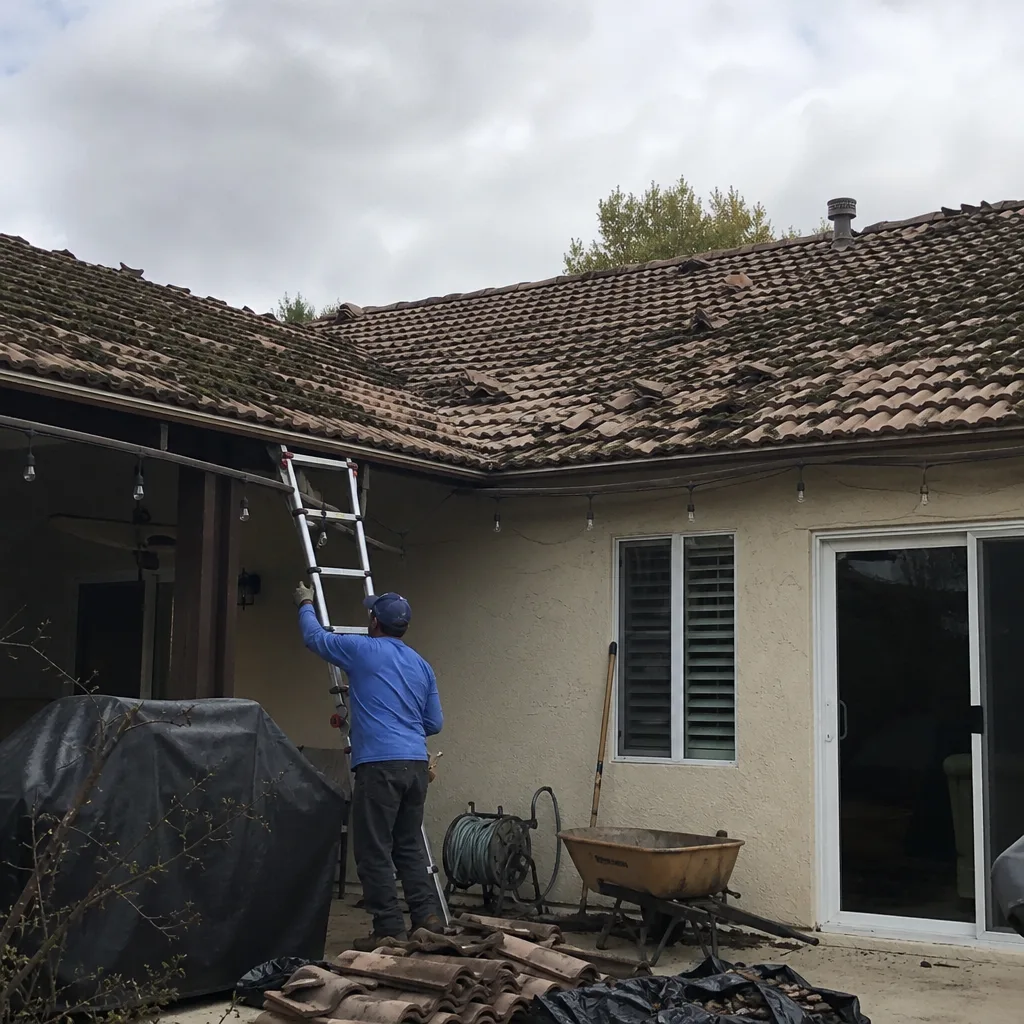 Before
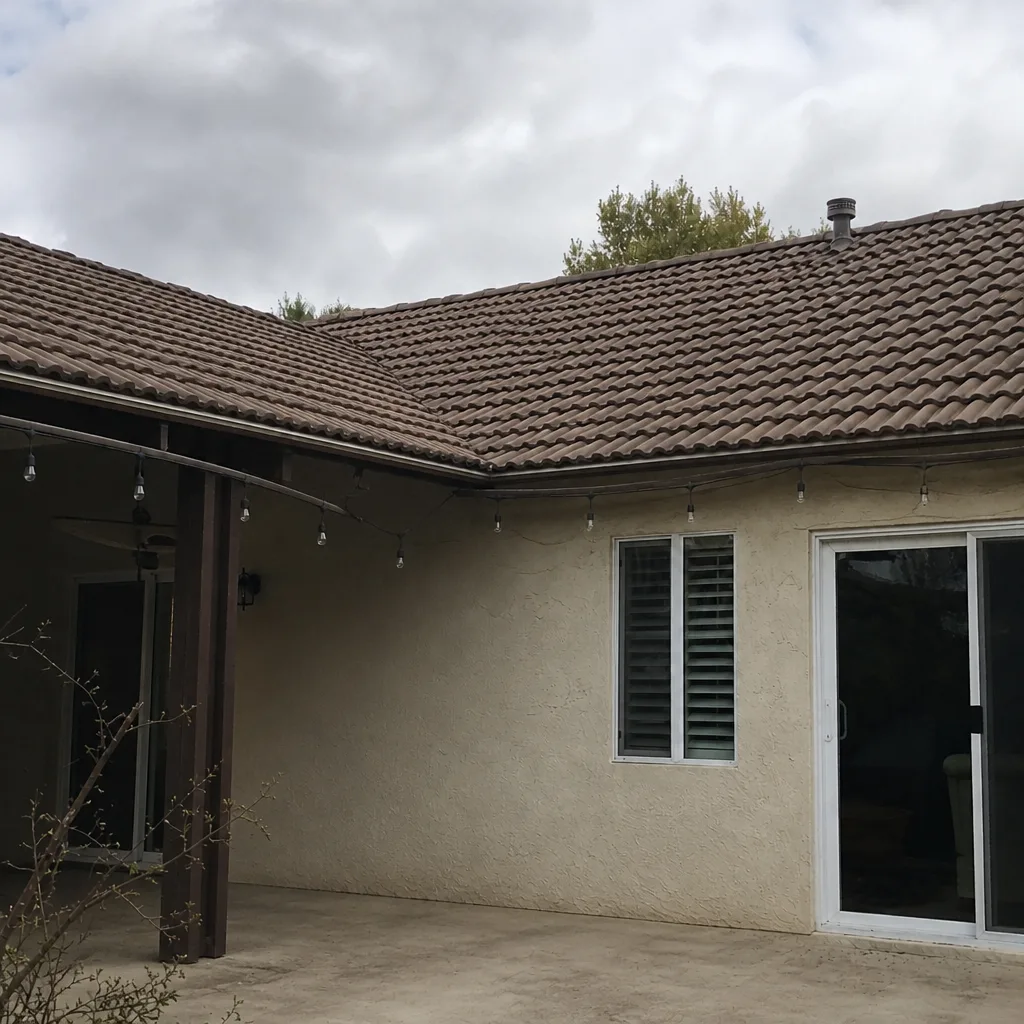 After
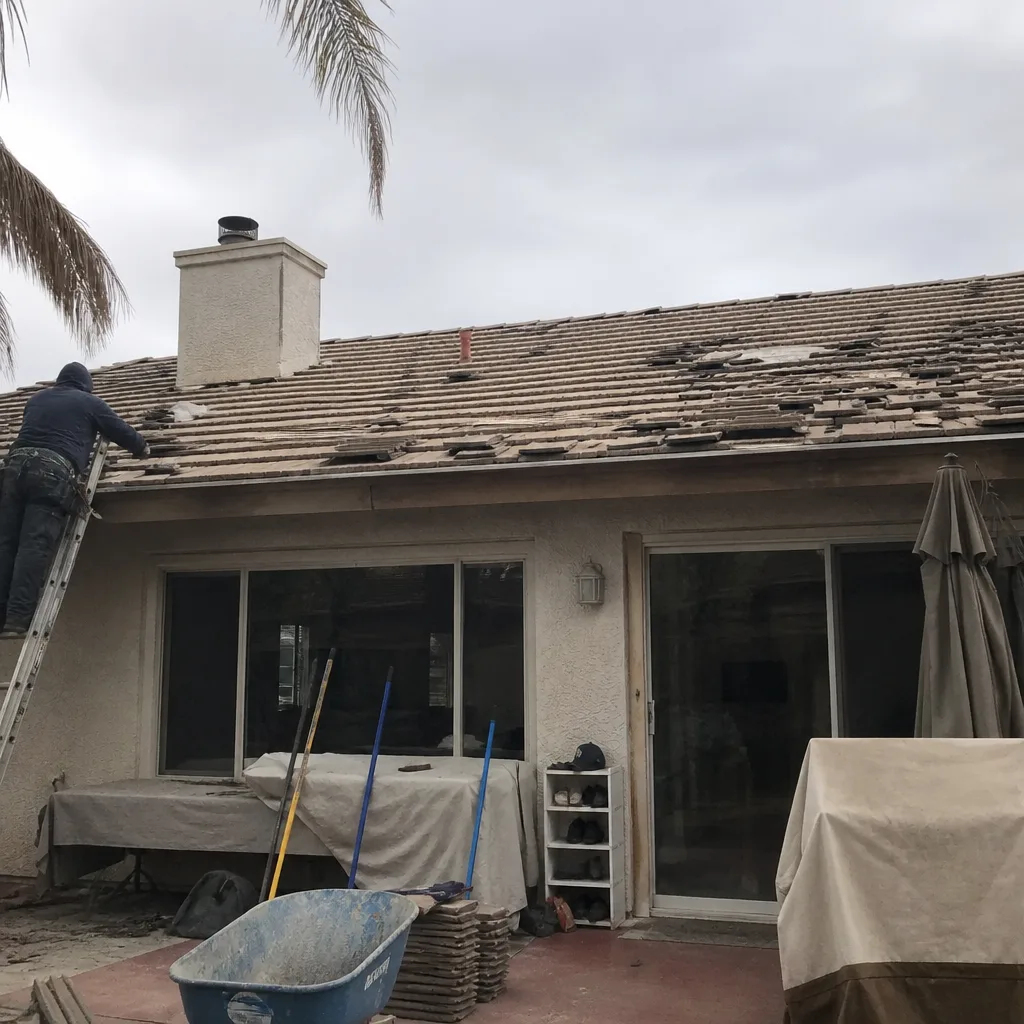 Before
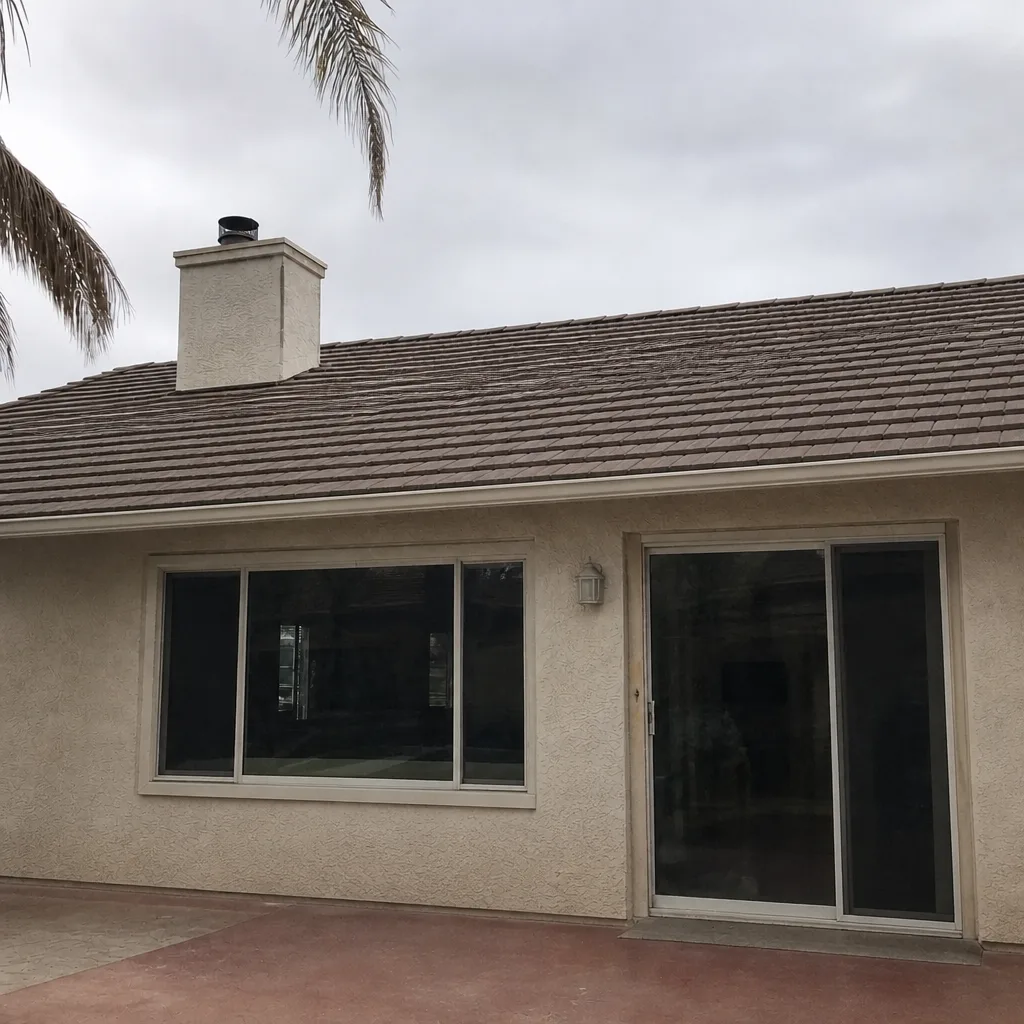 After
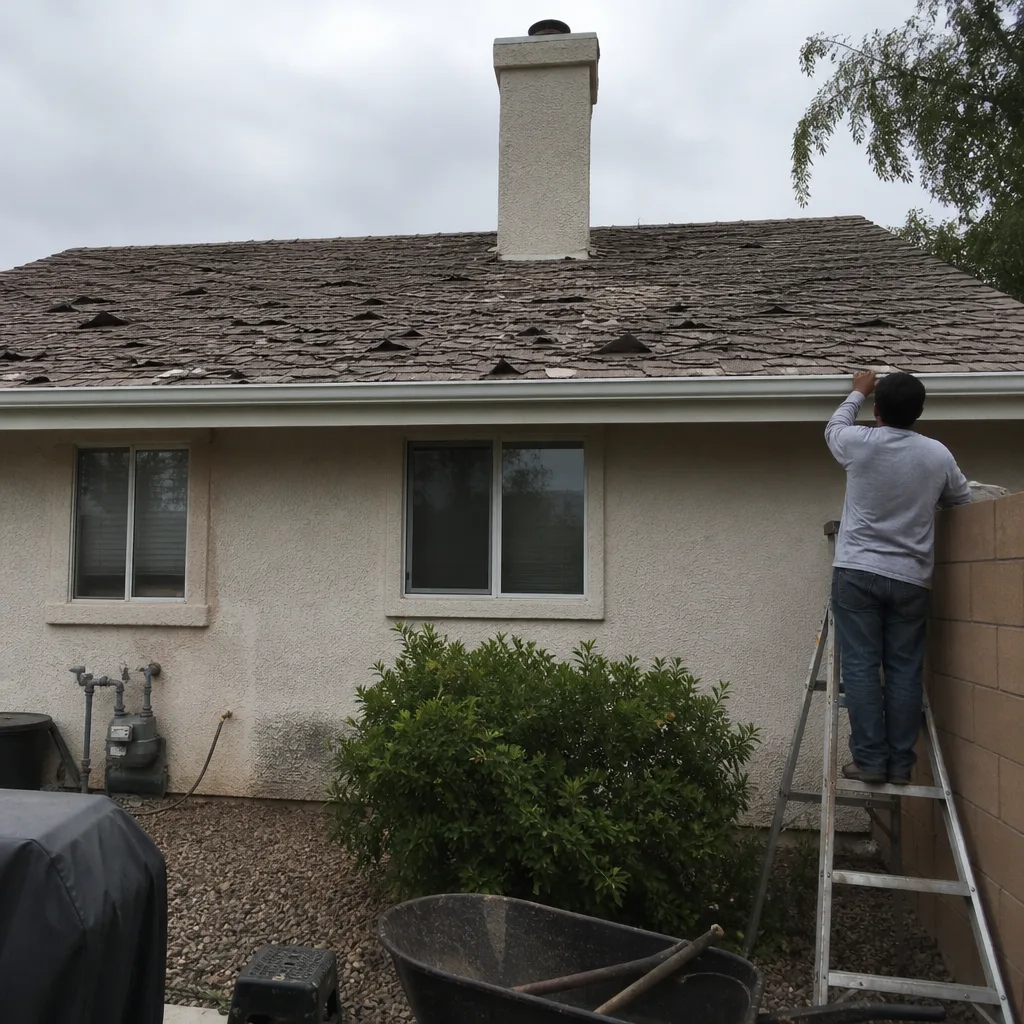 Before
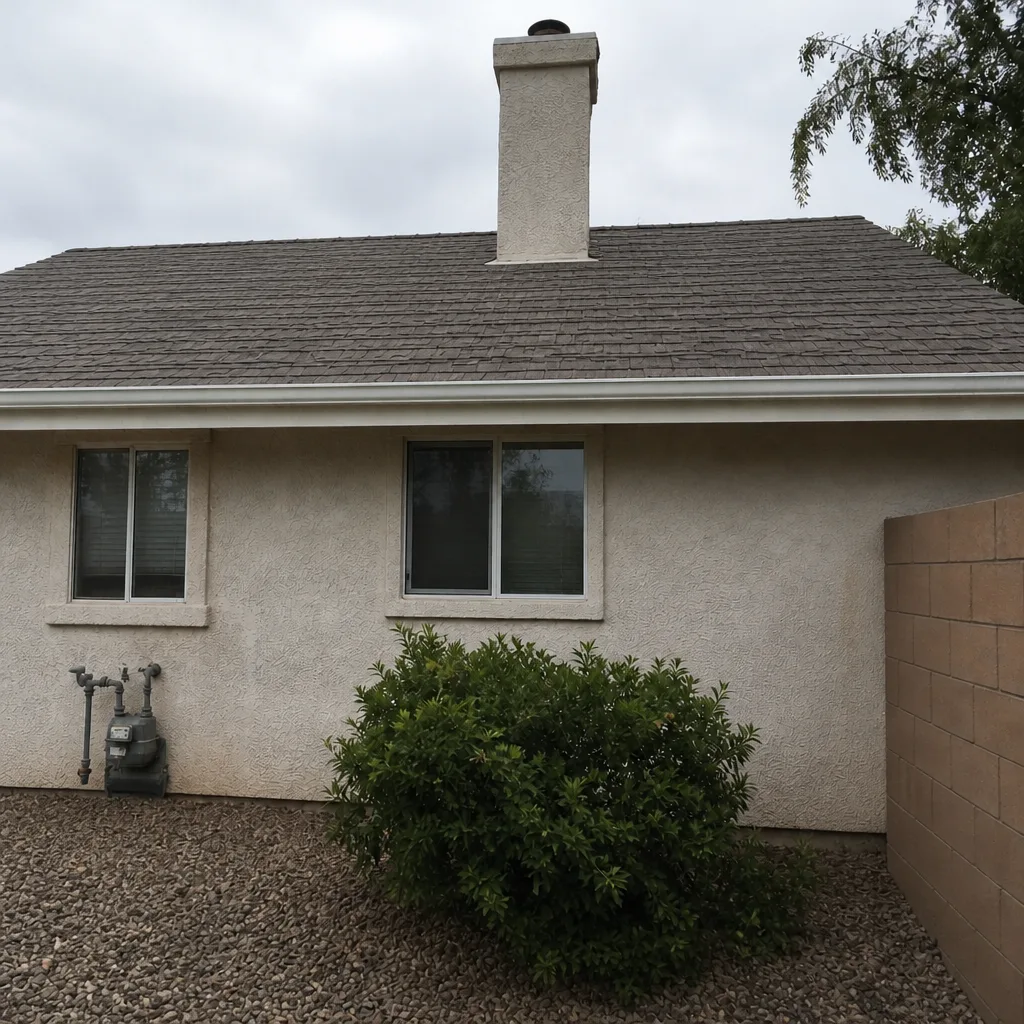 After
When to Call a Professional
Some roof issues are genuinely do-it-yourself; most aren’t. Call a professional if you see water stains on the ceiling or walls after a rain, if tile is cracked, slipped, or missing after a wind event, if you notice granules piling up in the gutters, or if you’re buying a Summerlin home and want an independent roof assessment before closing. Any time you’re dealing with a steep pitch, a two-story roofline, or a roof that hasn’t been inspected in years, a trained eye is worth the call. High-tension flashing repairs, attic moisture problems, and hail damage all deserve a professional look because a bad fix costs more than the original repair. Shepherd & Sons Roofing Summerlin offers free estimates in Summerlin, and we’ll show you the deck photos before we talk money. Call (844) 951-4545. If you’re starting from scratch, our Shepherd & Sons Roofing Summerlin home page is the easiest place to get oriented.
Frequently Asked Questions
A full tile re-roof on a typical Summerlin home usually falls in the mid-five-figure range, while an asphalt shingle re-roof runs lower, often in the high-four-figure range. The exact number depends on square count, pitch, how much deck repair turns up, and whether the underlayment is replaced throughout. Call (844) 951-4545 for an exact written, line-item quote; estimates are free and there’s no trip charge inside our own county.
Yes, in most Summerlin villages the HOA architectural review committee must approve your roofing material, color, and profile before the city will issue a permit. Skipping that step can result in a second tear-off ordered by the HOA. Get the approval in writing first, then apply for the city permit.
A full tile re-roof on a small single-story home often takes 3 to 5 working days once materials are on site, mid-size homes usually take 5 to 8 days, and larger two-story homes with complex rooflines often take 8 to 12 working days or more. Add a couple of weeks for HOA approval and permits on top of the install. Call (844) 951-4545 for a realistic timeline based on your specific roof.
Some products allow a tile-over-tile approach, but in Summerlin’s climate we generally don’t recommend it, because the old underlayment is what usually fails first. If you leave it in place, you’re building a new roof on a foundation that’s already aging. A proper re-roof replaces the underlayment so the whole system starts fresh.
Concrete tile is the natural fit: it handles the intense UV, sheds rain, and matches most Summerlin HOA palettes. Heavier architectural asphalt shingles from Owens Corning, IKO, or Atlas are a strong alternative if you want a lower-cost install. In every case, the quality of the underlayment and the nailing pattern matter more than the brand on the box.
It shouldn’t, if you’re working with a roofer who gives you a written, line-item estimate and stands behind it. The one legitimate surprise is what turns up under the old roof once it’s off, like dry rot or a soft deck, and even that should be documented with photos and discussed before any change order. Call (844) 951-4545 for a no-hassle upfront estimate; estimates are free.
The Bottom Line
Summerlin roofing isn’t Las Vegas roofing with a different label on it. The elevation, the west-facing sun, the winds off the mountains, and the thermal cycling all put a specific kind of stress on your roof, and the HOA overlay adds a step that catches out-of-town crews every hurricane-free summer. Concrete tile is the local standard, and a real tile re-roof replaces the underlayment under it. Do the HOA approval first, check the license and the local address second, and demand a written line-item estimate third. Real timelines run in weeks, not the “one to three days” you’ll hear on the phone. When you’re ready to get a real number on your own roof, we’re glad to be the second opinion. Call (844) 951-4545 for a free estimate in Summerlin.
Written by the team at Shepherd & Sons Roofing Summerlin.