
Last updated November 18, 2026
 Tile roofing
 Architectural shingles
 Metal roofing
 GAF
 Owens Corning
 Flat & low-slope
Free roof inspection with deck photos before we talk money - GAF and Owens Corning certified installation
Tile Roofing Warning Signs Every Homeowner Should Know
If you’re waiting for a cracked tile to tell you something’s wrong with your tile roof, you’re already about 18 months late to the conversation. Here’s the counterintuitive part: the tile itself is almost always the last thing to fail. On the concrete and clay tile roofs across Summerlin, the surface can look completely intact from the street while the underlayment, flashing, and fasteners below it have been quietly giving up for a year and a half. That gap between what your eyes see and what’s actually happening is why tile roofs fail silently. This guide teaches you to read the early signals – the ones that show up six to eighteen months before a ceiling stain ever appears – so a small repair doesn’t turn into a deck replacement.
Quick Answer
The earliest tile roof warning signs are ridge line sag, misaligned tile courses, and white efflorescence streaks on the fascia – all visible from your driveway. Inside the attic, look for rust trails on rafters, daylight at penetration points, and compressed insulation. These signals mean water is getting under the tile long before a leak reaches your ceiling, and they typically appear 6-18 months ahead of visible interior damage.
Styles & brands we work with
- Architectural shingles
- Metal roofing
- Tile roofing
- GAF
- Owens Corning
- Flat & low-slope
Table of Contents
- The Three Warning Signs Visible From Your Driveway
- Attic Warning Signs That Correlate With Tile Roof Failure
- Why Lifted or Slipped Tiles in Summerlin Are a Mortar Problem, Not a Wind Problem
- Spalling: The Granule-Equivalent Signal for Tile Roofs
- How to Date a Problem Using Your Own Photo Timestamps
- Summerlin’s Climate and the Seasonal Failure Calendar
- Repair or Replace: Reading the Warning Signs Together
- What Actually Prevents Tile Roof Failure
The Three Warning Signs Visible From Your Driveway
Most of the trouble on a tile roof announces itself before you climb a ladder. Stand at the end of your driveway on a sunny morning and look up. Three things give it away, and most homeowners wave them off as cosmetic quirks.
- Ridge line sag. The ridge is the peak where two roof planes meet, capped with mortar-set ridge tiles. On a healthy roof that line is straight. If it dips or waves, the ridge tiles have loosened and the mortar bed underneath has cracked – which lets water straight into the most vulnerable seam on the whole roof.
- Misaligned tile courses. Look at the horizontal lines of tile. They should run true. When a course drifts out of alignment or a field tile slides down a few inches, the laps no longer shed water correctly, and the courses below start taking the runoff in the wrong place.
- Efflorescence streaks on the fascia. Those chalky white stains on the fascia board or stucco just under the roofline aren’t paint failure. They’re minerals left behind by water that’s been repeatedly wicking and drying along the edge. On a tile roof, streaks on the fascia are often the first outward sign that the underlayment at the eave has failed.
Any one of these alone is worth a look. Two together means it’s time to have someone get on the roof and check the layers underneath. When a Summerlin homeowner calls us at Roof Repair in Summerlin, this driveway walk is where we start – and it’s where the deck photos in our estimate usually come from.
Attic Warning Signs That Correlate With Tile Roof Failure
The attic is where a tile roof tells the truth. Water that gets past the tile rarely stops at the tile – it hits the underlayment, then the sheathing, then the rafters. Bill’s method has always been to go up there with a flashlight and look for what the roof is doing, not what it looks like from outside. Here’s what correlates with an active problem.
- Rust trails on the rafters. Nail heads and rafter edges that show rust streaks mean moisture has been riding the framing. On a tile roof this usually points to failed underlayment rather than a single broken field tile, because water is spreading across the deck before it finds a way down.
- Discoloration patterns on the sheathing. Look for dark bands or tide lines where wood has been wet and dried repeatedly. A scattered dark spot is one thing; a line running along a course is a pattern, and a pattern means the problem spans more than one tile.
- Light penetration points. Kill the attic light and look up. Pinholes of daylight at flashing points, penetrations, or the ridge usually read as underlayment that’s worn through, not a missing shingle like you’d see on an asphalt roof.
- Compressed or matted insulation. Insulation that’s flattened in one zone while the rest of the attic is fluffy is a sign water has been running down to that spot for a while. This one shows up months after the leak started, so treat it as confirmation, not a first alert.
If you’re doing the attic walk yourself, a phone flashlight and a dry day are enough to spot the obvious stuff. Anything that looks like active moisture means a call to us and a look at the deck.
Why Lifted or Slipped Tiles in Summerlin Are a Mortar Problem, Not a Wind Problem
Here’s where a lot of tile roof diagnoses go wrong. A homeowner sees a tile or two sitting up off the course and assumes the wind lifted it. On Summerlin roofs, that’s rarely what happened. The tile didn’t pop – the mortar bed that held it gave out, and the tile settled or slid once it lost its grip.
Summerlin’s summer heat is the reason. Concrete and clay tile, mortar, and the deck under them expand and contract at different rates across a day that swings from cool mornings to 100-plus afternoons. Over enough of those cycles, the mortar under a ridge or hip tile cracks, the adhesive under field tiles lets go, and the tile above it shifts. The wind may have finished the job, but the mortar started it.
Why this matters for the repair scope: a wind-lifted tile on a good mortar bed is a replace-the-tile job. A sunk or slipped tile from failed mortar usually means checking the whole ridge or hip run, because the mortar that held that one tile is the same mortar holding its neighbors. That’s the difference between a handful of tiles and a ridge cap re-set, and it’s the part a bid from across town can easily miss. When we quote a replacement at Roof Replacement & Installation in Summerlin, we count the ridge runs, not just the field.
Spalling: The Granule-Equivalent Signal for Tile Roofs
Asphalt roofing has a built-in wear gauge: the granules come off and land in the gutter. Tile doesn’t shed anything that obvious, so homeowners get no wear signal from the surface – which is exactly the silent-failure problem. The tile equivalent of lost granules is spalling: the surface of the tile flaking, pitting, or crumbling away.
What spalling means is that UV has broken down the tile’s outer skin and changed the tile’s absorption rate. A tile that used to shed water now drinks it. That does two things. First, the tile becomes heavier and its freeze-thaw resilience drops. Second, more water reaches the underlayment below, which is now handling a load it wasn’t sized for. The tile still looks mostly like a tile from the ground, but its job has quietly changed.
To check for spalling, get a look at the tile surface itself – not the color, the texture. Run your hand over the edge of a tile at the eave. If your fingers come away with grit or the edge feels crumbly, that tile has begun to go. On a Boral or CertainTeed clay tile, spalling on one field area often predicts the same on a sun-facing slope before it shows anywhere else. That’s the point in a tile roof’s life where we start honest repair-or-replace conversations rather than patch another slope. If the tile body is failing across a whole plane, metal is worth pricing against a new tile field – we cover that at Metal Roofing in Summerlin.
How to Date a Problem Using Your Own Photo Timestamps
This is the part most homeowners have never tried, and it’s Bill’s favorite. Your phone already has a photo album full of your house. Those photos carry timestamps, and timestamps tell you exactly when a warning sign appeared. You don’t need a specialist to date the problem – you need to look at your own gallery.
- Open your photos and pull up the front or back elevation of your house from any yard photo, holiday picture, or real estate listing shot.
- Find the earliest photo where the fascia, ridge line, or a course of tile is clearly visible. Set that as your baseline.
- Scroll forward and look at that same patch of roof year by year. When did the efflorescence first show? When did the ridge start to sag?
- Note the date of the first photo that shows the sign. That’s when your warning sign was born, not when you noticed it.
- Bring those dated images to the estimate. A photo from 18 months ago showing a slipped tile and one from today showing the same tile moved three inches tells the repair history in a way any honest roofer can read.
We use this exact method on Summerlin roofs all the time. A homeowner who can show us a 2022 photo of a straight ridge and a 2024 photo of a sagging one saves everyone an afternoon of guesswork. It also protects you from a bidder who tells you a problem is “brand new” when your phone says otherwise.
Summerlin’s Climate and the Seasonal Failure Calendar
Summerlin sits in the Mojave, which means two failure seasons a year, not one. Understanding them tells you when to look at the roof, not just what to look for.
- The monsoon window (July through September). Afternoon storms drop water hard and fast. This is when underlayment that’s been quietly failing at the eave starts leaking into the attic. If you had any warning sign in spring, the monsoon is when it turns into a stain.
- The winter cold-crack window (December into February). Summerlin gets cold nights and occasional hard frosts. Mortar that cracked in the summer heat gets worked again by the cold, and that’s when ridge tiles slip and hip tiles shift. A tile that survived the summer intact can lose its bed over one cold snap.
- Spring wind. Summerlin wind events finish off tiles the mortar was already losing. When you see a slipped tile in April, the honest question isn’t “what blew it off,” it’s “when did the mortar let go.”
Put the two together and you get a simple rule: walk your roof edge in late spring, and walk it again after the first couple of summer storms. Those two looks catch most warnings while they’re still cheap. For the deeper walk – getting on the deck, checking the underlayment, reading the flashing – that’s the work in our Shepherd & Sons Roofing Summerlin home service area, and it’s what a free estimate is for.
Repair or Replace: Reading the Warning Signs Together
One warning sign means a repair. Several signs together, spread across more than one slope, mean you’re looking at the end of the roof’s service life and it’s time to price a replacement honestly instead of chasing leaks. Here’s how we read the combination.
- One slope, one sign: a single slipped tile, a small spalled patch, an isolated mortar crack. Repair scope, and repair price.
- Two signs on the same slope: a slipped tile plus efflorescence at the same eave, for example. Repair with the underlayment checked across that plane, because the sign is telling you where the water already went.
- Signs on more than one slope, or any attic evidence: rust trails, a discoloration pattern, or daylight at a penetration. That’s the roof telling you the underlayment has aged out. Replacement is the honest call.
- Spalling across a whole plane plus mortar failures elsewhere: the tile body itself is gone. A new tile field or a metal system is the conversation, not another patch.
The tell for a Summerlin homeowner is often age together with spread. A tile roof whose underlayment has carried its share of monsoon seasons gets to a point where every patch is money spent on a roof that will still need replacing in a few years. Our rule has always been the same: show the deck, count the squares, and give a straight answer – repair if it’s a repair, replacement if it’s not. A roof is measured in squares, so ask any bidder how many they counted.
What Actually Prevents Tile Roof Failure
You can’t stop UV or heat cycles, and you can’t keep the monsoon off Summerlin. What you can do is stay ahead of the two things that turn a tile problem into a leak: mortar deterioration and underlayment wear. A few habits do most of the work.
- Have the ridge and hip mortar checked every few years. Re-setting a cracked ridge cap is far cheaper than repairing the deck it protected.
- Clear the valley and eave drainage before monsoon season. Water that pools at the eave backs up under tile and finds the underlayment faster than rain from above.
- Keep the photo timeline going. A yearly photo of the same four roof corners gives you a record no contractor can argue with.
- Look inside, not just outside. A ten-minute attic walk each spring catches what the driveway can’t.
- Get a second opinion before you sign. We offer a free second opinion on any written estimate, and we mean it as a check, not a pitch.
Common Mistakes to Avoid
- Assuming a clean-looking tile is a healthy roof. The tile is the last thing to fail – a roof can be two summers from a stain and still look perfect from the street. Judge by the signs, not the surface.
- Blaming the wind for a slipped tile. In Summerlin, a lifted or sunk tile almost always means the mortar bed let go first. A bid that only replaces the visible tile fixes the symptom.
- Painting the efflorescence over. Those white fascia streaks are a signal, not a paint problem. Covering them hides the water path you need to find.
- Waiting for the ceiling stain. A stain means water already crossed the deck. The signs before it – ridge sag, misalignment, spalling – are the cheap- repair window.
- Skipping the attic. The driveway shows you signs; the attic confirms them. A roofer who quotes from the curb alone hasn’t looked at the problem.
- Taking a phone quote as the number. A tile repair scope depends on the deck and the ridge runs, and nobody can see those over the phone. Insist on a written, line-item number.
- Hiring the storm chaser and not the neighbor. After a Summerlin storm, out-of-town crews appear and leave. Ask for the address and the license, and look them up.
See the difference
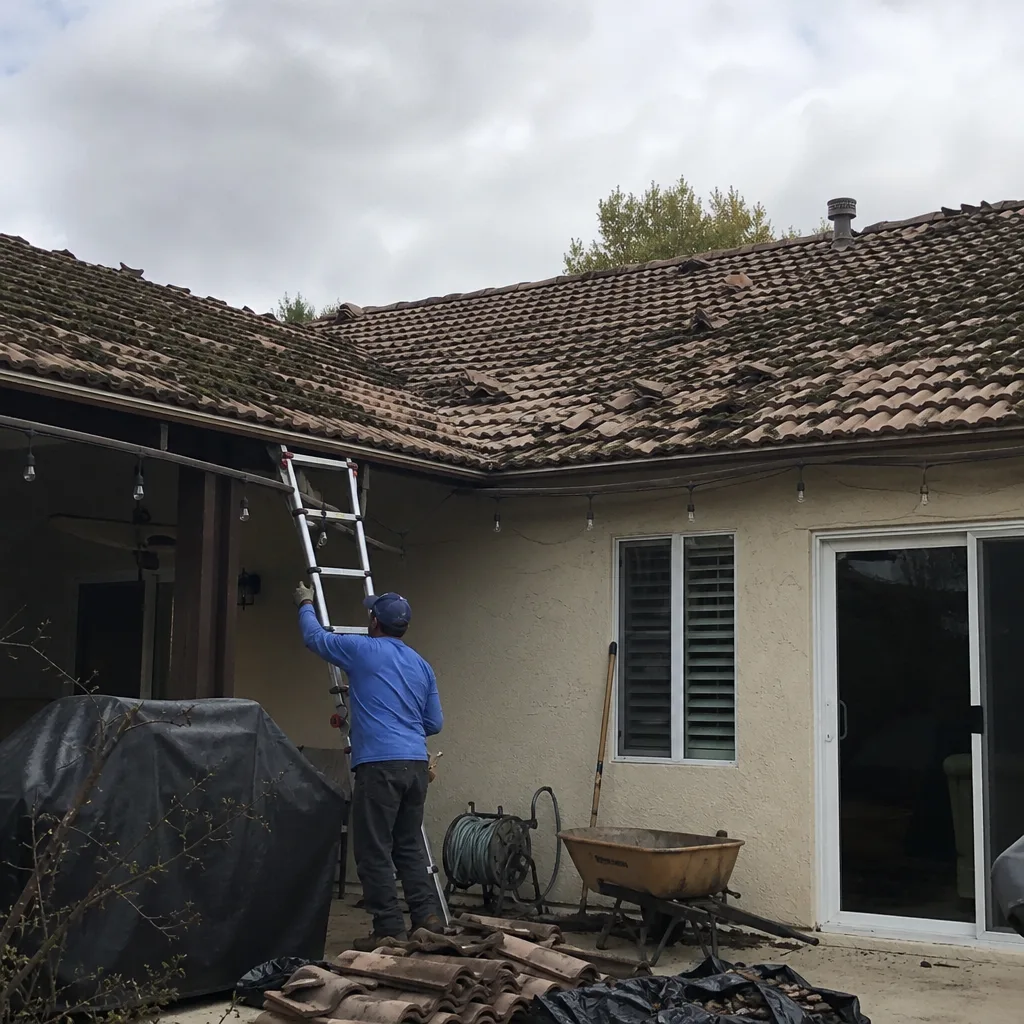 Before
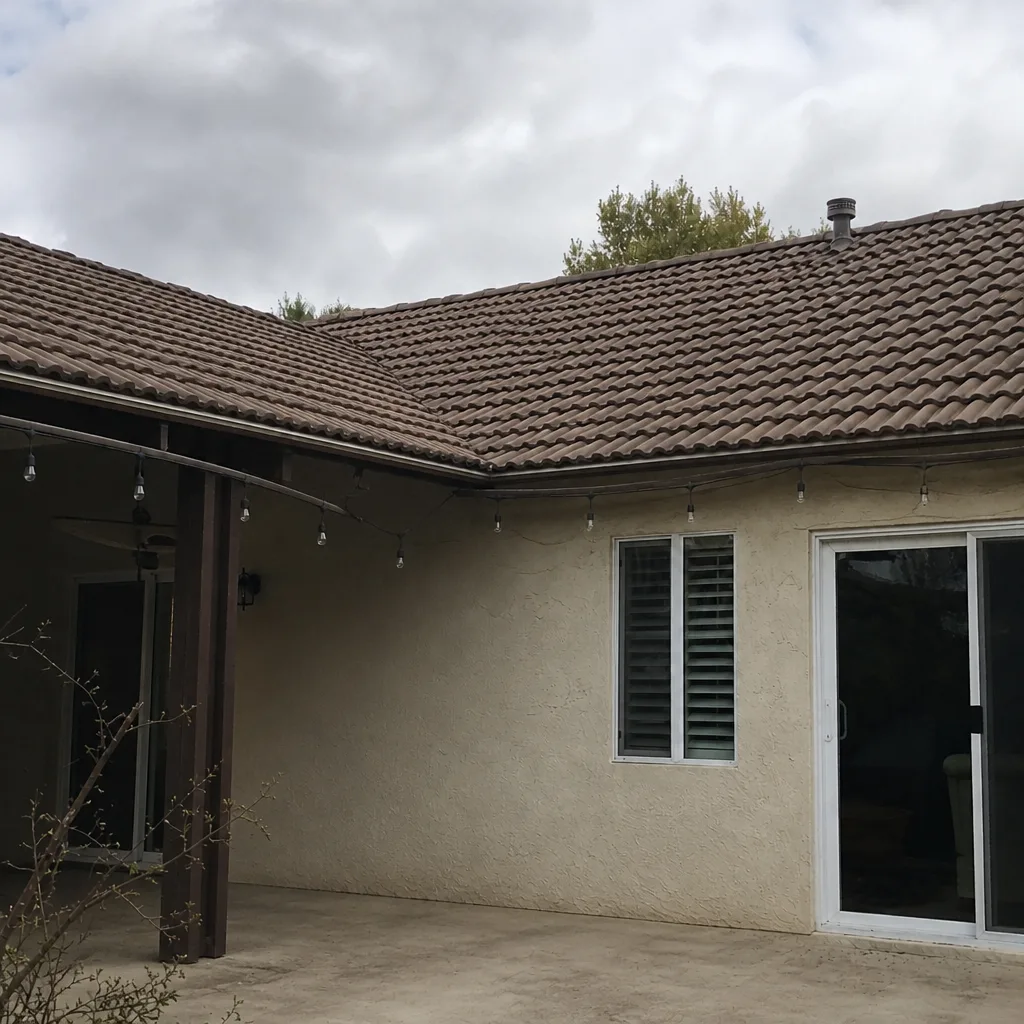 After
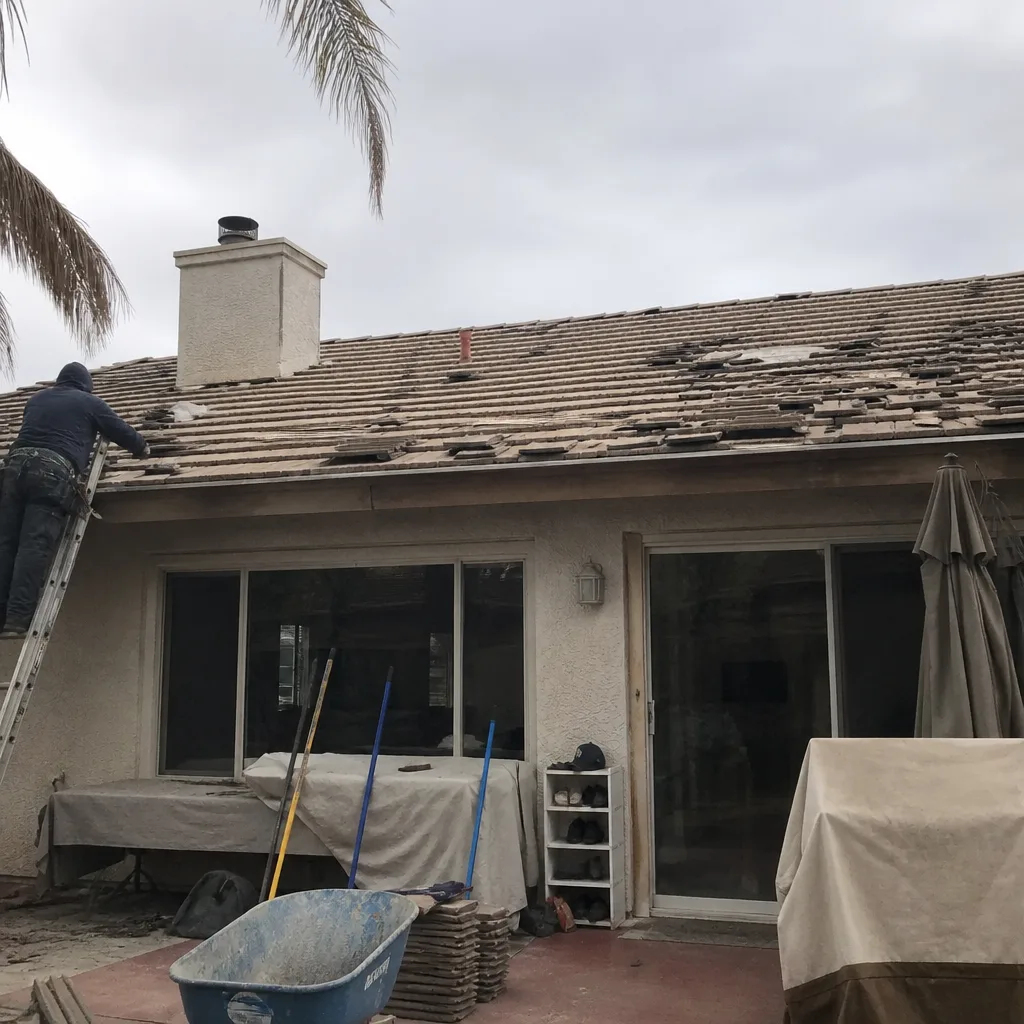 Before
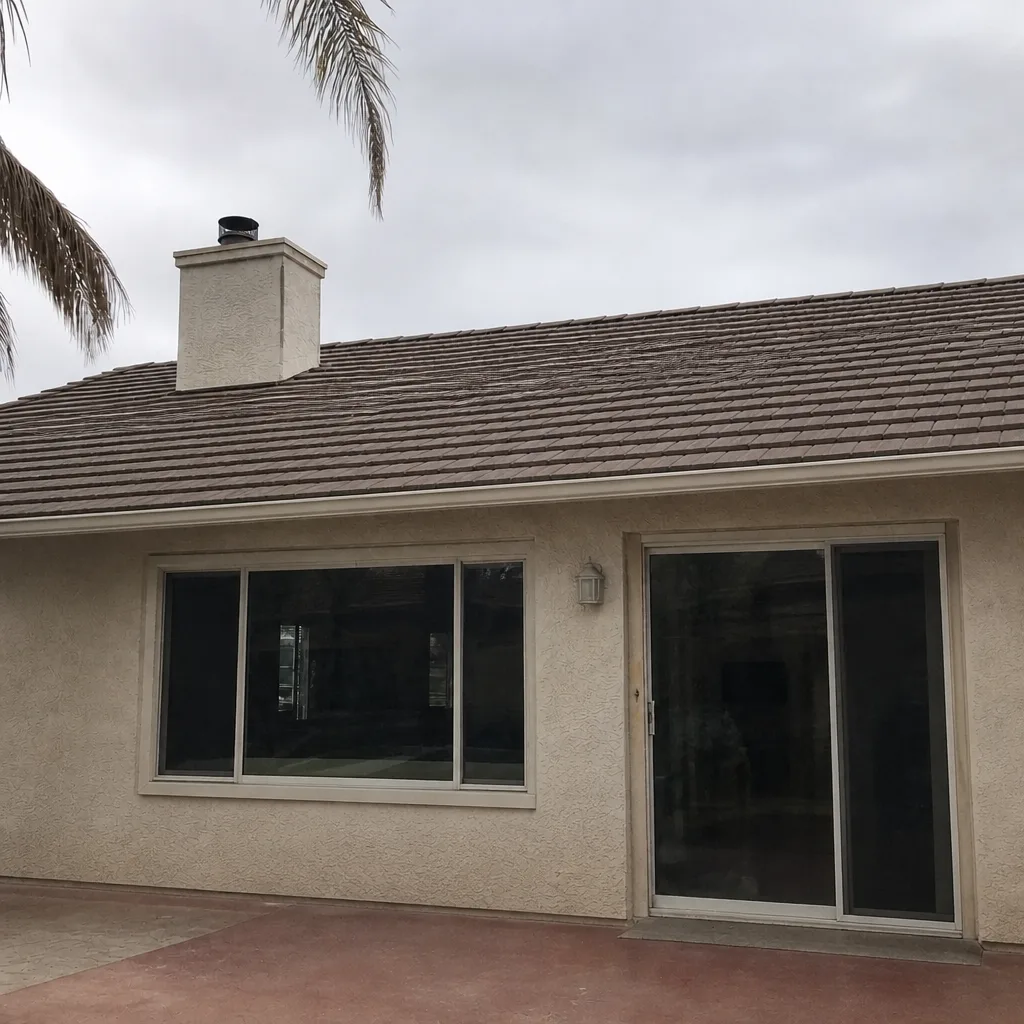 After
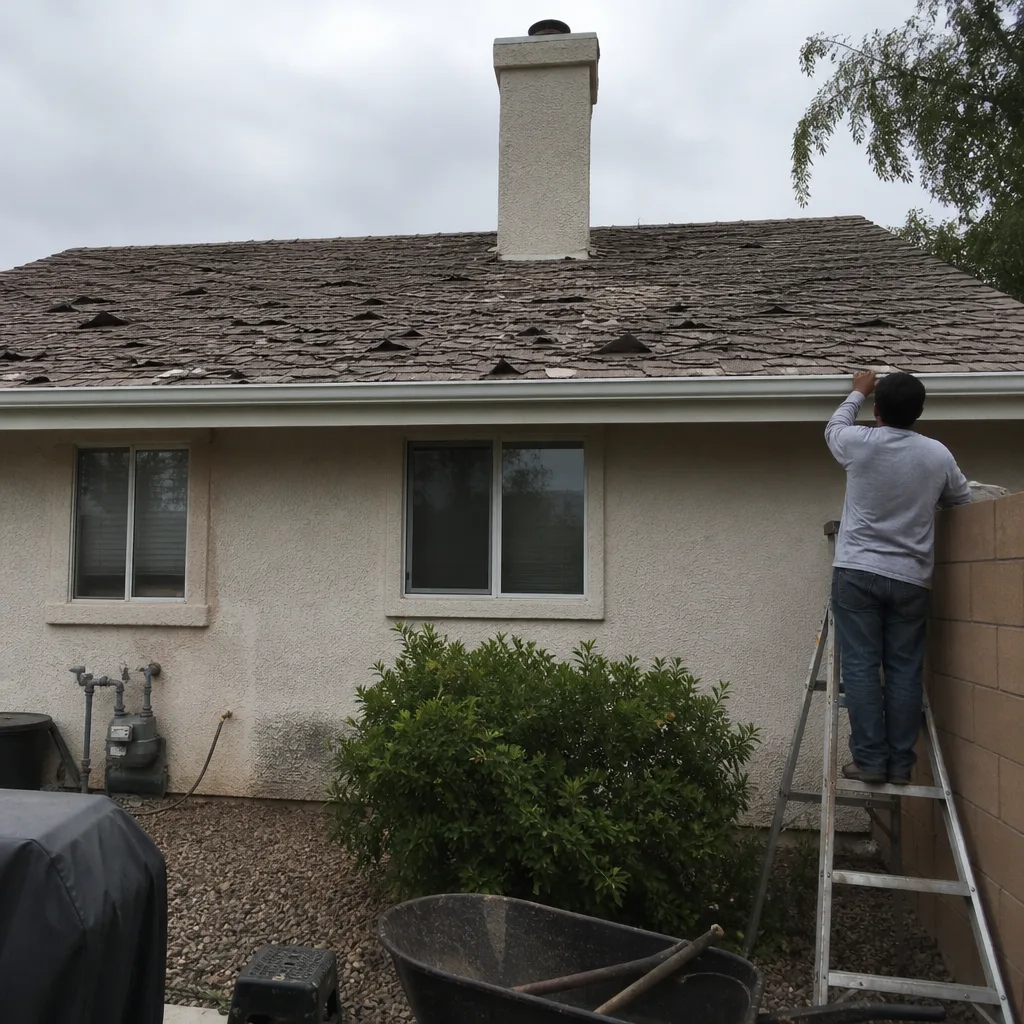 Before
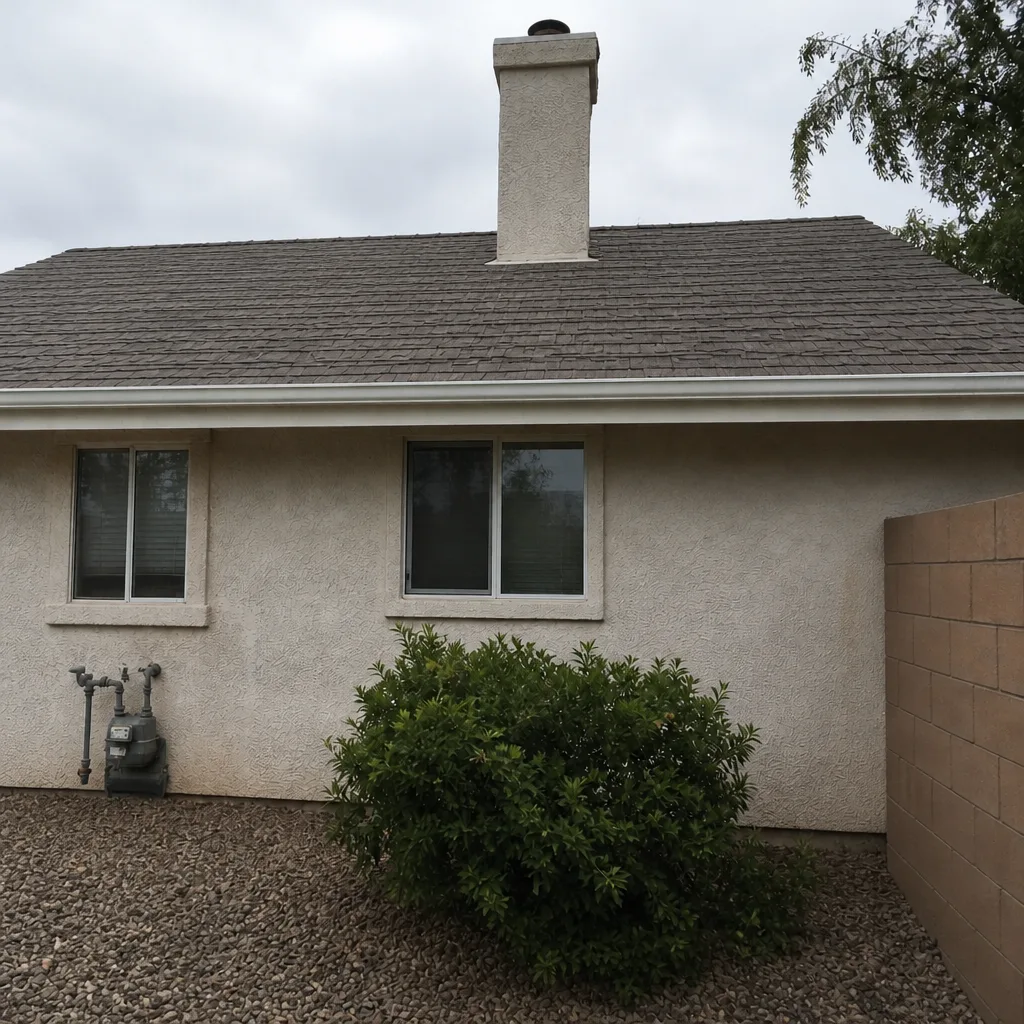 After
When to Call a Professional
Call us when you see any two of the warning signs in this guide – a sagging ridge plus fascia streaks, or a slipped tile plus an attic discoloration. Call sooner if you spot daylight in the attic, if your phone timeline shows a sign getting worse across two seasons, or if spalling has spread across a full slope. Those point to underlayment or tile-body failure that a patch won’t fix, and the sooner the deck is opened up the smaller the repair. Shepherd & Sons Roofing Summerlin offers free estimates in Summerlin, with a free second opinion on any written estimate, no trip charge inside our own county, and $40 off any repair over $200. Call (844) 951-4545 and a live person picks up.
Frequently Asked Questions
The first visible signs are ridge line sag, misaligned tile courses, and white efflorescence streaks on the fascia, all seen from the driveway before any leak appears. Inside, rust trails on rafters and light penetration points in the attic often show up around the same time. Together, these typically appear 6-18 months before a ceiling stain. Call (844) 951-4545 for a free estimate if you spot more than one.
No. A single slipped tile on otherwise solid mortar is a repair job. But in Summerlin, a slipped or lifted tile usually means the mortar bed under it let go – not that wind popped it – so the honest scope checks the whole ridge or hip run for neighboring failures. Call (844) 951-4545 and we’ll tell you whether it’s a single tile or a run.
Tile repair pricing depends on how many tiles and ridge runs are involved and whether the underlayment needs attention, which is why we put a written, line-item number in front of you rather than a phone guess. We offer $40 off any repair over $200, and estimates are free. Call (844) 951-4545 for an exact quote.
Spalling is the tile surface flaking, pitting, or crumbling away, and it’s the tile version of lost granules on an asphalt roof. It signals UV has broken down the tile’s outer skin and changed its absorption rate, so more water reaches the underlayment below. Spalling across a whole slope usually means the tile body is going. Call (844) 951-4545 for a free estimate.
Use your phone’s photo timestamps. Find the earliest yard or listing photo showing the fascia, ridge, or tile course, then scroll forward and note the date the sign first appears – that’s when the problem was born, not when you noticed it. Bring those dated images to your estimate. Call (844) 951-4545 to book a free estimate.
No – on a tile roof the outside signs usually come first. The tile and underlayment protect the deck, so exterior signals like ridge sag, misaligned courses, and fascia efflorescence typically appear months before a ceiling stain. A stain means water already crossed the deck. Call (844) 951-4545 and we’ll check the deck before it gets that far.
The Bottom Line
Tile roofs in Summerlin fail quietly, and the tile itself is the last thing to show it. Learn to read the three driveway signs – ridge sag, misaligned courses, and fascia efflorescence – and back them up with an attic walk looking for rust trails, discoloration patterns, daylight, and matted insulation. Treat a slipped tile as a mortar problem, watch for spalling as the tile’s wear gauge, and keep a photo timeline so you can date the first sign. Two or more signals together mean it’s time to have the deck looked at. Shepherd & Sons Roofing Summerlin has been at the same address since 1996, and every job carries the written 90-Day Done Right Promise. Call (844) 951-4545 for a free estimate, and we’ll show you the deck photos before we talk money.
Written by the team at Shepherd & Sons Roofing Summerlin.