
Last updated November 18, 2026
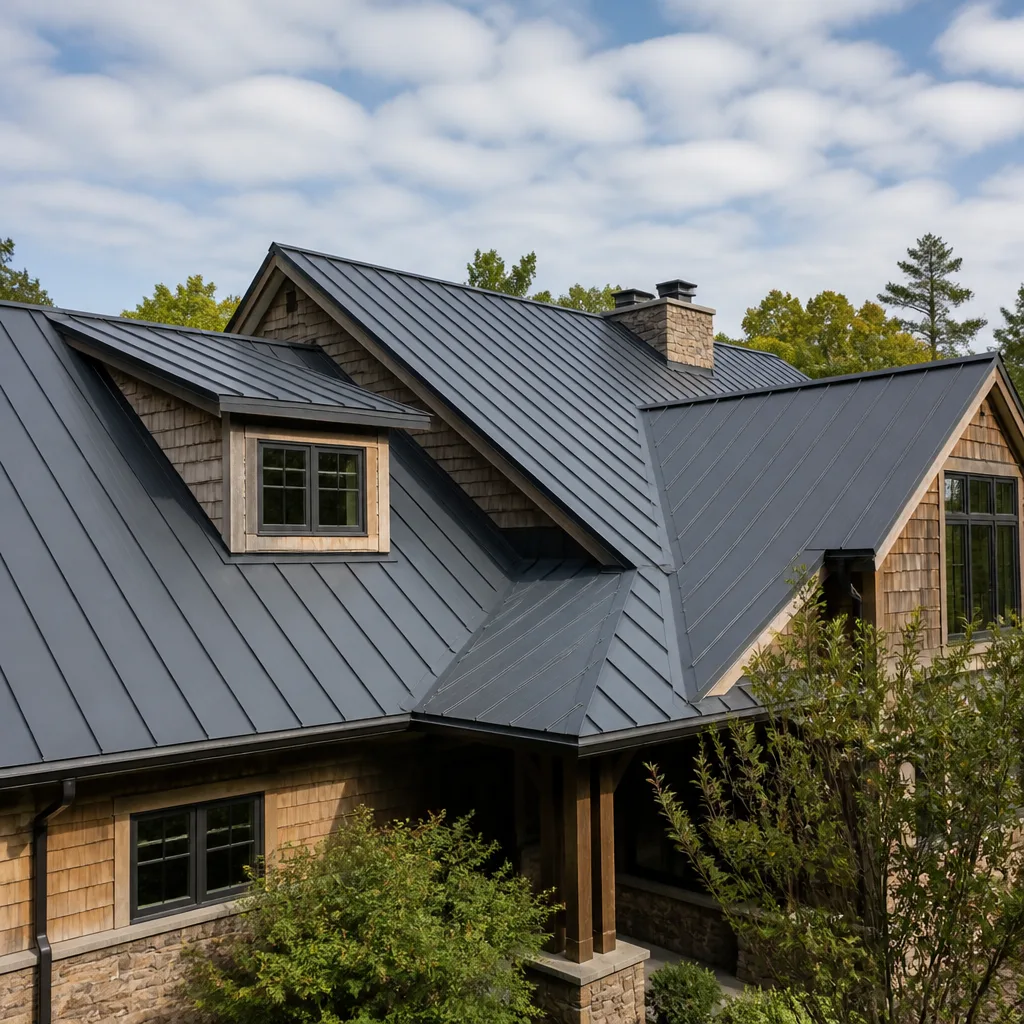 Metal roofing
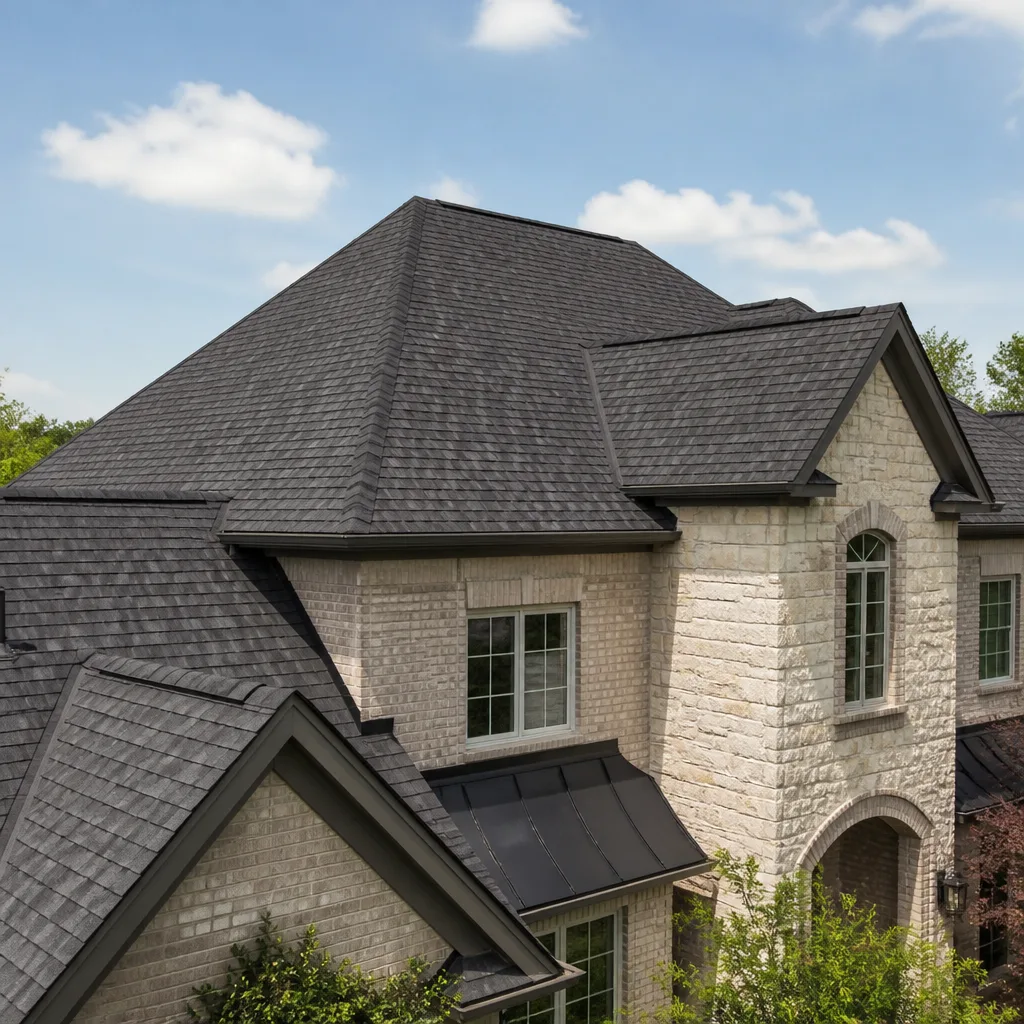 Architectural shingles
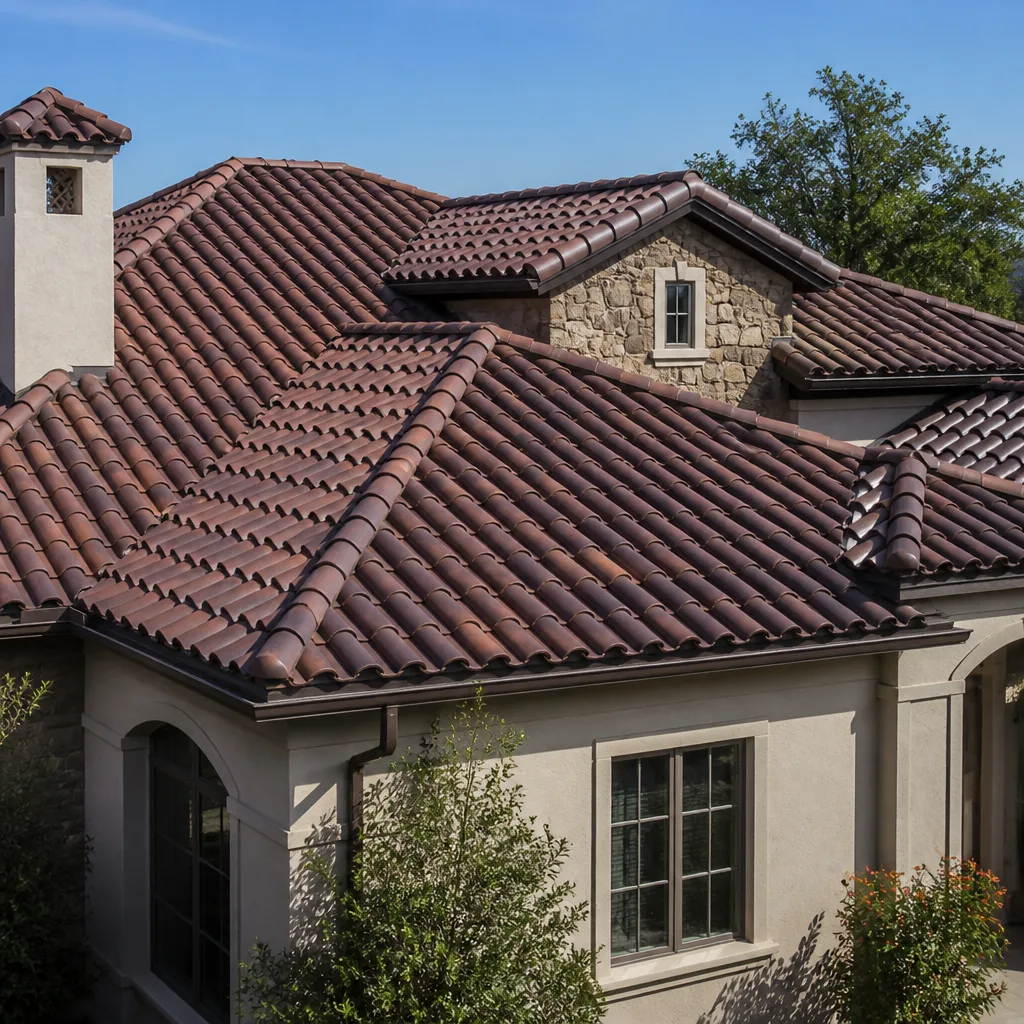 Tile roofing
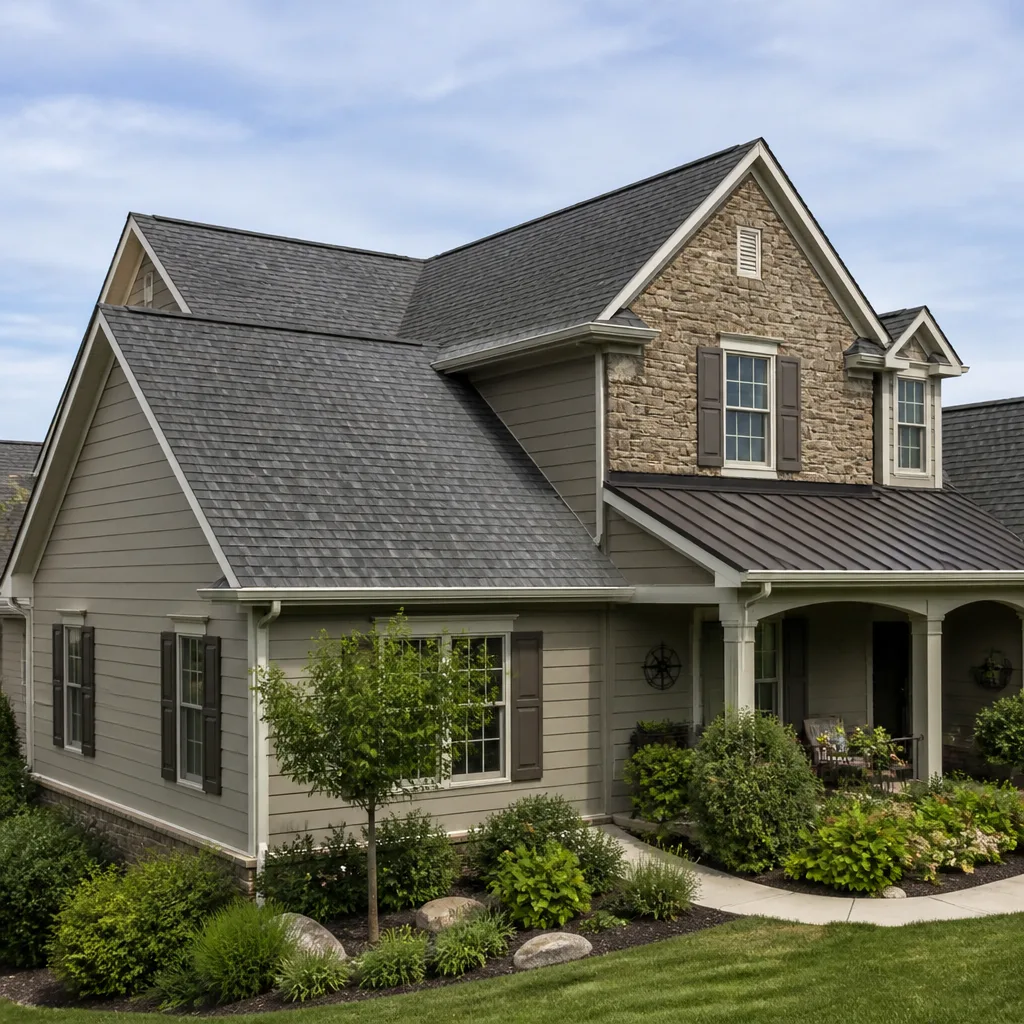 GAF
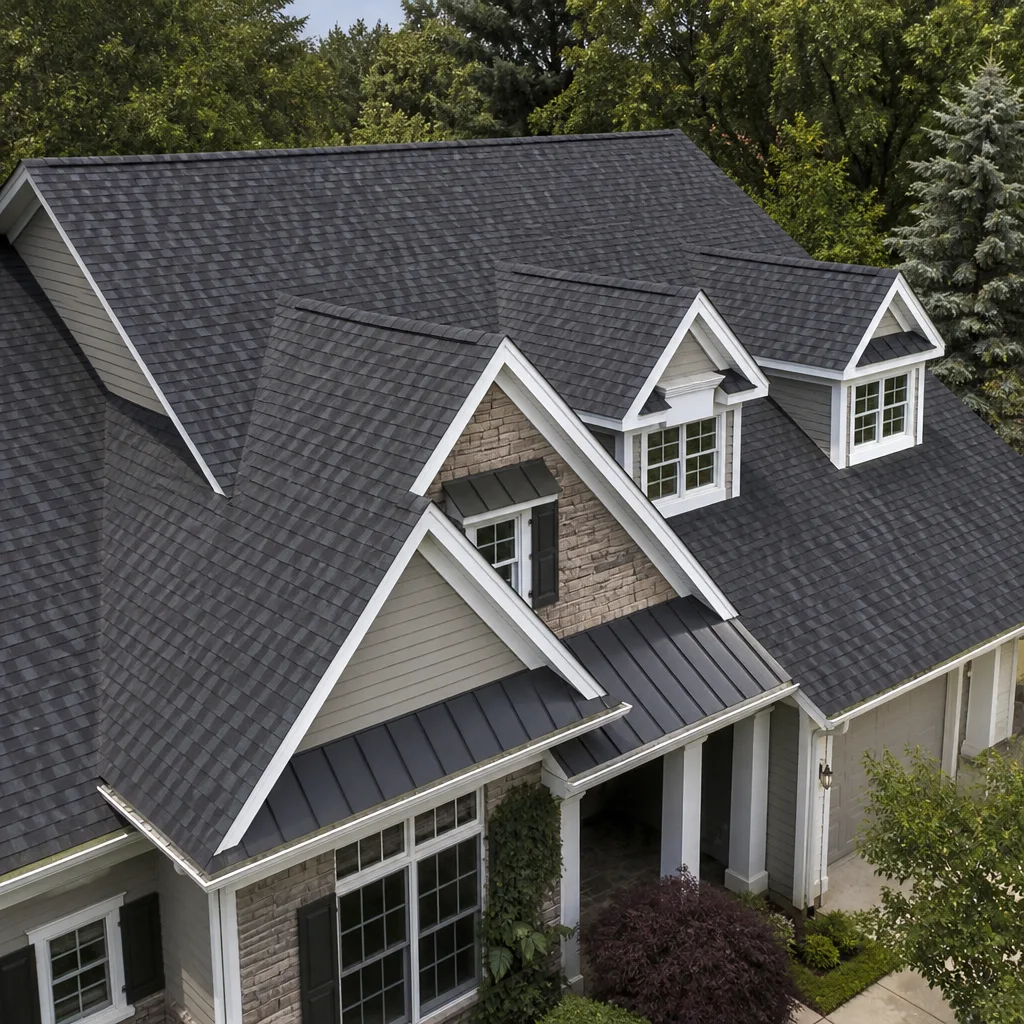 Owens Corning
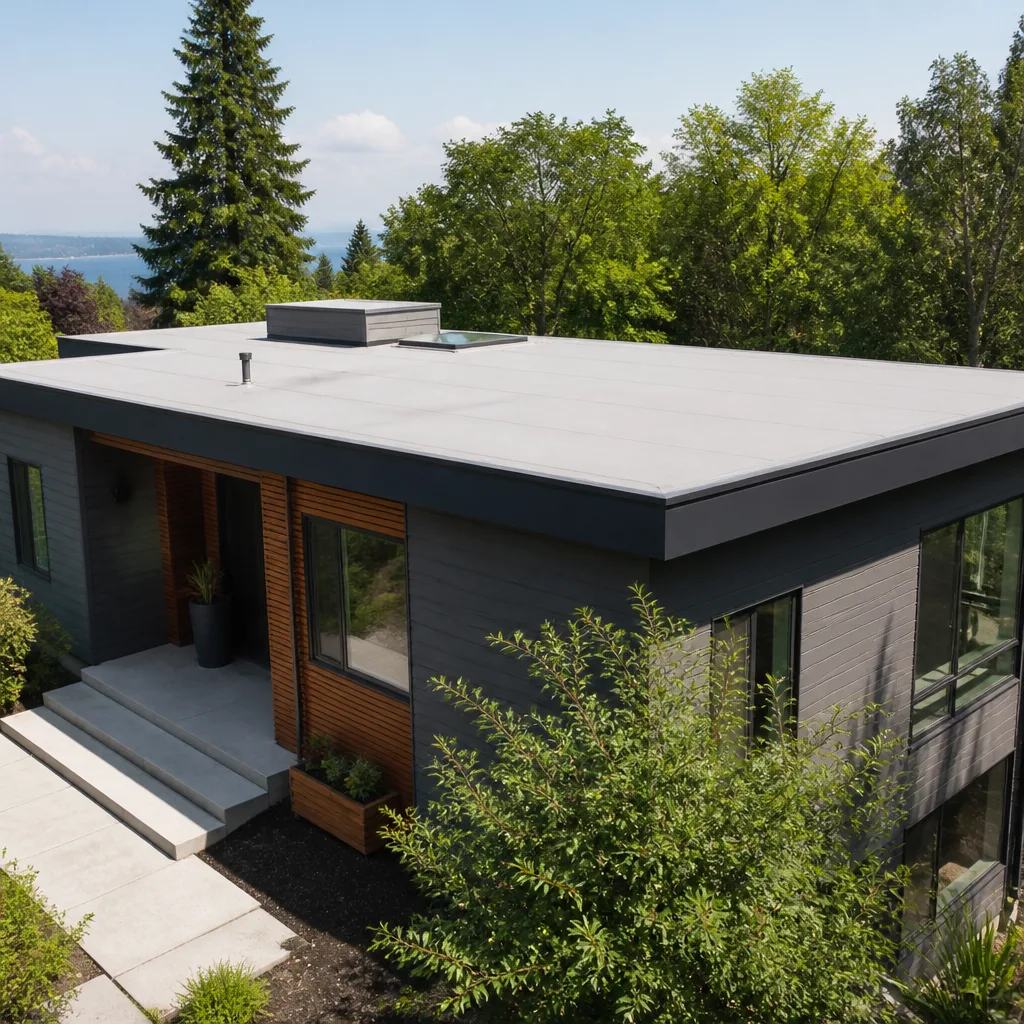 Flat & low-slope
Free roof inspection with deck photos before we talk money - GAF and Owens Corning certified installation
Metal Roofing Warning Signs Every Homeowner Should Know
The most expensive metal roof repair we do every year is on roofs where the homeowner noticed something small two years earlier and figured metal means maintenance-free. It doesn’t mean maintenance-free. It means low-maintenance. There’s a difference, and that difference is usually a few thousand dollars. Metal roofs fail quietly – the panels don’t curl up and wave at you the way a worn shingle does. The warning signs are almost all outside, and they show up long before the first brown ring on your ceiling. In Summerlin, where the sun is unforgiving and the monsoon comes in sideways, knowing what a healthy metal roof looks like is the whole game. Here’s what to watch for.
Quick Answer
The five exterior warning signs of metal roof trouble are rust streaking, lifted panel edges, shrinking sealant around penetrations, backing-out fasteners, and separated flashing. Inside, watch for condensation staining on the sheathing that gets misread as a plumbing leak. Any one of these means the roof needs eyes on it now, not next spring. Catching them early is the difference between a repair and a replacement.
Styles & brands we work with
- Architectural shingles
- Metal roofing
- Tile roofing
- GAF
- Owens Corning
- Flat & low-slope
Table of Contents
- Rust Streaking: The Slow Bleed
- Lifted Panel Edges and What They Tell You
- Sealant Shrinkage at Penetrations
- Fastener Back-Out: The Quiet Loosener
- Flashing Separation at Walls and Valleys
- Oil-Canning: Cosmetic or Structural?
- Interior Signs Unique to Metal Over Desert Attics
- The Post-Monsoon Inspection
- The Warranty Documentation Warning Sign
Rust Streaking: The Slow Bleed
Rust on a metal roof rarely starts where you’d expect. It almost always begins at a cut edge, a fastener head, or the bottom lip of a panel where water sits longest. You’ll see it first as a thin orange-brown line running down the panel face, not a patch. That streak is the rust bleeding from a point of failure above and washing down with every rain.
On a quality painted panel from CertainTeed or Owens Corning, the factory finish is designed to shrug off decades of sun. When you see streaking, it means the coating has been breached somewhere – a scratch from a ladder, a cut edge that never got touch-up paint, or a fastener that backed out and let water in behind the finish. Left alone, that breach widens. Galvalume and unpainted steel weather differently and can look chalky before they rust, but the rule is the same: streaks mean water is finding a path it shouldn’t.
What to check:
- Cut edges at the ridge, eaves, and around any penetration
- Screw heads, especially on the sunny south and west faces
- Panel ends where they overhang the gutter
- Anywhere a ladder has leaned against the roof
In Summerlin, we see more edge rust than face rust because the sun bakes the exposed cuts while the monsoon hammers them. A homeowner can spot streaks from the ground with binoculars, and that’s worth doing twice a year. If you find them, that’s the moment to call – not when the ceiling shows a stain. For a closer look at what’s happening up top, our Metal Roofing in Summerlin page covers how panels are detailed to keep water out of these weak points.
Lifted Panel Edges and What They Tell You
A metal panel edge that lifts even a quarter inch is telling you something is wrong underneath it, not with the panel itself. Lifted edges usually mean the fasteners holding that run have loosened, the underlayment beneath has deteriorated, or the panel was never seated flat to begin with. Wind gets under a lifted edge and peels it back like a lid on a can. That’s how a small problem becomes a missing panel after a strong gust.
Walk your property line on a calm day and look along the eave and the ridge. Edges should lie flat and tight. On a hip roof, look at the corners where panels meet. On a gable, look down the rake. If you can slide a finger under an edge, or if a panel edge catches the light at a different angle than its neighbors, it’s lifting.
What causes it, in plain terms:
- Fasteners that loosened from thermal movement – metal expands and contracts more than any other roofing material, and over years that works screws loose.
- Underlayment that got wet and failed, leaving the panel unsupported.
- Panels installed with too few fasteners or the wrong pattern for our wind zone.
- Improper lapping at panel joints, letting wind drive in.
The nailing pattern earns the wind rating, not the shingle wrapper. Same goes for metal: the fastener schedule is what holds a panel down, and you can’t see it once the roof is on. That’s why we take deck photos on every job, metal or shingle, so a homeowner can see what’s actually under there. If you notice a lifted edge in Summerlin, don’t wait for it to tear off in the next wind event. Call us for a free estimate and we’ll tell you whether it’s a re-fastening or something bigger.
Sealant Shrinkage at Penetrations
Every metal roof has penetrations – vents, pipe boots, chimney surrounds, skylight curbs. Every one of them is sealed with some kind of caulk, gasket, or boot. Sealant has a lifespan. In our climate, that lifespan is shorter than most homeowners expect because the summer sun and the dry air pull the oils out of it. When sealant shrinks and pulls away from its substrate, it opens a gap that water finds.
You’re looking for cracks, pulling-away edges, or a visible gap where the sealant used to meet the metal. Look at the base of every pipe boot, around the chimney flashing, and at any vent stack. Sealant should look snug and continuous, not peeled or crazed. A cracked bead of caulk looks like a dry riverbed – you’ll know it when you see it.
Here’s the part that costs homeowners: when sealant fails, the water doesn’t pour in. It seeps. It takes months to show inside. And by the time it does, the decking around that penetration may be soft. In Summerlin we’ve pulled chimney surrounds where the plywood underneath was mush because a bead of caulk had been failing for two seasons. Fresh sealant is cheap; new decking and flashing isn’t.
What’s worth doing once a year, ideally before monsoon season: walk the roof or have us look at every penetration and press on the sealant. If it’s brittle, it gets cut out and redone with the right product for metal, not the wrong caulk from the hardware store. That’s the kind of small chore that keeps a roof out of the repair column.
Fastener Back-Out: The Quiet Loosener
Metal roofs move. Every hot day, the panels expand; every cool night, they contract. Over years, that daily cycle can work a fastener loose. A backed-out screw no longer holds the panel tight, and its gasketed washer no longer seals. You’ll often see them as a line of screw heads sitting slightly proud, sometimes with rust halos around them. The washer under the head may be visible and flattened, or the screw may be sitting up on top of the panel instead of sunk into it.
Why it matters: a backing-out fastener is two failures in one. It’s a holding failure – wind can lift that panel. And it’s a sealing failure – water can get in at the screw hole. On a large roof, one loose screw is a warning that others in that run may be on the way.
What to look for:
- Screw heads that sit higher than their neighbors
- Gaskets that look cracked, flattened, or pushed out
- Rust rings around fasteners
- Any fastener that spins freely if you test it
Don’t go up and tighten them yourself. Over-tightening drives the gasket past its seal and does more harm than good, and walking a metal roof safely takes the right footwear and the right touch on the seams. This is a job our crew does in a few hours across a whole roof – and part of why Bill’s own sons are on the roof with him. If you suspect back-out, call (844) 951-4545 and we’ll give it a look, free.
Flashing Separation at Walls and Valleys
Flashing is the metal that seals the places where roof planes meet walls, valleys, chimneys, and skylights. It’s the most failure-prone part of any roof, metal or otherwise, and it’s where most leaks actually start. On a metal roof, watch for flashing that has pulled away from its wall or from the panel, or fasteners that have let go at the flashing edge.
Where to look:
- Where a roof meets a vertical wall – look for a gap at the top or a bead of old sealant pulling loose
- Valleys, where two roof planes meet – look for the flashing standing up proud or dented
- Around the chimney – look at the bottom edge of any flashings and at the counter-flashing at the masonry
- Skylight curbs – look for pulled corners
Flashing separation is serious because water doesn’t just seep in at the seam – it gets behind the flashing and travels. It can show up ten feet away on a ceiling or a wall. A lot of the “mystery stains” we chase in Summerlin turn out to be flashing that failed two seasons ago and nobody looked at it.
When flashing pulls free, it usually means the fasteners failed, the sealant behind it failed, or the metal itself was damaged by wind or a falling branch. Re-securing it isn’t a big job, but it needs to be done right, with new sealant behind it and proper fastening. Ask any bidder how they plan to handle flashing – if they talk past it, they’ve missed the most important part.
Oil-Canning: Cosmetic or Structural?
Oil-canning is the wavy, puckered look some metal panels get – like the roof is rippling across its face. It’s the most misunderstood thing on a metal roof. Some waviness is normal, cosmetic, and completely harmless. Some of it is a signal that the panels were installed over uneven decking or that the panel was stressed during installation, and that can shorten the roof’s life.
How to tell the difference:
- Cosmetic oil-canning is even, gentle, and consistent across a panel. It usually shows up on wide, flat pan panels and is a natural product of how that profile is formed and how light hits it. It does not leak. It does not get worse.
- Structural oil-canning is irregular or concentrated, often accompanied by loose fasteners, lifted edges, or gaps. It often means the deck underneath is uneven, the panels were walked on incorrectly during install, or the fastening pattern let the panel bow.
The waviness itself isn’t the problem – the pattern is the tell. If you’re not sure which you’re looking at, have someone who installs metal look at it. We’ve told plenty of homeowners the waviness on their roof is nothing to worry about, and we’ve told others it’s hiding a deck problem. Either way, the answer beats guessing from the ground.
Interior Signs Unique to Metal Over Desert Attics
Our attics here are hot and dry most of the year, and that’s actually why the interior signs of a metal roof problem look different in Summerlin than they do elsewhere. Metal panels sit on underlayment and decking, and in a poorly ventilated desert attic, condensation can form on the underside of the decking during our cooler nights and evaporate during the day. That cycle leaves staining.
What to look for from inside:
- Fresh-looking dark or rust-colored stains on the sheathing that don’t line up with a plumbing run. In Summerlin, this gets misread as a water heater or pipe issue more often than you’d think – it’s actually condensation or moisture getting past a failed sealant bead above.
- Water rings on the ceiling below a penetration – vents and pipe boots are the most common sources.
- Daylight between panels and decking – if you can see daylight coming through from the roof, that’s a gap.
- Musty smell in the attic even in dry weather – a sign of moisture that has no business being there.
If you find staining, don’t assume plumbing until you’ve had the roof checked. In our experience, a lot of “plumbing leaks” in Summerlin homes turn out to be roof moisture that’s working down a truss. A roofer can tell you in a half hour. The fix is often small at that stage; if ignored, it’s a deck repair.
The Post-Monsoon Inspection
July is when hidden metal roof failures in Summerlin finally show themselves. The heavy rain, driven sideways by wind, exposes every gap that a lighter storm won’t reach. That first real rain of the season is the most valuable test your roof gets all year – if you know where to look afterward.
What we do and what you can do after the first heavy storm:
- Walk the inside of the house and look at the ceilings, especially under chimneys, vents, and skylights. Note any fresh ring or wet spot.
- Walk the perimeter outside and look for panel edges that lifted, flashing pulled free, or debris collected at valleys.
- Look at the ground and the gutters for granules or metal shavings – not a big red flag, but it tells you a panel or trim took a hit.
- Check the attic for new staining on the sheathing.
What your roofer should do: get on the roof and check every penetration and panel, because the water that didn’t reach your ceiling may still be sitting under a panel waiting. Our crew’s 90-Day Done Right Promise is one call brings Bill back – if we missed something on a repair, we own it. If you’re in Summerlin and the first monsoon has you wondering, call us for a free look. It beats finding out in September. Our Roof Repair in Summerlin team handles post-storm inspections and repairs, and we’ll show you exactly what we find.
The Warranty Documentation Warning Sign
If you can’t find the paperwork on your metal roof, you may already be outside coverage and not know it. Manufacturer warranties on panel finishes and materials, from CertainTeed, Owens Corning, or IKO, typically require registration, and they’re usually tied to the original installation. Without that paperwork, you’re standing on your own. We’ve seen homeowners learn this at the worst moment – mid-leak.
What to gather if you own a metal roof:
- The manufacturer’s name and the panel profile – look for a tag or stamp, or ask the installer
- The date the roof was installed, if you know it
- Any warranty registration card or certificate that came with the install
- The original contractor’s name and, if you have it, their license number
Why this matters in Summerlin: our climate is hard on finishes. A finish warranty can be the difference between a manufacturer replacing panels and you paying for them. If the paperwork is missing, call us and we’ll help you identify the panel and figure out where you stand. We’ve done it plenty of times – a roof is measured in squares, and so is a warranty. Get it in writing. The original installer’s license number matters too: a published license number is the accountability that stays with the work. If the paperwork trail is gone, that’s not a dire emergency, but it is the sign to get a professional’s eyes on the roof so you know what you’re sitting on.
Common Mistakes to Avoid
- Waiting for the ceiling stain. By the time water reaches your ceiling, the damage has been working under the panel for a while. The outside signs come first for a reason.
- Treating metal as zero-maintenance. It’s low-maintenance. A twice-a-year look at edges, fasteners, and penetrations is what keeps it from becoming a repair.
- Letting a storm chaser touch the roof. Out-of-state crews come after every hail and monsoon and are gone before the repair fails. Ask for a local address and a license number you can look up.
- Caulking over a problem instead of fixing it. A bead of caulk on a lifted edge or a loose flashing hides the issue and lets the water keep traveling behind it.
- Ignoring oil-canning without knowing which kind it is. Harmless waviness is common; waviness tied to loose fasteners or lifted edges is the kind that shortens the roof’s life.
- Skipping the post-monsoon look. The first big rain of the season exposes what a dry winter won’t. Check afterward, not next spring.
- Not tracking the warranty paperwork. A registered warranty is worth real money on a metal panel finish. Lose the paperwork and you lose the claim.
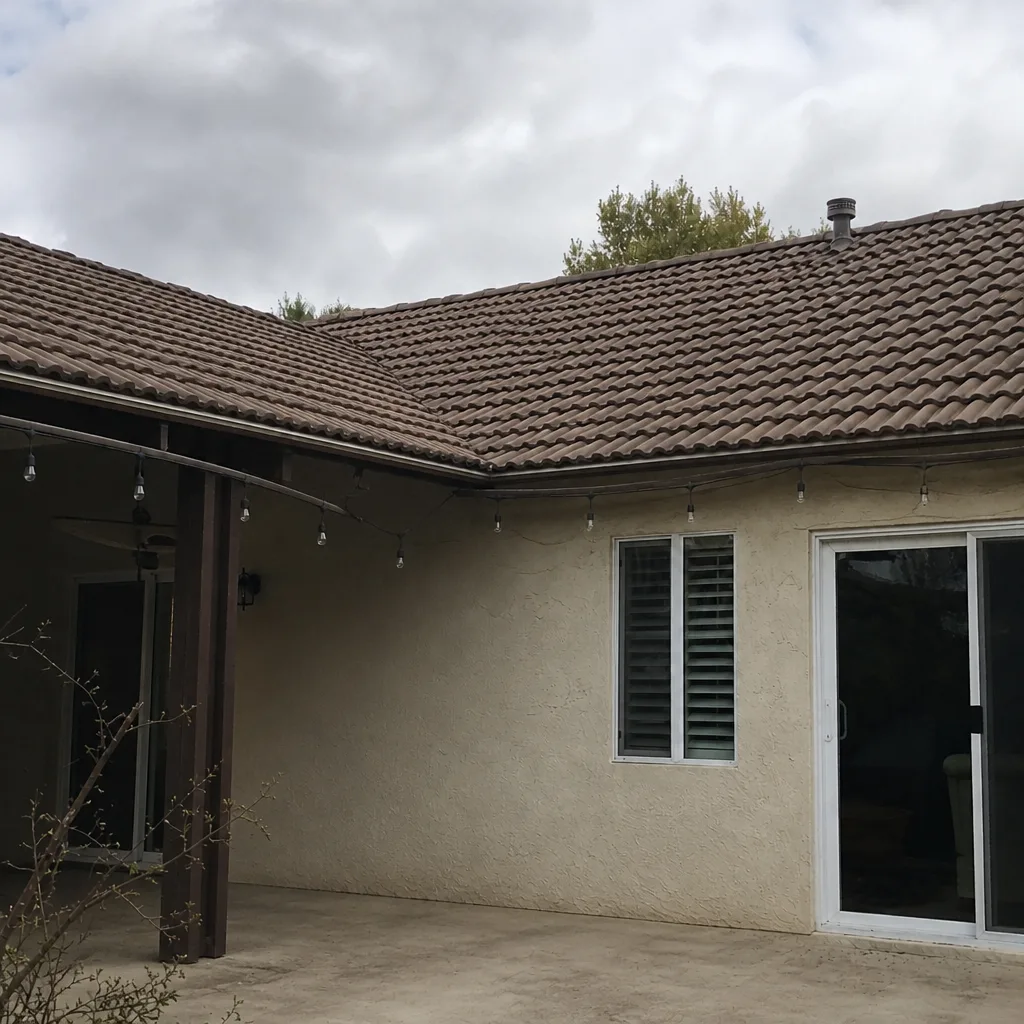
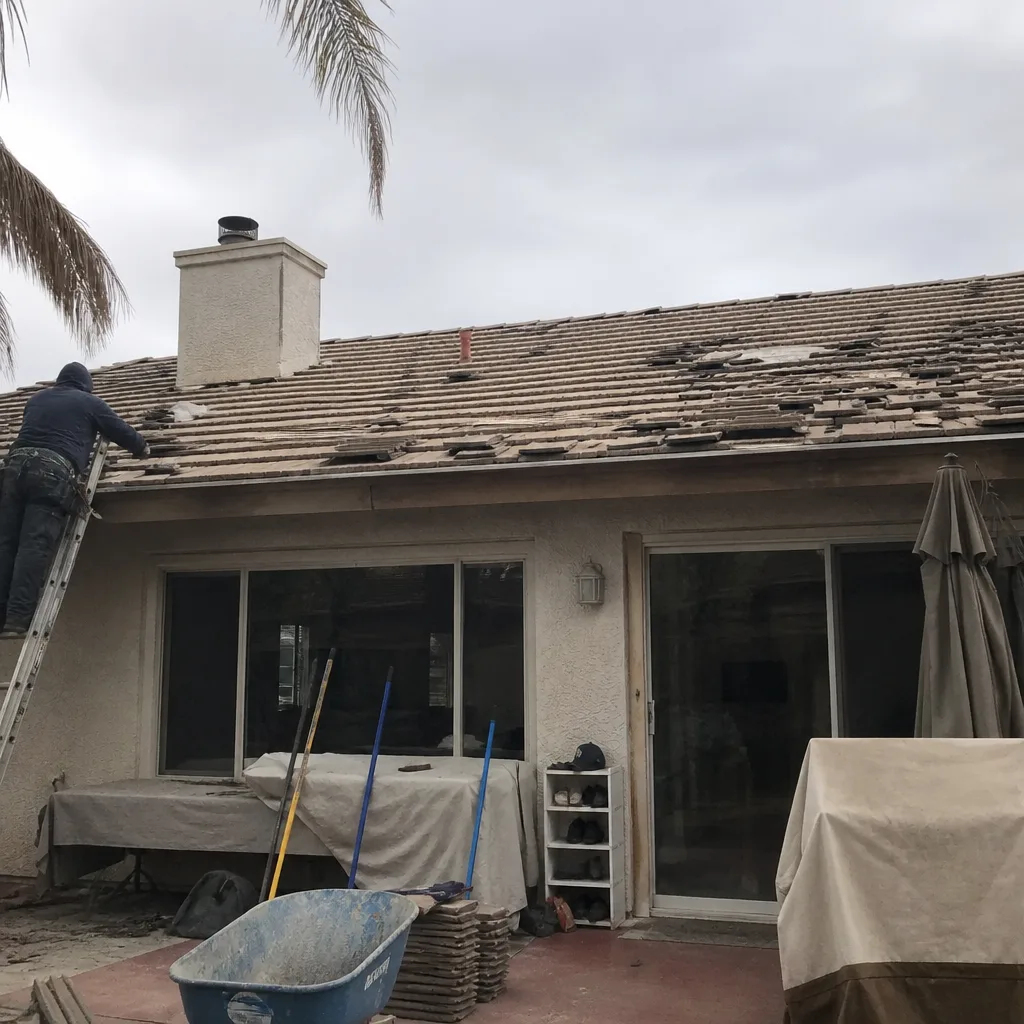
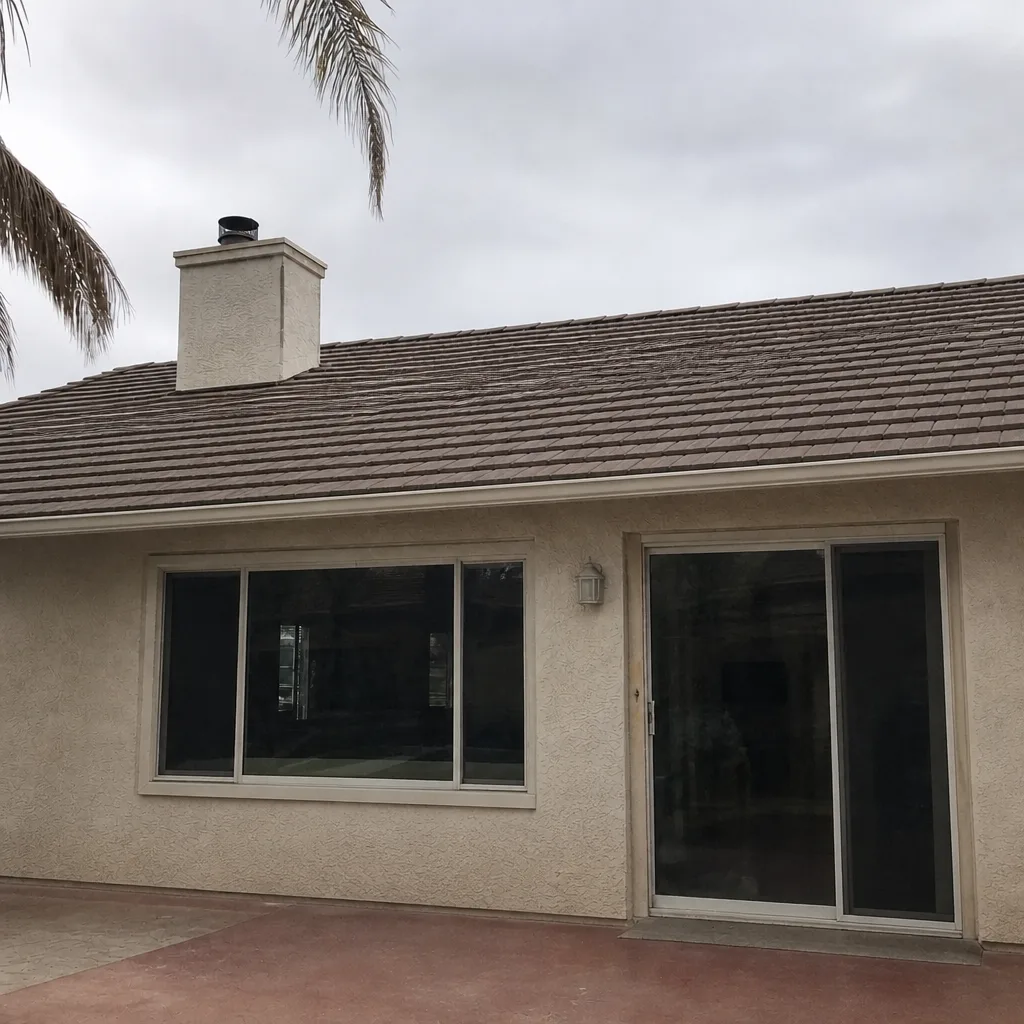
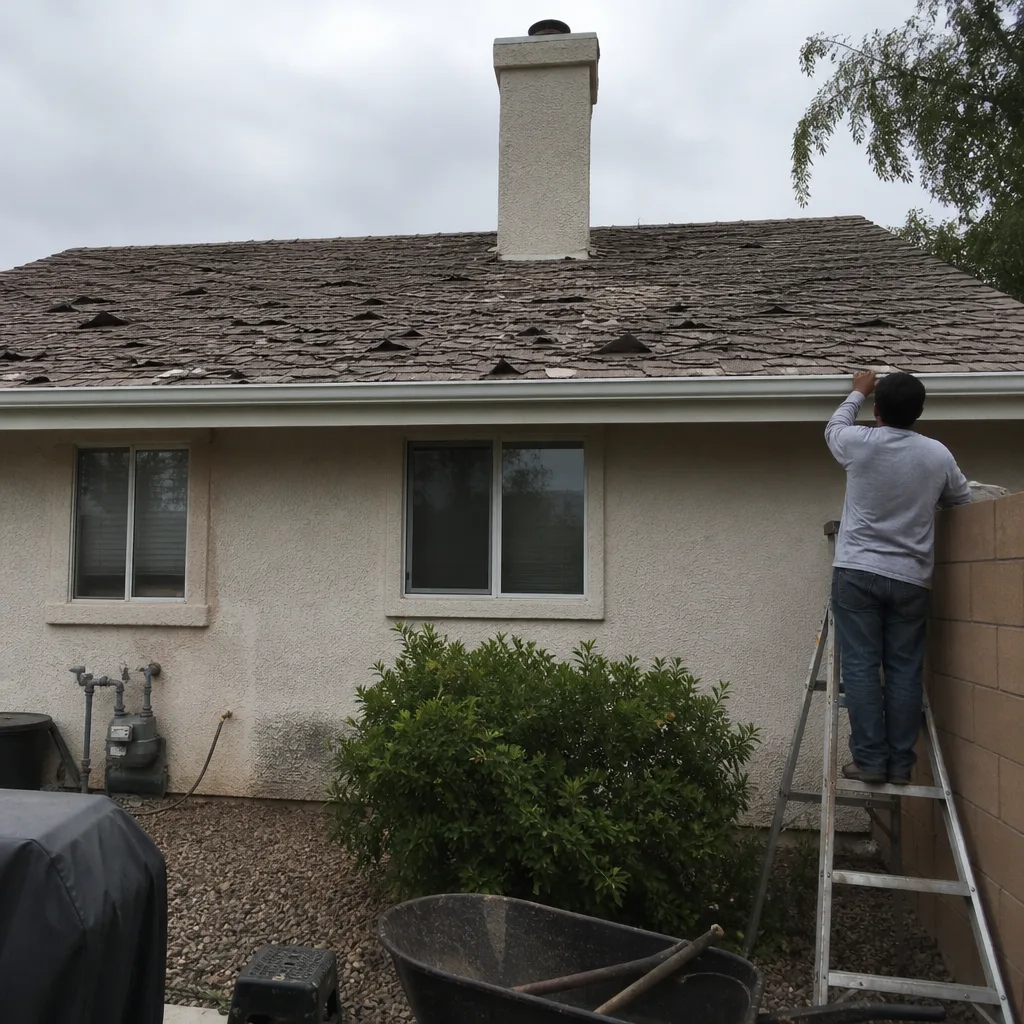
See the difference
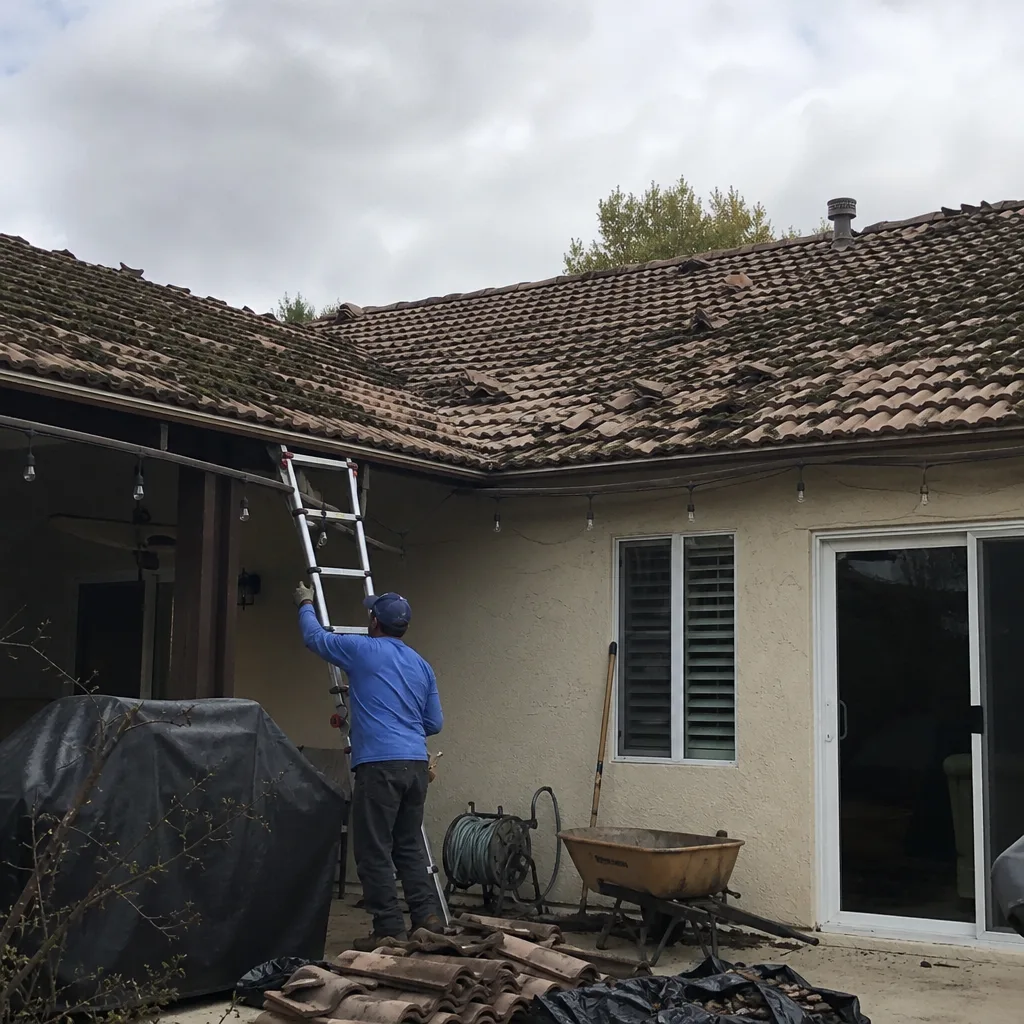 Before
 After
 Before
 After
 Before
 After
When to Call a Professional
Some warning signs sit for a few weeks. Others don’t. Call us right away if you find a lifted panel edge that won’t lie flat, flashing pulling free at a wall or valley, sealant that has clearly failed around a chimney, rust streaks coming from a single point, or any fresh stain on the ceiling or attic sheathing after a rain. Those are the signs we want eyes on before the next wind or storm. A half-hour look can catch a repair before it becomes a deck replacement. Shepherd & Sons Roofing Summerlin offers free estimates in Summerlin – call (844) 951-4545 and a live person will pick up, day or night. If it’s small, we’ll tell you it’s small.
Frequently Asked Questions
Once a year and after the first heavy monsoon rain is the right rhythm. Our climate is hard on finishes and sealant, and the wet-dry cycle in a desert attic makes the underside worth checking too. A yearly look beats a big repair every time.
Usually not. Oil-canning is often cosmetic waviness that comes from the panel profile and how light hits it. It’s the pattern that matters: waviness tied to loose fasteners or lifted edges is a sign to have it checked.
Most small repairs – re-fastening panels, replacing a failed sealant bead, re-securing flashing – run in the low-to-mid hundreds of dollars. Caught early, that’s the whole bill. Caught after a deck rots, it climbs fast. Call (844) 951-4545 for a free estimate in Summerlin and we’ll give you the number before we touch the roof.
Some things you can check safely from the ground, like rust streaks and lifted edges. Getting on a metal roof to tighten fasteners or redo sealant is not a homeowner job – the walking surface, the over-tightening risk, and the fall risk make it worth a pro. We’ll look for free.
It usually means moisture is getting into the attic from one of two places: ventilation is failing, or water is getting past a roof penetration and resting on the sheathing. In Summerlin it gets misread as plumbing all the time. Have a roofer check it before you call a plumber.
Find the manufacturer’s name and panel profile stamped on a panel or a tag, and the original install paperwork. If you can’t find them, call a local roofer – we can identify the panel and figure out where you stand. Without the paperwork, the finish may be outside coverage and you’d never know it until you needed the claim.
The Bottom Line
Metal roofs don’t fail loudly. They fail in the small stuff – a rusty cut edge, a backed-out screw, a bead of sealant that dried up, a flashing that pulled free – all of it visible from outside if you know what to look for. The interior signs in a Summerlin attic look like plumbing but often aren’t. The post-monsoon look is the most important inspection of the year. And the paperwork matters more than most homeowners think. If any of these signs show up on your roof, don’t wait for the ceiling to tell you. Roof Replacement & Installation in Summerlin is the last resort – a free look now is the thing that keeps it from becoming that. Call (844) 951-4545, or start at the Shepherd & Sons Roofing Summerlin home page and we’ll take it from there.
Written by the team at Shepherd & Sons Roofing Summerlin.