
Last updated November 18, 2026
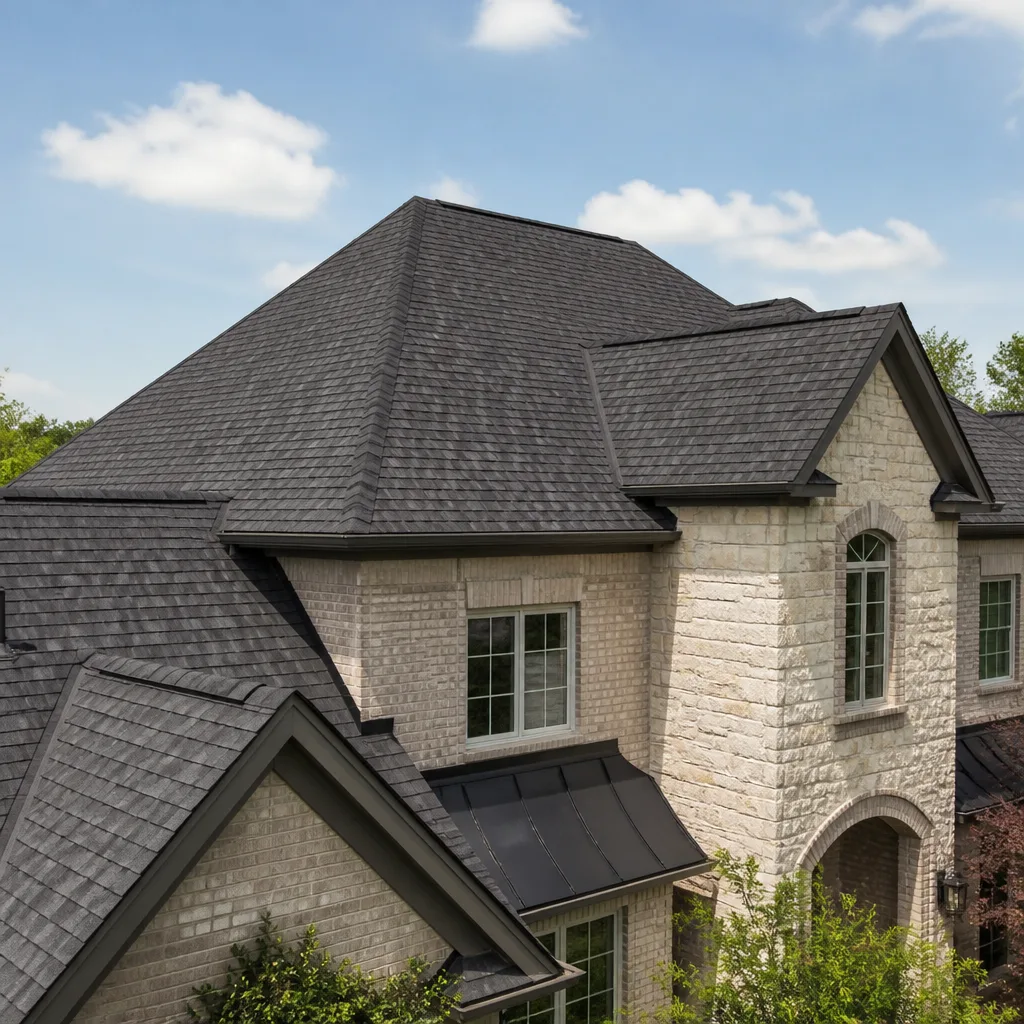 Architectural shingles
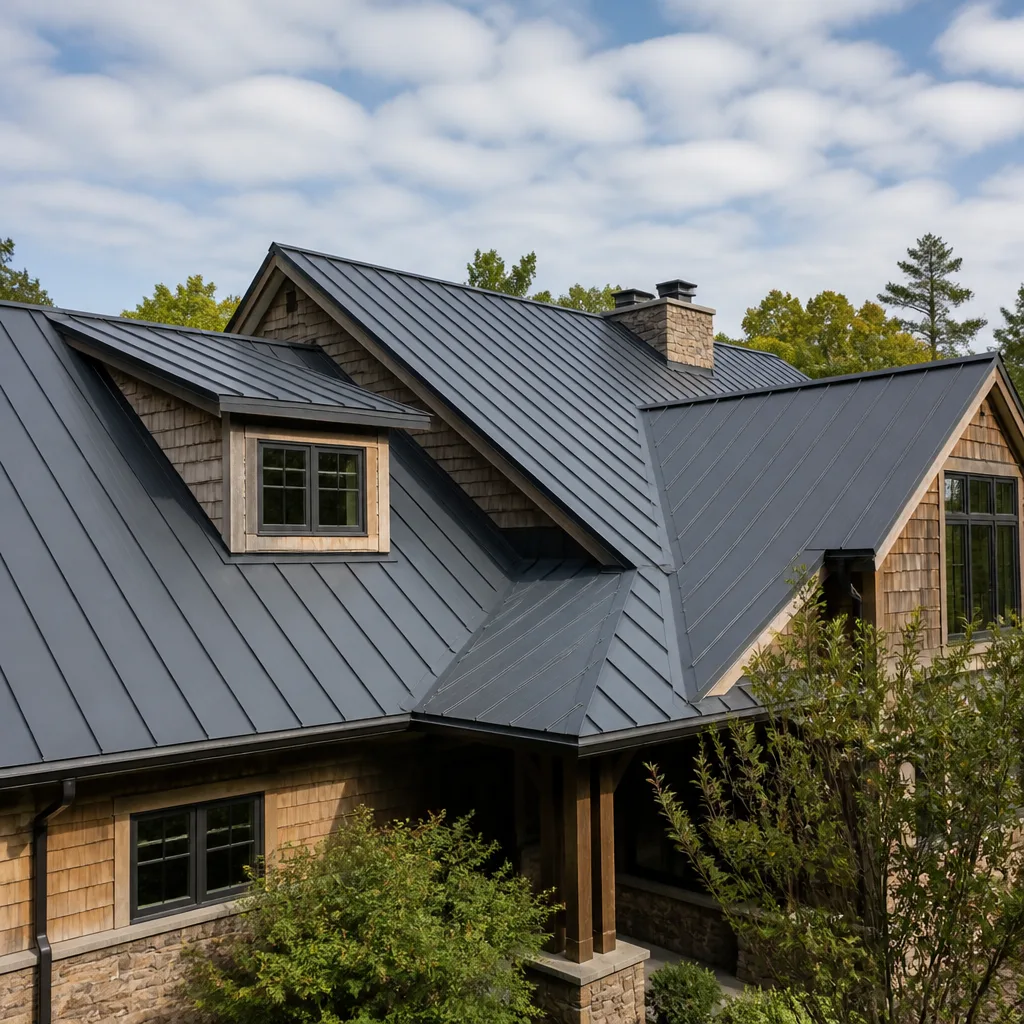 Metal roofing
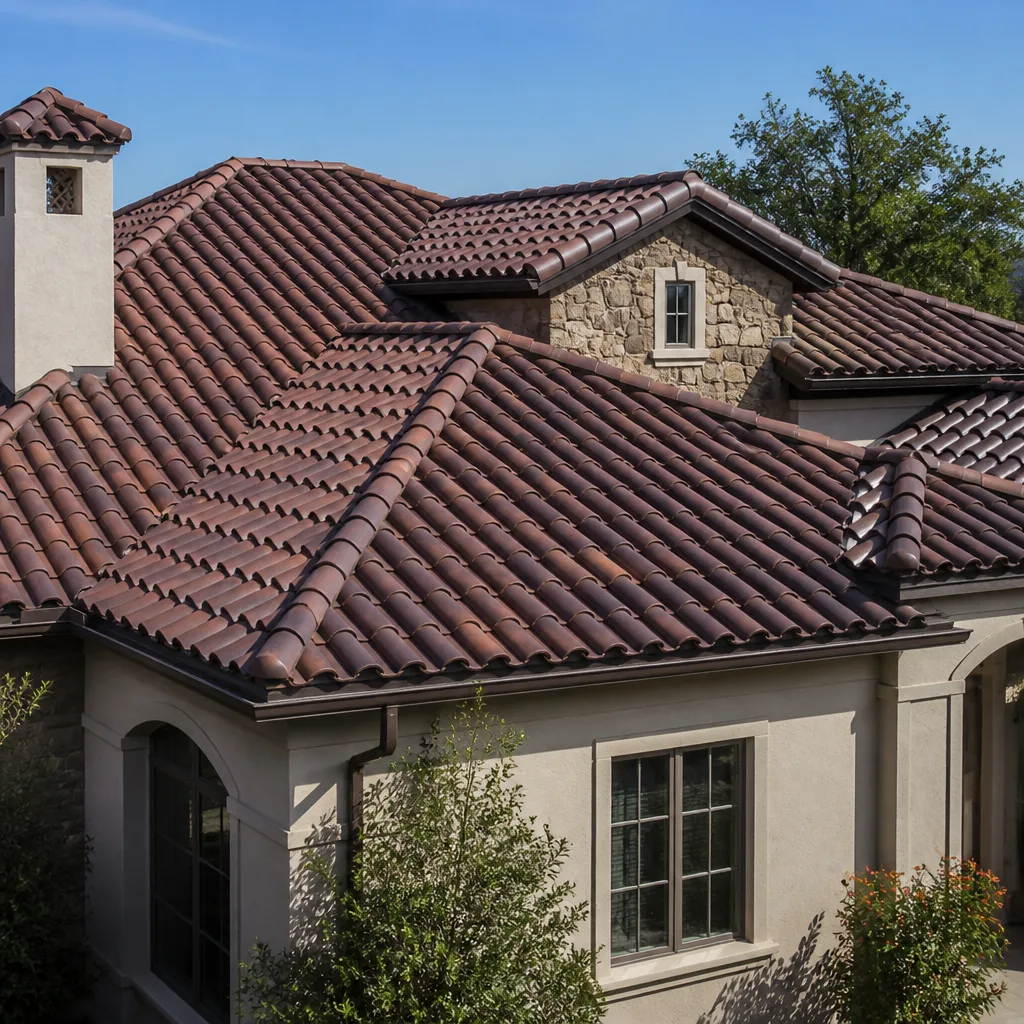 Tile roofing
 GAF
 Owens Corning
 Flat & low-slope
Free roof inspection with deck photos before we talk money - GAF and Owens Corning certified installation
Roof Repair Troubleshooting: Common Problems and How to Fix Them
The water stain on your hallway ceiling is probably not under the stain. That’s the first thing we tell folks who call us from around Summerlin. Leaks travel along rafters and sheathing for 6 to 12 feet before they finally drip through your drywall – which means the spot a salesman scopes directly above your stain is often the wrong repair entirely. We’ve walked into hundreds of homes where a previous patch sat six feet from the real entry point. This guide works backward from the symptom to the source, so you can tell the difference between a flashing problem, a field shingle problem, and a ridge issue before anyone gets on your roof.
Quick Answer
Most roof leaks you’ll find in Summerlin come from failed flashing, backed-up valleys, or cracked pipe boots – not from missing shingles. To troubleshoot correctly, trace the leak backward from the ceiling stain along the framing to its true entry point, then match the fix to the actual failure (flashing, field, or ridge) rather than the symptom. A repair quote without photos of the exposed deck is a quote you shouldn’t sign.
Styles & brands we work with
- Architectural shingles
- Metal roofing
- Tile roofing
- GAF
- Owens Corning
- Flat & low-slope
Table of Contents
- The Trace-Back Method: Finding the Real Entry Point
- Five Problems Homeowners Misdiagnose Most Often
- Flashing vs. Field Shingles vs. Ridge and Hip: How to Tell Them Apart
- Why Summerlin Roofs Fail Differently Than the Rest of the Country
- What a Quote Without Deck Photos Is Telling You
- When “We Patched It” Made the Problem Worse
- What You Can Check Safely and What You Can’t
- Repair or Replace: The Honest Questions
The Trace-Back Method: Finding the Real Entry Point
Leaks lie about where they started. Water enters at a tiny gap, slides down the sheathing, follows the top edge of a rafter, weaves around a nail, and only then drops – sometimes 10 or 12 feet from where it came in. Salespeople love a ceiling stain because it gives them an address. The honest approach is to ignore the stain and work backward. Here’s the sequence the guys on the roof use when they’re trying to actually find the problem rather than sell a new roof:
- Mark the stain, then map the framing. Go into the attic during dry weather and locate the wet spot from above. Use a bright light and a pencil to mark where the drip is hitting.
- Follow the wet path uphill. Wet sheathing leaves a trail unless it recently rained and dried. Look for darker boards, rusted nails, and water tracks running in a consistent direction.
- Check the nearest penetrations uphill. Pipe boots, chimney flashing, swamp cooler curbs, and skylight frames are the most common entry points on Summerlin roofs. If a roof penetration sits uphill from your stain, that’s your primary suspect.
- Verify on the roof surface. Only then do you get on the roof and confirm what you suspect from inside. Matching an interior trace to an exterior failure is how you avoid opening drywall you don’t need to open.
- Photograph the deck before patching. A repair that doesn’t show you the exposed sheathing underneath is a guess – not a fix.
In Summerlin, this method saves homeowners the cost of replacing perfectly good shingles that were never the problem. It also catches the swamp cooler flashing failures we see constantly on older west-side homes before they rot out an entire eave. Our full guide to Roof Repair in Summerlin walks through the specific repairs this method points to.
Five Problems Homeowners Misdiagnose Most Often
After enough callbacks across Summerlin, you notice patterns. Certain problems look like one thing from the ground and something else entirely once you’re on the deck. These five come up over and over:
- Swamp cooler flashing mistaken for shingle failure. Every summer we get called to “re-shingle the back slope” and find the real cause is a rusted curb flashing around an old cooler platform. The shingles underneath are usually fine.
- Ceiling stains blamed on the shingle directly above. Covered above – the leak traveled. The repair is uphill, not overhead.
- Granule loss in valleys read as old age. Valleys shed granules faster than any other field, especially on south-facing slopes in the desert sun. Sometimes it’s age; sometimes it’s a valley detail that was never done right.
- Ice-dam symptoms in a desert. Homeowners who moved from colder states see a water stain in winter and assume ice dams. In Summerlin we see the same stain pattern from monsoon wind-driven rain pushing under the same flashing.
- Ridge and hip cracks mistaken for wind damage. Hairline cracks along the ridge cap or hip are usually thermal cycling from 30-degree temperature swings between day and night, not wind. The repair is different.
Naming the wrong problem gets you a repair on the wrong part of the roof, and the leak comes back the next time it rains. Matching the fix to the failure is what separates a repair from a reseal-and-prayer.
Flashing vs. Field Shingles vs. Ridge and Hip: How to Tell Them Apart
From a ladder these three failure types can look almost identical. They don’t behave the same, and they don’t get fixed the same. Knowing which one you’re looking at keeps you from paying for the wrong scope.
Flashing problems
Leaks around a chimney, pipe boot, valley, or wall transition almost always show up first as a stain near the penetration – a couple of feet downhill, not 10 feet away. The shingles around it may look fine because the water is entering the metal or membrane joint, not the field. Flashing repairs are the cheapest fix on a roof and the most frequently skipped. If your stain is near a chimney or skylight, press hard on diagnostic.
Field shingle problems
True field failures show up as widespread granule loss, curling tabs, or shingle blow-off from wind. They cause broad, diffuse dampness rather than a single sharp stain – water gets pushed in across a wide area during wind-driven rain. A single isolated stain almost never means the field failed. Look for a patch of matching shingles and a proper nailing pattern before assuming you need the whole slope.
Ridge and hip problems
Ridge caps and hip caps live in the windiest, most sun-baked part of the roof. In Summerlin, they take the worst of the afternoon heat and the worst of the monsoon gusts. Hairline separation along the ridge is common as the mat ages, and the fix – usually re-capping the ridge with proper sealant and new fasteners – is often confused with a shingle problem three rows down the slope. Ridge repair is a distinct trade from field repair, and quotes that lump them together tend to overcharge.
Why Summerlin Roofs Fail Differently Than the Rest of the Country
Most roof repair guides assume four seasons and a freeze-thaw cycle. Summerlin doesn’t work that way. Our failures come from heat, sun exposure, and monsoon wind – a completely different profile from what a Texas or Midwest roofer was trained to spot. If a contractor from out of state is diagnosing your roof using a freeze-thaw playbook, the diagnosis is likely wrong.
The dominant failure modes in Summerlin:
- Attic heat cycling. Summerlin attics hit 150 to 160 degrees Fahrenheit in July. Shingles, underlayment, and sealant all cook. Underlayment that would last 25 years in Ohio can fail in 12 here.
- South and west slope granule loss. The slopes that face the afternoon sun take twice the UV load. If you see granule accumulation in your gutters only on the south side, that’s why.
- Monsoon wind-driven rain. Our rain arrives sideways in 45-minute bursts. That’s why leaks here so often trace back to wind-driven rain finding a gap under flashing – not to a shingle that “wore out.”
- Thermal expansion on metal and tile. Metal roofing and tile move more in our temperature swings than they do in milder climates. Fastener and sealant maintenance schedules are more aggressive in Summerlin for exactly this reason. When metal repair or replacement is on the table, our guide to Metal Roofing in Summerlin covers the specific patterns to watch for.
- Dry rot in shaded valleys. Counterintuitive, but true: valleys that don’t dry out after a storm – because of tree cover or a bad pitch detail – trap moisture for days and rot sheathing far faster than a sunny slope.
Reading the roof through Summerlin’s climate lens changes the repair recommendation on a surprising number of calls. It’s why we photograph the deck on every diagnostic – the story in the deck is almost always the Summerlin story.
What a Quote Without Deck Photos Is Telling You
If a contractor quotes you a repair without showing you a single photograph of the exposed deck or the actual failure point, treat that as information. Either they didn’t go on the roof, or they went up and don’t want you to see what they found. Both possibilities should move you toward a second opinion before you sign.
Here’s what a legitimate repair quote contains:
- Date-stamped photos of the failure – the flashing, the cracked shingle, the rotted deck, whatever it is.
- A measurement in squares, not a vague “we’ll need a few bundles.” A roof is measured in squares. Ask any bidder how many they counted.
- A written scope that names the repair, the material (Tamko, GAF, CertainTeed, whatever they’re proposing), and the labor.
- A workmanship promise in writing. Ours is the 90-Day Done Right Promise – if it’s not done right, we make it right – and it goes on every job, repair or full replacement.
- Photographic proof of the before-and-after. A contractor who won’t email you the “after” photo is a contractor whose phone will get quiet the moment the check clears.
When a quote feels like a sales document instead of a scope of work, that’s the moment to get a Free Second Opinion on any written estimate. Ask the storm chasers where their address is. If they can’t point to a shop in Summerlin, you have your answer about who’s showing up when the leak returns in three months. When a repair turns out to be more than a repair, our guide to Roof Replacement & Installation in Summerlin covers what a full scope should look like.
When “We Patched It” Made the Problem Worse
Sealant over flashing is the single most common cheap-fix failure we tear out. The logic sounds fine – caulk stops water, put caulk on the thing leaking. The problem is that flashing failures are structural. The metal isn’t sitting where it should be, or the step flashing isn’t lapped correctly, or the counter-flashing lost its anchoring. Smearing sealant over the joint hides the failure for one season, then lets water pool behind the sealant rather than running off. By the time the next leak shows, the sheathing under that patch has started to rot.
We see this constantly on Summerlin homes that were “repaired” after a hailstorm by an out-of-town outfit that left a business card and a phone number that stopped working within a year. The proper fix is to reset or replace the flashing and re-lap the joint – then only use sealant where the manufacturer specifies it. Shingle and flashing manufacturers publish explicit specs on this, and a roofer who’s setting CertainTeed or GAF products daily knows where sealant belongs and where it doesn’t.
The tell is simple: if a repair quote is priced too low to include replacing the flashing, the repair you’re paying for is a sealant patch. It will buy you one season, maybe two if you’re lucky. Then the leak returns, and now the damage is structural.
What You Can Check Safely and What You Can’t
Some roof troubleshooting is a homeowner job. Some of it is genuinely dangerous, and we say so. Roofs are the worst possible surface for a DIY mistake – the pitch, the height, and the heat combine to make serious falls common. What’s safe to look at from the ground and the attic:
- Ceiling stains – mark them, photograph them, and see if they grew after the last rain.
- Attic condensation vs. actual leaks. Run a fan or light in the attic on a rainy day; a wet spot that appears on the sheathing but not on a pipe or penetration may be condensation, not a roof leak.
- Gutter granule accumulation – the amount and where it collects tells you about shingle wear.
- Flashing that’s visibly lifted from the ground with binoculars – you’re confirming a suspect, not fixing it.
What you should never do yourself: climb on the roof in summer heat, walk a pitch steeper than you’re comfortable with, or try to reset flashing. The guys on the roof are background-checked, insured, and used to the height. A single slip on a hot shingle is the difference between a $400 flashing repair and an emergency room visit.
Repair or Replace: The Honest Questions
The repair-or-replace question is where a lot of homeowners feel cornered by the quote. Three honest questions cut through the fog:
- How old is the roof, and how much life is left in the underlayment? Underlayment age, not shingle age, is the real number that matters in Summerlin. A 15-year-old roof here may be at the end of its usable life even if the shingles still look okay from the street. Our team’s lead roofer has been setting roofs for up to 30 years – that experience is exactly the judgment you’re paying for.
- Is the leak a penetration problem or a field problem? Penetration problems (flashing, boots, valleys) are almost always repair territory. Field problems (widespread granule loss, curling across multiple slopes) usually tip toward replacement.
- Has the deck stayed dry? If you’re seeing rot, the math shifts. Rotted sheathing needs replacement regardless of what happens to the shingles above it.
We’ve never been shy about telling a Summerlin homeowner to repair and not replace – a flashing fix on a dry deck is a fix, not a sales opportunity. And a full roof replacement is a decision that should come from evidence, not a salesman’s urgency. For a sense of what we’re about before you call, our homepage for Shepherd & Sons Roofing Summerlin home lays it out. If you’re looking at the question from a fresh start, our full guide to roof replacement is the place to start.
Common Mistakes to Avoid
- Fixing the ceiling stain area instead of the true source. The repair above your stain is often wrong because the water traveled. Trace first, fix second.
- Accepting a repair quote with no deck photos. If they didn’t photograph the exposed sheathing, they didn’t diagnose the deck. You’re paying for a guess.
- Letting a salesman seal over flashing instead of resetting it. The flashing is the failure. Sealant hides it and lets the sheathing rot underneath.
- Hiring a storm chaser with no Summerlin address. Post-hailstorm, out-of-town crews knock doors, take checks, and leave. The phone number on the card stops working within a year.
- Confusing ridge and hip cracks with field shingle failure. Ridge caps fail from wind and heat cycling, not ordinary field wear. Re-capping the ridge is cheaper than the whole-slope repair a misdiagnosis would sell you.
- Ignoring a small ceiling stain that’s grown after the last monsoon. A stain that grows with each rain is a leak that’s already tracking water across your framing. Waiting a couple seasons turns a flashing fix into a deck repair.
- Attempting to service the roof yourself in the summer heat. Summerlin afternoons hit the roof deck at 140 degrees Fahrenheit or more. A single slip from the ridge puts you in the ER; the flashing fix you were trying to save money on becomes a much bigger bill.
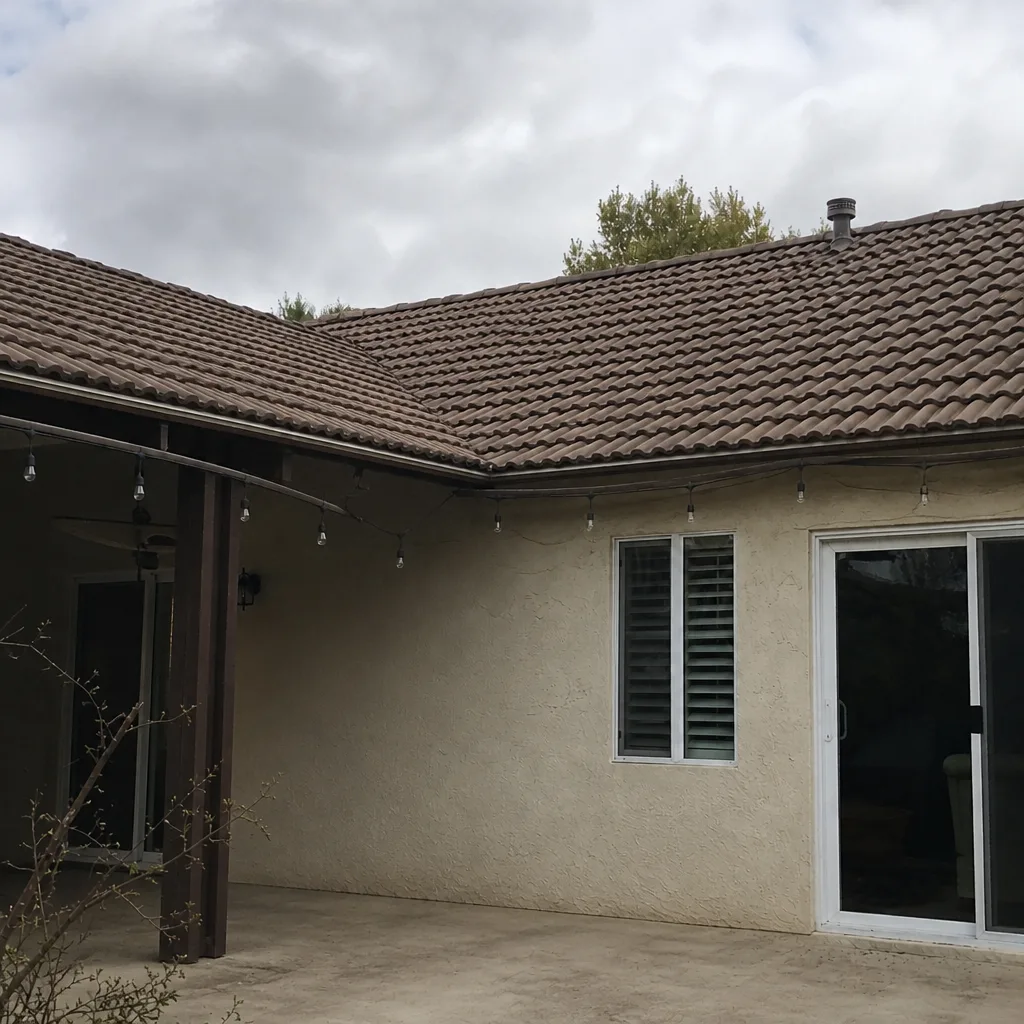
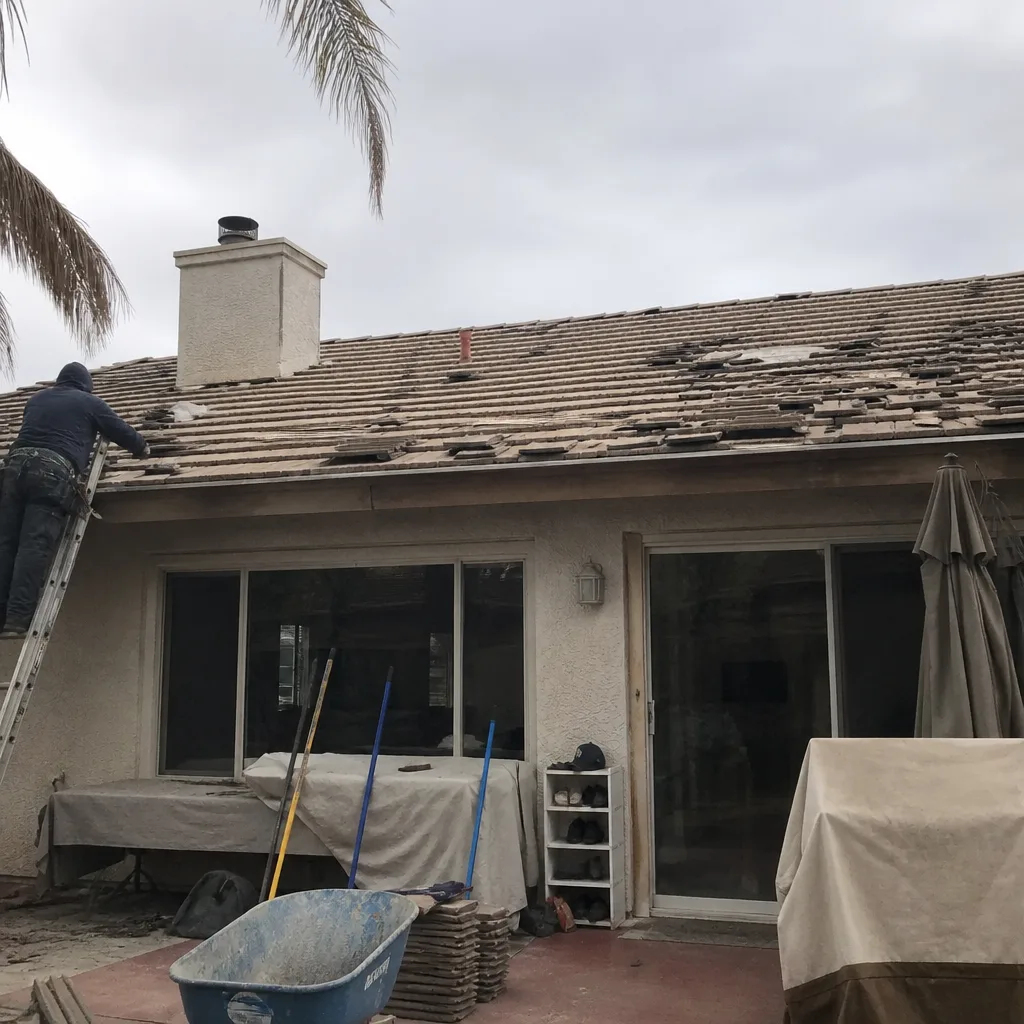
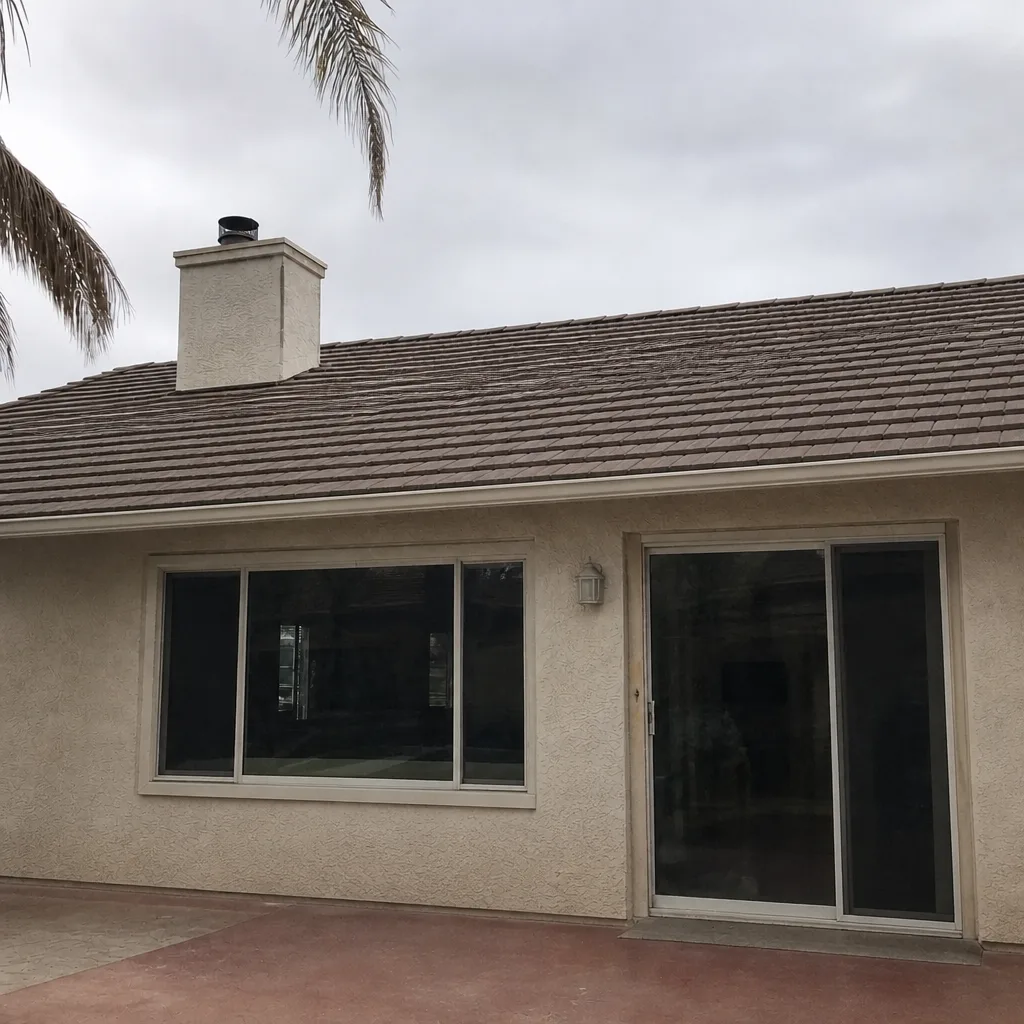
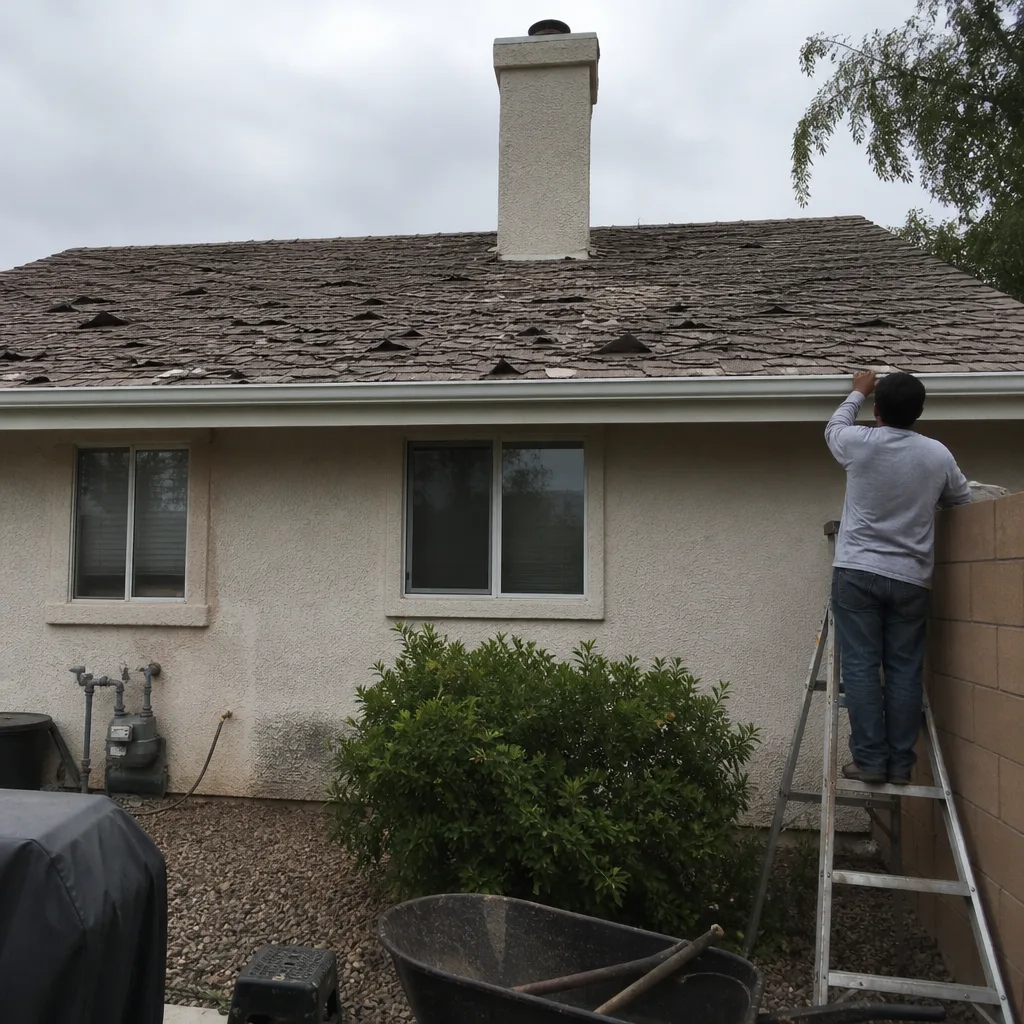
See the difference
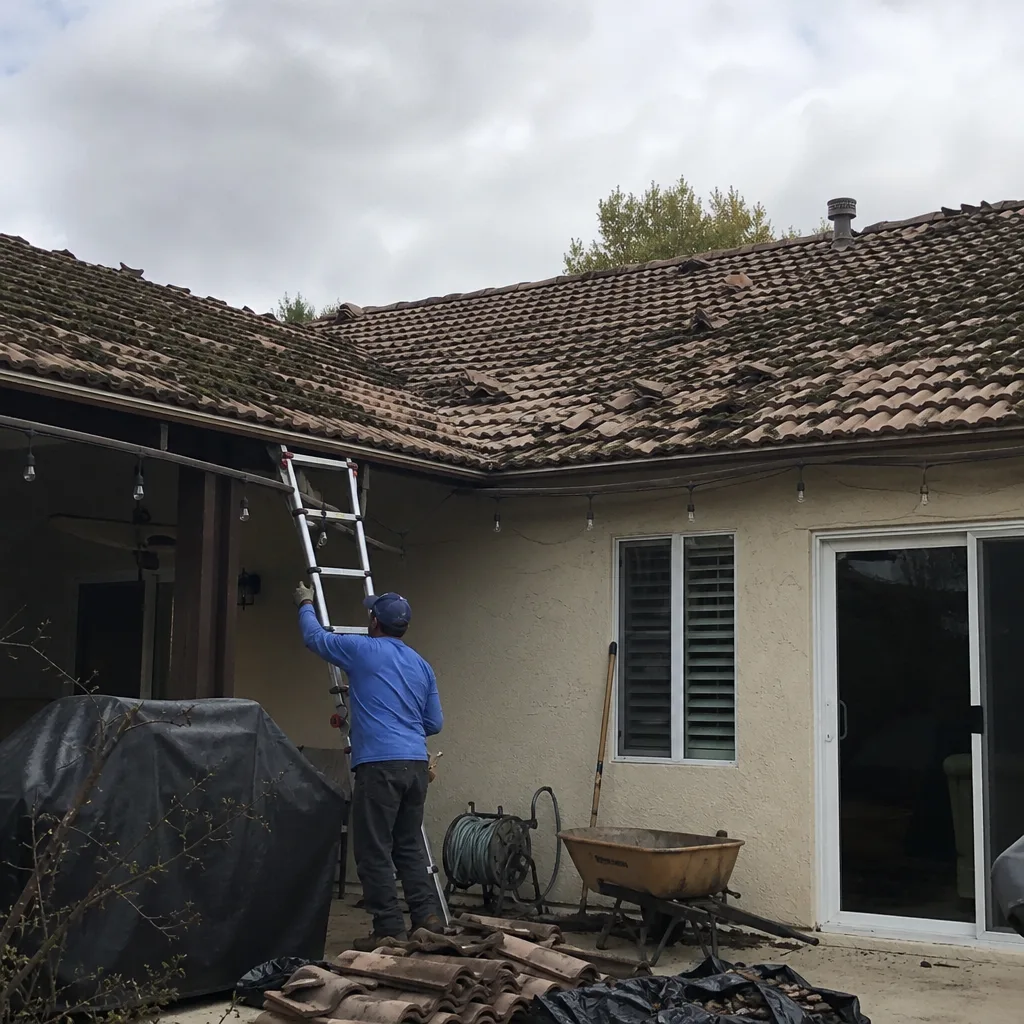 Before
 After
 Before
 After
 Before
 After
When to Call a Professional
Call us when the ceiling stain grows after a storm, when you can see flashing lifted from the ground, when a previous repair is leaking again, or when your quote for a repair is missing photos of the deck. Call us before you sign a storm-chaser contract – we’ll trace the leak from attic to roof with you and walk you through the evidence. Call us if you’re not sure whether the deck is dry, since that answer changes the whole scope of the job. Shepherd & Sons Roofing Summerlin offers free estimates in Summerlin – call (844) 951-4545. A live person answers, including nights and weekends after a monsoon. No trip charge inside our own county, and a Free Second Opinion on any written estimate you’ve already got in hand.
Frequently Asked Questions
A diagnostic on a Summerlin roof typically runs from $150 to $350, depending on whether the technician needs to get into the attic and trace a leak. That diagnostic is usually applied toward the actual repair. Flashing repairs run in the $400 to $900 range; field repairs run $600 to $1,500; ridge re-caps run $300 to $700. We don’t charge a trip charge inside our own county, and we take $40 off any repair over $200. Call (844) 951-4545 for an exact quote – estimates are free.
Because water travels along rafters and sheathing before it drips. A leak at a chimney flashing or a pipe boot can run six to twelve feet along the top plate of a rafter before finding a nail hole and dropping into your drywall. The stain tells you where the water exited, not where it got in. That’s why we trace from the stain uphill in the attic to the actual entry point before we quote.
Permits are required for full reroofs and for structural repairs in Summerlin; simple patch repairs usually don’t require one. We pull permits when the scope of work calls for it, and we coordinate the inspection so you have a signed-off job on record when you sell the house. If a contractor tells you permits aren’t needed for a full replacement, that’s a contractor who doesn’t want the inspection.
Not on our jobs. Our quotes are based on a diagnostic with photographs of the deck, not a phone estimate that gets rewritten at the door. If we open up the roof and find hidden damage underneath, we stop and photograph it before doing anything – then you decide. Fixed pricing with no change orders is the whole point of a real scope of work.
Most flashing repairs and pipe boot replacements are done in a few hours. Field repairs and valley work typically take one to two days. Ridge re-caps run a half-day to a full day depending on length. The determination is always made at the diagnostic, not on the phone, because the repair depends on what the deck shows.
It tells you the contractor either didn’t get on the roof or doesn’t want you to see what they found. A legitimate repair quote includes date-stamped photos of the failure, a measurement in squares, a written scope naming the materials, and a workmanship promise in writing. If a quote you’ve got doesn’t have those, we’ll do a Free Second Opinion on it at no charge – call (844) 951-4545.
The Bottom Line
Roof leaks are almost always uphill from where they show up. The repair that fixes a stain directly above the stain is often the repair that comes back as a callback six months later, and the contractor who scoped it should have told you so. Trace first: attic to roof, uphill to the entry point, with photographs of the deck before anyone touches a shingle. Match the fix to the failure – flashing, field, or ridge – instead of the symptom. And when a quote arrives without photos, that’s a signal, not a formality. Shepherd & Sons Roofing Summerlin has had the same address since 1996, and every roofing job carries the 90-Day Done Right Promise. Call (844) 951-4545 for a free estimate.
Written by the team at Shepherd & Sons Roofing Summerlin.