
Last updated November 18, 2026
 Architectural shingles
 Metal roofing
 Tile roofing
 GAF
 Owens Corning
 Flat & low-slope
Free roof inspection with deck photos before we talk money - GAF and Owens Corning certified installation
Roof Repair Warning Signs Every Homeowner Should Know
By the time you see a water stain on your ceiling, you’ve probably had an active leak for two to eight weeks. That’s the part that surprises people. The stain is the last thing to show up, not the first. The signs that appear before it are almost never on the warning-sign lists you’ll find online, and they’re the ones worth knowing about. In Summerlin, where the sun is brutal from May through September and the monsoon rolls in July and August, the early warning signs show up on the roof surface and in your attic long before they reach your drywall. This guide covers what to look for, how to check for it in ten minutes, and when to stop looking and pick up the phone.
Quick Answer
The earliest roof repair warning signs are granule loss collecting in gutters, cracked or lifted ridge caps, and flashing that has pulled up at HVAC curbs and swamp cooler penetrations. Inside the house, rising energy bills, uneven cooling on the top floor, and attic humidity spikes signal trouble before any water reaches your ceiling. Most Summerlin roof failures we see are caught at one of those three stages, well before drywall damage starts.
Styles & brands we work with
- Architectural shingles
- Metal roofing
- Tile roofing
- GAF
- Owens Corning
- Flat & low-slope
Table of Contents
- The Early Visual Signals We Check First
- Interior Warning Signs That Have Nothing to Do With Water
- What Healthy Concrete Tile Looks Like vs. Tile That’s 18 Months From Failure
- The Failure Point Almost Nobody Checks: Crickets and Saddles
- How to Do a 10-Minute Biannual Ground-Level Inspection
- Summerlin-Specific Failures We See Every Season
- Repair or Replace? A Simple Way to Decide
- Common Mistakes to Avoid
- When to Call a Professional
- Frequently Asked Questions
The Early Visual Signals We Check First
When we walk a roof in Summerlin, we look in specific places in a specific order. Those places aren’t random. They’re the spots where damage shows up first, months before it starts letting water through.
The first stop is the gutters. Granules are the rough sand-like surface on asphalt shingles, and they’re what protects the shingle from the sun. When a shingle has been baking in Summerlin heat for 15-plus years, the granules start to let go. If you run your hand along the bottom of a gutter and come up with a gritty palm, that’s a shingle losing its armor. Granule loss concentrated on the south and west slopes is normal wear. Granule loss on one specific section, or on shingles that aren’t the south-facing ones, is a sign of a problem.
The second is ridge cap cracking. The ridge cap runs along the peak of the roof, and it takes the most sun of any part of the roof. We regularly see summer failures where the ridge caps on a Summerlin home crack while the rest of the shingles look fine. You can often spot this from the ground with a phone camera zoomed in.
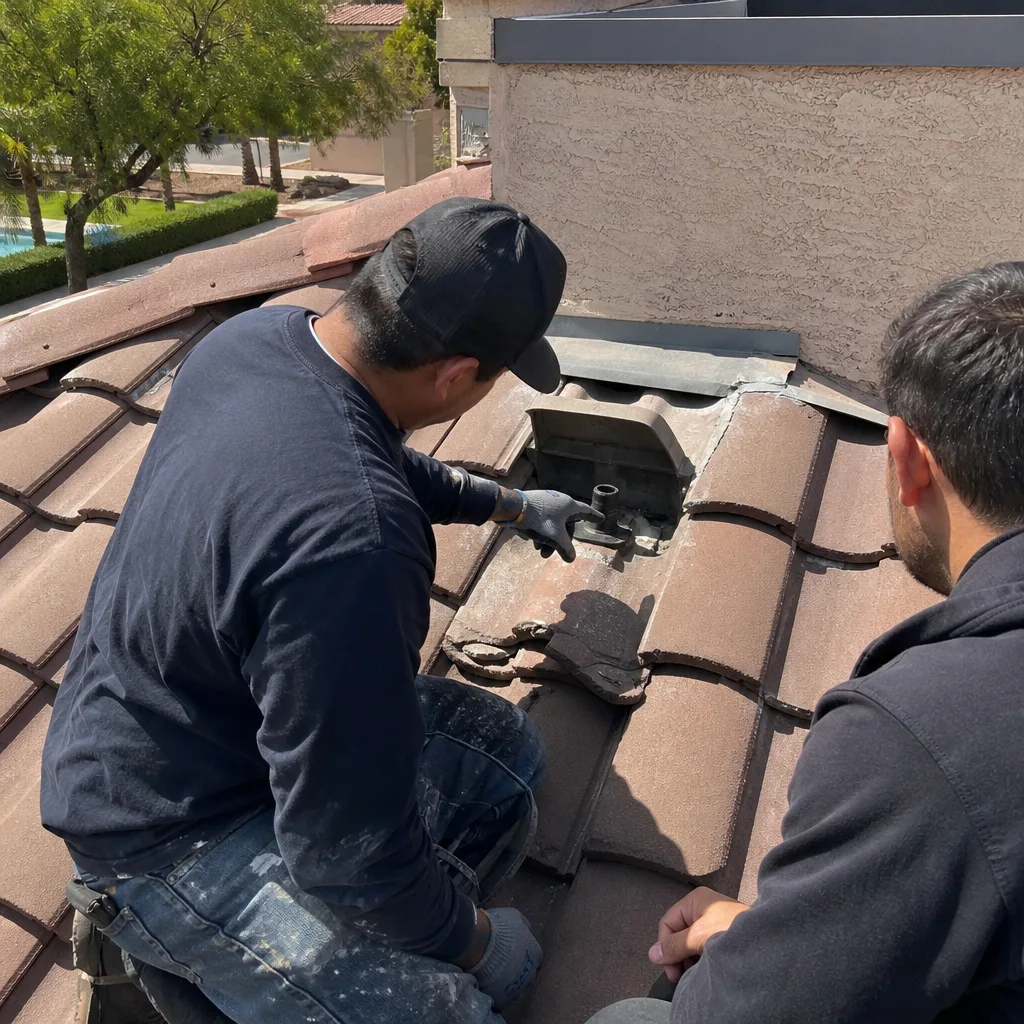
The third is flashing lift at HVAC curbs and swamp cooler penetrations. Every hole someone cut into your roof is a potential leak, and the metal flashing around those holes is what keeps it dry. When flashing begins to pull up – even a quarter inch – wind-driven rain in a Summerlin monsoon gets behind it. Check every curb and cooler mount for a gap, a lifted edge, or a rust streak.
Three places to look, in order:
- Gutter bottoms – a gritty palm means granule loss.
- Ridge caps – look for cracks, missing caps, or caps that have lifted.
- Every flashing point at HVAC curbs, swamp cooler mounts, and roof-to-wall intersections.
Interior Warning Signs That Have Nothing to Do With Water
Not every warning sign is on the roof. Some of the loudest ones are in your electric bill and your attic. These are the ones homeowners miss because they don’t feel like roof problems.
Energy bills creeping up. If your summer power bill has climbed over the last two seasons and nothing else has changed – same thermostat, same family, same habits – a degraded roof is a likely culprit. In a Summerlin summer, a roof with worn-out underlayment or lost granules lets heat soak through into the attic, and the AC has to work harder to make up the difference. A 10-15% jump in the July-August bill is worth investigating.
Uneven cooling on the top floor. The second story of a Summerlin home heating up faster than the first, or a bedroom that never quite cools down, often traces back to heat pushing through a roof that’s lost its performance. You can feel it with the back of your hand on the ceiling.
Attic humidity spike. A crawl through your attic in the morning with a cheap hygrometer tells you a lot. Attic humidity above 55-60% in dry Summerlin air means moisture is entering somewhere. That’s a leak in development, not a leak that has already reached the ceiling. Catching it at the attic stage is one of the cheapest possible outcomes.
Daylight in the attic. Any light coming through where roof meets wall or around a vent stack is a hole. Small, and usually easy to fix.
If any of those sound familiar, it’s worth a look. We’ve seen Summerlin homes where the energy-bill warning appeared a full roof cycle before the first water stain. Contact us for a free second opinion if you’re not sure what you’re looking at.
What Healthy Concrete Tile Looks Like vs. Tile That’s 18 Months From Failure
Most Summerlin homes are concrete tile, and concrete tile fools a lot of people because the tile itself almost never fails. The underlayment beneath it does. The tile is a sunshade; the underlayment is the actual roof. When the underlayment goes, you can’t see it from the street – but you can often read the tile.
Healthy concrete tile in Summerlin has an even, matte surface. The color should be uniform from ridge to eave on a given slope, with maybe a slight sun-fade on the west-facing tiles. Run your fingers across a dry tile: it should feel smooth-ish with fine grain. When you tap it lightly, it should ring solid, like a dinner plate, not dull.
Tile that’s 18 months from failure shows a specific set of signs:
- Chalky, powdery surface. If you can wipe a white powdery film off a tile with your thumb, the surface is breaking down and letting water through at a faster rate than the tile was designed to handle.
- Moss and dark streaking. Dark biological staining on the north slopes is common, but streaking that follows specific tile courses – especially below the ridge and below penetrations – points to water running under the tile, not over it.
- Curling or lifting at the corners. Tile that’s no longer lying flat across its neighbors is out of position and letting water underneath.
- Tile spalling. If the edges and corners are crumbling, the tile itself has reached end-of-life.
- Visible wrinkles in underlayment. From the eave or from a safe vantage point above, an underlayment that has wrinkled or hardened to the point of cracking is a roof that will start leaking within the next two rainy seasons.
The practical point: your concrete tile roof probably has a longer life than the underlayment under it. When the tile looks like it’s aging but the roof is leaking, the fix is usually a tile lift-and-relay with new underlayment – not a new tile roof. The right roof replacement work is worth doing once, done properly.
The Failure Point Almost Nobody Checks: Crickets and Saddles
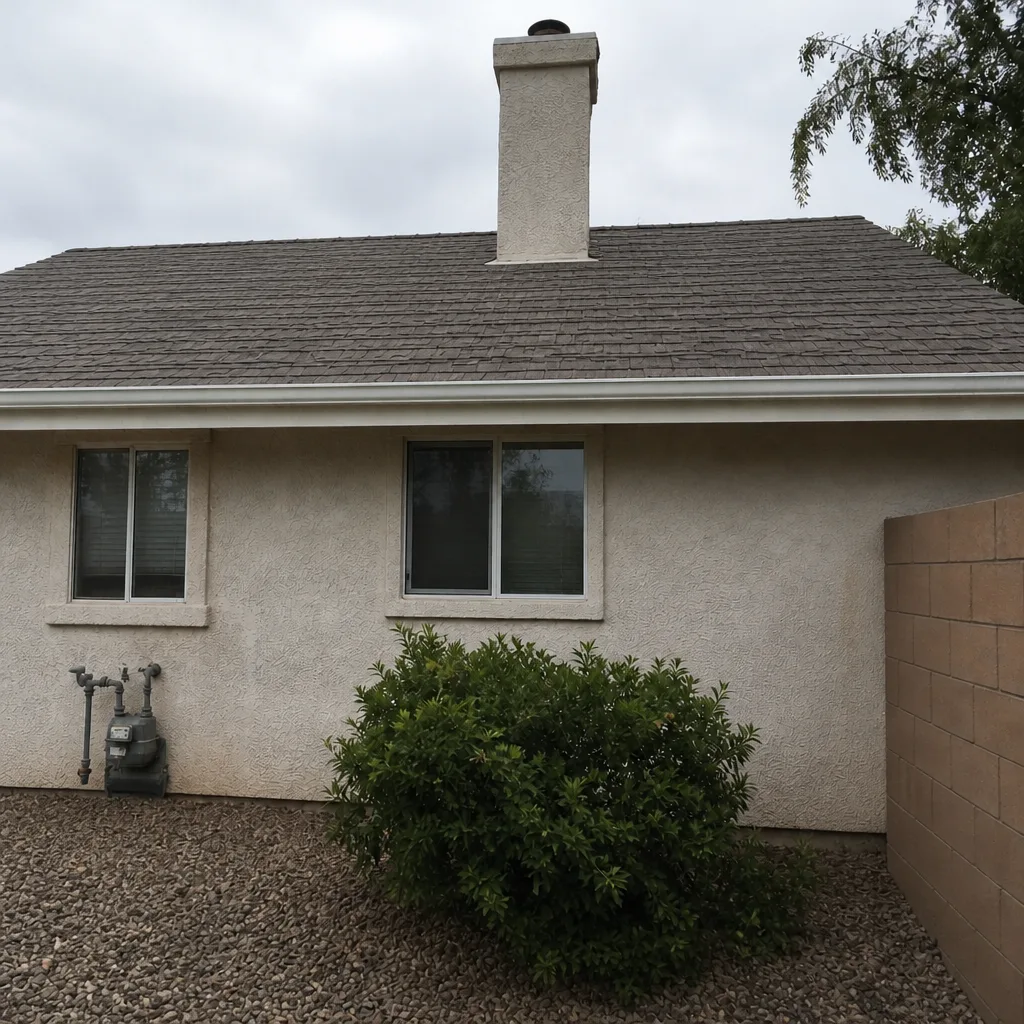
This is the one we’d put in ten-foot letters if we could. On Summerlin roofs with a chimney chase, there’s a small triangular “cricket” or a wider “saddle” built behind the chimney to divert water around it. Homeowners almost never look at these. When they fail, water gets into the chimney chase and takes months to show up inside – often as a stain on a ceiling two rooms away from the chimney itself, which makes the source hard to trace.
What to look for on a cricket or saddle:
- Flashing lift at the chimney wall. The metal counterflashing that ties the roof to the chimney brick should be tight and sealed. Any daylight visible or any gap at the top edge means wind-driven rain gets behind it during a monsoon.
- Split or missing cricket shingles. Crickets are small and steep, and their shingles take sun from three directions. They fail earlier than the rest of the roof. On Summerlin roofs we often see cricket shingles 3-4 years older than the surrounding field shingles, even when the roof was done as one job.
- Rust streaks on the chimney brick. Rust is iron oxide carried by water. A rust streak running down the brick from the flashing line means water is running behind the flashing.
- Efflorescence at the chimney base. White mineral deposits on the brick at the roof line mean moisture is moving through the masonry.
When we do a roof inspection, we walk every cricket. If yours hasn’t been checked in a few years, that’s a ten-minute reason to call us for a look.
How to Do a 10-Minute Biannual Ground-Level Inspection
You don’t need to get on the roof. You need to be smart about what you check from the ground, twice a year – ideally in March (before monsoon season) and in October (after it).
Here’s the ten-minute routine we recommend to Summerlin homeowners:
- Walk the perimeter with your phone. Start at the front door, walk slowly around the house, and take a photo of every visible roof slope from a distance. Wide shots first, then zoom-in shots of the ridge and each flashing point. This gives you a record to compare against next season.
- Zoom on the ridge line. A phone camera with a 3x or 5x zoom can see ridge cap cracking from the ground. Snap the whole ridge, then zoom on the areas that look “off.”
- Zoom on every flashing point. Chimney chase, HVAC curbs, swamp cooler mounts, and any roof-to-wall joins. Look for lifted edges, rust, or daylight at the wall.
- Check every gutter. Look for debris buildup, granule grit at the bottom, and water stains on the fascia behind the gutter. A gutter that’s backing up into the fascia board is a warning sign about the gutter, and often about the roof edge.
- Look straight up in the attic. From your attic access, shine a flashlight at the underside of the roof deck. Any water stain, dark spot, or daylight on the sheathing is worth writing down.
- Note today’s date and the condition. Save the photos in a folder on your phone. Next inspection, compare. New damage shows up as a change, not as something you try to remember.
Save the photos and add a calendar reminder for the second inspection six months out. Two of these a year will catch most of what we catch on a paid inspection. The things that require actual experience to read – like tile aging under the surface, or the mid-life warning signs of underlayment – are the ones where a professional eye pays for itself.
Summerlin-Specific Failures We See Every Season
The Summerlin climate has a specific failure fingerprint, and it’s different from other parts of the valley. Two things drive it. First, the number of heat cycles: the swing from a 108-degree July afternoon to a 75-degree night is hard on every roof product, and it’s harder in Summerlin because so many homes are concrete tile over underlayment. Second, the July-August monsoon: rain comes in hard and sideways, and it finds every flashing lift, every cracked ridge cap, and every failed cricket in the neighborhood.
Specific patterns we see every year in Summerlin:
- South and west slope wear. The slopes facing the afternoon sun in Summerlin age about 20-30% faster than the north-facing slopes on the same roof. When we write a bid, the slope direction matters.
- Tile underlayment failure at 18-22 years. The number varies by product, but on Summerlin concrete tile roofs we typically see the underlayment reach end-of-life in that window. The tile above it is often still in good shape.
- Ridge cap cracking on low-slope roofs. Newer Summerlin subdivisions have some roof pitches that are shallower than older homes. Shallow pitches put more heat and thermal stress on the ridge caps specifically.
- HVAC curb flashing failure in the fifth to eighth summer. The sealant around HVAC curbs shrinks in Summerlin heat. By summer 5-8, that sealant is often failing and needs refreshed.
- Swamp cooler penetrations. Evaporative cooler mounts are a Summerlin classic. The metal curb around a swamp cooler takes sun, and the sealant cracks first.
- Chimney cricket failure on Summerlin homes built in the 1990s and 2000s. Same story as the previous section, but on the Summerlin housing stock it’s the most common single surprise we find on inspection.
If you want the full picture on how we approach repair vs. replacement across different roof types, our Roof Repair in Summerlin page and Roof Replacement & Installation in Summerlin page cover the details. If you’re on a metal roof, the Metal Roofing in Summerlin page has the specific failure points to watch for.
Repair or Replace? A Simple Way to Decide
The honest answer to “do I need a repair or a replacement” depends on three things: how much of the roof is affected, how old the underlayment is, and how much time you’re buying with the repair.
A simple filter we walk homeowners through:
- Repair is usually the right call when the damage is isolated (a flashing lift, one failed cricket, a few cracked ridge caps) and the surrounding roof is under 15 years old, with a visible underlayment layer in good shape.
- Repair can still be the right call above 15 years if a specific, contained area is failing and you’re buying 2-4 years before a planned replacement. Be honest with yourself about that timeline.
- Replacement is usually the right call when the underlayment is at end-of-life, granule loss is widespread, or the “repair” is going to cover 30% or more of the roof. At that point, patching costs more per year than a complete job.
- Replacement is also the right call when the roof has already leaked enough to wet the deck sheathing underneath. Wet sheathing means hidden deck repairs, and adding those to a repair will often push you into replacement territory anyway.
Every bid we write includes a rough square count. A roof is measured in squares – ask any bidder how many they counted. If two bids don’t agree on squares, one of them is guessing. We install products from GAF, CertainTeed, Owens Corning, IKO, Atlas, Tamko, and Boral, so the material line is a real choice rather than a single default – the brand matters less than the install, but it matters.
Common Mistakes to Avoid
- Waiting for the water stain. The stain is a late signal, not an early one. If you’re waiting for it, you’re waiting for hidden drywall and insulation damage too. Call at the first sign in the attic or on the ridge.
- Judging a roof by its visible tile. Concrete tile roofs in Summerlin can look healthy from the street while the underlayment underneath is failing. The underlayment is the actual roof.
- Skipping the attic. Half the early warning signs live in the attic, not on the roof. Look at the underside of the deck, note humidity, and check for daylight.
- Taking the cheapest bid without a written scope. If the bid doesn’t list the squares, the shingles, the underlayment, the flashing details, and what happens if there’s hidden deck damage, it isn’t a bid. It’s a placeholder.
- Hiring a storm chaser who showed up after the last hail event. Every Summerlin monsoon brings a wave of out-of-town contractors with out-of-state tags and no local address. Ask for a license number you can look up and an address you can drive past. Same address since 1996. Ask the storm chasers where theirs is.
- Ignoring the crickets and saddles. The most common missed failure point on a Summerlin roof is behind the chimney chase. Have it checked every few years, even if the tile looks fine.
- Doing the inspection once and never again. Roofing condition changes. Two ground-level inspections a year – March and October – will catch more than an annual look.
When to Call a Professional
You should call us – or any qualified roofer – when you see any of the following: granule loss in a new pattern, ridge caps that are cracked or lifted, flashing that has pulled up at any penetration, a cricket or saddle behind the chimney that hasn’t been checked in the last five years, an attic humidity reading above 55%, daylight on the underside of the sheathing, or a full set of summer power bills that have crept up more than 10%. Also any active drip, and any visible water stain. Those are the signs where a pro eye saves money.
And to be clear about the check we do: we don’t need to be on your roof to give you an answer. We show up, we walk it, we take photos, we show them to you. You’ll see the deck photos before we talk money. If the answer is “you’re fine, come back next year,” that’s what you’ll hear – and we’d rather tell you that than talk you into a roof you don’t need. Our team has up to 30 years of experience on Summerlin roofs, and we’ll tell you the truth either way.
Shepherd & Sons Roofing Summerlin offers free estimates in Summerlin – call (844) 951-4545. Every roofing job carries our written 90-Day Done Right Promise, and a live person answers the phone – not a call center.
Frequently Asked Questions
If the damage is isolated to a specific flashing point, a cricket, or a few ridge caps, and the underlayment is under 15 years, it’s a repair. If the underlayment is at end-of-life, granule loss is widespread, or the deck sheathing has gotten wet, replacement is the better investment. The cleanest way to decide is a proper inspection with photos of the deck. Call (844) 951-4545 for a free estimate.
The first sign is usually not on the ceiling. It’s granule loss in the gutters, ridge cap cracking, flashing lift at penetrations, or an attic humidity spike – and often an energy bill that has crept up without explanation. On a Summerlin home, by the time a stain appears, the leak has usually been active for weeks. Free second opinion on any written estimate.
Once a year for a professional look, and twice a year for the ten-minute ground-level check we recommend – March before monsoon season and October after it. Concrete tile roofs and asphalt roofs age differently, but the schedule is the same. Any roof over 15 years old deserves an annual pro inspection. Call (844) 951-4545 to schedule yours.
Yes. Granules collect in your gutters and downspouts, so cup your hand along the bottom of the gutter after a dry week and look for grit. Dark, gritty residue on your palm is granule loss. From the ground, a phone camera with 3x or 5x zoom can also spot thinning on the south and west-facing slopes. Free second opinion on any written estimate.
It can be, especially if the tile itself is still in good shape. The tile usually lasts 40-50 years; the underlayment underneath it lasts about 18-22. That means a 20-year-old Summerlin tile roof is often ready for a tile lift-and-relay with new underlayment – keeping the tile, replacing the failing layer underneath. We’ll tell you honestly which one makes sense. Call (844) 951-4545.
We don’t charge a trip fee inside our own county, and no one on our crew will try to sell you a roof before they’ve shown you the photos of what they found. If the honest answer is “you don’t need us yet,” that’s what you’ll hear. Call (844) 951-4545 – when the phone rings, a real person answers.
The Bottom Line
The warning signs worth knowing are the early ones. Granule loss in the gutters, cracked ridge caps, lifted flashing at HVAC curbs and swamp cooler mounts, chalky or curling concrete tile, an unchecked cricket behind the chimney, attic humidity above 55%, and summer energy bills creeping up more than 10% all show up before the first drop hits drywall. Twice a year, spend ten minutes with your phone and a flashlight in the attic. When you see something you can’t read, call us. In Summerlin, we’d rather give you a free second opinion than have you discover a leak in August. Call (844) 951-4545 – a live person answers, day or night.
Written by the team at Shepherd & Sons Roofing Summerlin.
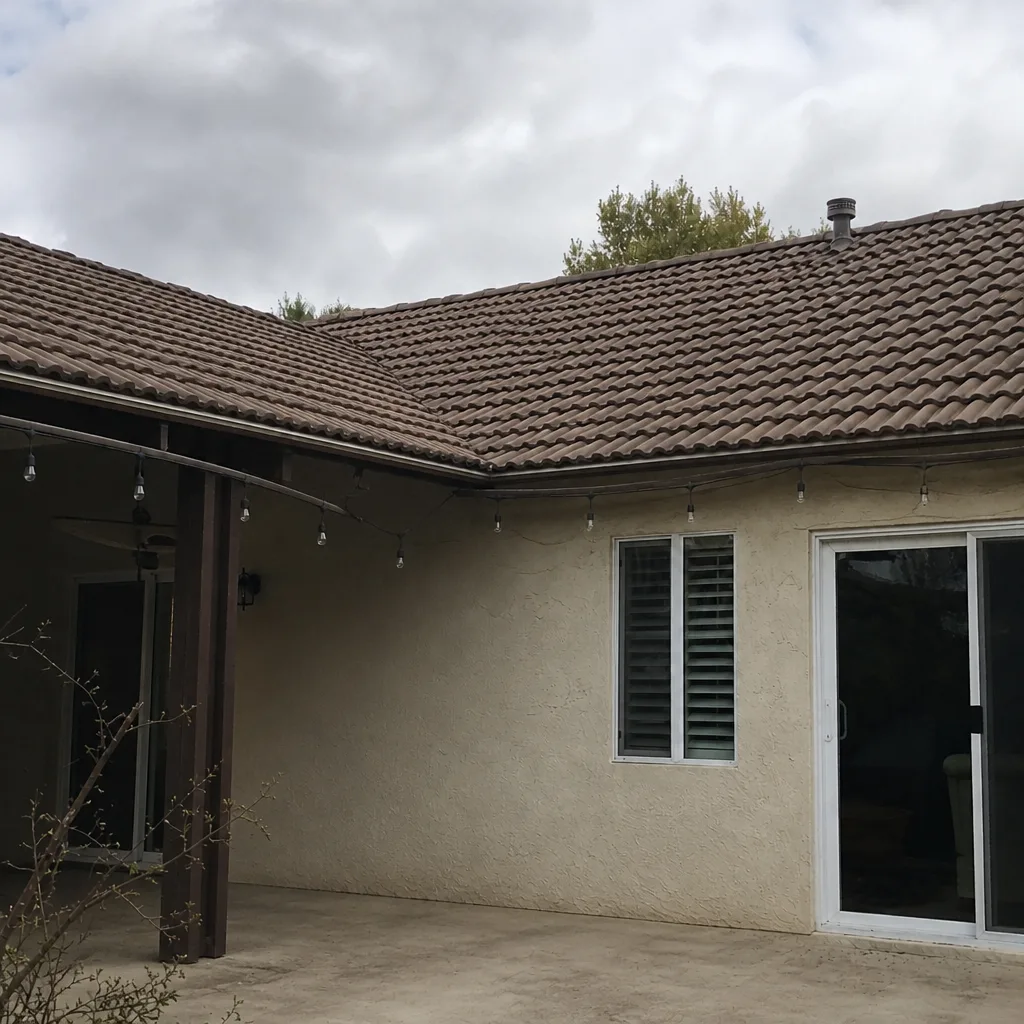
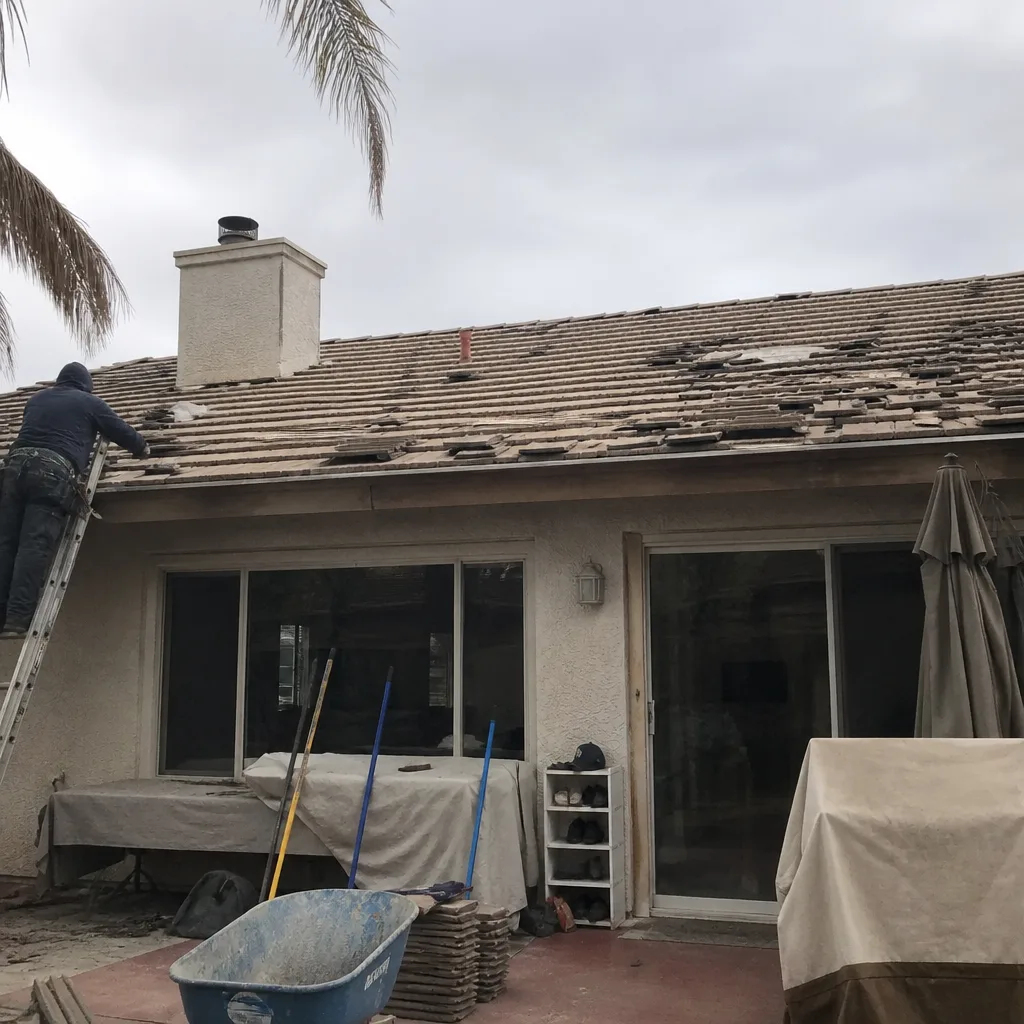
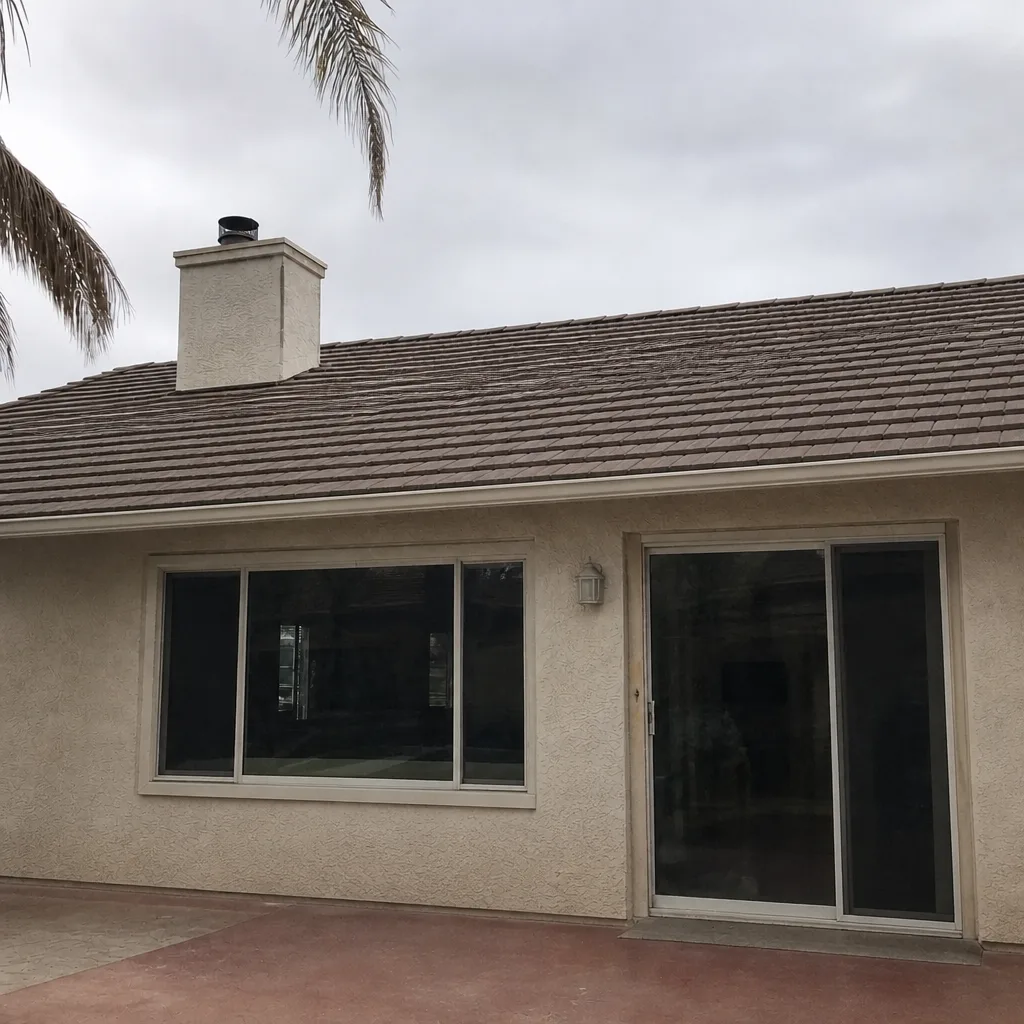
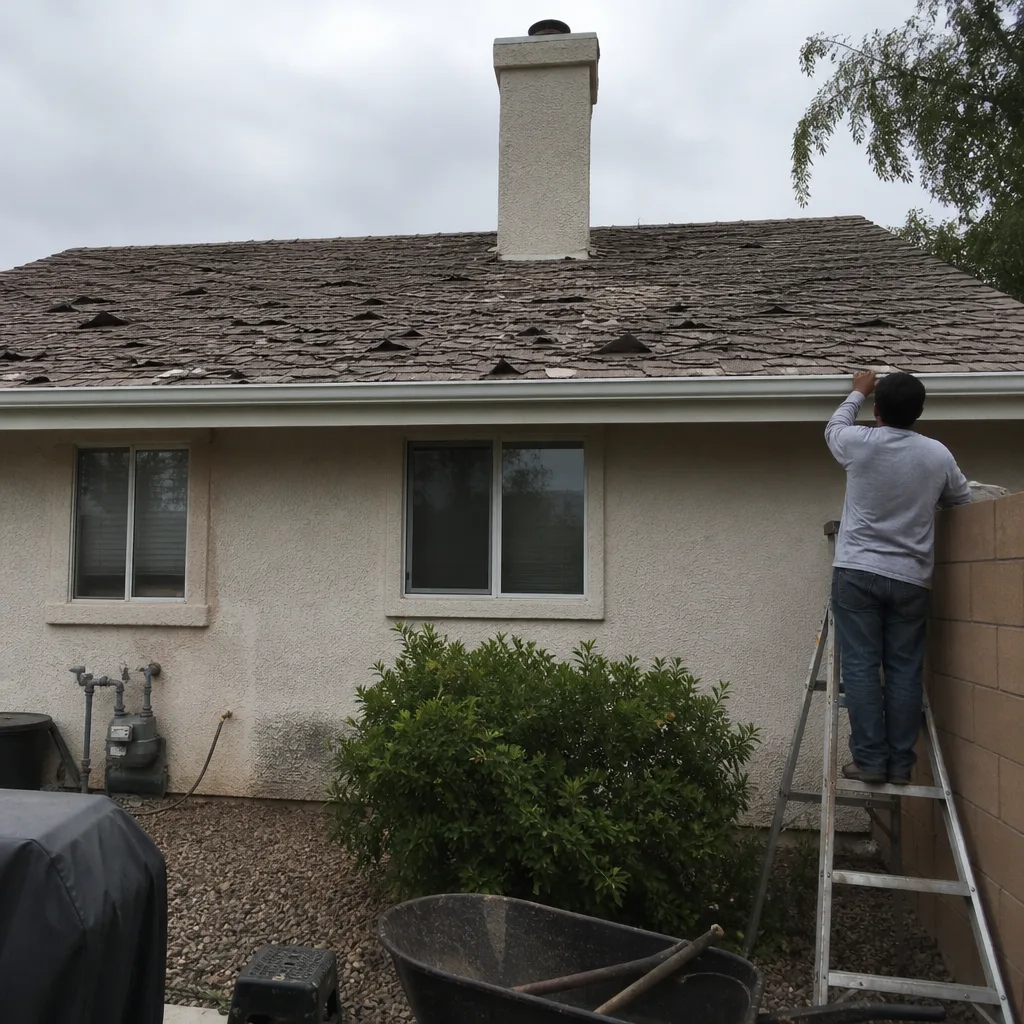
See the difference
 Before
 After
 Before
 After
 Before
 After