
Last updated November 18, 2026
 Metal roofing
 Architectural shingles
 Tile roofing
 GAF
 Owens Corning
 Flat & low-slope
Free roof inspection with deck photos before we talk money - GAF and Owens Corning certified installation
Metal Roofing Troubleshooting: Common Problems and How to Fix Them
If your metal roof is leaking, there is an 80% chance the water is entering at a fastener, a flashing joint, or a penetration – not through the panel itself. The panel is almost never the problem. Here in Summerlin, where the heat cycle runs from cold desert mornings to brutal afternoon sun, we’ve torn into enough leaking metal roofs to see the same three installation mistakes over and over – mistakes made years earlier by somebody who isn’t coming back. This guide walks through the symptoms, the real root causes behind each one, and what the fix actually looks like. Most “metal roof problems” turn out to be contractor problems.
Quick Answer
Nine out of ten metal roofing problems we see in Summerlin trace back to installation error, not material failure – specifically fastener back-out, failed flashing at transitions, and condensation from a mixed-up attic assembly. The fix depends entirely on where the water is coming from: a leak at a fastener or penetration needs localized repair, while oil-canning and most surface rust are usually cosmetic. Only a small share of problems require a full re-roof, and that decision should follow an inspection, not a guess.
Styles & brands we work with
- Architectural shingles
- Metal roofing
- Tile roofing
- GAF
- Owens Corning
- Flat & low-slope
Table of Contents
- Start Here: The Metal Roof Symptom-to-Cause Diagnostic Tree
- Fastener Back-Out in the Summerlin Heat Cycle
- Attic Condensation: The Spray Foam Problem Nobody Warns You About
- Rust on Galvalume vs. Painted Steel vs. Stone-Coated
- Flashing Failure at Parapet Walls and Flat-to-Pitched Transitions
- Oil-Canning Dents: Cosmetic or Structural?
- Repair vs. Full Re-Roof: How to Decide
Start Here: The Metal Roof Symptom-to-Cause Diagnostic Tree
The single biggest time-waster in metal roof troubleshooting is treating every leak like the roof is failing. It isn’t. Where the water shows up tells you almost everything about where it’s getting in. Match your symptom to the list below before you call anybody – it will save you money whether you hire us or not.
- Leak at a penetration (vent pipe, chimney, skylight, exhaust stack): almost always a failed sealant collar or a boot that’s dried out and split. The panel is fine. The penetration flashing isn’t.
- Leak at the eave or drip edge: usually water backing up under the panel because the underlayment or edge metal wasn’t lapped correctly, or a gutter is dumping against the fascia. Rarely the panel itself.
- Water on the underside of panels, no obvious path (interior condensation): not a leak at all. Warm moist air is hitting a cold metal surface and condensing. This is an attic ventilation problem, not a roof problem.
- Oil-canning dents (the wavy ripples between fasteners, especially on wide pans): cosmetic in most cases, caused by thermal movement or over-tightened fasteners. Doesn’t leak on its own.
- Rust streaks or bubbling paint: depends on the panel type and where the rust is. Surface oxidation on the cut edge of Galvalume is normal. Rust eating through a fastener is a structural warning.
Here’s the thing we tell folks in Summerlin: get the symptom right first, and the fix usually costs a fraction of what a re-roof quote will scare you into. Get it wrong – say, tearing off panels to chase a condensation problem – and you’ve spent real money for nothing. For a full rundown of how we approach repairs versus replacement, see our Roof Repair in Summerlin page.
Fastener Back-Out in the Summerlin Heat Cycle
Exposed-fastener metal panels – the kind screwed straight through the panel into the purlins – are common here, and they have one predictable enemy: the Summerlin thermal cycle. Our daytime highs and overnight lows swing hard across the year, and every swing makes the metal expand and contract. Over a few thousand cycles, a fastener that wasn’t driven to the right depth with the right washer starts to walk loose. You’ll see it as a little ring of rust around a screw head, or a washer that’s cracked and cupped.
Why does it matter? A backed-out fastener stops compressing its sealing washer, and that’s your leak. Not a hole in the panel – a hole beside it. We’ve walked metal roofs in Summerlin where a dozen fasteners had worked loose while the panels themselves were perfectly sound.
What the fix looks like, in order of seriousness:
- Loose fasteners, sound panels: replace the screws with the correct gauge and a fresh EPDM washer, driving to the right depth – not over-tight, not under. Localized, fast, and it stops the leak.
- Stripped or enlarged holes: step up to a slightly larger fastener or move to the next purlin line, so the new screw bites clean metal.
- Widespread back-out with cracked panels around fasteners: this is where it gets expensive. If a large share of the panel attachment has failed, patching screws one at a time stops making financial sense and you’re looking at re-securing panels or a new roof.
A roofer who reaches for a full re-roof the second they see a loose screw is either guessing or selling. The nailing – or in this case, fastening – pattern earns the wind rating, not the panel wrapper. Get it right and the roof holds.
Attic Condensation: The Spray Foam Problem Nobody Warns You About
This one has become more common every year in Summerlin, and it’s why the “leak” you’re seeing might not be a leak at all. Here’s the pattern: a homeowner adds spray foam insulation to the underside of a metal roof deck during a remodel or an energy upgrade, closing the attic up tight. Then the water starts showing up on the underside of the panels. They call it a leak. It’s condensation.
Metal is a near-perfect thermal bridge. Spray foam on the underside of a metal deck, done without a proper vapor barrier and ventilation plan, traps warm moist air from the house against a cold metal surface on our cool desert nights. Water beads. Water drips. And it looks exactly like a roof leak – until you get up there and find the panels dry on top and wet underneath.
What to check before anyone touches a panel:
- Is the moisture on the underside of the panels, or coming from above? That single question changes the whole diagnosis.
- Was spray foam recently installed, or the attic sealed up and ventilation reduced? Timing is a clue.
- Is there a vapor barrier between the conditioned space and the metal, and is the attic actually vented?
The fix for true condensation is rarely on the roof surface. It’s correcting the attic assembly – the ventilation, the vapor control, sometimes adding a thermal break under the panels. I’ve told more than one Summerlin homeowner to spend their money on the attic, not a new roof, and meant it. For how we handle attic and ventilation questions during a roof install, see our Roof Replacement & Installation in Summerlin page.
Rust on Galvalume vs. Painted Steel vs. Stone-Coated
Not every rust spot means the same thing, and this is where a lot of homeowners get talked into a re-roof they don’t need. Which surface you’re looking at decides whether a stain is cosmetic, a warning, or a warranty issue.
- Galvalume (unpainted steel with a metallic coating): the cut edges and any scratched spots will show a little surface oxidation, and that’s normal – the coating is designed to protect itself as long as the rust stays on the edge. Rust spreading across a field of panel means the coating itself has failed, which is a much bigger deal and often a warranty matter.
- Painted steel (the colored panels from makers like Owens Corning, IKO, Atlas, and Tamko – most of what’s on Summerlin homes): chalking and fading are cosmetic. Bubbling paint that peels back to expose bare steel is a coating failure and needs attention before the metal starts to rust through.
- Stone-coated steel (granule finish): granule loss and small rust freckles are usually cosmetic early on. Rust coming through from below the granules, or along a folded edge, is structural and can void the finish warranty.
The rule of thumb: rust on a cut edge or a scratch is cosmetic. Rust eating through a fastener or spreading across the flat of a panel is structural. And a repair done wrong – slapping the wrong sealant over a rusted fastener, for example – can void your finish warranty, so check with the manufacturer’s spec before you touch it. When in doubt, we’ll look at it and tell you which bucket you’re in.
Flashing Failure at Parapet Walls and Flat-to-Pitched Transitions
Most metal roofing troubleshooting guides skip this, and it’s one of the most common failure points on Summerlin homes. A lot of our neighborhoods have flat-to-pitched transitions and parapet walls – the raised walls that run along the roof edge on flat sections. Where the metal panel meets a parapet, or where a pitched metal roof ties into a flat section, there’s a flashing detail. That detail is where water wins if it was done badly.
The pattern we see: the flashing was installed with sealant alone and no proper counter-flashing or reglet, so there’s nothing keeping water out once the sealant ages out – and in our sun, sealant ages out fast. Water gets behind the flashing, runs along the wall, and shows up as a stain on the ceiling inside, sometimes 10 feet from where it went in.
What a correct fix involves:
- Find the actual entry point at the flashing – not just the interior stain, which lies to you about location.
- Remove the failed sealant-only joint and cut a proper reglet, or install new counter-flashing lapped correctly against the wall.
- Use the right metal-to-metal lap with the right underlayment detail, not a bead of caulk over a gap.
- Re-check the tie-in at the flat-to-pitched transition, since they usually fail together.
This is precisely the kind of detail where a cheap install shows up years later. Flashing done right costs a little more up front and lasts; caution and sealant is a temporary fix at best. We look at every transition on any Summerlin roof we inspect.
Oil-Canning Dents: Cosmetic or Structural?
Oil-canning is the wavy rippling you see between fasteners on wide metal panels – it looks like the panel is dented or sagging, and it makes a lot of homeowners panic. The truth: in the large majority of cases it’s cosmetic. It doesn’t leak, it doesn’t mean the roof is failing, and it doesn’t shortchange the roof’s life. It’s a visual matter caused by thermal movement, over-driving fasteners during install, or panels that were too wide for the deck. It’s a reminder that the day of install is when most of these show up.
There is one exception worth knowing. If oil-canning comes with a leak nearby, or the panels are visibly lifting, the problem isn’t the cosmetics – it’s attachment. That’s a fastener or purlin issue and needs a real look. But the average wave in a Summerlin roof? Nothing to fix. If a bidder is using oil-canning as the reason you need a full re-roof, ask them to show you where it’s leaking. Nine times out of ten they can’t.
Repair vs. Full Re-Roof: How to Decide
The honest answer to “do I repair or re-roof” is that it depends on three things: how much of the attachment system has failed, whether the coating is structurally compromised, and how old the roof actually is. We’ve seen Summerlin metal roofs with a dozen loose fasteners get repaired for a fraction of replacement cost and hold up for years. We’ve also seen roofs where the whole attachment had gone, and patching it would have been throwing money at a losing battle.
A quick way to think about the decision:
- Repair makes sense when the problem is localized – a flashing detail, a handful of fasteners, a single penetration – and the panels and coating are otherwise sound.
- Re-roof makes sense when attachment has failed broadly, the coating has failed across the field, or the deck underneath is compromised.
What matters is that the decision follows an actual inspection from someone who will still be around in five years. A lot of the metal roofing “problems” we get called about in Summerlin were created by out-of-state crews who drove through after a storm, installed fast and cheap, and moved on. Our Metal Roofing in Summerlin page covers how a metal roof should be installed so it doesn’t end up as a troubleshooting case in the first place.
Common Mistakes to Avoid
- Treating condensation like a leak. If the moisture is on the underside of dry panels, no amount of flashing repair will fix it – you’ll spend money on the wrong problem. Diagnose the attic, not the roof surface.
- Slapping sealant over a backed-out fastener. It hides the problem for a season and can void your finish warranty. The screw needs replacing, not caulking.
- Letting a bidder talk you into a re-roof over oil-canning alone. If it isn’t leaking and the panels are attached, oil-canning is cosmetic. Ask to see the leak before you approve a replacement.
- Adding spray foam without a ventilation and vapor plan. This is the number one cause of “leaks” we find in Summerlin attics after energy upgrades. Seal it tight without the right assembly and you’ve traded a heat bill for a moisture problem.
- Ignoring rust on a fastener until it spreads. One rusted fastener is cheap to swap. A line of them that’s rusted through the panel around them is not.
- Hiring a storm chaser with no local address. When the flashing detail they installed fails in two years, they’re gone. Ask for the address and the license number. Same address matters.
- Skipping the flat-to-pitched transition during repair. It’s the detail most guides skip and one of the first to fail. If you’re fixing a parapet flashing, check the tie-in while you’re up there.
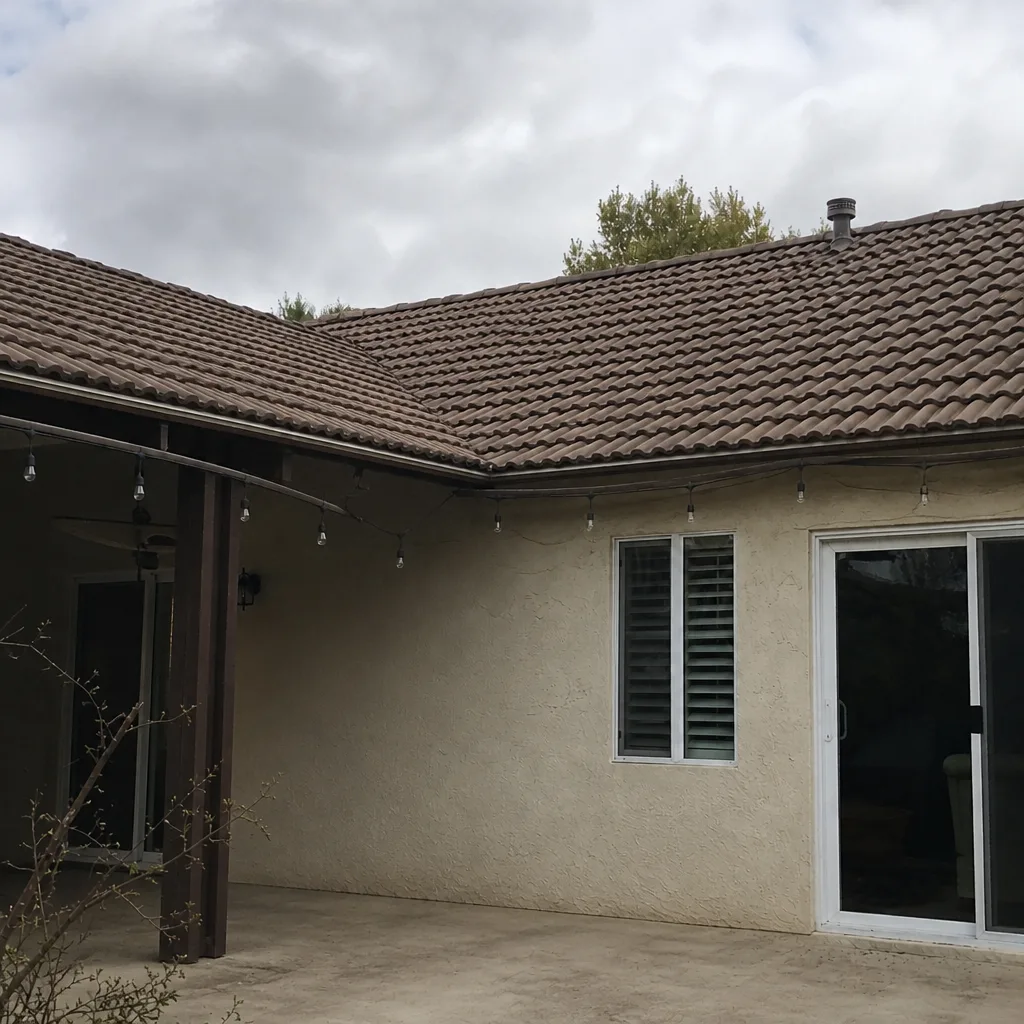
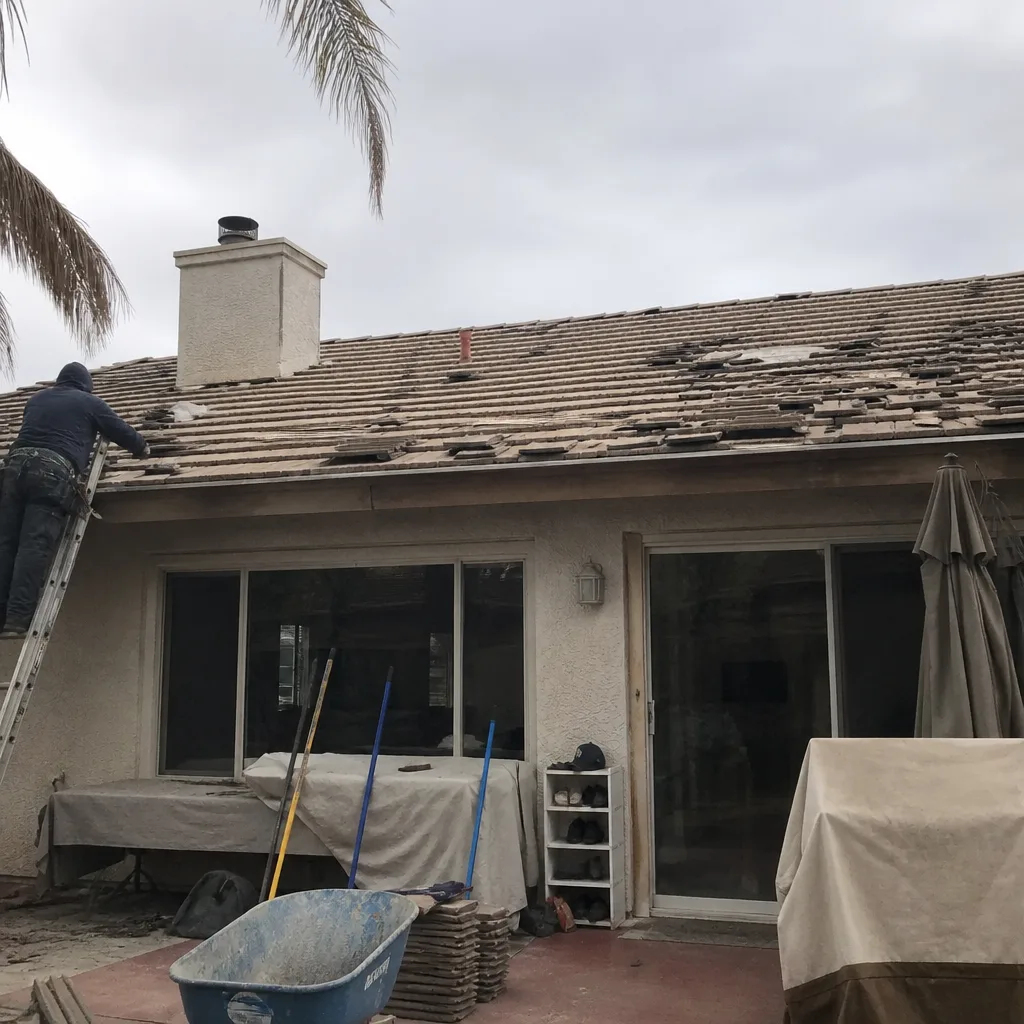
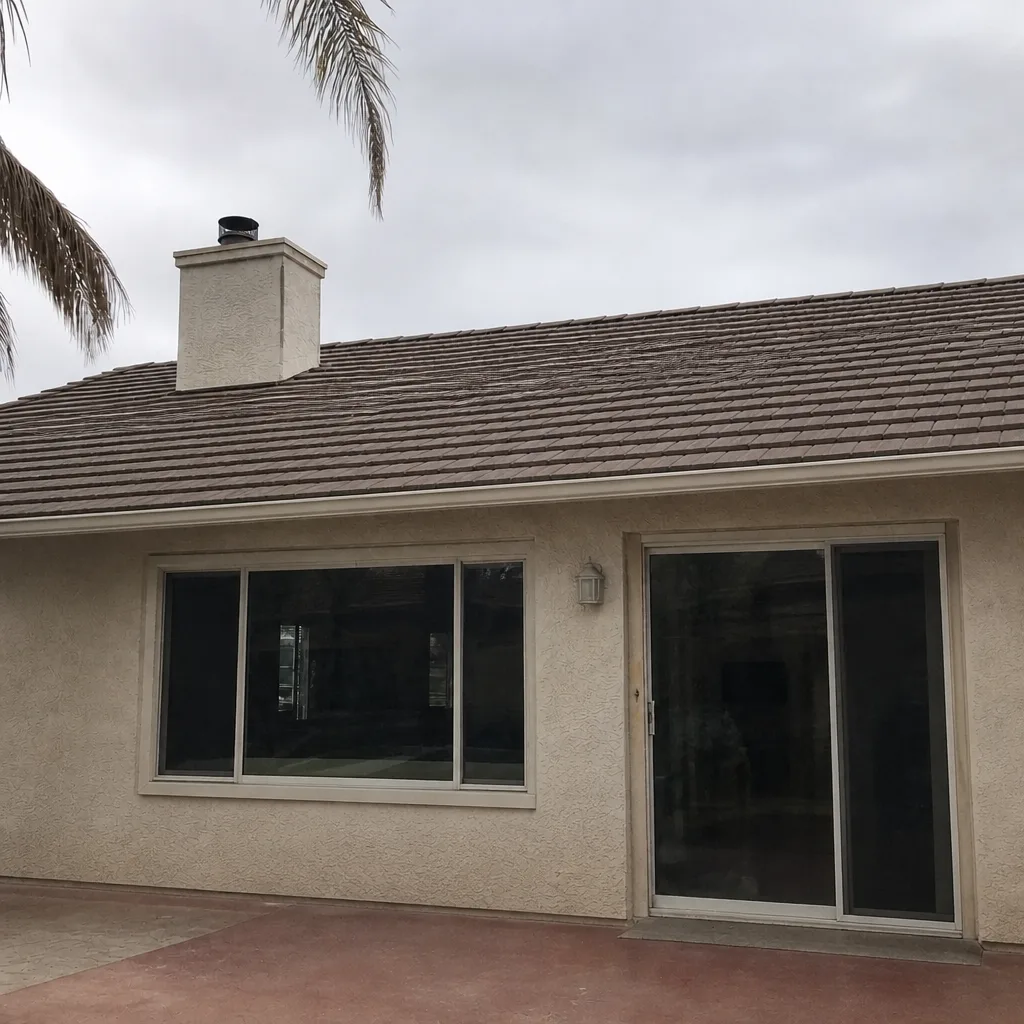
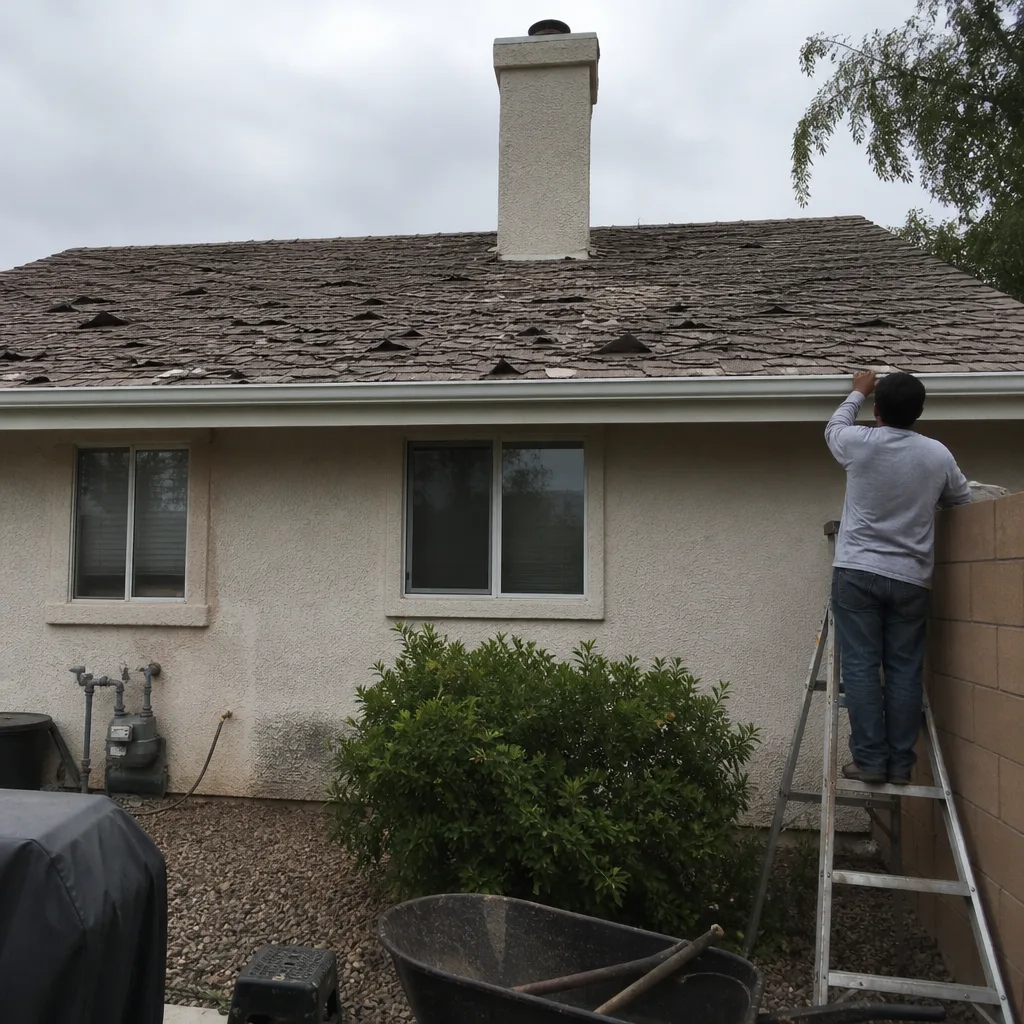
See the difference
 Before
 After
 Before
 After
 Before
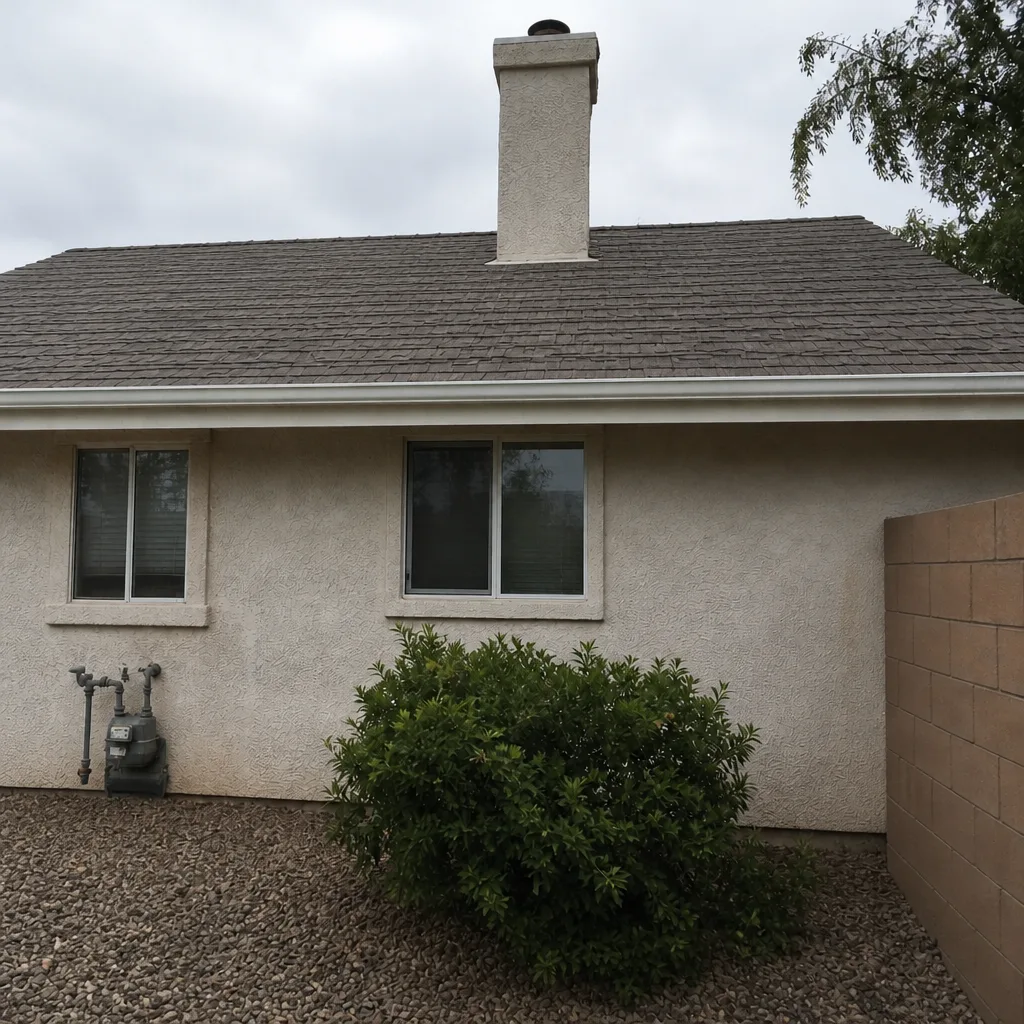 After
When to Call a Professional
Some of this you can check yourself – walk the roof from the ground, look for rust rings around fasteners, watch for interior moisture patterns after a cool night. But call a professional when you see any of the following: water on the underside of panels with no obvious entry point (that’s a condensation or attic problem that needs a real diagnosis), a parapet or flat-to-pitched flashing that’s failing, rust spreading across the flat of a panel, or a leak you can’t pin to a single spot after one attempt. Metal roofs are slippery when dusty, and the panels are sharp and hot – the “how to check” is safe, the “how to fix on a ladder” usually isn’t. If you’re in Summerlin and want an honest read on what’s actually wrong, Shepherd & Sons Roofing Summerlin offers free estimates in Summerlin – call (844) 951-4545. We’ll show you what we found before we talk money, and if it’s cosmetic, we’ll tell you that too.
Frequently Asked Questions
Because the water is almost certainly getting in at a fastener, a flashing joint, or a penetration – not through the panel. Check for rust rings or cracked washers around fasteners and any failing sealant at chimneys, vents, or parapet walls. If those look sound and the moisture is on the underside of dry panels, the cause is attic condensation, not a leak. Call (844) 951-4545 for an exact diagnosis – estimates are free.
It depends on the cause, not the square footage. A handful of replaced fasteners or a single penetration repair is a small job; replacing failed parapet flashing is a mid-range one; a full re-roof is the only expensive option and it’s rarely the first answer. We give written line-item pricing so you can see what you’re paying for. Call us for a free estimate on your specific roof.
You can spot them from the ground, but we don’t recommend climbing up to drive them yourself – metal panels get dangerously hot and slick, and over-driving a fastener is one of the causes of the leak in the first place. The right screw, the right washer, and the right depth do the job; a screw gun and a guess don’t. Have a professional handle the repair and you protect the warranty too.
No. Surface oxidation on the cut edge of Galvalume and small scratches are cosmetic and normal. Rust spreading across a flat panel, or eating through a fastener, is structural and needs repair. If a bidder tells you cosmetic edge rust means you need a new roof, get a second opinion.
Oil-canning can appear later as the panels expand and contract through thermal cycles, even on a correct install. It’s usually cosmetic and doesn’t mean the roof is failing. It only matters if it comes with a leak or lifting panels – then it’s an attachment issue. If a roofer is using the wave alone to sell you a re-roof, ask to see the leak.
Yes, and it’s mostly about the heat cycle and the sun. Have the fasteners checked every few years for back-out and cracked washers, keep the gutter from dumping against the fascia, and watch the sealant at flashing joints since our sun ages it fast. A short check now prevents a costly repair later. Call (844) 951-4545 to schedule a free estimate on any concern.
The Bottom Line
Most metal roof problems in Summerlin aren’t the metal – they’re the install. Water gets in at fasteners, flashing, and penetrations, not through the panel. Learn to tell condensation from a leak, rust on an edge from rust through a panel, and cosmetic oil-canning from a failed attachment, and you’ll avoid most of the expensive mistakes. The roof is a system, and the details earn the performance. If you want an honest read from someone who’ll still be at the same address when the storm chasers are long gone, Shepherd & Sons Roofing Summerlin is here – free estimates, no trip charge inside our own county. Call (844) 951-4545 to schedule yours. For everything else we do, start at our Shepherd & Sons Roofing Summerlin home page.
Written by the team at Shepherd & Sons Roofing Summerlin.