
Last updated November 18, 2026
 Tile roofing
 Architectural shingles
 Metal roofing
 GAF
 Owens Corning
 Flat & low-slope
Free roof inspection with deck photos before we talk money - GAF and Owens Corning certified installation
Tile Roofing Troubleshooting: Common Problems and How to Fix Them
Most calls we get about tile roofing start the same way. A homeowner in Summerlin points at one cracked tile and says, “There’s the leak.” Sometimes they’re right. More often, that cracked tile is a witness, not a suspect. The real failure is underneath it, in the underlayment or the deck, and it has been quietly working for a season or two before it ever showed up on your ceiling. Replacing the tile alone fixes the appearance. It does nothing for the leak. This guide covers what each symptom actually tells you, how Summerlin’s monsoon season shapes tile failures here, and what you can check yourself versus what needs someone up on the deck.
Quick Answer
Most tile roof leaks aren’t caused by the tile at all. The tile sheds the bulk of the water, but the underlayment beneath it does the waterproofing, and when that underlayment ages out or gets damaged, water shows up exactly where a cracked or shifted tile happens to be sitting. Fix the underlayment and the deck, and the tile above it can go back where it belongs. Just replace the tile and you’ll be calling again after the next rain.
Styles & brands we work with
- Architectural shingles
- Metal roofing
- Tile roofing
- GAF
- Owens Corning
- Flat & low-slope
Table of Contents
- What Each Symptom Tells You: Drips, Stains, Smells, and Sagging
- Why One Tile Is Never Just One Tile
- Valley Failures and Monsoon Debris Dams in Summerlin
- Efflorescence, Spalling, and UV Damage on Concrete Tile
- Walking Damage: The Leak You Created 18 Months Ago
- Flashing Failures at Walls, Skylights, and Vents
- What You Can Check Yourself vs. What Needs a Roofer
- Repair or Replace? How to Decide
What Each Symptom Tells You: Drips, Stains, Smells, and Sagging
Where the water shows up inside your house and what it looks like when it does tells you which layer of the roof has failed. This is the first thing we sort out on any call. A homeowner describing “a leak” is describing a symptom, not a cause, and the two are usually two floors apart.
- An active drip during rain: A steady drip that starts within minutes of rain and stops shortly after points to a flashing failure or a gap in the tile field where water is getting straight through. Fast response means the water has a short, direct path. Common at wall junctions and around vents.
- Brown water staining with no active drip: Water is finding a slow path, probably through a failing underlayment seam or a hairline breach. It soaks the deck and the drywall below over a season before it drips. These are the leaks that show up six months after the storm that caused them.
- A musty or moldy smell in the attic or a closet: Long-term moisture in the deck and insulation. By the time you smell it, the wood is often already compromised. This is a deck problem, not a tile problem.
- Sagging drywall in a ceiling or a bubbling paint line: Saturated material with weight in it. Stop using the room below and get someone out. This is the highest-priority category and the one most often ignored.
Every one of these can trace back to the tile or to the layer beneath it. Matching the symptom to the layer is what keeps you from paying twice. In Summerlin, where the rain arrives hard and fast during monsoon season and then vanishes for months, the slow-stain category is by far the most common call we get.
Why One Tile Is Never Just One Tile
When a tile cracks, it usually has help. The tile itself is fire-resistant and largely decorative on a well-built roof, but it still rests on a substrate that can move, soften, or rot. If the deck has a soft spot under a crack, a technician who steps there will find the tile moves underfoot. That movement is a tell. Replacing just the cracked tile puts a new piece on a deck that’s flexing, and the new tile cracks within a year.
- Find the cracked tile from the ground. Note its approximate location relative to a vent, chimney, valley, or wall.
- Get on the deck and press gently around the crack. If it gives, the deck or the underlayment under it has failed, and the tile is only the visible symptom.
- Lift the broken piece and inspect the underlayment underneath. It should be intact, pliable, and dark. If it’s chalky, torn, or shows water staining, the underlayment needs replacement, not just the tile.
- Check the surrounding field for hairline cracks within 3 feet. One crack in a Summerlin tile roof often means a cluster, because the failure mechanism (sun, thermal cycling, walking) is region-wide.
This is where the “one tile” illusion costs homeowners the most. A $200 tile swap on top of failed underlayment doesn’t solve anything, and the drip comes back in the first big storm. We’d rather tell you that before we charge you for a tile.
Valley Failures and Monsoon Debris Dams in Summerlin
The valley is where two roof planes meet, and it’s the single most common tile leak location we see across Summerlin. The reason isn’t the tile. It’s the debris.
Summerlin gets its rain in bursts. Monsoon storms drop a month’s worth of water in an hour, and the wind that comes with them pushes fine roof grit, palm fronds, and fine dust into every valley on the house. When that debris piles up against the valley flashing, it forms a dam. Water backs up under the tiles above the dam, runs along the deck, and finds its way inside behind a wall or at a ceiling joint below.
Homeowners almost always blame the flashing, because that’s where the water exits inside. The flashing is usually fine. The fix is clearing the valley and re-checking the underlayment. In the worst cases we’ve found, the debris had been building for multiple seasons and the underlayment was already gone in a strip 2 feet wide along the valley. That’s the difference between a $400 debris cleaning and a $4,000 valley rebuild, and the only thing separating them is time.
A quick check you can do yourself: get on the ground with binoculars and look at the valleys after a wind event. If you can see leaf matter or dark organic mass in the valley, it’s time for a cleaning. If your roof is at the point where valleys are failing and the surrounding field is nearing the end of its life, that’s when a full roof replacement and installation in Summerlin penciled out better than repeated repairs for several neighbors we’ve worked with.
Efflorescence, Spalling, and UV Damage on Concrete Tile
Concrete tile in Summerlin takes a beating from UV exposure that most of the country doesn’t see. Over years, the sun degrades the surface seal. When that seal is gone, the tile starts to chalk and pit. Two visible signs show up before the tile stops shedding water:
- Efflorescence: The white powdery bloom on the tile surface. This is mineral salts migrating to the surface as moisture moves through the tile. A little efflorescence after rain is normal. Persistent bloom that doesn’t wash off with a hose usually means the tile is staying wet and the underlayment above it is no longer doing its job.
- Spalling: Chips and flakes coming off the tile face. Spalling is the end stage. Once a tile spalls, it’s losing material and won’t shed water as effectively. Spalling on more than a few scattered tiles on a Summerlin roof means UV degradation has reached the point where replacement is on the horizon.
Neither sign means you need a new roof today. Efflorescence is a warning. Spalling is a countdown. Take photos, date them, and repeat the check every 12 months. When spalling starts on more than a small fraction of the field, we can run the numbers on a tile repair against a new install and show you the line-item comparison. Products from CertainTeed and Owens Corning are two we set often on Summerlin residential work because both have tile-system components that hold up to this climate.
Walking Damage: The Leak You Created 18 Months Ago
Here’s the one most homeowners don’t know. Every time someone walks a tile roof without the right technique, they load specific tiles with concentrated weight. Concrete tile handles a lot of things. It doesn’t handle a 200-pound tech stepping on the unsupported middle of a tile and then stepping off. The tile doesn’t always crack right then. It micro-fractures. The crack opens over the next rainy season, sometimes two, and then you have a leak.
The culprits are usually HVAC service, satellite installers, and home inspectors. None of them are roofers, and none of them walk tile the way it should be walked (on the tile overlap, in the reinforced zone, with soft-soled boots). We’ve pulled satellite dishes off Summerlin roofs and found a perfect ring of cracked tiles under the mount. We’ve seen a line of failed tiles that traced exactly to where an HVAC tech stepped twice.
The lesson for homeowners: be present when someone goes on your roof. It’s your house and your roof, and you’re allowed to watch. If you can’t be home, ask for a photo of where they stepped. A reputable company won’t mind. If the crew balks, that’s an answer too.
If you’re concerned the walking has already done damage, a walk-through should be part of any roof inspection. Our roof repair in Summerlin calls start with a documented walk and photos of every suspect tile before we talk about money.
Flashing Failures at Walls, Skylights, and Vents
Flashing is the metal or membrane that seals the joints where the roof plane meets something else. On tile roofs, flashing failures mimic tile leaks but come from a different layer. They show up as:
- Stains on the ceiling directly under a chimney, in a ring or a spot
- Water running down the inside of a wall after a rain
- A drip only during wind-driven rain, not during gentle rain
Flashing is also where cheap installs fail first. A tile roof relies on the flashing being stepped and counter-flashed correctly, and it relies on the underlayment being lapped into the flashing, not just butted against it. When a skylight or vent was added years after the roof was installed, the installer often worked around the existing tile instead of lifting it and reinstalling it correctly. Those jobs leak at the first hard rain.
The fix is rarely tile. It’s lifting the field around the penetration, rebuilding the flashing, and re-setting the tile. It’s a small job when caught early, and a deck-and-drywall job when ignored for two seasons. Products like IKO and Atlas offer flashing components and membrane products that hold up to Summerlin’s UV and thermal swings, and those are the ones we reach for when a flashing rebuild is on the schedule.
What You Can Check Yourself vs. What Needs a Roofer
Some of this you can do from the ground. Some of it you absolutely should not. Here’s the honest line:
What you can check yourself
- Cracked tiles visible from the ground with binoculars. Look for diagonal cracks, missing corners, or visible displacement. Note the location relative to valleys, vents, or the ridgeline.
- Gutter debris composition. Open the gutter from a ladder (on flat ground, not on the roof). If the gutter is full of tile grit and fine dust, the tiles are losing material. If it’s full of leaves, you’re getting debris dams in your valleys. If it’s full of shingle granules, there’s a different roof up there than you think there is.
- Ceiling stains and their shapes. Take a photo every month and date it. The shape and rate of growth tells a roofer where to look first.
- The smell test. If a closet ceiling or attic access smells like a wet basement, you have a deck problem, not a tile problem.
What needs a licensed roofer on the deck
- Any inspection that requires stepping on the tile field. Tile roofs are not walkable without technique. This is the single most expensive thing a homeowner can get wrong on a tile roof.
- Underlayment inspection. You can’t tell if the underlayment is intact from the ground, and you can’t tell without lifting the tile.
- Deck integrity. If the deck is soft, walking on it may be the thing that sends a technician through it.
- Flashing and valley rebuild. These require lifting the field and re-setting it, which is installation work, not inspection work.
Walking a tile roof incorrectly causes real damage. A tile whose weight-bearing zone is misunderstood can crack the tile under it, and the crack shows up 18 months later, in a spot that has nothing to do with the original problem. If you have any reason to get up there, call a roofer instead. It costs less than the tile you’re going to break trying.
Repair or Replace? How to Decide
For a Summerlin tile roof, the numbers usually sort themselves into one of three buckets once we’re on the roof with photos:
- Isolated tile damage on healthy deck and underlayment: repair. Replace the broken tiles and any nearby field tiles that show micro-fractures. Most jobs land in the low hundreds per area. This is the case you want, and it’s common on Summerlin roofs installed in the last 15 years.
- Intact tile field with failed underlayment or flashing: repair the underlayment and flashing in the affected zone, re-set the tile. This is a mid-range job and often the right answer when the tile is still shedding water correctly. We’d rather do this than replace a tile field that has another 15 years in it.
- Widespread spalling, deck rot, or repeated valley failures: replacement. At this point, the tile repair bill arrives every season, and the homeowner is paying for a roof twice. When the deck and underlayment have to come out anyway, a new tile system or a metal roofing in Summerlin install is the better money. We run the comparison so you have the number.
One thing that separates a fair quote from a bad one: ask the bidder how many squares they counted. A roof is measured in squares, and the bid should match the measurement. If the number on the bid doesn’t match the number someone else counted, ask why. This is also where a free second opinion comes in. We’ll look at any written estimate from any other roofer, at no charge, and tell you what we’d do. That’s a standing offer, and it’s free because so many of the homeowners in Summerlin we work with have already been burned by an out-of-town roof crew that quoted one number on the phone and another at the door.
Common Mistakes to Avoid
- Replacing only the cracked tile. This is the single most common mistake we see in Summerlin. The underlayment under it is often already failed, and the new tile cracks again within a year.
- Walking on the roof to inspect the leak. A tile roof is a walkable surface only with technique. Concentrated weight micro-fractures tiles that don’t give any warning until they leak 18 months later.
- Letting a satellite installer or HVAC tech walk the tile field unsupervised. Ask to be home when they’re on the roof, or ask for photos. A reputable company will oblige.
- Ignoring a valley full of debris until it rains. By the time a Summerlin valley dam leaks, the underlayment strip along it is often already gone. Clean the valleys after any wind event.
- Treating efflorescence as a cosmetic issue. Persistent bloom that doesn’t wash off is a sign the tile is staying wet, which means the underlayment is already compromised.
- Fixing the ceiling stain without finding the source. A stain on the ceiling gets painted over while the deck above it is still wet. The drywall fails again the next season and now you’re paying for drywall twice.
- Accepting a phone quote without a deck inspection. Any number given before someone gets on the roof is a guess. A real tile quote comes with photos of the deck and the count in squares.
See the difference
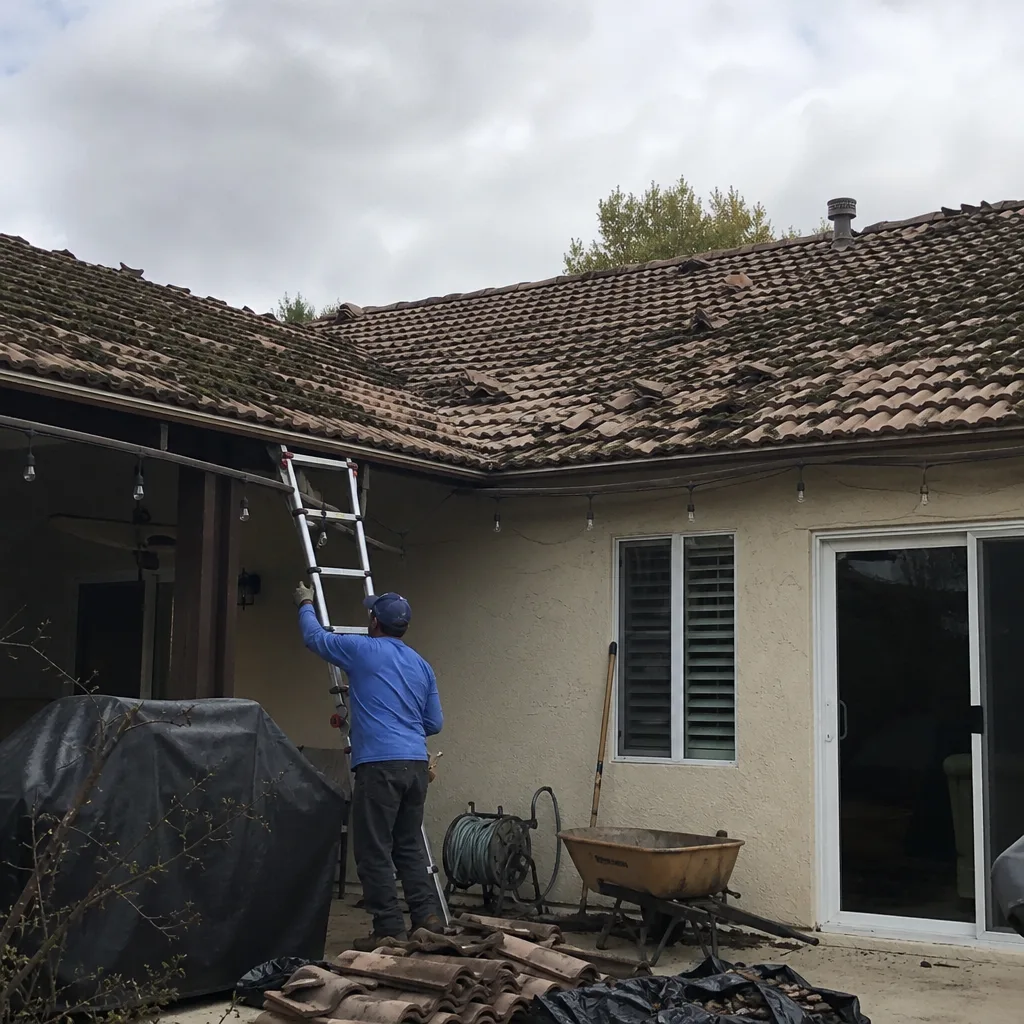 Before
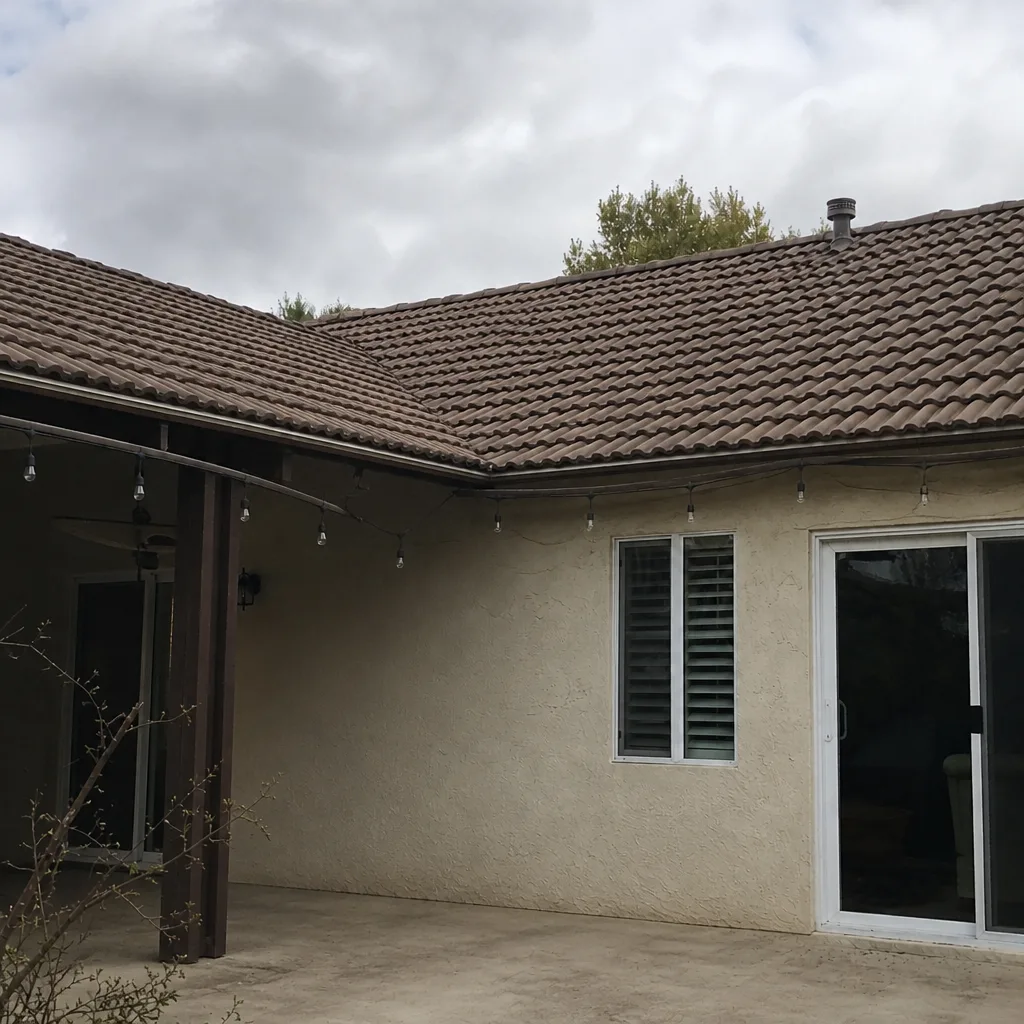 After
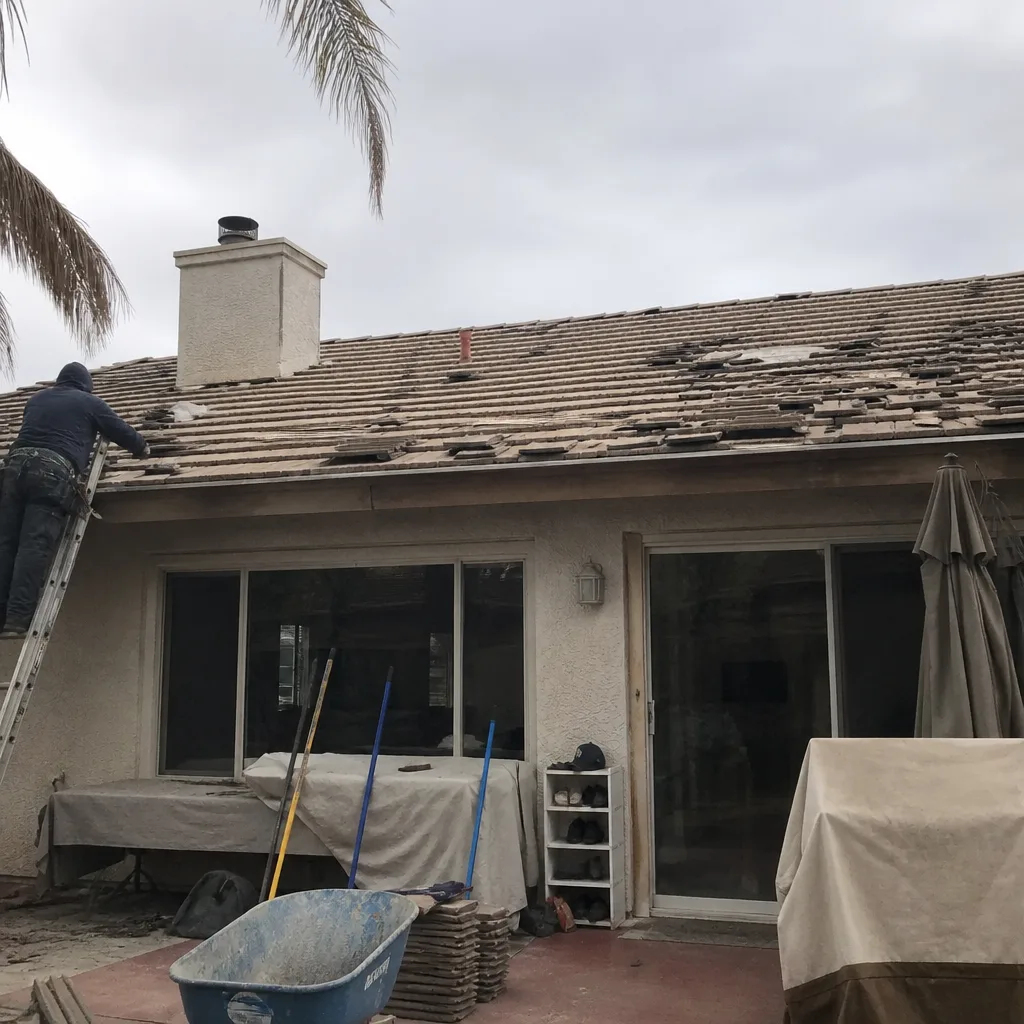 Before
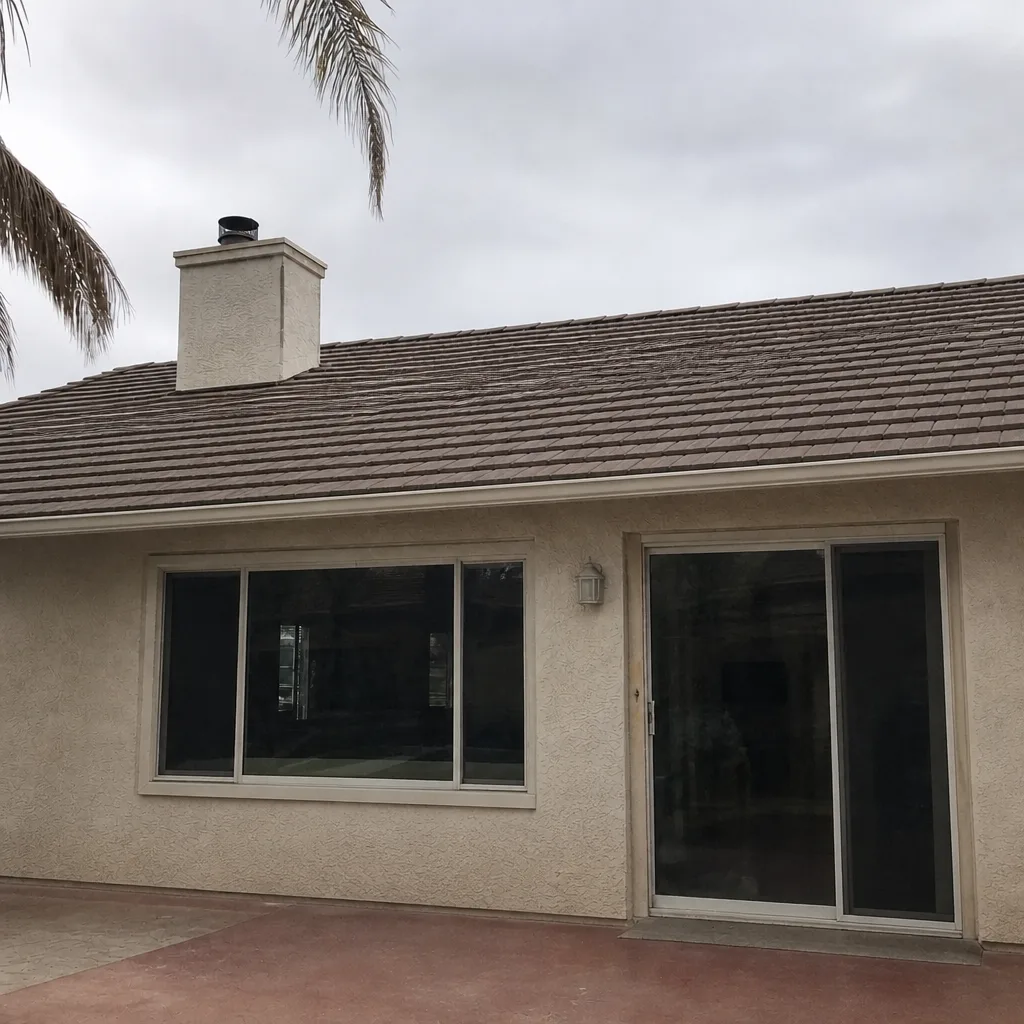 After
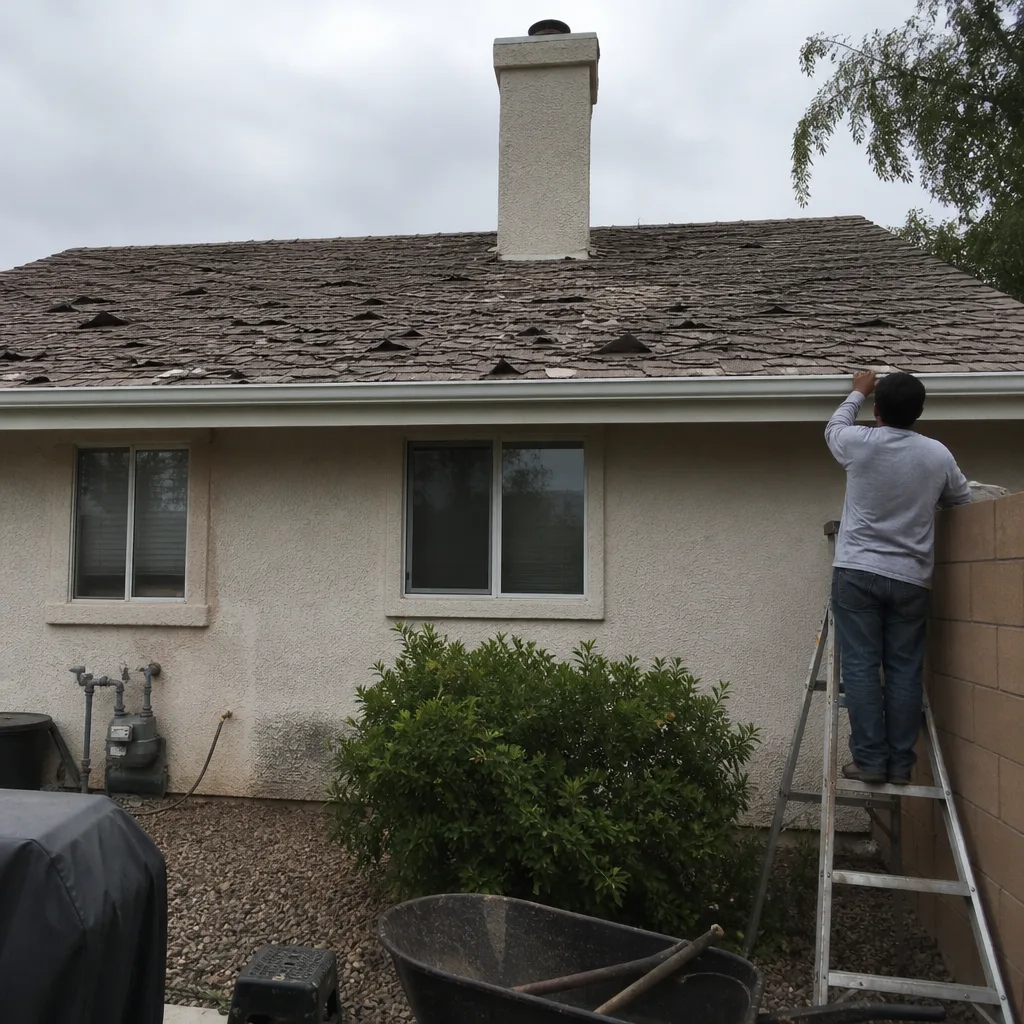 Before
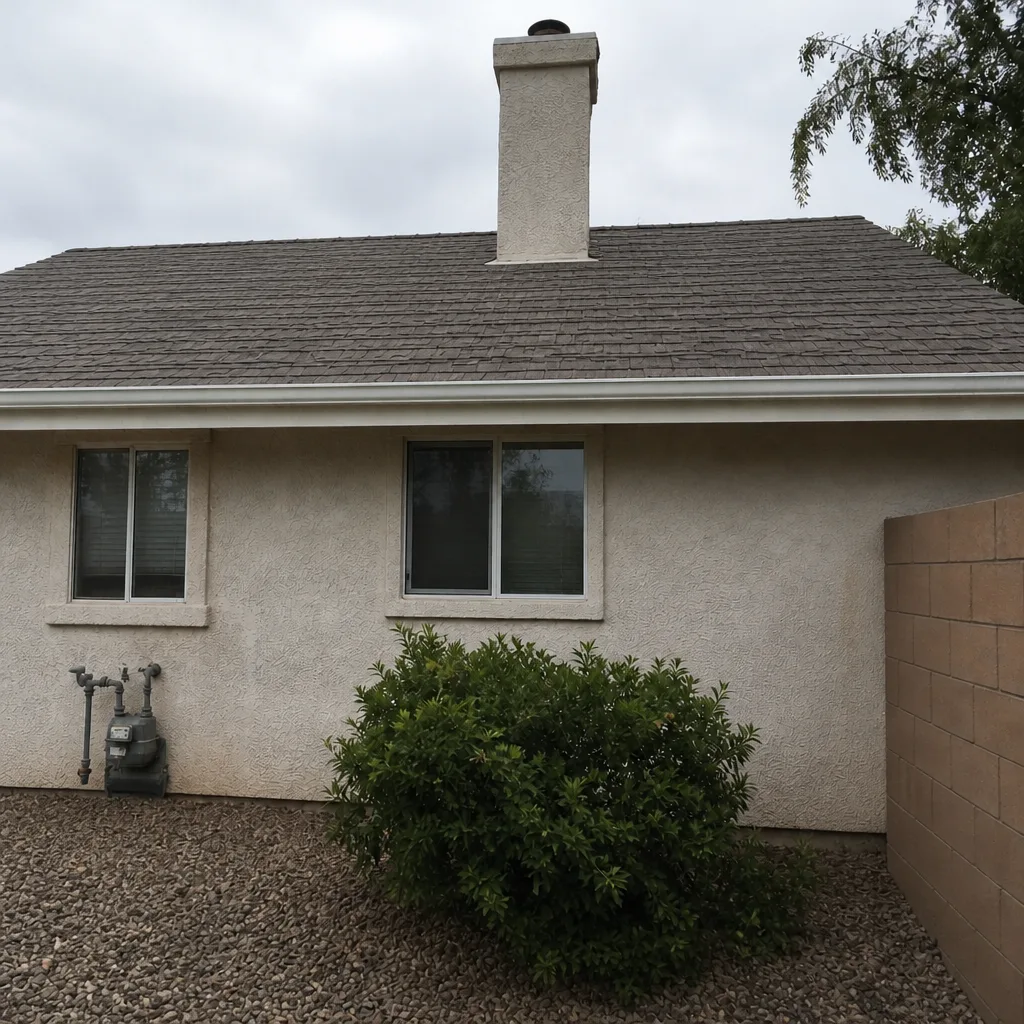 After
When to Call a Professional
Call a licensed roofer when water is actively coming into the house during rain, when a ceiling is sagging or a wall is bubbling, when you can smell mold in an attic or closet, when a valley is holding visible debris you can’t safely clear, or when you’ve had the same leak “fixed” more than once. Those are the cases where the tile is a symptom and the real failure is underneath. Call a professional any time you need to look at the underlayment, the deck, or the flashing, because none of those are visible without lifting tile, and lifting tile is installation work.
Shepherd & Sons Roofing Summerlin offers free estimates across Summerlin and free second opinions on any written estimate you have in hand. Our technicians have up to 30 years of experience with tile systems and install products from CertainTeed, Owens Corning, IKO, and Atlas. Call (844) 951-4545 for a free estimate.
Frequently Asked Questions
Most tile roof repairs in Summerlin land in the low hundreds to the low thousands, depending on whether the tile alone is damaged or the underlayment and deck underneath it are also affected. A single tile replacement is the low end. A valley rebuild with underlayment replacement is the high end. Anything quoted before someone inspects the deck is a guess, so ask for a deck inspection with photos and a line-item quote. Call (844) 951-4545 for a free estimate and a second opinion on any number you’ve already been given.
Because the tile isn’t the waterproofing layer, the underlayment is. Concrete tile sheds the bulk of the water but relies on a sheet of underlayment below it to keep the deck dry. When that underlayment ages out, tears at a seam, or gets compromised by debris or walking damage, water gets through and the tile above it is just the roof’s face, not its protection. This is the most common pattern we see in Summerlin.
You usually can’t tell from the ground, and that’s the honest answer. The signs that point toward underlayment failure are brown ceiling stains that grow season over season, a musty smell in the attic, and small leaks that never seem to go away after a repair. The only way to confirm is to lift tile on the deck and look at the underlayment underneath. A roofer with tile experience can do that in an hour for most Summerlin homes.
Yes, and the damage often shows up 18 months after the walk. Tile has a reinforced zone where it’s safe to step and unsupported areas where it isn’t. A technician, HVAC installer, or satellite tech who steps in the wrong place can micro-fracture the tile without any visible crack at the time. The crack opens over a rainy season, and by the time it leaks, the walk is long forgotten. This is why we keep the tile-field walk to trained roofers.
It’s efflorescence, and it’s not a leak by itself, but persistent bloom that doesn’t wash off with a hose after a rain does mean the tile is staying wet longer than it should. In Summerlin’s sun, that usually points to UV degradation on the tile surface and compromised underlayment above it. Take photos, date them, and re-check every 12 months. Spalling (chips and flakes coming off the tile face) is the next stage and means replacement is on the horizon.
Repairs and replacements that involve roof structure, decking, or underlayment in Summerlin generally require a permit under the local building code. A roofer should pull the permit before work begins, and the job should pass inspection afterward. If a bidder tells you the permit isn’t necessary for a deck-level repair, that’s a red flag. Ask who’s pulling the permit before they start, and get it in writing.
The Bottom Line
Tile roof troubleshooting is a match-the-symptom-to-the-layer exercise. A drip during rain is mostly a flashing problem. A brown stain that grows over a season is usually an underlayment problem. A musty smell or a sagging ceiling is a deck problem. A cracked tile is a tile problem only when the deck and underlayment underneath it are healthy. Get a roofer on the deck to see the layer under the tile before you sign off on any work, and let the photos drive the decision. That’s the whole guide in three sentences. Everything else in this piece is the detail behind it, and the case for looking under the tile before you write a check for the surface. For a full look at how we approach this across Summerlin homes, start at our Shepherd & Sons Roofing Summerlin home page.
Written by the team at Shepherd & Sons Roofing Summerlin.