
Last updated November 18, 2026
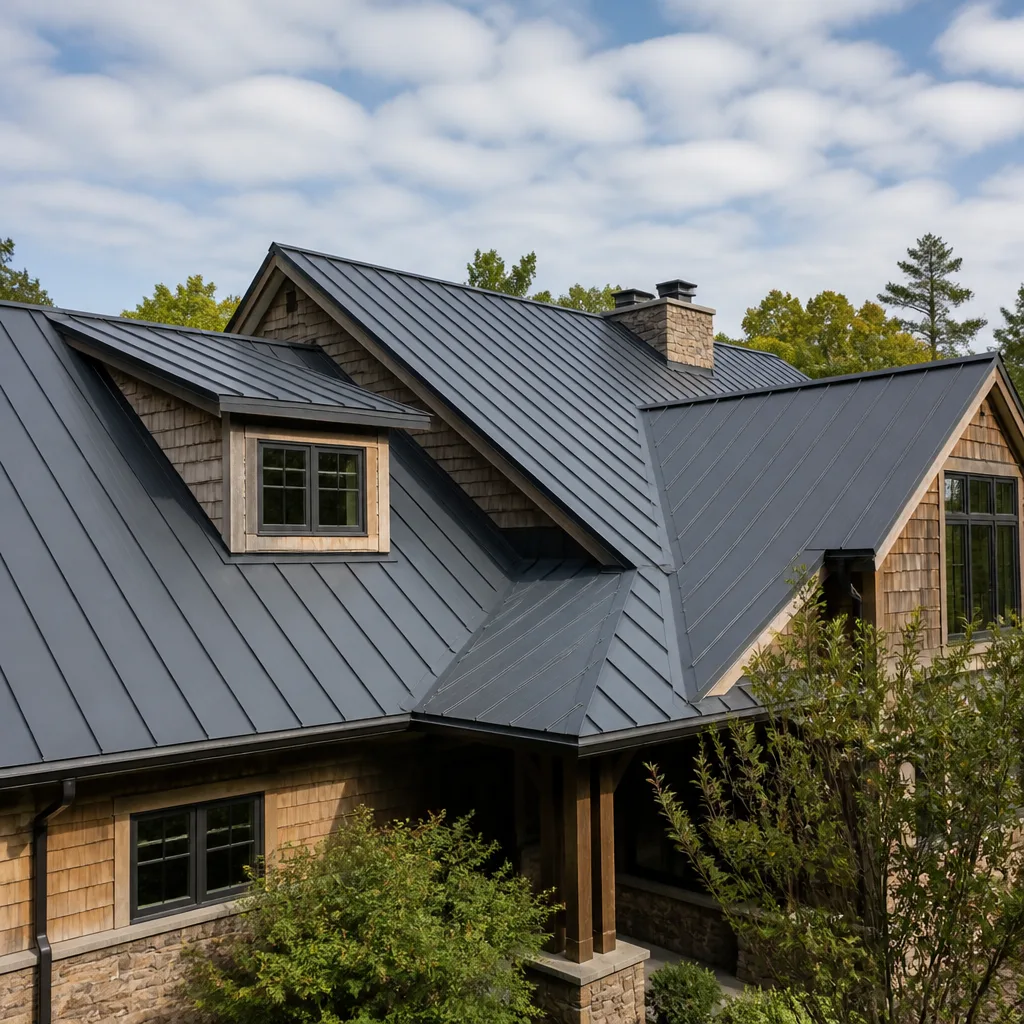 Metal roofing
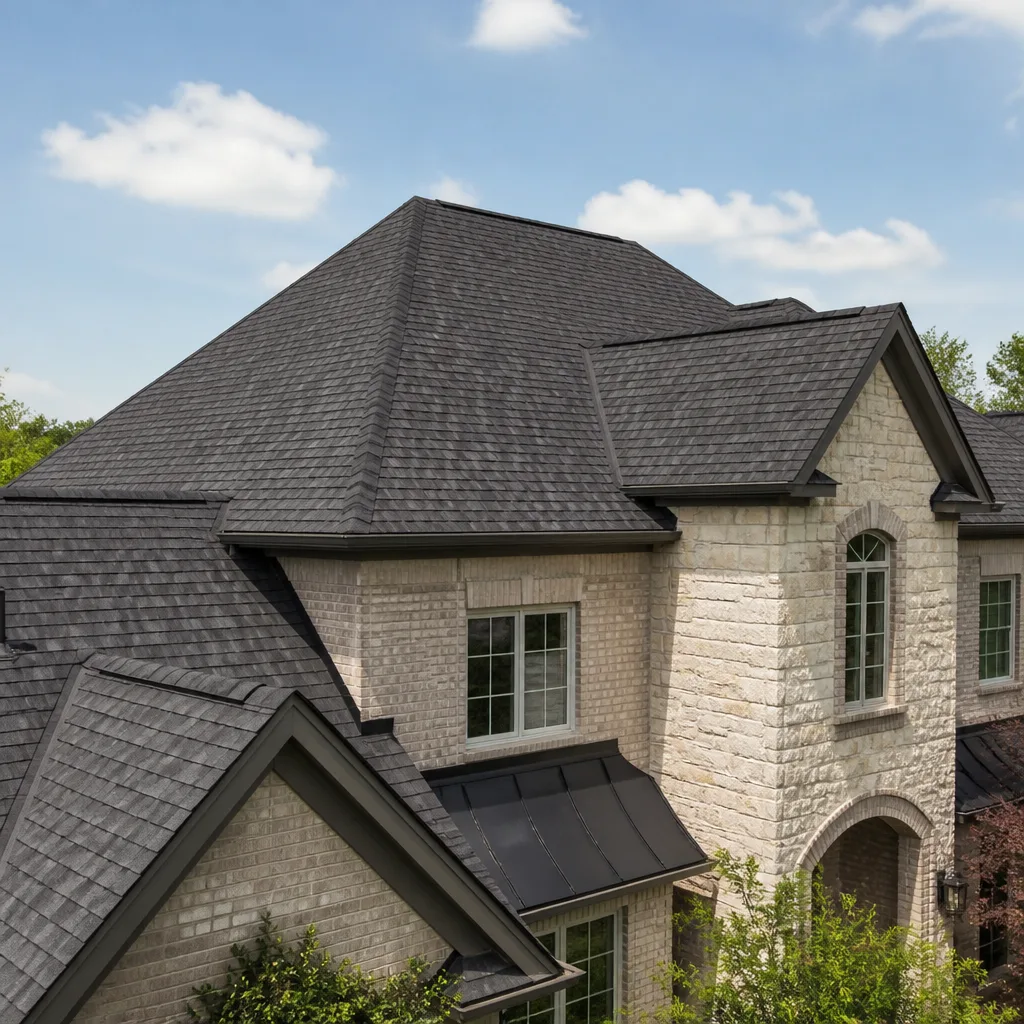 Architectural shingles
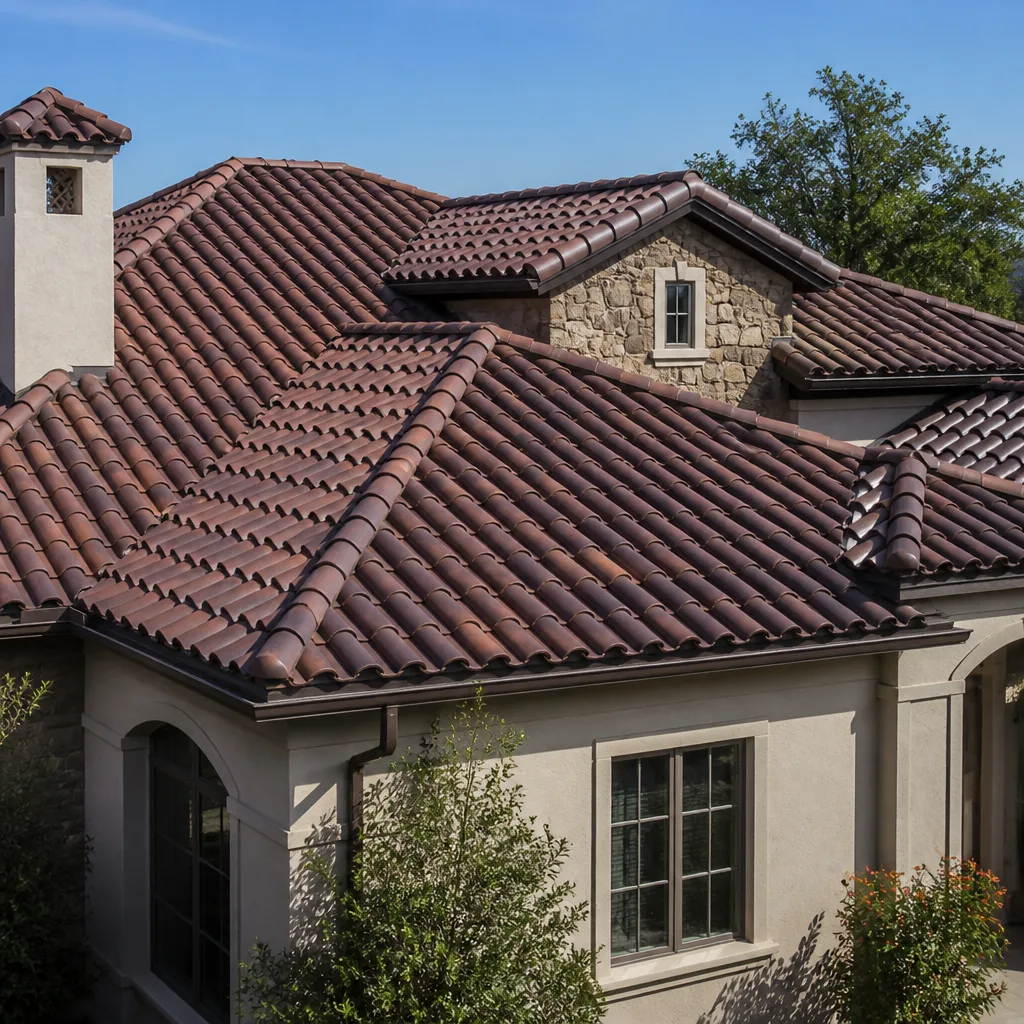 Tile roofing
 GAF
 Owens Corning
 Flat & low-slope
Free roof inspection with deck photos before we talk money - GAF and Owens Corning certified installation
Metal Roofing Maintenance Schedule: What to Do and When
Skip one biannual debris clear on a Summerlin metal roof and you will spend the next three monsoon seasons fighting rust stains down your fascia from wet caliche dust sitting in the valleys. That’s the part nobody warns you about. Metal roofing is genuinely low-maintenance compared to asphalt or tile, but “low” isn’t “none,” and the little it needs is timed to the desert, not to a national checklist written for rain-soaked climates. In this guide we’ll lay out the exact two-inspection calendar that works in Summerlin, the caliche dust problem that eats finishes from the inside out, what you can safely check yourself and what needs a roofer on the deck, and the mistakes that quietly void your warranty.
Quick Answer
In Summerlin, a metal roof needs two inspections a year: one in May before monsoon season and one in October after it ends. Each visit covers debris and caliche removal, fastener and sealant checks, valley and gutter clearing, and finish inspection. Everything else – repairs, resealing penetrations, panel work – should be done by a roofer, not the homeowner.
Styles & brands we work with
- Architectural shingles
- Metal roofing
- Tile roofing
- GAF
- Owens Corning
- Flat & low-slope
Table of Contents
- Why a Summerlin Metal Roof Schedule Is Different
- The Caliche Dust Problem Nobody Warns You About
- The May Inspection: Pre-Monsoon Checklist
- The October Inspection: Post-Monsoon Checklist
- Fastener Inspection: What You Can Check and What You Can’t
- Sealant Reapplication at Penetrations
- What Voids a Metal Roof Warranty in Summerlin
- Common Mistakes to Avoid
Why a Summerlin Metal Roof Schedule Is Different
Most metal roof maintenance guides you’ll find online are written for the Pacific Northwest, the Midwest, or the Gulf Coast. They talk about snow load, ice dams, and salt air. None of those apply to a roof in Summerlin. What does apply is a very particular cycle: eight months of dry, dusty heat, then a monsoon season that dumps weeks of hard rain on a roof that’s been baking at 150 degrees on the panel surface since April. The desert doesn’t just sit there being dry – it actively coats your roof in alkaline dust that then gets rained into every seam, valley, and fastener head.
When you call Shepherd & Sons Roofing Summerlin out at the Shepherd & Sons Roofing Summerlin home page, you’re calling a company that has watched this exact failure pattern on Summerlin roofs for over 29 years, from the same address. We know what fails here because we’ve been on thousands of Summerlin roofs and seen it happen in real time. The metal roofing panels we install – from Owens Corning, IKO, and other mills – are rated for it, but the maintenance intervals are not the same as a roof in Portland or Kansas City.
The two things that drive every decision on a Summerlin metal roof schedule:
- The dry season runs roughly April through June – this is when dust, pollen, and caliche grit accumulate in valleys and against penetrations with no rain to wash them out.
- The monsoon season runs July through September – this is when that accumulated dust becomes a wet paste, holds moisture against the panel finish, and drives water into any gap that’s opened up over the year.
That’s why two inspections per year is the standard here, and why they need to be placed deliberately on either side of monsoon season, not on a one-year anniversary or a “sometime in spring” schedule. If you’re on a metal roof, the schedule is not optional; it’s the difference between a 40-year panel and a 15-year one.
The Caliche Dust Problem Nobody Warns You About
Caliche is the calcium carbonate layer that sits under much of the desert soil around Summerlin. When it dries, it turns to a fine, powdery, alkaline dust that blows onto roofs constantly and settles in every low spot. On a metal roof, that dust is not a cosmetic nuisance – it’s a slow corrosion problem. It’s alkaline, which means it chemically attacks the factory finish and the zinc or aluminum coating on the panel over time. It also holds water. A handful of caliche dust in a valley will soak up monsoon rain like a sponge and keep the metal underneath wet for days after the storm has passed. Wet metal plus alkaline dust plus intermittent UV exposure is the exact recipe for finish chalk, fade, and eventually rust – and it starts in the valleys where you can’t see it from the ground.
Coastal guides never mention this because coastal roofs sit in a different chemistry. Midwest guides don’t mention it because the Midwest doesn’t have caliche. But any roof on the west side of the Las Vegas Valley gets it, and it settles hardest on rooflines facing the open desert – which is a lot of Summerlin, especially up toward The Ridges and out Red Rock way.
What this changes about your maintenance:
- Debris clearing matters more than leaf clearing. It’s not about pine needles; it’s about fine dust that accumulates in a valley, sets up like chalk, and traps moisture.
- Rinse-based cleaning is not optional. A simple garden-hose rinse of the panels before monsoon season gets most of the top-layer dust off before the rain arrives.
- Valleys need physical clearing, not just rinsing. A roofer on the deck with a soft brush clears what a hose can’t move – but only a trained hand should be up there, and we come back to that below.
If you’ve seen the fine chalky streaks on a Summerlin roof after a dry month, that’s caliche dust sitting on the finish. It’s the first sign the schedule has slipped.
The May Inspection: Pre-Monsoon Checklist
The May inspection is the most important one on the Summerlin calendar. You want it done before the first real monsoon storm hits, because everything you repair in May is a problem you don’t have in July. This is a good time to schedule it, and if you have any existing repairs to sort out first, our team can handle both the roof repair in Summerlin and the inspection in one visit.
Here’s the pre-monsoon checklist we work through on every Summerlin metal roof:
- Full debris and caliche sweeps of all valleys. Panels on the south and west slopes get the most dust; verify those first.
- Gutter and downspout flush. Desert dust and small debris collect in the gutter bends and block the only drainage the roof has.
- Fastener head inspection on exposed-fastener panels. Every screw is a potential entry point. Loose screws get re-torqued; backed-out screws get replaced with the correct washer-head fastener.
- Sealant check at every penetration. Vents, pipe boots, chimney tops, skylight curbs – all of these have a sealant that’s now a year older and a year more sun-baked.
- Panel and rib check. Walk the deck and check for oil-canning (popping panels), lifted ribs, and any panel that’s walked loose at the fastening row.
- Ridge cap and trim inspection. Wind-driven monsoon storms eat up ridge caps first. Check for fasteners backing out and any caulk lines starting to peel.
- Photo documentation. We photograph the deck, the valleys, and any problem areas before we talk money – every time.
May is also the right month to touch up any factory finish scratches from the past year, because a scratch on a Summerlin roof will chalk and start to spot-rust within a single monsoon if it’s left alone.
The October Inspection: Post-Monsoon Checklist
The October inspection is the “what did the monsoon do to it” inspection. Monsoon season is hard on any roof in Summerlin – quarter-inch hail is not unusual in a July storm, and the combination of wind-driven rain and grit can knock loose fasteners, open seams, and blow small debris into valleys. The October visit is how you catch a $300 repair before it becomes a $3,000 one.
Post-monsoon checklist:
- Water intrusion check. Look at the attic ceiling, the sheathing under the metal, and anyplace brown streaks appear. This is the whole reason to schedule in October.
- Fastener inspection on the whole panel field. Recheck every fastener you checked in May. Monsoon wind is exactly the kind of stress that backs a partially-seated screw out.
- Sealant reapplication at penetrations that took the season. Expect a few – not all, but a few.
- Valley sweep second pass. Monsoon rain backs a fresh wave of caliche grit into the valleys. Clear it once more before the dry season.
- Panel seam check. Standing-seam panels get a visual; exposed-fastener panels get a full walk with attention to overlapping side laps.
- Finish inspection. Any new scratch, chalked area, or spot of rust gets documented and addressed before the next dry season.
- Gutter and fascia inspection. Check for rust bleed from the gutters onto the fascia – that’s a sign of caliche dust buildup you missed.
That’s the whole two-inspection rhythm. Nothing more, nothing less. It’s not complicated, but it does have to happen on schedule.
Fastener Inspection: What You Can Check and What You Can’t
Fasteners are where most metal roof failure begins, and they’re also the one part of the maintenance schedule a careful homeowner can partially check. But “partially” is the important word. Here’s the split:
What you can safely check from inside the attic hatch:
- Visible daylight through the panel field or around penetrations – this means water is getting in.
- Water staining, rust streaks, or wet wood on rafters and sheathing directly under the panel line.
- Any active drip points, especially after a rain.
- Daylight around vents, pipe boots, and chimney curbs – a fast visual confirmation those flashings are sealed.
That’s the safe list. It’s a “is water coming in?” check, not a fastener check.
What requires a roofer on the deck:
- Tightening, replacing, or re-seating any fastener head.
- Checking fastener torque and washer seal integrity at each head.
- Walking the panel ribs correctly (the only safe way to move on a metal roof without denting panels).
- Inspecting seams, ridge caps, and side laps for lift.
- Clearing valleys of caliche dust buildup.
Metal roofs are slippery – dry or wet – and walking them wrong will dimple the panels and void the finish warranty. No homeowner should be up there with a screw gun; if the panels are loose, a homeowner pulling a screw out of one makes the seal worse, not better. Our technicians have up to 30 years of experience on roofs like yours, and the reason fastener work is a professional job is not mystery – it’s that a three-dollar fastener done wrong costs a panel replacement.
Sealant Reapplication at Penetrations
Every penetration on a metal roof – vent pipe, roof jack, chimney curb, skylight frame – has sealant that ages faster in Summerlin than most places. UV exposure here breaks down standard hardware-store silicone in about two summers. It doesn’t fail in the Pacific Northwest on that timetable; it fails in Summerlin because the panel surface heats to 150-plus degrees on a July afternoon and then drops to 80 at night, and that daily expansion/contraction is what cracks generic sealant from the inside out.
The sealants that actually hold up to a Summerlin metal roof:
- High-performance silicone (neutral-cure, 100% silicone). Not hardware-store silicone caulk – the professional-grade 100% silicone rated for high-heat roofing. This is what should be used at vents and pipe boots.
- Polyether sealant. Better adhesion and less chalking on metal than standard silicone; a good option where the sealant is visible.
- Urethane sealant. Best for high-movement joints – chimney curbs, parapet walls, anywhere the metal meets masonry.
- Butyl tape. This is what should sit under every fastener washer and every metal-to-metal lap. It’s a gasket, not a caulk line.
The generic clearance-aisle silicone tube is what causes most sealant failures on Summerlin metal roofs. It cooks in two summers, cracks, and then every monsoon drives water into the crack it left behind. When we reseal a penetration, we’re matching the product to the joint, not picking whatever’s on the shelf. This is the kind of detail our team covers whenever we’re doing metal roofing in Summerlin – the schedule continues after the panel goes on.
What Voids a Metal Roof Warranty in Summerlin
Metal roof warranties are generous but they’re also conditional, and the three most common ways Summerlin homeowners accidentally void them are all maintenance-related:
- Pressure-washing the panels. This is the single most common warranty void on a metal roof. A pressure washer strips the factory finish, drives water behind the fasteners, and lifts sealant – and manufacturers will deny a finish claim if any evidence of pressure-washing exists.
- Walking on panels incorrectly. Metal panels have a limited number of safe walking paths (usually the flat between ribs, along the fastening row) and stepping on the wrong spot dimples the panel and smashes the finish. Finish claims get denied for it. If someone other than your roofer is on the roof – a satellite installer, a solar guy, a chimney sweep – ask them to confirm they know how to walk a metal roof.
- Coating the roof with the wrong product. Aftermarket “roof coatings” sold for metal, or elastomeric roof paint, or anything sprayed on the panels is a warranty-killer if it’s incompatible with the factory finish. If a salesman shows up at your door offering a “metal roof re-coat,” don’t let them touch it – it’s the most expensive mistake in this section.
A fourth real one worth knowing: letting caliche dust sit in the valleys and against penetrations for the whole season. It’s not always a line-item in the warranty document, but it’s what manufacturers point to when a finish claim gets denied – the pattern of caliche deposits shows the roof wasn’t maintained. Two cleanings per year are what keeps finish coverage valid.
If you’re not sure whether your roof is under warranty, or which panel type it’s running, we can look in the attic and give you a straight answer. Our team provides a free second opinion on any written estimate and a no-hassle upfront pricing quote, and we carry a written 90-Day Done Right Promise on every roofing job we do – so if it’s not done right, one call brings us back. If your Summerlin metal roof needs replacing or is heading that way, we also handle roof replacement & installation in Summerlin.
Common Mistakes to Avoid
- Scheduling on a twelve-month anniversary instead of the calendar. The May inspection needs to land before monsoon rain, not “sometime in spring” or “when we get around to it.” A maintenance visit in August, after the first monsoon, has already missed what the schedule exists to catch.
- Using hardware-store silicone on the penetrations. It cooks off in two Summerlin summers. Generic silicone is what causes most sealant failures on a metal roof – use the products rated for high-heat roofing instead.
- Letting anyone pressure-wash the panels. A neighbor with a rented pressure washer, a solar installer, a “free roof wash” flyer – all of them will void your finish warranty. A garden hose with nozzle pressure is as much as your metal roof needs.
- Walking on panels with no idea where the fastening row is. Panels dent, finish cracks, and warranty claims get denied. Only your roofer should be walking the deck.
- Ignoring the caliche dust in the valleys because it “looks dry.” Dry dust becomes wet paste during monsoon and holds moisture against the finish for days. It’s silent until it’s visible as rust streaks on the fascia below.
- Letting a door-knocker “re-coat” the roof after a storm. This is the fastest way to void the factory warranty on a metal roof, and it’s a sales pitch you’ll hear after every hailstorm in Summerlin. Ask where their shop is – if they can’t answer, you know what you’re looking at.
- Skipping the October visit because nothing “looked broken” in July. Monsoon season damage doesn’t announce itself. Backed-out fasteners, lifted seams, and hidden water intrusion all show up in the October inspection – not on a visual scan from the ground.
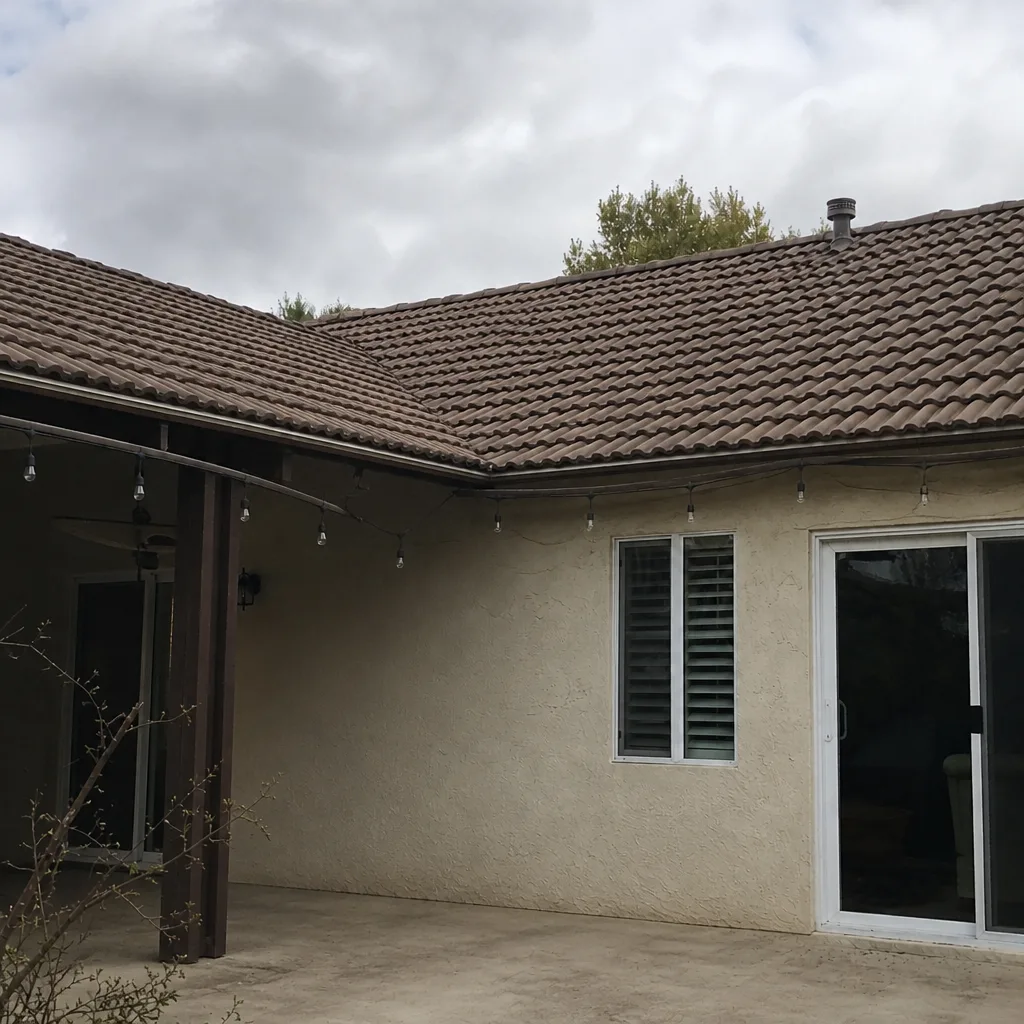
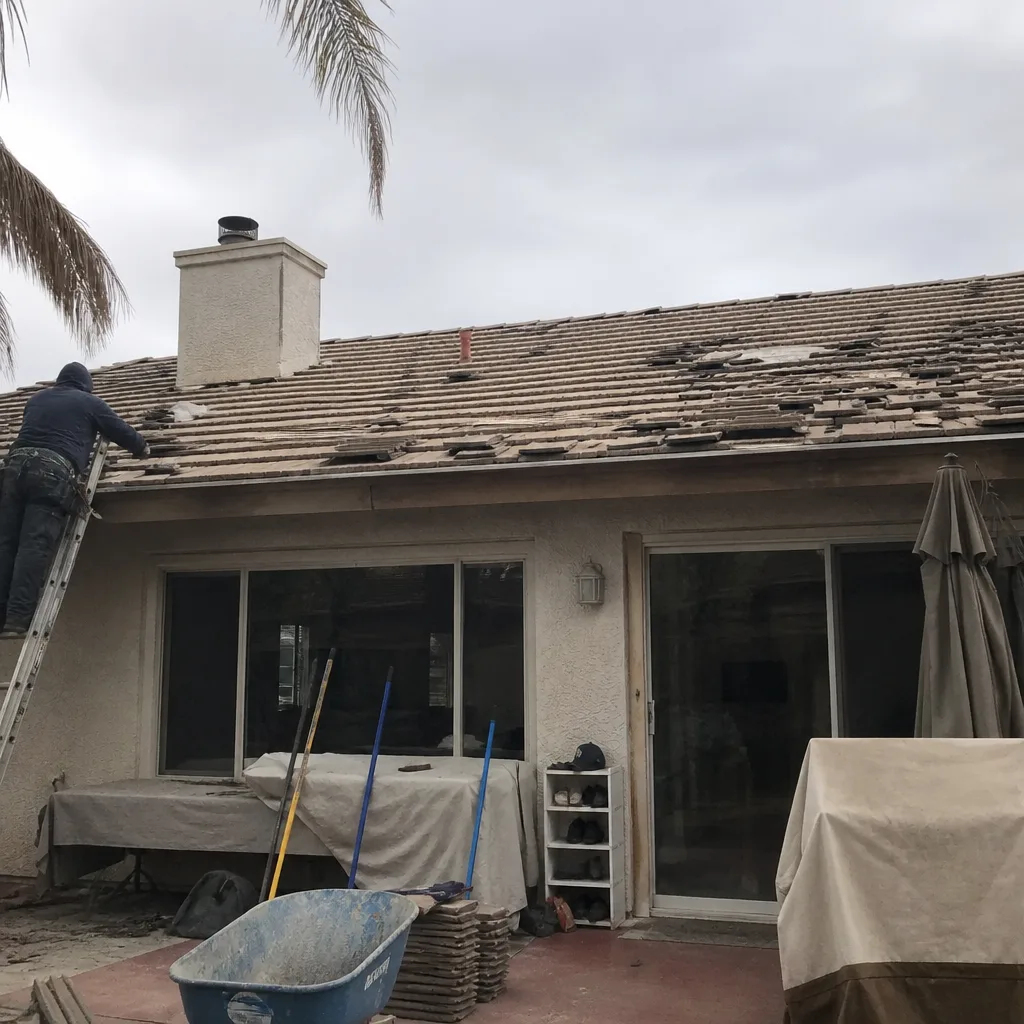
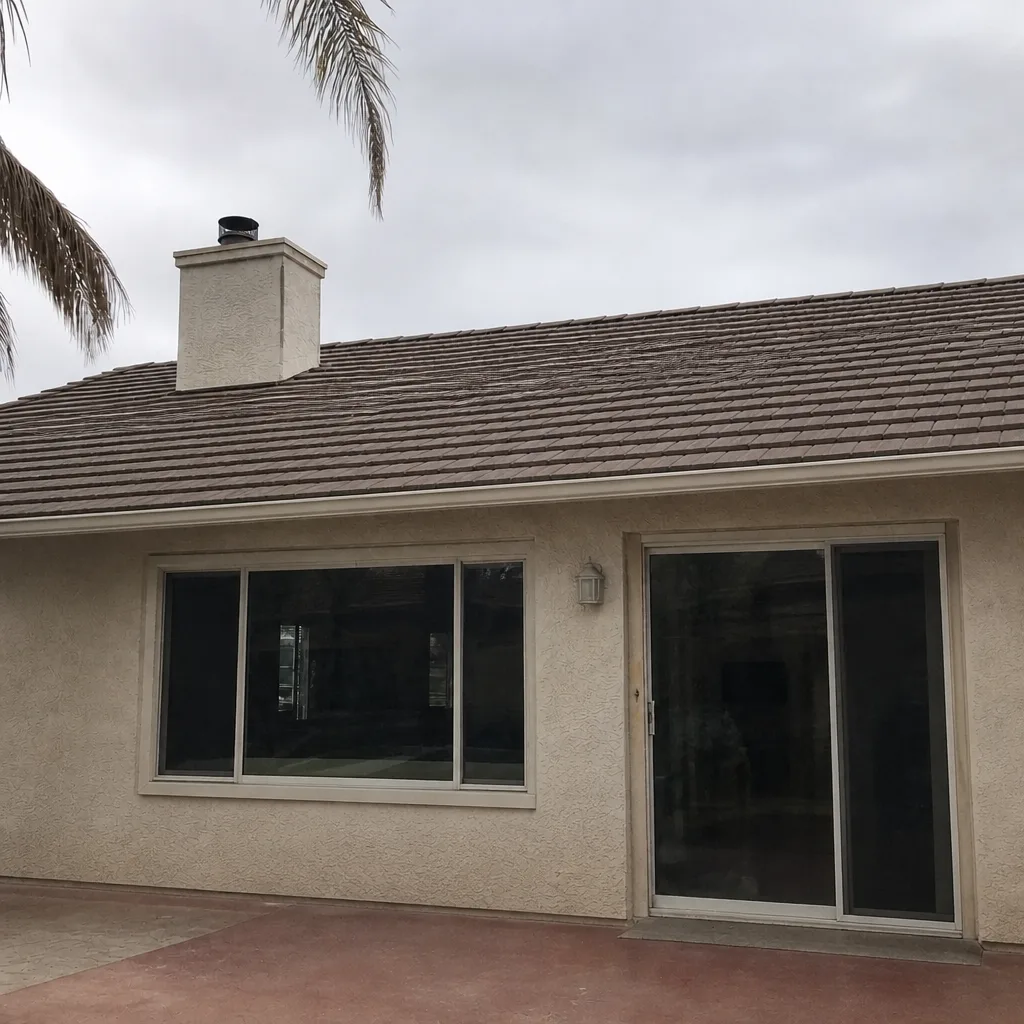
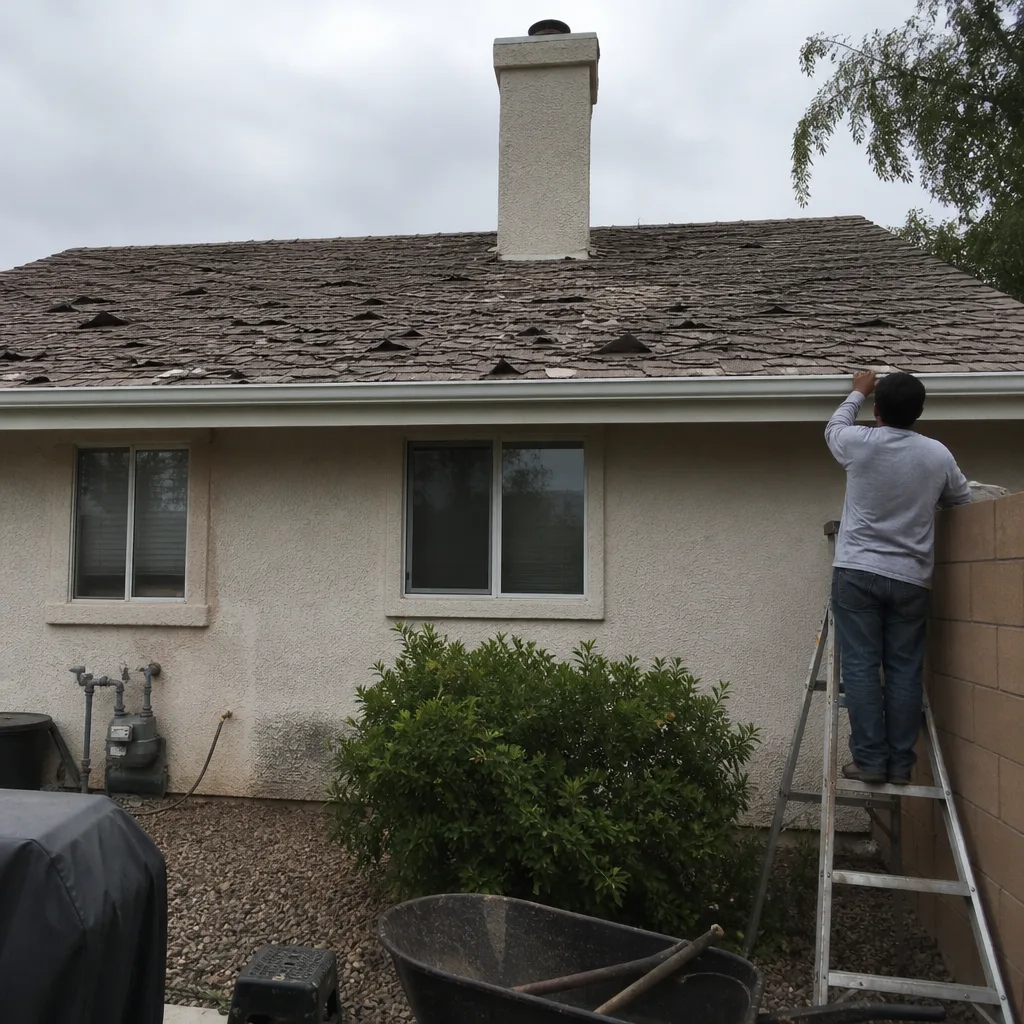
See the difference
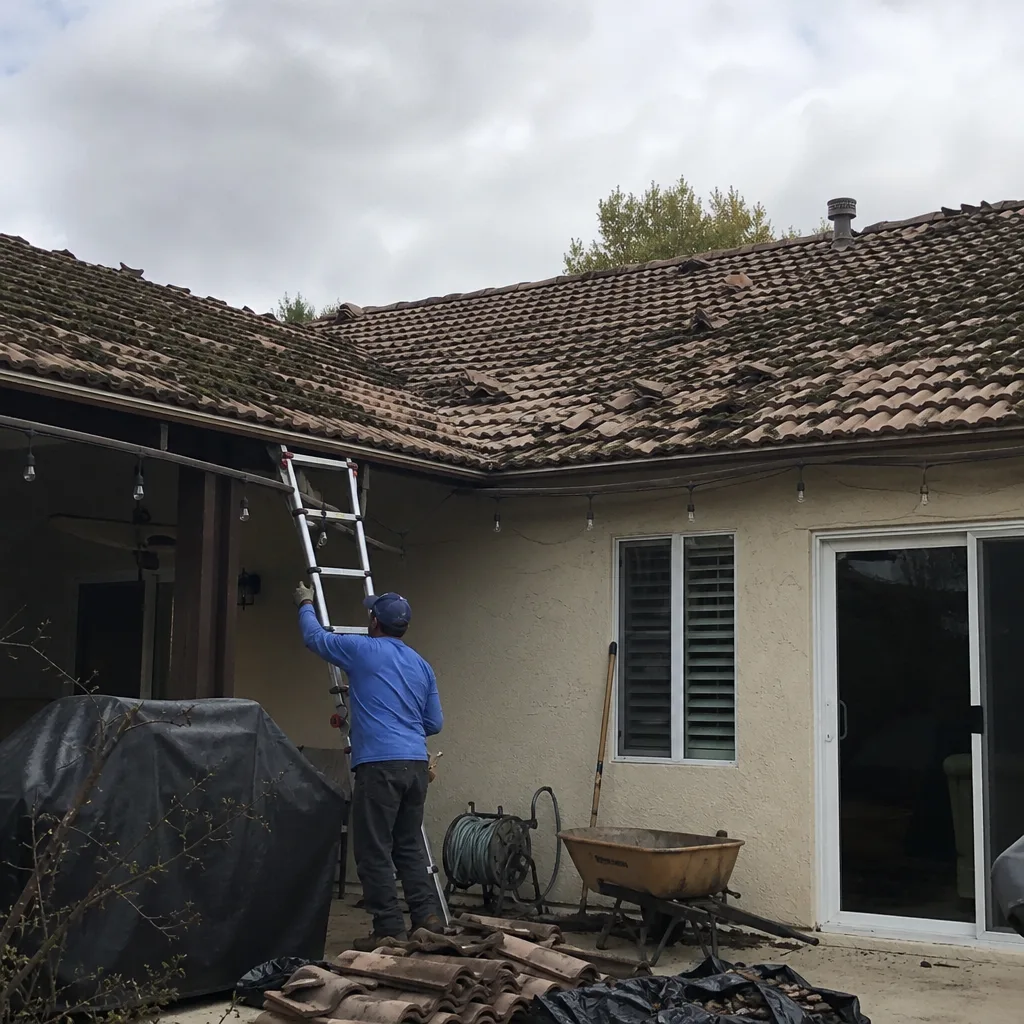 Before
 After
 Before
 After
 Before
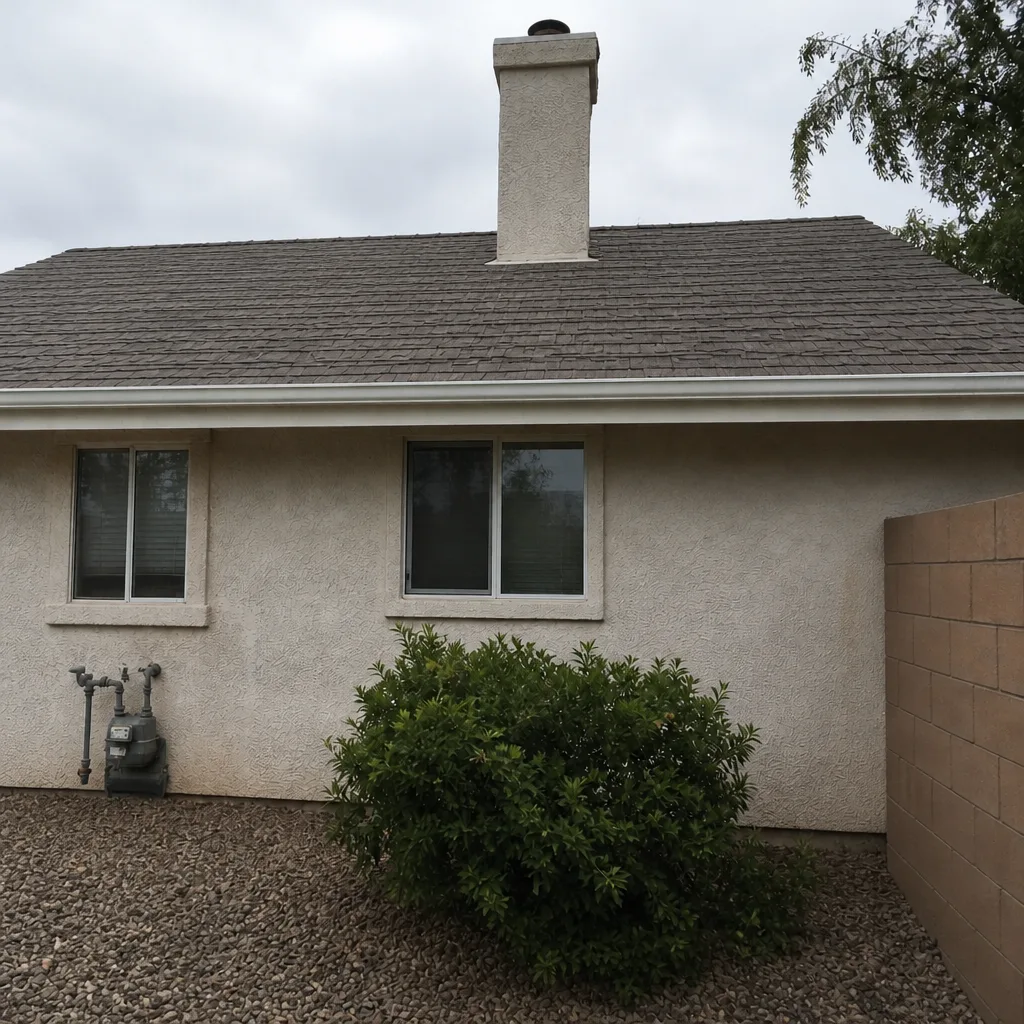 After
When to Call a Professional
Most of the Summerlin metal roof maintenance schedule is about prevention – the two a-year inspections, the valley sweeps, the sealant checks. But some situations need a roofer on the deck before the next scheduled visit. Call us if you see:
- Any water staining, rust streaks, or drip points visible from the attic hatch.
- A fastener head that’s backed out or visibly loose from the ground.
- Any panel that’s lifted, oil-canned, or dimpled.
- Sealant cracking on a vent, pipe boot, or skylight curb.
- Rust bleeding onto fascia or a downspout after a storm.
- Any visible scratch, chalked enamel, or spot-rust on a panel.
- Any conversation with a “roof coating” or “re-coat” salesman.
Shepherd & Sons Roofing Summerlin offers free estimates in Summerlin – call (844) 951-4545. A live person picks up, 24/7, and we don’t charge a trip charge inside our own county.
Frequently Asked Questions
Twice a year: a pre-monsoon inspection in May and a post-monsoon inspection in October. Anything less frequent and caliche dust sits in the valleys through monsoon season, holding moisture against the finish and beginning the corrosion cycle.
You can rinse panels from the ground with a garden hose, and that alone removes most of the top-layer dust before monsoon season. You should not walk a metal roof or clear valleys yourself – metal panels are slippery and dimple easily, and walking them wrong voids the finish warranty.
The first sign is a fine chalky streak or white powdery residue on the panel surface and in the valleys. If it’s been sitting for a full monsoon season, you may also see rust streaks on the fascia below the roofline. That’s the point to call us – the dust has started to attack the finish.
Replaced, in most cases. Caulking over old cracked sealant traps moisture underneath it and fails again the next summer. We remove the old sealant, clean the metal surface, and re-apply with the correct product for the joint – silicone, polyether, urethane, or butyl, depending on where it is.
Yes. It’s the most common metal roof warranty void in Summerlin. Pressure-washing strips the factory finish and drives water behind fasteners and seams, and manufacturers deny finish claims when they spot it. A garden hose is all your metal roof ever needs.
Yes. We inspect any metal roof in Summerlin regardless of who installed it or what panel type it uses. Our team provides a free second opinion on any written estimate, a no-hassle upfront pricing quote, and no trip charge inside our own county – and we’ve been at the same address for over 29 years.
The Bottom Line
A Summerlin metal roof needs less than most materials, but what it does need is timed to the desert. Two inspections a year – May and October – on either side of monsoon season cover almost everything. The May visit clears caliche dust before rain arrives and confirms fasteners and sealant. The October visit checks what monsoon did and re-seals what took damage. Between those visits, you can rinse panels with a garden hose and keep an eye on the attic. What you should never do is pressure-wash the roof, walk the panels yourself, or let a storm-chaser “re-coat” it. That’s the whole schedule, and the routine one gets you from a 15-year roof to a 40-year one. If you’d like a trained eye on your Summerlin metal roof before the next monsoon, our team will be there. Call (844) 951-4545 for a free estimate – a live person picks up whenever you call.
Written by the team at Shepherd & Sons Roofing Summerlin.