
Last updated November 18, 2026
 Metal roofing
 Architectural shingles
 Tile roofing
 GAF
 Owens Corning
 Flat & low-slope
Free roof inspection with deck photos before we talk money - GAF and Owens Corning certified installation
Specialty Roofing Troubleshooting: Common Problems and How to Fix Them
Bill has seen a foam roof patched with tile caulk. He’s also seen a tile roof sealed with elastomeric coating mixed up for foam work. Both jobs were done by contractors who charged full price and left the homeowner with a worse leak than they started with. That’s the core trouble with specialty roofing: each system on a Summerlin home fails in its own way, and a repair product built for one will quietly destroy another. This guide walks through the diagnostic logic system by system, so you can tell what you’re actually looking at before anyone touches your roof, and know which repairs are worth the money.
Quick Answer
Specialty roofing troubleshooting means diagnosing the specific system (foam, concrete tile, clay tile, or metal tile) before choosing a repair, because each one fails in different places and needs materials with matching expansion rates. A flashing failure costs a few hundred dollars to fix; a field failure can run thousands. The only way to know which you have is a proper diagnostic, and most contractors skip it.
Styles & brands we work with
- Architectural shingles
- Metal roofing
- Tile roofing
- GAF
- Owens Corning
- Flat & low-slope
Table of Contents
- Where Each System Fails First: Tile vs. Foam vs. Metal
- Flashing Failure or Field Failure? The $400 vs. $4,000 Question
- Tracing a Monsoon-Only Leak
- Why Expansion Coefficients Break Bad Repairs
- Bill’s Field Triage Checklist: The First 10 Minutes
- Common Mistakes to Avoid
- When to Call a Professional
- Frequently Asked Questions
Where Each System Fails First: Tile vs. Foam vs. Metal
Every specialty roof has a weak point, and it’s rarely where homeowners point when they call. If you know where to look on a Summerlin roof, you can often spot the culprit before a ladder even goes up. Here’s how each of the three main specialty systems behaves.
Concrete and Clay Tile
Tile roofs don’t fail in the middle of the field. The tile itself lasts generations. What fails first is the underlayment, and it fails earliest in the valleys and at the penetrations where water channels and sits. In Summerlin, the intense sun cooks the underlayment on south- and west-facing slopes years before the shaded sides give out. Check the valley metal, the pipe boots, and the step flashing at sidewalls first.
Foam (Spray Polyurethane)
Foam fails at the edges and at anything that pokes through it. The perimeter where the roof meets a parapet or drip edge takes the most UV and thermal movement, so that’s where cracks and blisters show up first. Around skylights, vents, and AC curbs, foams pull away as the two materials expand at different rates. Walk the perimeter of a Summerlin foam roof and you’ll usually find the problem.
Metal Tile and Standing Seam
Metal fails at the fasteners, the seams, and the cut edges. Backed-out or over-driven screws leave a hole that weeps. The cut edge of a panel is where the factory finish stops, and once that edge starts to corrode it travels under the coating. On Summerlin metal roofs, look at the fasteners on the sun-facing slope and the seams at the ridge. That’s where the water gets in.
Flashing Failure or Field Failure? The $400 vs. $4,000 Question
This is the diagnostic step most contractors skip, and it’s the one that decides whether your repair runs a few hundred dollars or a few thousand. A flashing failure is localized. Water is getting in at a junction where the roof meets something else: a wall, a chimney, a vent, a skylight. A field failure is broad. The membrane or underlayment over a large area has broken down.
How to separate the two
- Find the leak inside, then go straight up the slope behind it. Water runs downhill, so the entry point is almost always up-slope of the stain.
- Look at the penetration zone. If the stain is directly below a vent, skylight, wall, or chimney, suspect flashing first.
- Check the field for uniformity. If there’s one wet spot and dry material all around it, that points to a point-source leak, not a field failure.
- Look at the deck. Sagging or soft decking across a wide area means the field has been wet for a while, and the repair is bigger.
A flashing repair on a Summerlin tile roof usually stays in the low hundreds. A field failure on that same roof, where the underlayment has to come out across a whole slope, jumps into the thousands. Getting the diagnosis right is where your money goes.
Tracing a Monsoon-Only Leak
Summerlin’s monsoon season, roughly July through September, brings the kind of wind-driven rain that finds gaps a garden-hose test never will. Homeowners call because the roof looks perfectly dry the other ten months of the year. That’s the tell. If a leak only shows up during heavy, sideways rain, you’re not dealing with a broken field. You’re dealing with a penetration or flashing that only fails under pressure.
The troubling sequence
- Mark the exact date and time of each leak so you can compare it to rainfall direction. Wind-driven rain hits the windward side hardest.
- Have the roof inspected while it’s still dry to map every suspect flashing, boot, and seam up-slope of the stain.
- Ask for a targeted water test at those junctions, not a blanket hose-down of the whole roof. A whole-roof test tells you nothing.
- Check the attic and ceiling for a drip trail that may be traveling along a rafter before it shows up on your ceiling. The stain is rarely directly under the leak.
In Summerlin, we’ve seen monsoon leaks that turned out to be a single loose pipe boot thirty feet from the ceiling stain. The water ran the length of a rafter and dropped at the low end. Without tracing it, a contractor could have sold a whole-slope repair for a boot that needed a five-minute reseal.
Why Expansion Coefficients Break Bad Repairs
Materials grow and shrink with temperature at different rates. That’s the expansion coefficient, and it’s the reason specialty repairs go wrong when someone slaps on whatever’s on the truck. A low-slope foam roof moves a lot in Summerlin’s heat. Patch it with a product that cures rigid, like a cement-based tile sealant or the wrong caulk, and the foam will pull away from that rigid patch within a season. The crack comes back, usually worse.
The same rule works the other way. Seal a tile roof with an elastomeric coating built for foam and you trap moisture against the tile and underlayment. The coating peels, water gets behind it, and now you can’t see the real problem because it’s covered in a flexible skin that was never meant to be there.
The matching rule in plain terms
- Foam gets patched with foam-compatible coatings that stay flexible as the surface moves.
- Tile gets its underlayment repaired and the tile re-laid; it does not get a coating over the field.
- Metal gets fasteners and sealant rated for metal, not tile or foam product.
- When a repair has to bridge two materials, the sealant has to flex enough to survive both.
Bill has walked more than one Summerlin roof where the previous repair looked fine from the street and had failed completely underneath. Matching the product to the system is the whole game.
Bill’s Field Triage Checklist: The First 10 Minutes
Before a single tool comes off the truck, Bill runs a problem roof through a quick set of questions and photos. It’s how he avoids selling the wrong repair. Here’s the actual sequence he uses on a Summerlin roof.
- Where does the water show up inside, and where is the leak up-slope from there? The interior stain anchors everything.
- What’s the roof system? Foam, concrete tile, clay tile, or metal. That decision drives every material choice that follows.
- Is it a point leak or a broad area? One wet spot points to flashing. Wide spread points to field failure.
- What’s the slope orientation? On Summerlin roofs, south and west slopes age faster than shaded north slopes, and that’s usually where the failure starts.
- What did the last repair look like? A mismatched patch is a red flag and often the actual cause of the current leak.
- How’s the deck underneath? Soft or sagging deck means the repair scope just grew.
- Photos before and after. Every angle, every penetration, the deck, the flashing. If a roofer won’t show you the deck photos before they talk money, ask why.
Ten minutes of this saves a lot of guessing, and it means the written estimate matches what’s actually wrong with your roof before anyone climbs up to fix it.
Common Mistakes to Avoid
- Letting a foam roof get patched with tile caulk. It cures rigid, the foam moves, and the seam opens up within a season. It’s the fastest way to turn a small leak into a bigger repair.
- Sealing a tile roof with an elastomeric coating. That product is made for foam. On tile it traps moisture and hides the real failure, and the coating peels off in a Summerlin summer.
- Skipping the flashing-versus-field diagnosis. Jumping straight to a big repair quote without tracing the leak up-slope is how a few-hundred-dollar fix becomes a few-thousand-dollar bill.
- Patching over an existing mismatched repair. If the last crew used the wrong material, going on top of it just buries the problem. The old patch has to come off first.
- Trusting a storm chaser with no local address. When a bidder can’t tell you where the shop is or show you a license number you can look up, you have no one to call back when the leak returns.
- Hosing the whole roof to “test” it. A blanket water test tells you almost nothing. You want a targeted test at the suspected junctions, not a bath.
- Ignoring the deck. A soft spot under the tile or foam means the field has been wet a long time. Missing it means the repair fails from underneath.
We install products from GAF, CertainTeed, Owens Corning, and Boral, and across all of them the same rule holds: match the material to the system, or the repair won’t last.
When to Call a Professional
Some of this you can check yourself from the ground and in the attic. But a few situations call for a trained roofer, full stop. If a leak returns after a previous repair, if the deck feels soft or the ceiling sags, if you’re seeing failed patches of mismatched material, or if a monsoon-only leak has you guessing, that’s when a proper diagnostic earns its keep. Foam and tile systems especially punish guesswork, and working around them on a ladder with the wrong product is how small problems become expensive ones. Shepherd & Sons Roofing Summerlin offers free estimates in Summerlin, and a live person answers the phone around the clock. Call (844) 951-4545 to set one up. For general repair work, see our page on Roof Repair in Summerlin, and for the bigger picture on specialty systems, there’s more on the Shepherd & Sons Roofing Summerlin home page.
Frequently Asked Questions
In most cases, if the tile itself is intact and the failure is in the underlayment over a limited area, a repair is the right call. A replacement becomes the better choice when the underlayment is failing across multiple slopes or the deck is soft in more than one spot. A proper inspection of the valleys and penetrations tells you which side of that line you’re on.
A monsoon-only leak almost always means a flashing or penetration failure that only opens under wind-driven rain and pressure. It’s not a broken field. Tracing the stain up-slope to the nearest junction and testing that junction specifically is how you find it. Call (844) 951-4545 for a targeted inspection before monsoon season.
You can buy foam patch products, but the risk is the mismatch. A patch that cures differently than the surrounding foam will pull away within a season in Summerlin’s heat. Getting the material and the surface prep right matters more on foam than on almost any other system, which is why we recommend a professional here.
A proper diagnostic is normally free with a written estimate. The repair itself is what varies: a flashing repair typically runs a few hundred dollars, while a field repair across a whole slope runs into the thousands. Knowing which you have before you commit is the whole point of the diagnostic.
Metal tile repairs are usually straightforward when the failure is at a fastener or seam, and those are the spots to check first. The tricky part is the cut edges and the coating. Corrosion that starts at an exposed edge can travel, so a small repair done correctly saves a much larger one later. Call (844) 951-4545 for an exact quote.
It shouldn’t, and with us it won’t. We show you the deck photos and give you a written line-item estimate before we start, so the number you agree to is the number you pay. If we open something up and find a surprise, we stop and tell you before adding a dollar.
The Bottom Line
Specialty roofing problems in Summerlin almost always come down to a mismatch: the wrong product on the wrong system, or a field repair sold for what was really a flashing leak. Each system fails in its own place, and each fix has to match the material’s expansion behavior to hold. Get the diagnosis right, patch with the right product, and most of these problems stay small. Skip the diagnosis, and a few-hundred-dollar repair becomes a few-thousand-dollar one. When you want the deck photos and a straight answer before you talk money, call Shepherd & Sons Roofing Summerlin at (844) 951-4545 for a free estimate. You can also read up on Metal Roofing in Summerlin and Roof Replacement & Installation in Summerlin for the full-service side of the work.
Written by the team at Shepherd & Sons Roofing Summerlin.
See the difference
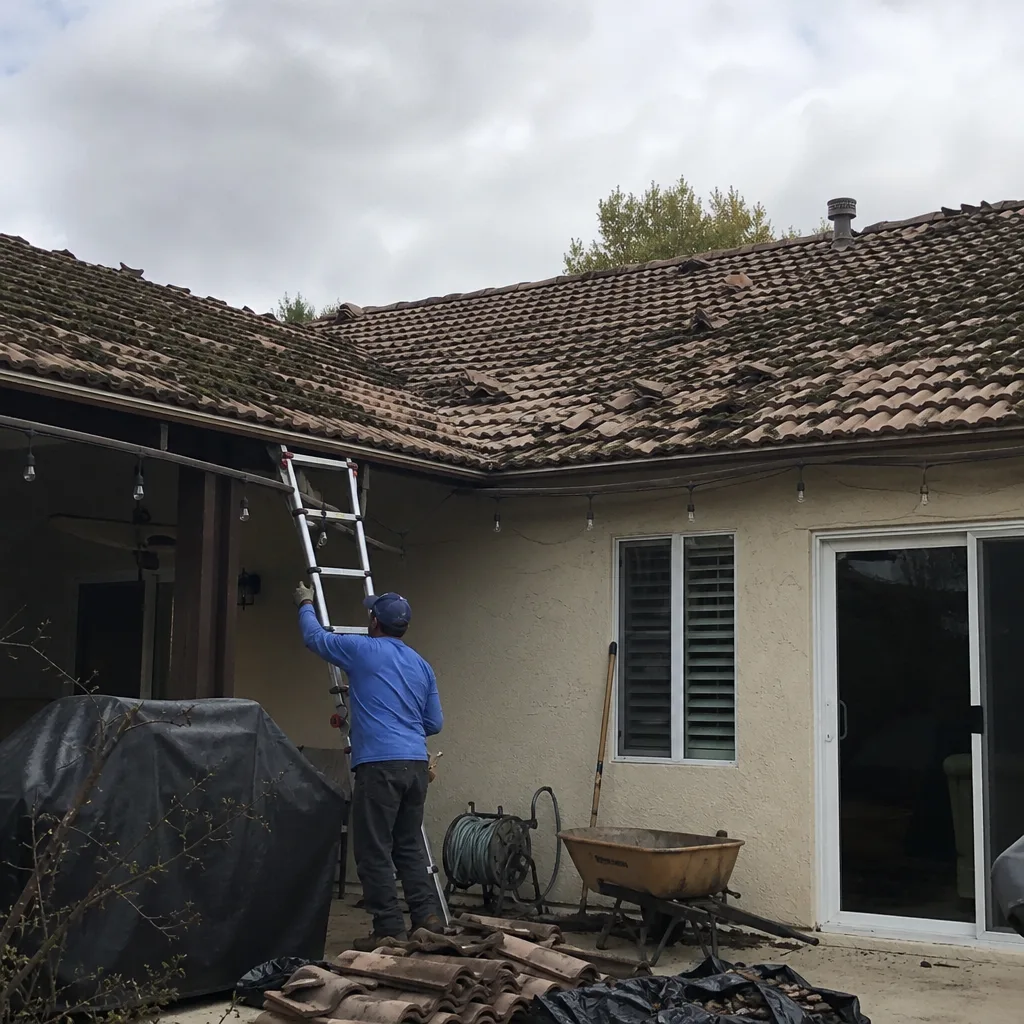 Before
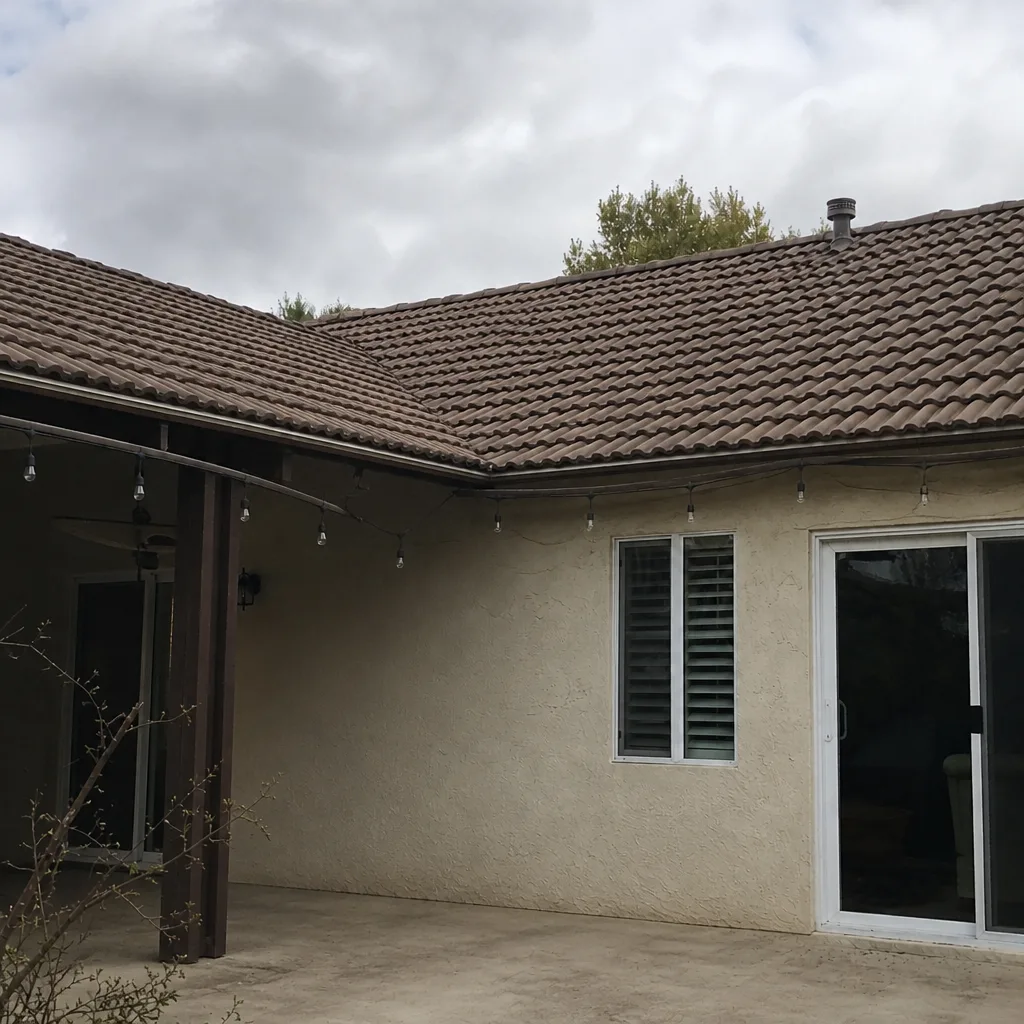 After
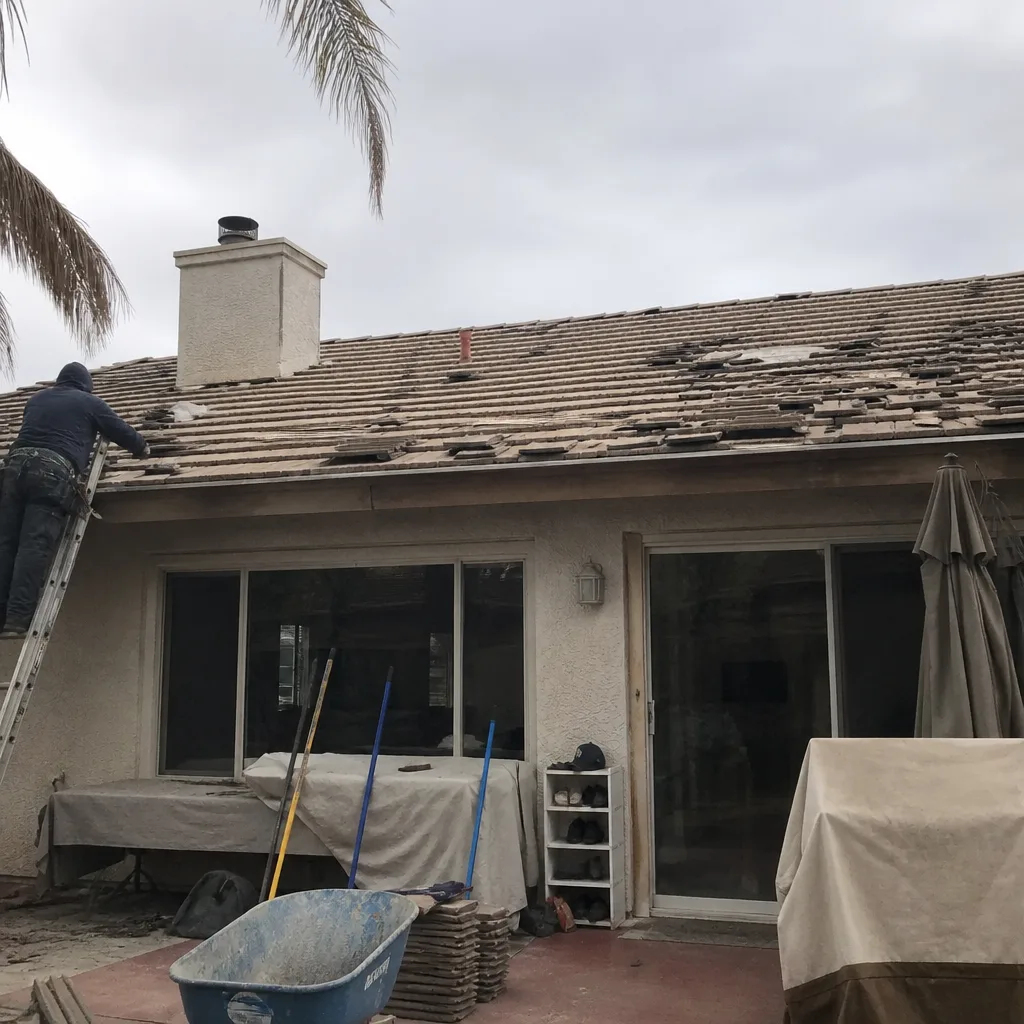 Before
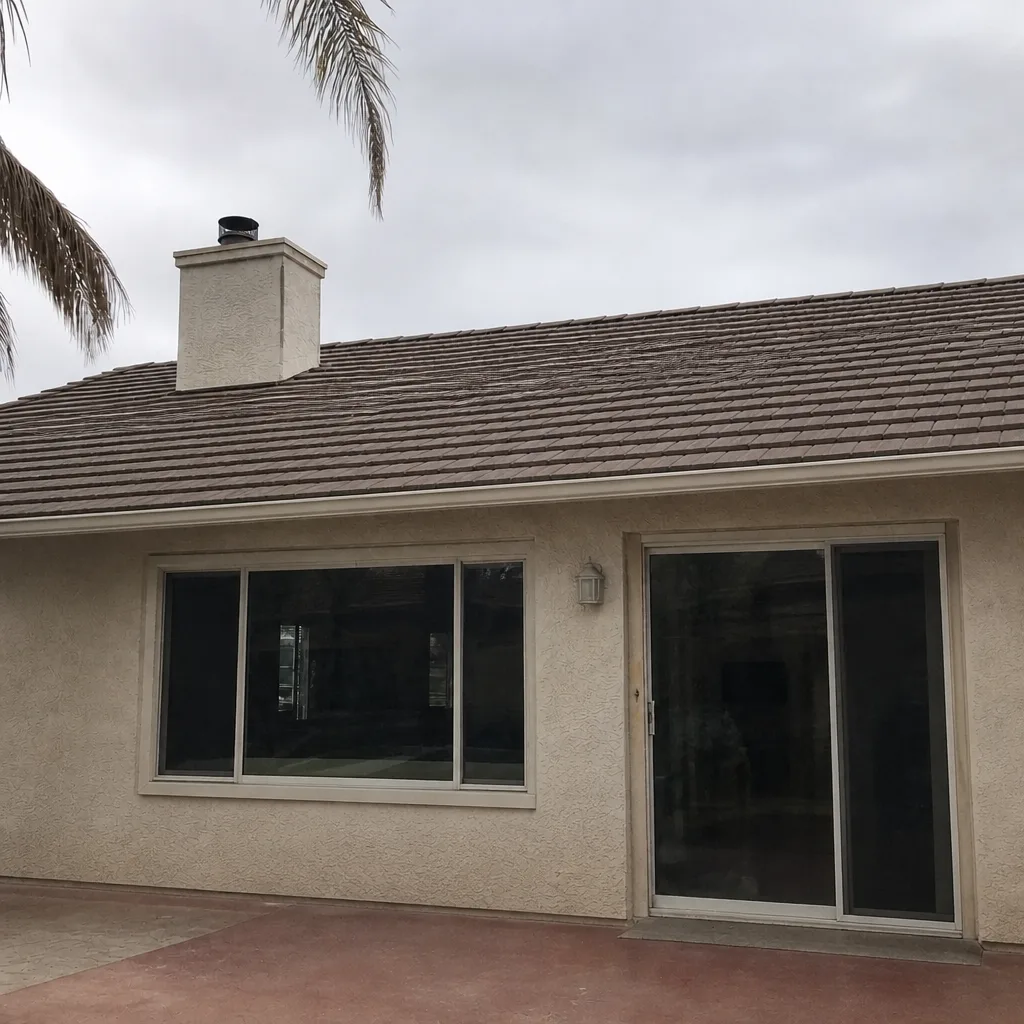 After
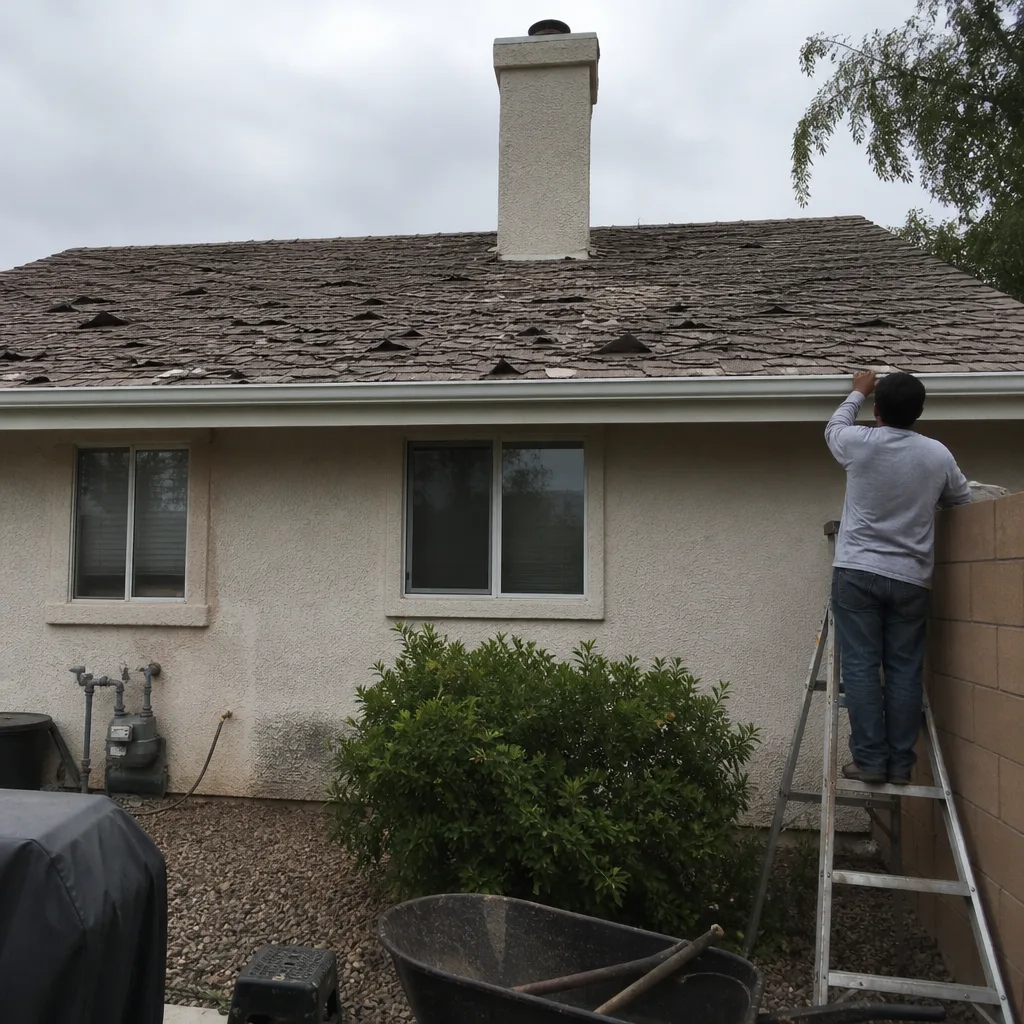 Before
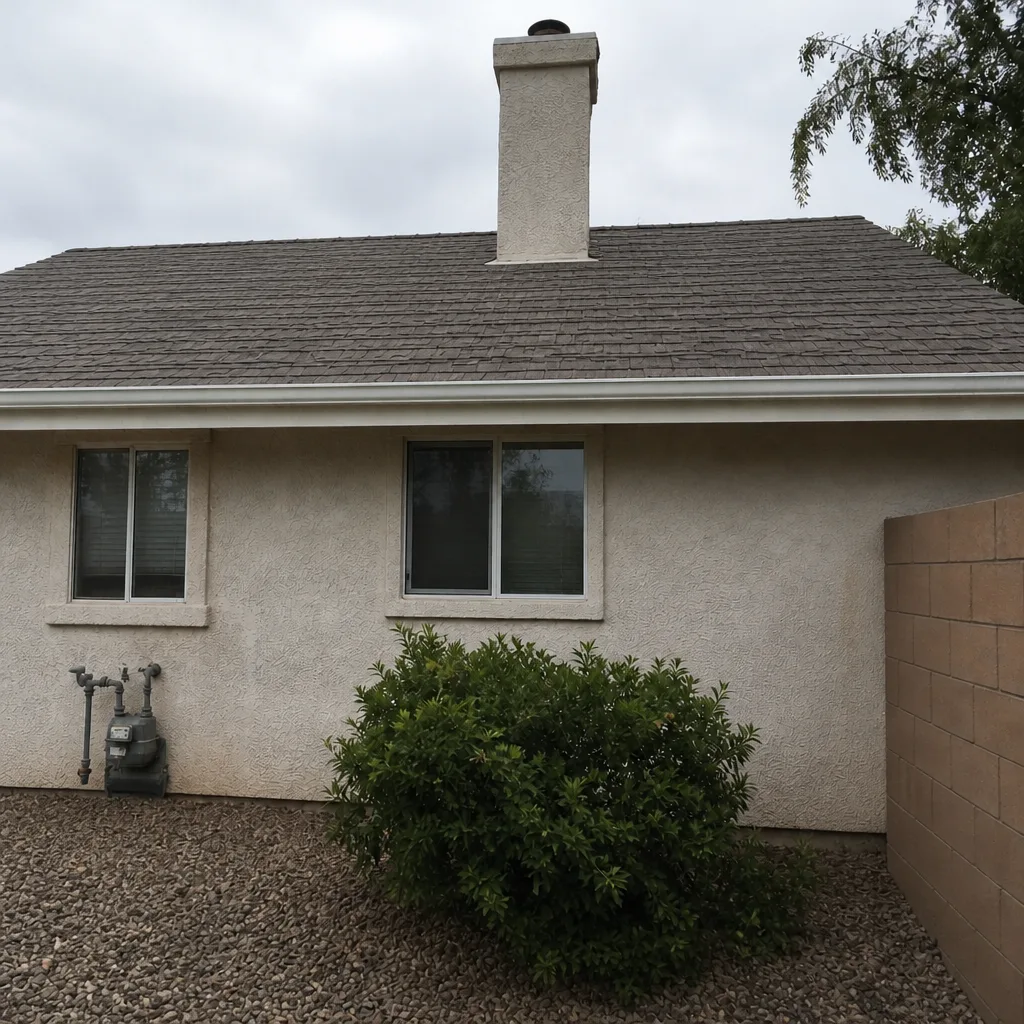 After