
Last updated November 18, 2026
 Metal roofing
 Architectural shingles
 Tile roofing
 GAF
 Owens Corning
 Flat & low-slope
Free roof inspection with deck photos before we talk money - GAF and Owens Corning certified installation
Roofing Warning Signs: A Summerlin Homeowner’s Reference Guide
In a wet climate, a roof leak shows up as a water stain inside six weeks. In Summerlin, that same leak can evaporate before it reaches your drywall for eighteen months – by which point the decking is rotted and you’re looking at a full replacement instead of a repair. That’s the part most warning-sign guides miss. They were written for rain-soaked suburbs back east, not for a high-desert community where the sun does as much damage as any storm and the dry air quietly hides the evidence. This guide covers the Summerlin-specific failure signatures that homeowners walk past for two years before the ceiling finally tells them. We’ll show you what to look for, what it means, and when it’s time to call.
Quick Answer
The most important roofing warning signs for Summerlin homeowners are the ones you can’t see from the street: soft or stained attic decking, granule piles in the gutters, cracked or lifted tile after a freeze-thaw night, and deteriorating mortar at ridge lines. Because Summerlin’s low humidity lets small leaks evaporate before they stain a ceiling, a thorough attic inspection and a ground-level visual check matter far more here than the obvious missing-shingle check most guides lead with. Catch these early and you’re usually looking at a repair; miss them for two years and it’s often a replacement.
Styles & brands we work with
- Architectural shingles
- Metal roofing
- Tile roofing
- GAF
- Owens Corning
- Flat & low-slope
Table of Contents
- The Invisible Leak: Why Summerlin Hides Water Damage
- Attic Inspection Signs That Catch a Leak Early
- Thermal Cracks vs. Impact Cracks in Tile Roofs
- Mortar Bed Failure on Concrete Tile Roofs
- Granule Loss on Low-Slope Modified Bitumen
- Gutter and Fascia Clues Before Interior Damage
- The Seasonal Checklist: What to Check Each Quarter
- Common Mistakes to Avoid
- When to Call a Professional
- Frequently Asked Questions
The Invisible Leak: Why Summerlin Hides Water Damage
Here’s what makes roofing in Summerlin fundamentally different from the guides written for wetter places. When water gets past a tile or flashing, it doesn’t pool. Summerlin averages roughly four inches of rain a year, almost all of it squeezed into a handful of monsoon storms, and the air in between is bone-dry and hot. That means a slow intrusion from a cracked flashing or a failed underlayment gets soaked up by the decking and then evaporates before it ever travels far enough to stain your ceiling drywall. The leak is real. The evidence just dried up first.
That’s the invisible leak. In our experience, the homes that end up needing a full replacement instead of a repair are almost never the ones with an obvious stain on the ceiling. They’re the ones where a homeowner noticed nothing for a season or two, and the plywood under the tile quietly turned soft and delaminated. By the time the ceiling finally shows a ring, the decking is already gone across a section bigger than anyone expected.
The good news: invisible doesn’t mean undetectable. It just means you have to look in the right place. The attic is where the truth lives, and later in this guide we’ll walk you through the specific signs. The short version is that a roof in Summerlin rarely fails loudly. It fails slowly and silently, and your job is to check before the silence turns into a sagging ceiling.
Attic Inspection Signs That Catch a Leak Early
If you do one thing from this guide, make it an attic walk-through twice a year – once after the monsoon season in early fall, once in spring. This is where Summerlin leaks announce themselves before the living space ever knows. Here’s what to look for, in order:
- Daylight through the deck. Turn off the attic light and look up. Any pinhole or streak of light between boards or around penetrations means a gap that water can find.
- Dark or discolored decking. Wet plywood and OSB stain a tea-brown or gray color and stay that way. A dark patch that isn’t near a plumbing vent is a leak scar, even if it feels dry now.
- Soft spots underfoot. Step carefully on the framing, not the deck, and press a screwdriver into any suspicious board. If it sinks in easily, the wood has absorbed water and lost its strength.
- Water stains on the rafters and top plates. Streaks running down the side of a rafter or along a top plate point to where water is entering and traveling.
- Crumbling or white powdery residue. That chalky film is efflorescence – minerals left behind when water evaporated. It’s a fingerprint of past moisture.
- Rust on nails and fasteners. A rusty nail head means it’s been wet. Rust streaks on the underside of the deck tell the same story.
None of these require you to climb onto the roof. They require a flashlight, ten minutes, and a willingness to get a little dusty. If you find any of them, don’t wait for a stain to confirm what your eyes already saw. A roof repair in Summerlin caught at this stage is a fraction of the cost of the replacement that follows a missed one.
Thermal Cracks vs. Impact Cracks in Tile Roofs
Concrete and clay tile dominate a lot of Summerlin roofs, and both crack. But not all cracks are created equal, and the difference matters a great deal if you’re filing an insurance claim. A thermal crack and an impact crack tell two completely different stories, and your adjuster will care which one it is.
Thermal cracks come from the daily swing that defines the desert. Summerlin rooftops can hit 160 degrees on a July afternoon and drop into the sixties by morning. That expansion and contraction, repeated over years, causes hairline cracks that tend to run in straight lines, often following the long axis of the tile, and they cluster on the south- and west-facing slopes that take the most sun. They’re usually narrow, clean-edged, and appear across many tiles in a pattern rather than scattered at random.
Impact cracks look different. They radiate from a central point like a spiderweb or a windshield chip. The edges are often chipped or crushed, and you may see a small dent or bruise nearby. These come from hail, a fallen branch, a stray ball, or something dropped during a repair. An adjuster reads an impact crack as a sudden event (usually covered) and a thermal crack as wear and tear (usually not).
Why this matters for you: if a hailstorm rolls through and cracks a cluster of tiles that were already thermally weakened, you need a clear before-and-after picture, or the claim gets denied as pre-existing. Take dated photos of your roof every spring. That single habit has saved Summerlin homeowners thousands. When the tile count gets high enough, a roof replacement and installation in Summerlin can be the smarter call than chasing cracks one at a time.
Mortar Bed Failure on Concrete Tile Roofs
Many Summerlin concrete tile roofs are set in a mortar bed at the ridges and hip courses, and mortar is where these roofs most often fail systemically – not in one spot, but across the whole detail. The trouble is that mortar failure rarely looks like a hole. It looks like a hairline you’d never notice from the ground. Here are the visual cues at the ridge lines and hips that tell you it’s a pattern, not an isolated problem:
- Hairline cracks running the length of the ridge mortar. A single small crack is normal settling. Cracks that run continuously along the ridge, or open and close along a whole course, mean the mortar bed is separating from the tiles.
- Mortar that crumbles when touched. If you can flake it off with a fingernail or it sheds sand, it has lost its bind.
- Tiles that lift or “oil can.” Press gently near a hip. If a tile rocks or lifts, the mortar underneath has released it.
- Sagging or drooping ridge caps. A ridge that dips or waves instead of running straight is a serious sign the mortar has let go.
- Missing mortar at the hip-to-ridge junction. Look where a hip meets a ridge. That corner is the first place mortar gives way, and it’s a direct invitation for wind-driven monsoon rain.
When you see these cues spread across more than a couple of tiles, it’s not a repair – it’s a mortar bed that needs to be rebuilt, or a roof that’s telling you it’s near the end of its service life. A lot of Summerlin replacements we’re called out on start with exactly this: a ridge line nobody looked at for years. If your tile roof is a candidate for a fresh start, a modern metal roofing in Summerlin setup sidesteps the mortar question entirely, and metal handles the desert temperature swings with room to spare.
Granule Loss on Low-Slope Modified Bitumen
Plenty of Summerlin homes have sections that aren’t tile or shingle at all – low-slope transitions, patios, porches, and flat or near-flat roof areas that get covered in modified bitumen. That material is a workhorse, but here in the desert its granules wear off faster than the manufacturer warranty expects. Those granules are the sacrificial layer that shields the asphalt underneath from UV. Once they’re gone, the sun starts eating the membrane itself.
What to watch for:
- Granule piles at the base of downspouts and in the gutter. That’s the roof shedding its armor. A handful after a storm is normal; a continuous accumulation means the coating is failing.
- Bare, shiny, or gray-streaked patches. Where granules are gone you’ll see the black asphalt underneath starting to gray and expose its surface.
- Blistering or bubbles. Small raised bumps mean trapped moisture or off-gassing under the membrane, and they’re the beginning of a split.
- Seam separation and alligator cracking. Cracks that look like reptile skin are the membrane drying out and losing its flexibility.
A quick way to test for UV damage on these sections: look carefully at a horizontal surface after a windy day. Granule loss on a low-slope section is one of the earliest, most fixable warning signs on a Summerlin roof – and one of the most common things homeowners walk right past because they’re watching the pitched tile and never glance down at the flat bits. If you’re wondering whether those low-slope sections are worth patching or resurfacing, our Shepherd & Sons Roofing Summerlin home page lays out repair versus replacement, and we’ll always tell you which one your roof actually needs.
Gutter and Fascia Clues Before Interior Damage
You don’t have to get on the roof to read it. The gutter and fascia line tells you more about flashing and water management than almost any other spot on the house, and you can check it standing on the ground with a pair of binoculars. Here’s the ground-level technique we walk homeowners through:
- Look for staining under the gutter. Rust-colored or dark streaks down the fascia board below the gutter usually mean water is getting behind the gutter, often from failed flashing above.
- Check the gutter line for sagging or pulling. A gutter pulling loose from the fascia is a sign the backing has rotted, which means water has been sitting where it shouldn’t.
- Watch where the gutter meets the wall. Gaps, caulk that’s peeling, or a visible separation at the corner is a flashing problem in the making.
- Look at the fascia paint. Bubbling, peeling, or flaking paint on fascia wood signals moisture underneath – paint fails from the inside out when wood stays wet.
- Look at the soffit. Sagging soffit or stains on the underside of the eave are flashing and water-management warnings you can see from the driveway.
Every one of these clues appears before water ever reaches your ceiling. That’s the whole point. In Summerlin, the house gives you a ground-level heads-up weeks or months ahead of the interior stain – you just have to know where to look. It’s also a reminder that a roof and its gutter system are one unit. Sagging or undersized gutters dumping water against your fascia is a roof problem wearing a gutter costume.
The Seasonal Checklist: What to Check Each Quarter
A roof doesn’t need a lot of attention if you spread it across the year. Here’s a simple quarterly rhythm that works for a Summerlin home:
- Spring (before the heat): Photograph the roof and your tile field. Check the attic for winter moisture and rust. Clear any debris from valleys and low-slope drains.
- Early summer: Look for blistering on flat sections and granule shedding after the first big wind. Check fascia paint at the gutter line.
- Fall (after monsoon): Do a full attic walk-through – decking, rafters, fasteners. Look at ridge mortar and hips for new cracking. Check gutters for granule piles.
- Winter: After any freeze-thaw night, look for new tile cracks. Check attic for condensation (which can look like a leak). Confirm flashing at chimneys and vents hasn’t pulled.
That’s it. Two real inspections a year and a couple of quick looks after storms will catch the vast majority of what a Summerlin roof throws at you before it turns into a claim.
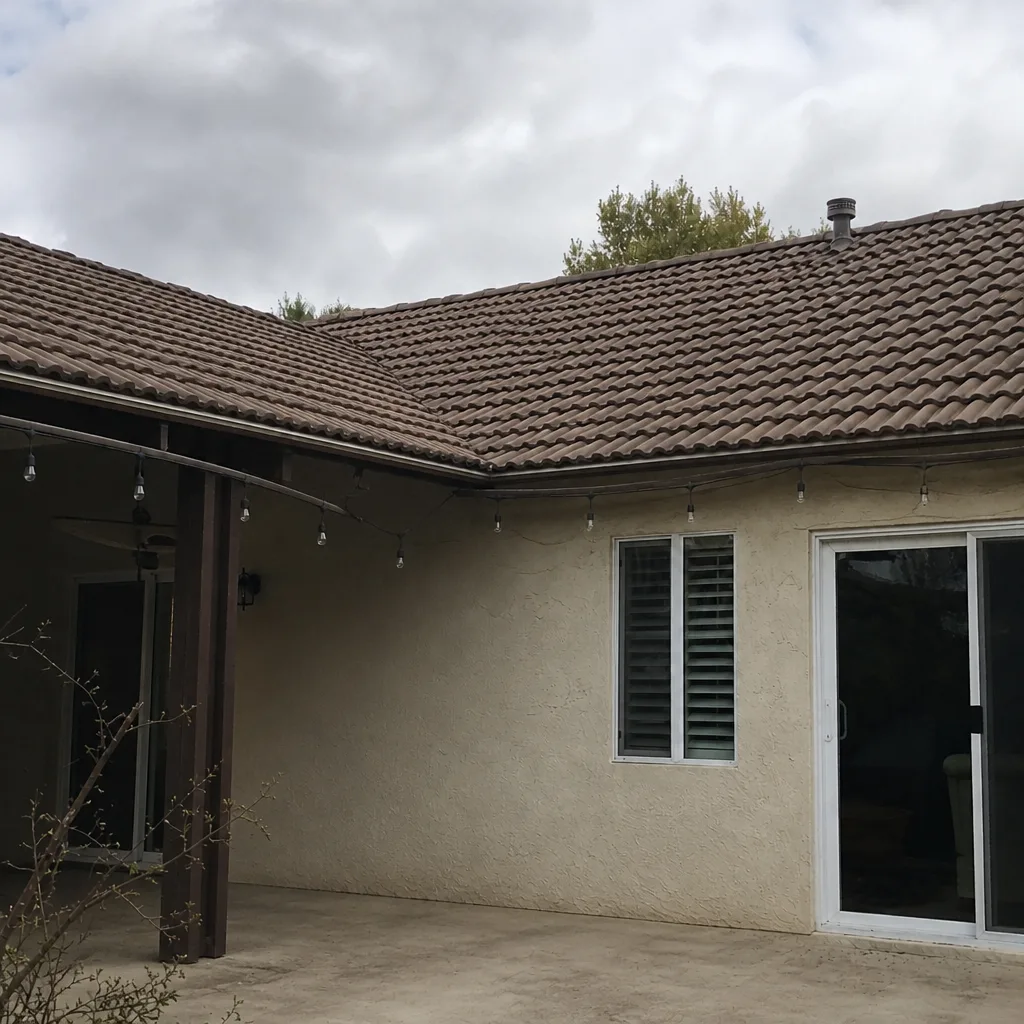
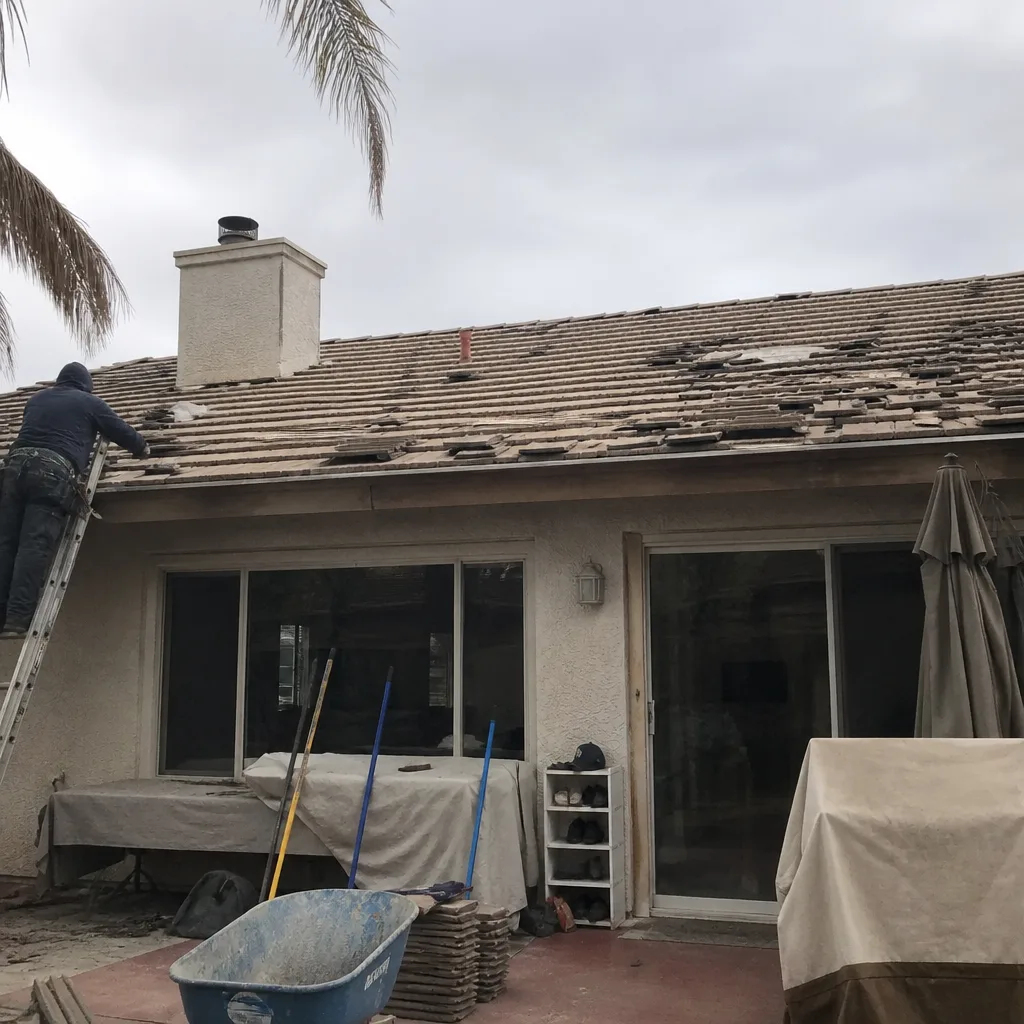
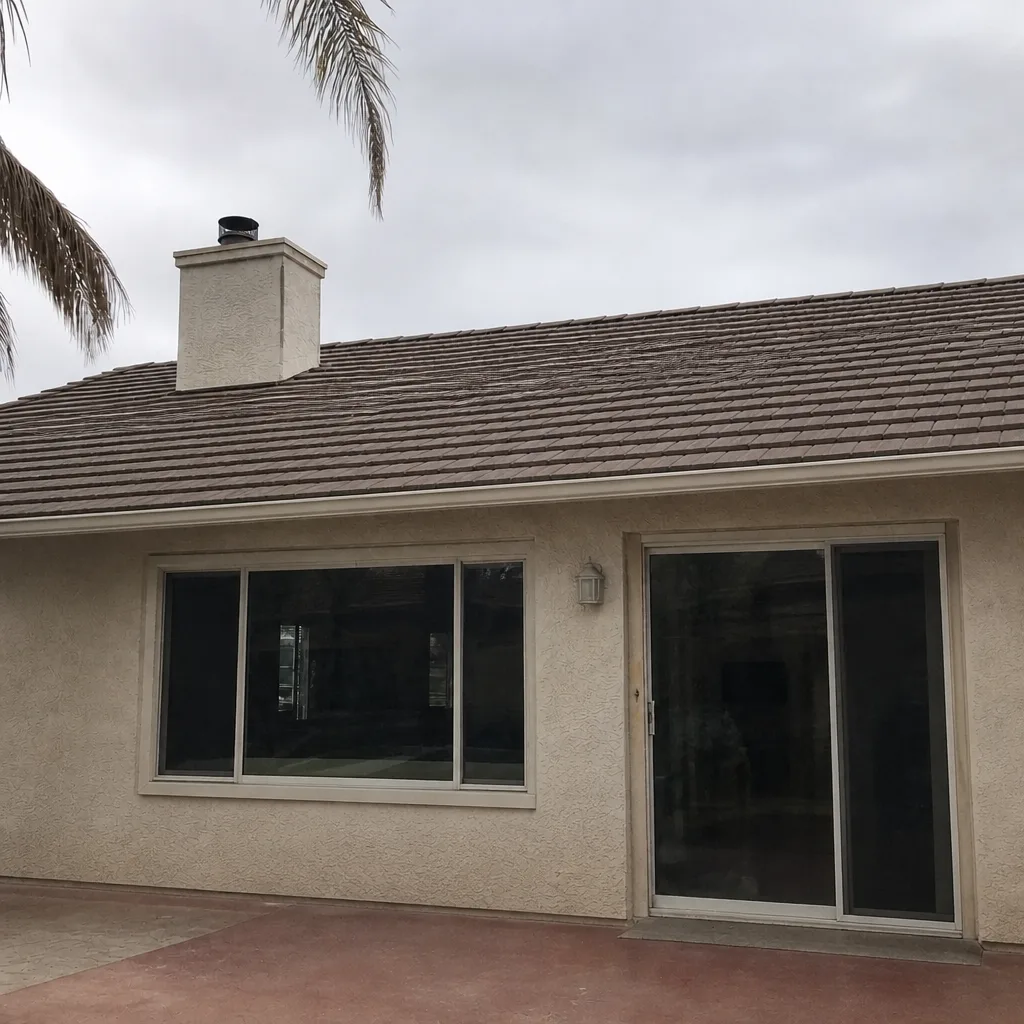
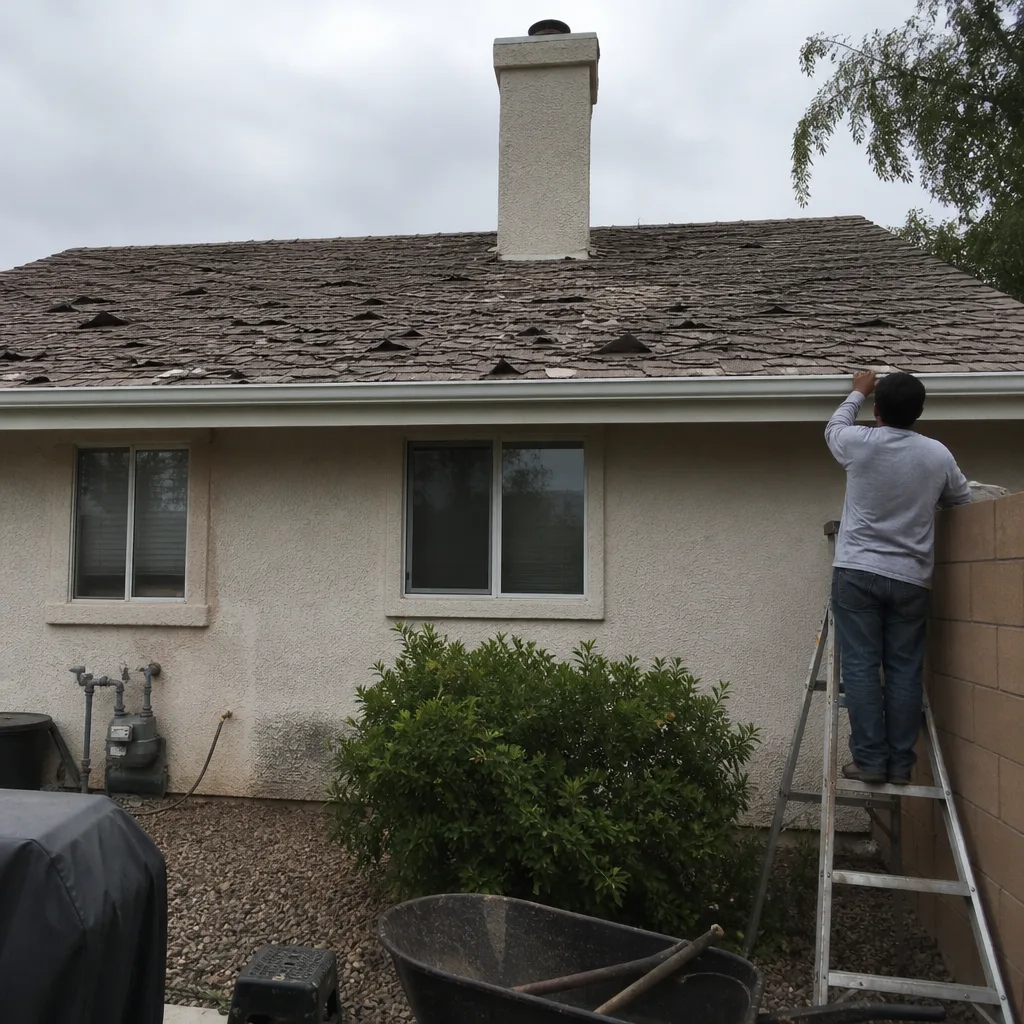
See the difference
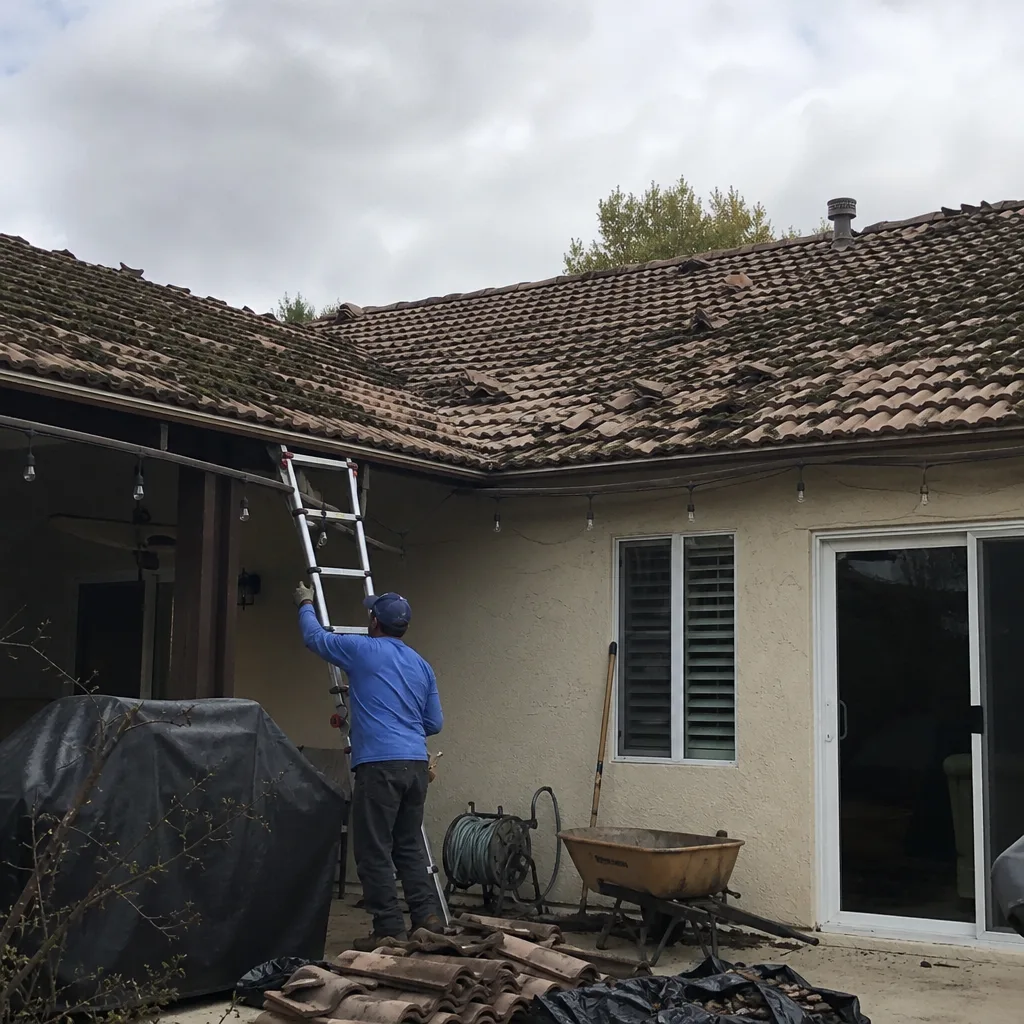 Before
 After
 Before
 After
 Before
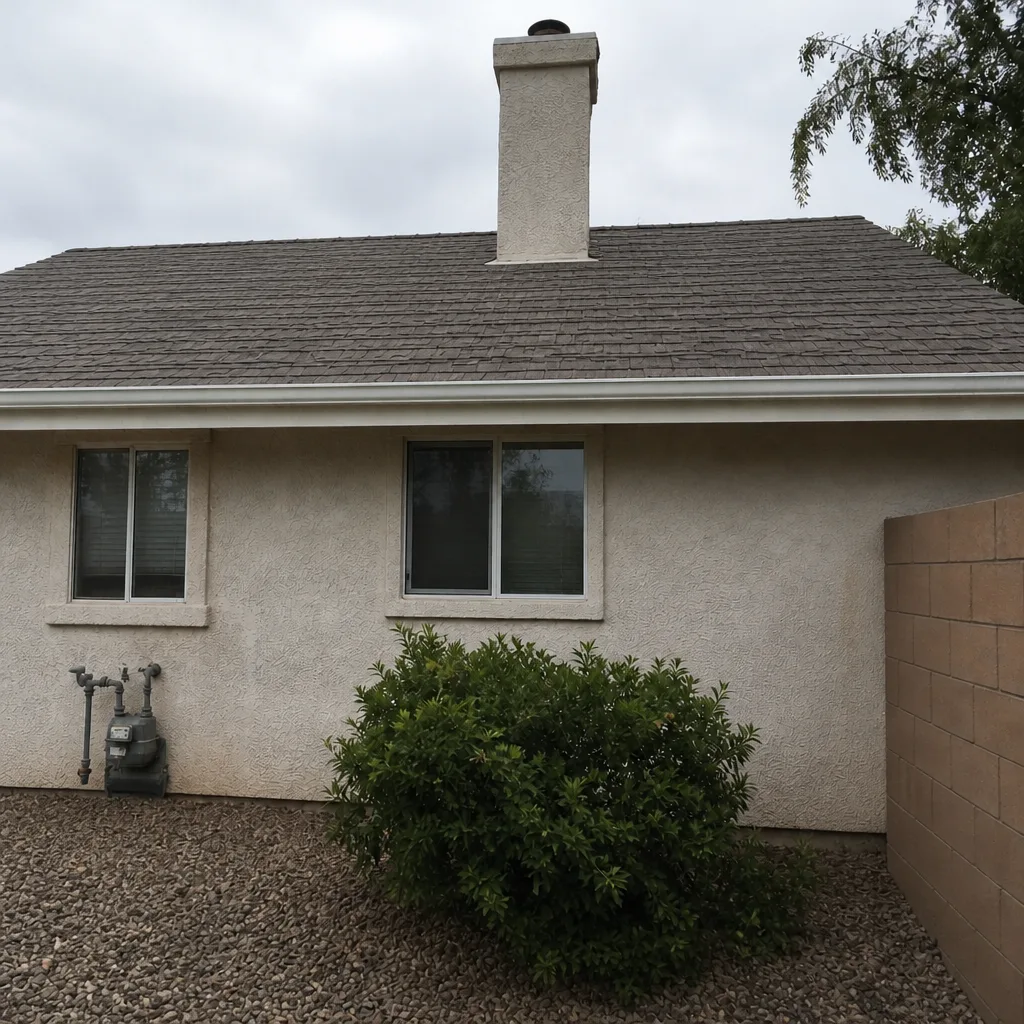 After
Common Mistakes to Avoid
- Waiting for a ceiling stain on a desert roof. As we covered, the stain may be a year or more behind the leak in Summerlin. Check the attic instead of trusting the drywall.
- Treating a thermal crack cluster like a hail claim. Photograph your roof every spring so you have a dated record. Without it, an adjuster will call existing cracks pre-existing and deny a legitimate storm claim.
- Patching one hip tile and ignoring the ridge line. A single cracked tile is a repair. Cracks that run along the whole ridge mean the mortar bed is failing. Repairing the tile hides the real problem.
- Ignoring granules in the gutter. Granule loss on low-slope modified bitumen is your earliest warning on a real wear problem. Assuming the shingle or membrane is “fine” because it’s not leaking is how it fails.
- Chopping away at the gutter and fascia yourself. Deteriorated fascia is often a symptom of a flashing failure above, and pulling the gutter to “see what’s going on” can open the wall to water. Get it looked at properly.
- Hiring the door-knocker after the first storm. Storm chasers come and go, and the price they quote at the door won’t be the one on the invoice. Ask for a license number you can look up and an address you can drive past.
- Skipping the attic entirely. A roof that looks fine from the driveway can have rotted decking a few feet above your ceiling. The attic is where the evidence lives.
When to Call a Professional
Some of this is a flashlight and a look. Some of it isn’t, and we’d rather you know the difference than climb up there and get hurt. Call a professional when: you find soft or discolored decking in the attic; you see ridge mortar that’s crumbling, cracks that run continuously, or tiles that lift under a light press; you have granule loss that’s leaving bare membrane on a low-slope section; or you spot staining or peeling paint on the fascia that suggests a flashing leak. Anything involving the roof surface at height, especially on tile or metal, is trained-professional work – one wrong step near a valley or ridge can break a tile and open a new leak, or worse. Shepherd & Sons Roofing Summerlin offers free estimates in Summerlin – call (844) 951-4545 and we’ll come look, with the deck photos to back it up before we talk money.
Frequently Asked Questions
It usually looks like nothing on the ceiling – the clues are in the attic: dark or tea-brown staining on the decking, soft OSB underfoot, rust on nail heads, white powdery efflorescence on rafters, or a pinhole of daylight between boards. Because Summerlin’s dry air lets small leaks evaporate before they reach the drywall, the attic is often the only place the leak shows for eighteen months or more. Call (844) 951-4545 for a free second opinion on any written estimate – we’ll look where the stain never will.
Thermal cracks tend to be straight, clean-edged, and clustered on the hot south- and west-facing slopes; impact cracks radiate from a central point like a windshield chip and often have chipped or crushed edges. The distinction decides whether insurance covers the repair, since wear and tear from temperature swings usually isn’t covered and a storm or falling object usually is. Dated spring photos of your roof are what let you prove the difference later.
Most small Summerlin roof repairs – a flashing fix, a few lifted tiles, a low-slope patch – run in the low hundreds to low four figures, while a full replacement is a larger project priced in squares. Nobody can give you a real number from the driveway; you need a measured, written quote. Call (844) 951-4545 for a free estimate and we’ll count the squares with you before any money changes hands.
One short crack is normal settling and usually isn’t urgent. What’s serious is a crack that runs continuously along the ridge or open hip courses, mortar that crumbles when touched, tiles that lift, or a ridge that sags or waves – those mean the mortar bed has failed systemically and a single patch won’t fix it. Get it looked at before a monsoon finds it. Estimates are free.
Summerlin’s UV load and repeated heating of low-slope sections shorten the life of the protective granule layer on modified bitumen faster than most manufacturer warranties assume. Once granules are gone, the asphalt coating erodes and the membrane cracks. If you’re finding granule piles at the downspouts, call (844) 951-4545 for a free estimate on resurfacing or a section rebuild.
If mortar failure is limited to a couple of tiles at a hip, a repair can make sense. If ridge and hip mortar is cracking continuously, crumbling, or letting tiles lift, that’s a systemic failure and rebuilding the details or replacing the roof is the honest answer. We’ll show you the deck and the details, then give you a written quote so the choice is yours. Call (844) 951-4545.
The Bottom Line
Summerlin roofs fail quietly. The desert hides a leak for a year or more, so the warning signs that matter here aren’t the obvious ones – they’re the attic stains, the granule piles, the hairline that runs along a whole ridge, and the staining under the gutter that you can read from the ground. Check your attic twice a year, photograph the roof every spring, and get a professional eye on anything that looks like a pattern rather than a single spot. Catch these early and you’re usually looking at a repair. Miss them and the quiet turns into a ceiling that tells the story for you.
The most reliable warning sign of all is a contractor you can actually track down. Shepherd & Sons Roofing has been locally owned and owner-operated since 1996, with the same address and a license number you can look up, and a live person on the phone. Same address the whole time – ask the storm chasers where theirs is. Our technicians have up to 30 years of experience, we install products from GAF, CertainTeed, Owens Corning, IKO, Atlas, Tamko, and Boral, and every roofing job is backed by our written 90-Day Done Right Promise. If it’s not done right, we make it right.
Call (844) 951-4545 for a free estimate. We answer around the clock, and a free second opinion on any written estimate is always on the table.
Written by the team at Shepherd & Sons Roofing Summerlin.