
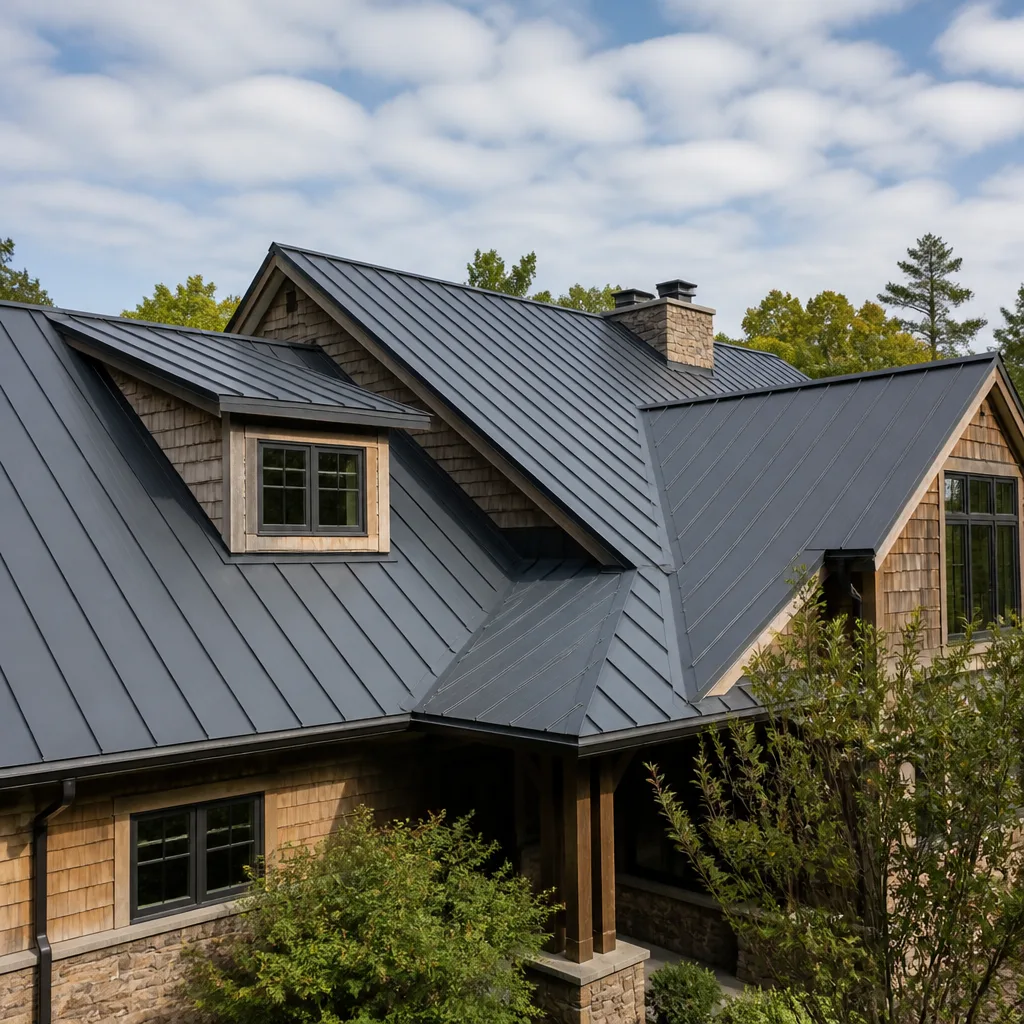
 Metal roofing
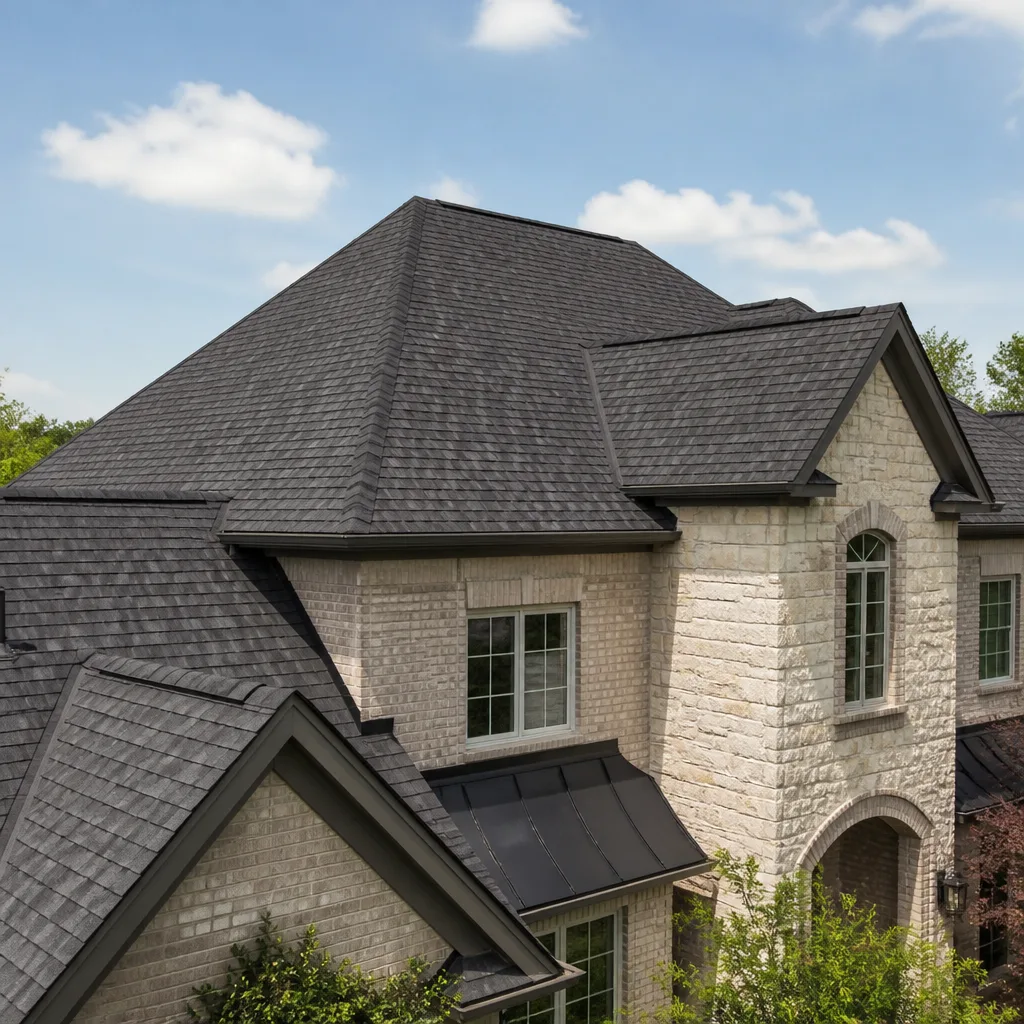 Architectural shingles
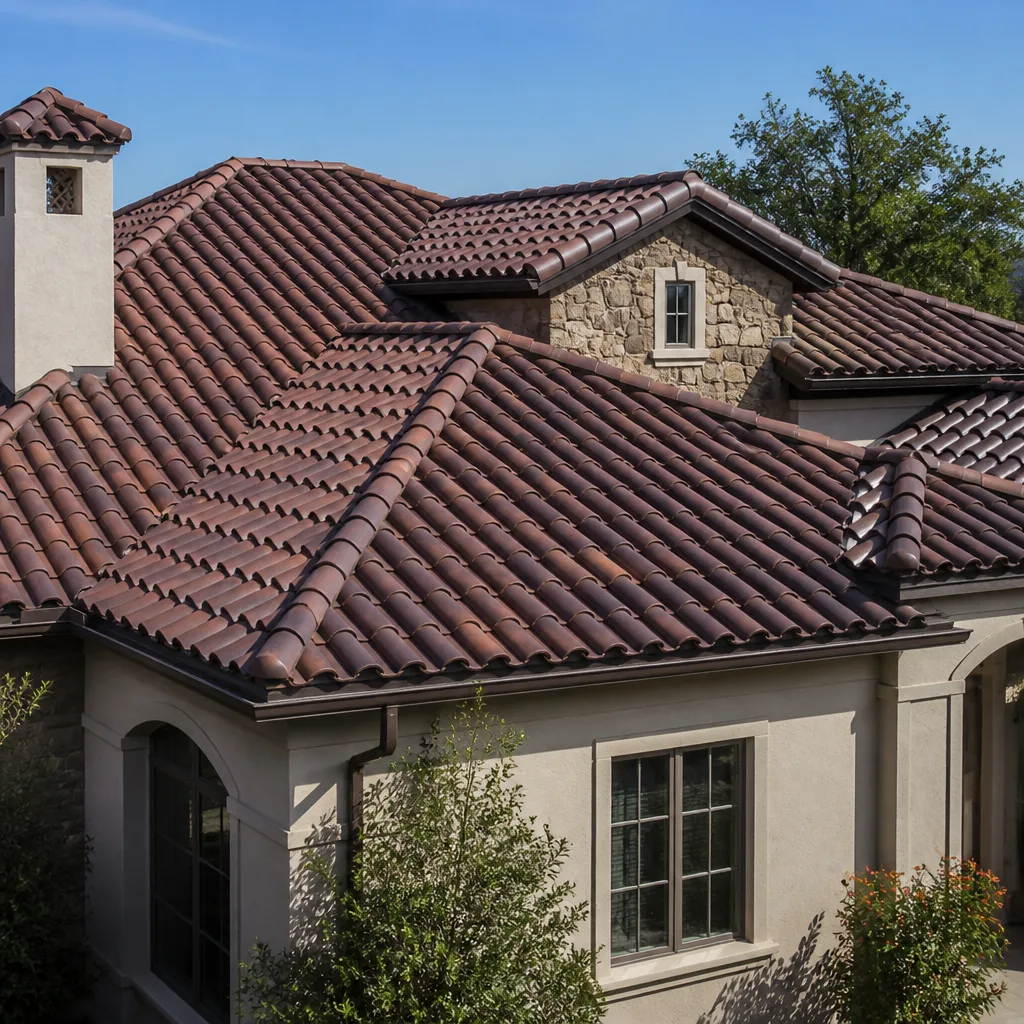 Tile roofing
 GAF
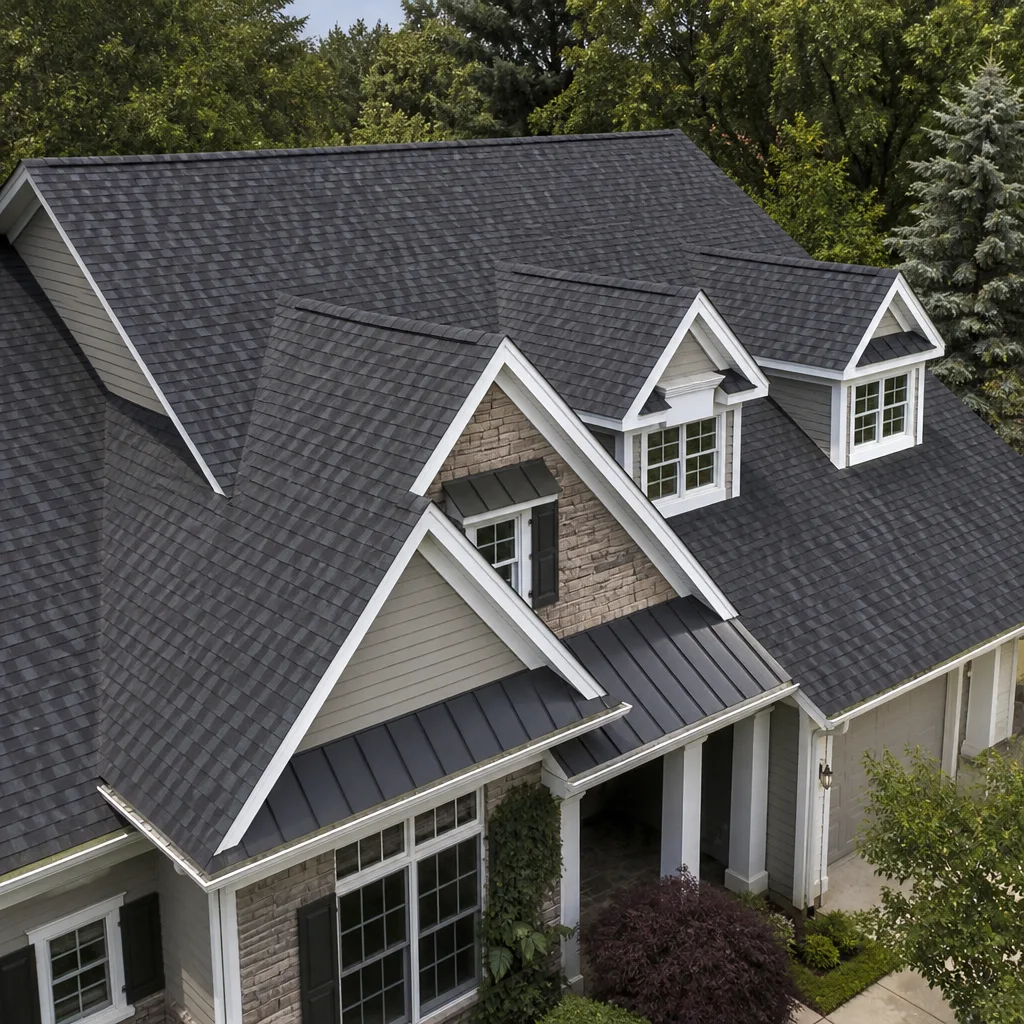 Owens Corning
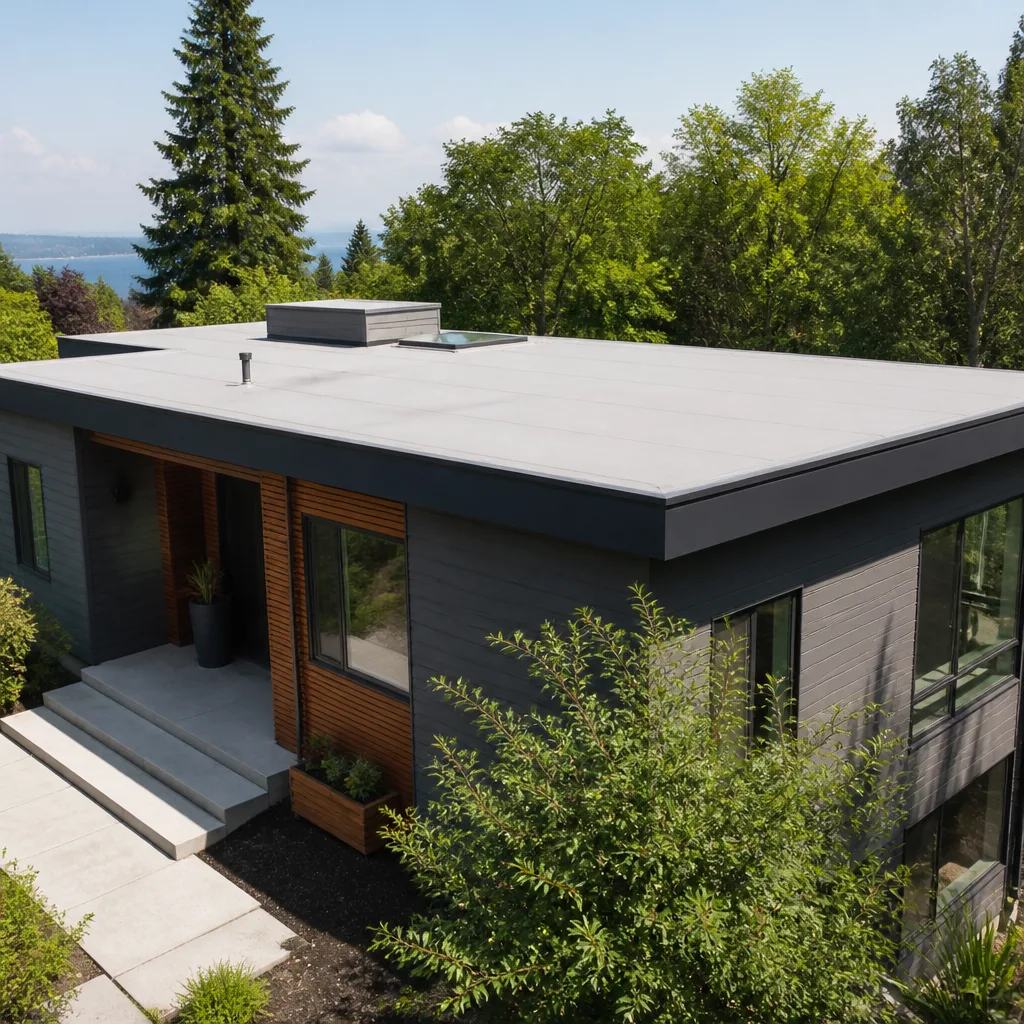 Flat & low-slope
Free roof inspection with deck photos before we talk money - GAF and Owens Corning certified installation
Styles & brands we work with
- Architectural shingles
- Metal roofing
- Tile roofing
- GAF
- Owens Corning
- Flat & low-slope
See the difference
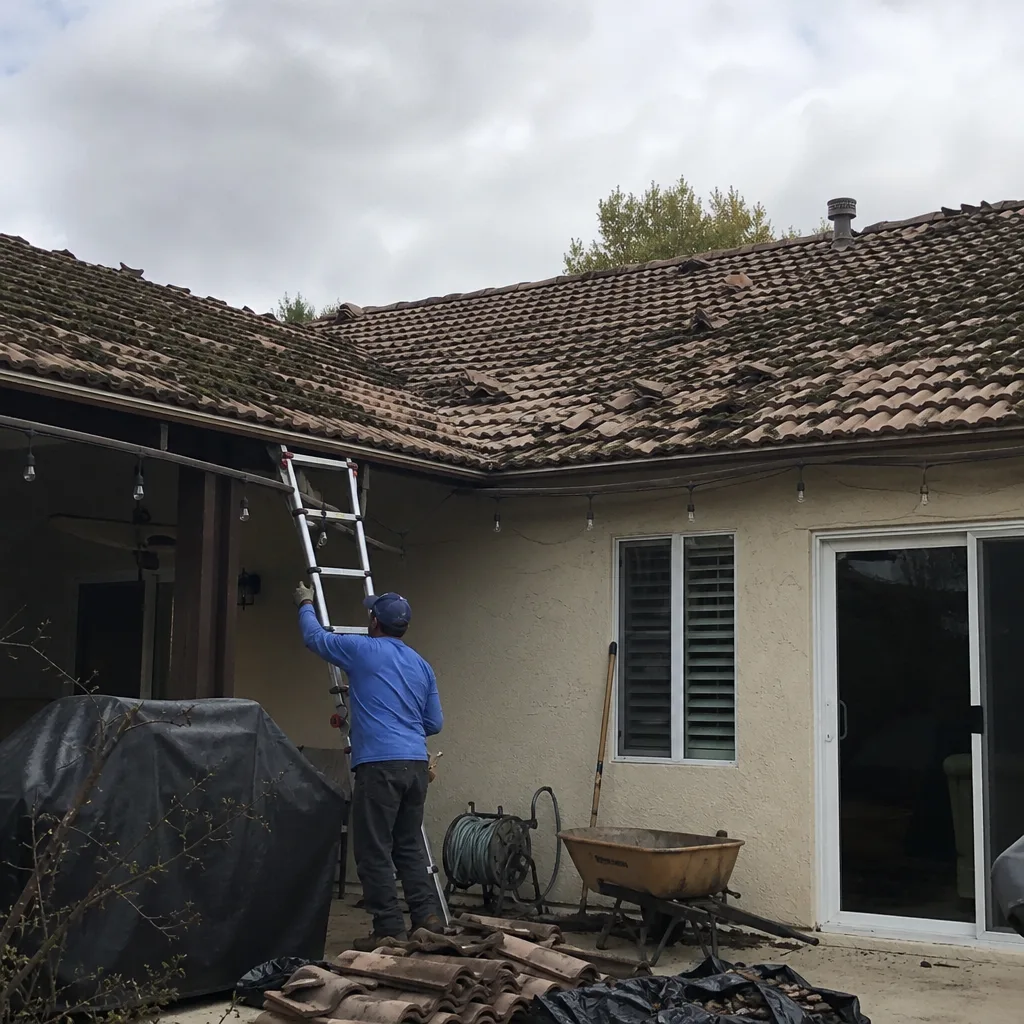 Before
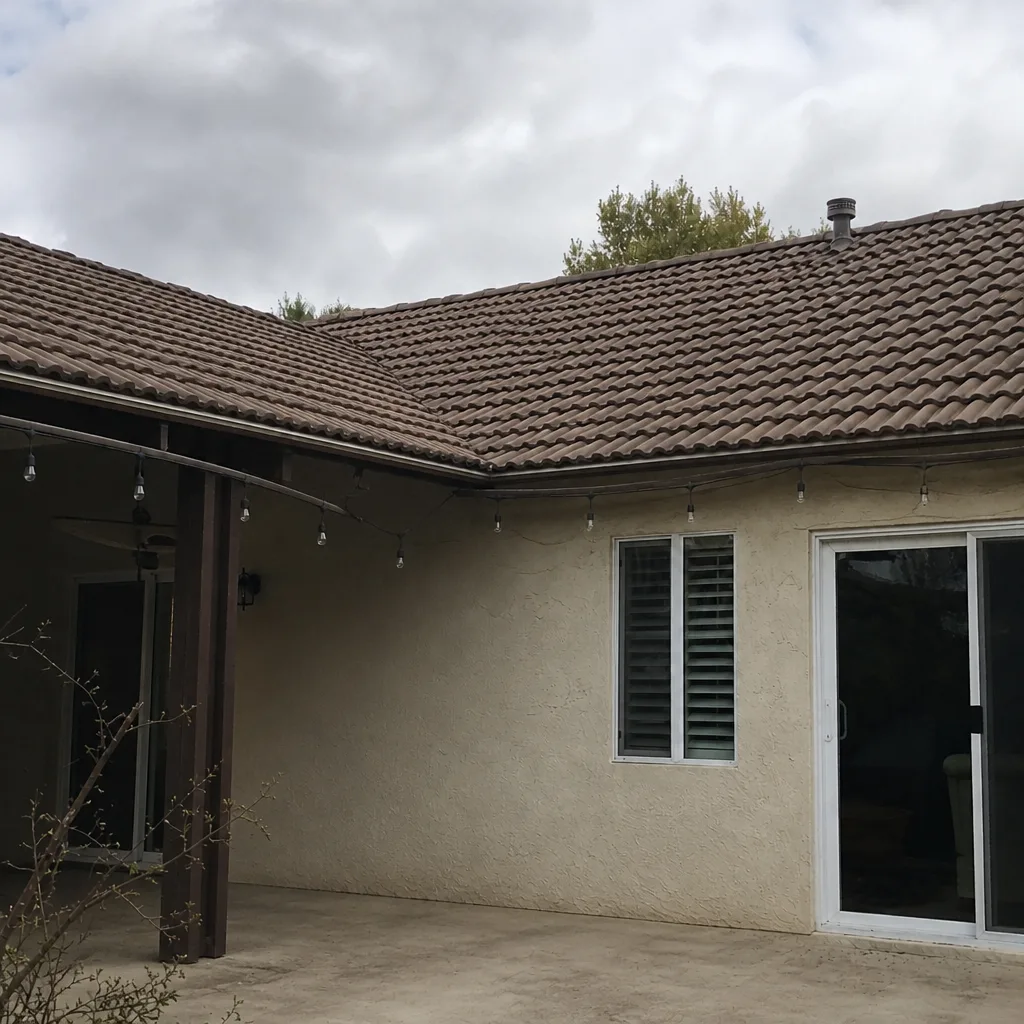 After
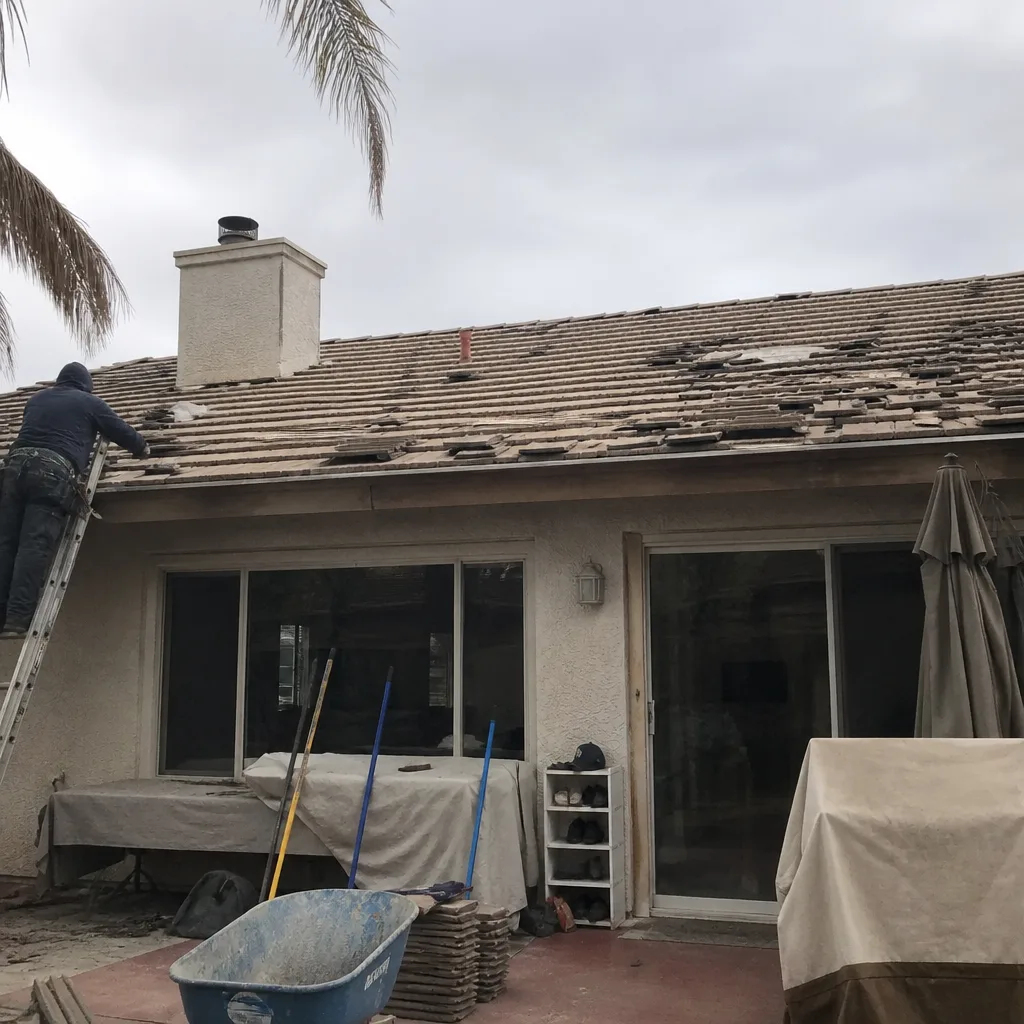 Before
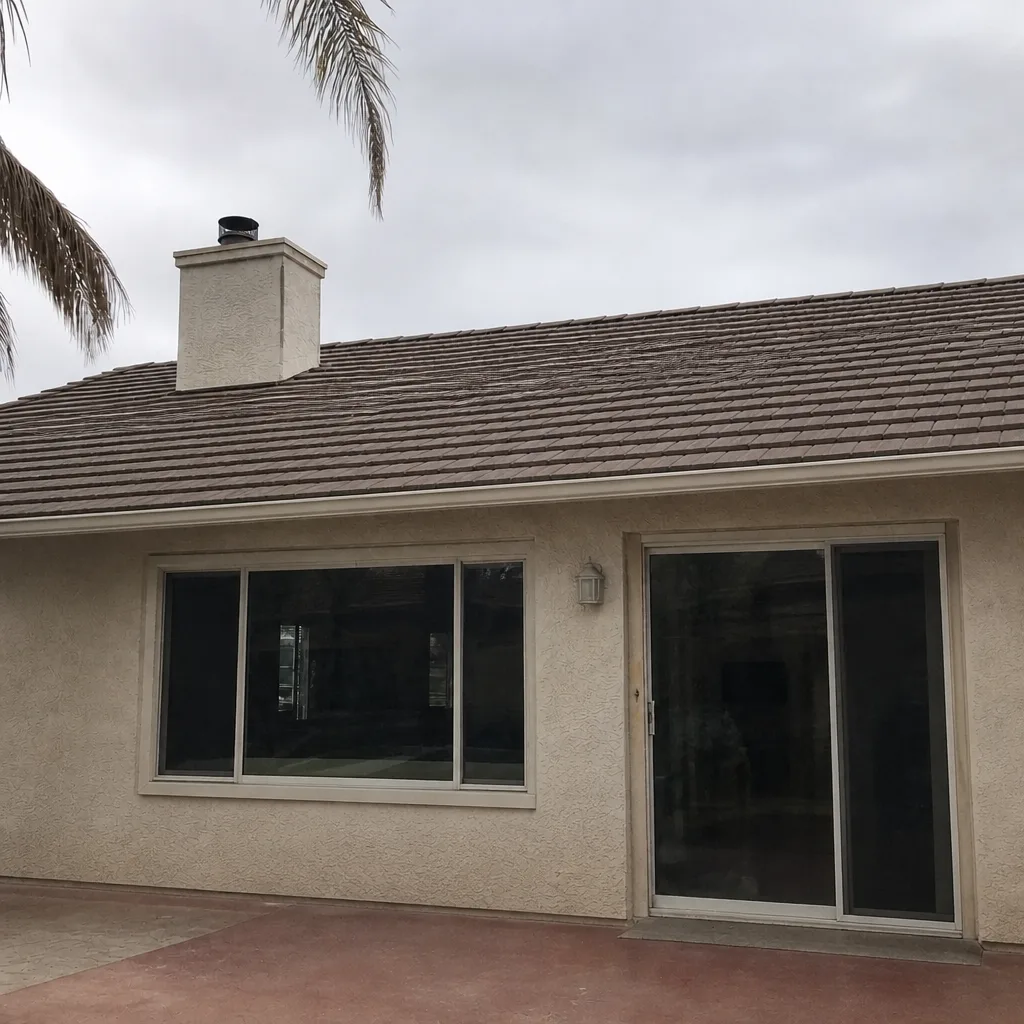 After
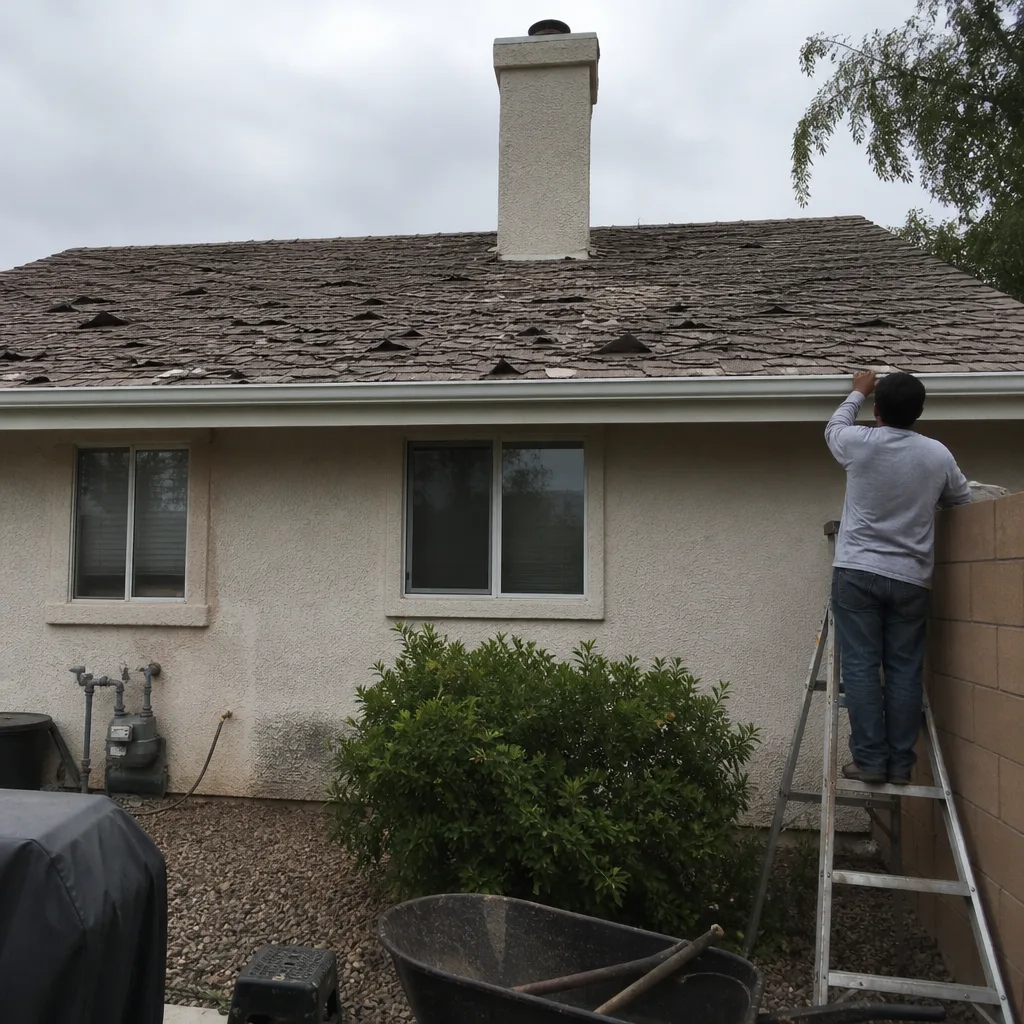 Before
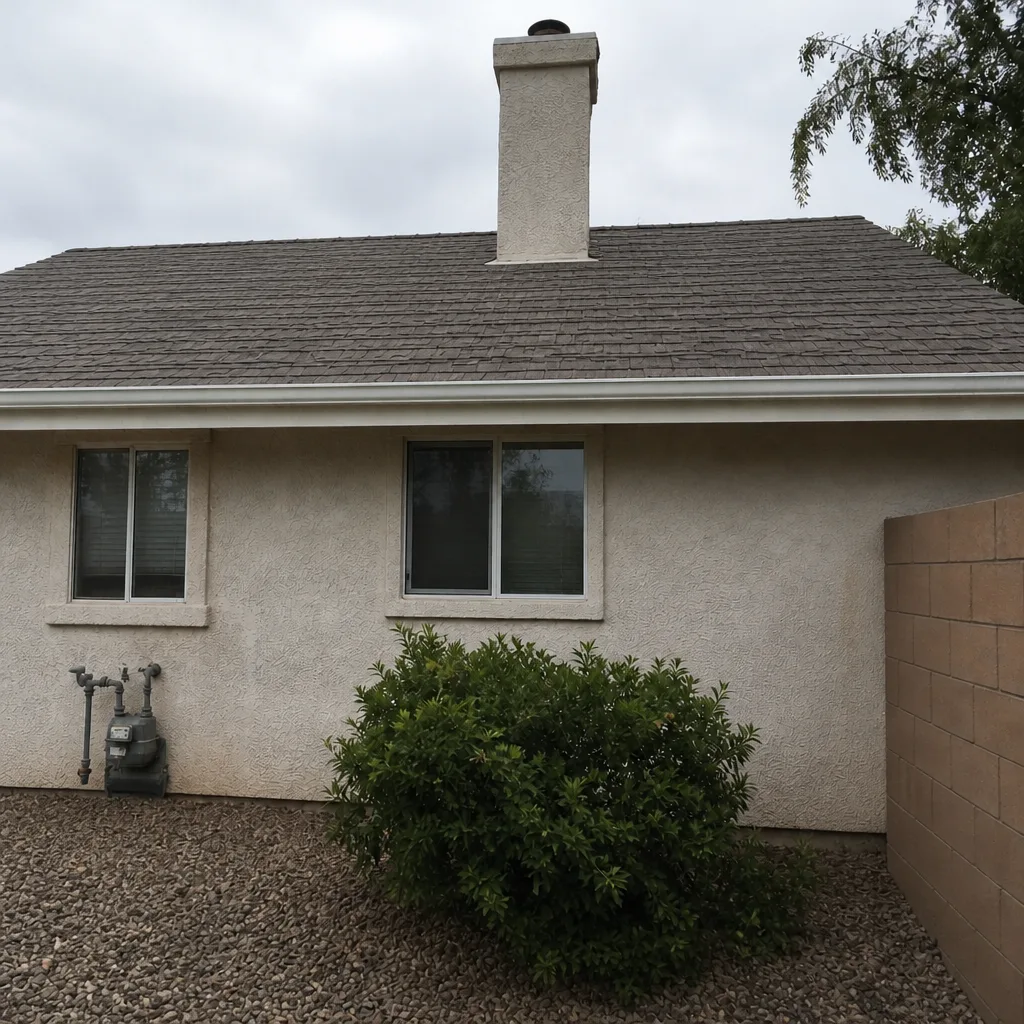 After
What Causes Roof Leaks in Summerlin, NV? Usually the Underlayment, Not the Tile
The most common cause of roof leaks in Summerlin, NV is failed underlayment beneath intact concrete tile, not broken tile itself. On the village roofs we inspect, the tile sheds bulk water fine while the original 1990s felt underneath has dried out, cracked at the valleys, and stopped waterproofing. That’s why water stains show up on a ceiling under a roof that looks perfect from the street. If you’re seeing a stain and want it traced, call (844) 951-4545.
I’ve stood on roofs in The Trails and The Willows where every tile is intact and the homeowner has a water stain spreading across a master bedroom ceiling. The tile didn’t fail. The felt underneath did. Understanding that split changes how you hunt down a leak, so let’s walk through it.
Key Takeaways
- Concrete tile is the armor; the underlayment underneath is the actual waterproofing.
- In Summerlin’s 110°F-plus heat, original felt is spent at 20-25 years, no matter how the tile looks.
- Valley flashing and pipe boots are the top two leak points on barrier-tile roofs.
- Cracked tile is often a symptom; the leak is usually draining under the field tile.
The Two-Layer Roof That Trips Up Summerlin Homeowners
Summerlin’s housing stock is almost all Mediterranean and Spanish Colonial Revival, and most of it went up in planned villages from the 1990s forward wearing concrete barrel tile. That’s two layers working as one system. The tile takes the sun, the wind, and the rain hitting it and sheds most of the water off. The underlayment, a roll of felt or synthetic membrane nailed on the deck, is what actually keeps the water out of your house. Tile alone is not waterproof.
Here’s where it gets interesting for Summerlin. Most “what causes roof leaks” articles are written for shingle roofs, where the shingle is the waterproofing. Barrier-tile roofs don’t work that way, and the advice doesn’t transfer. On a tile roof, a leak almost always means water got past the waterproofing layer, and the tile above it may be perfectly fine while the felt below is the problem.
Summerlin sits on the western edge of the Las Vegas Valley, where summer temps routinely top 110°F and UV pounds everything on the roof. That heat is brutal on felt. A 1990s-era underlayment in this climate reaches end of life around 20-25 years, even though the tile it’s hidden under still looks like new. The villages hitting that mark now, The Trails and The Willows among them, are the ones keeping us busy.
What to Look For: Leak Symptoms vs. Actual Causes
Homeowners often point at the wrong thing. Here’s the comparison I walk people through on the deck, symptom on the left and what it usually points to on the right.
| What you’re seeing | What’s usually causing it |
|---|---|
| Water stain on the ceiling with no cracked tile above | Failed underlayment letting water weep through the deck |
| Rust streaks or daylight through the valley | Corroded or lifted valley metal flashing |
| Stain near an HVAC pipe or vent | Heat-crazed neoprene pipe boot that sealed its last summer |
| Cracked or slid tile after a monsoon | Wind damage exposing the underlayment underneath |
| Stain directly below a valley after a hard rain | Standing water overwhelming a failing valley |
Notice how few of those are “the tile broke.” The tile tells you where water might get in. The underlayment tells you where it actually got through.
Valley Flashing: The Highest-Risk Leak Point on Summerlin Barrel Tile
On a barrel-tile roof, the valley is where two roof planes meet and dump their water into one channel. During the region’s monsoon season, sudden violent thunderstorms send a wall of water down those valleys at once. If the valley metal underneath has corroded, rusted through, or been bent up by previous work, water pools there and finds its way under the tile. We see this misdiagnosed constantly: someone spots a cracked tile near the valley and seals it, and the leak keeps coming.
Failed valley metal looks like rust along the seam, lifted edges, or daylight showing through when the tile is pulled back. If you want someone who reads that layer instead of just patching a tile, our Roof Repair page explains how we trace a leak to its real source.
Pipe Boots and HVAC Penetrations: The Silent Second Cause
The second most common silent leak source in Summerlin homes isn’t the roof at all; it’s the penetrations poking through it. Every HVAC line and vent pipe gets a rubber boot or collar sealing the hole. On the original roofs, those boots were often neoprene. After decades of 110°F summers, neoprene heat-crazes, cracks, and pulls away, and nobody notices because it’s a two-inch piece of rubber on a roof you look at from the ground.
A cracked boot lets water through right at the penetration, and the stain shows up some feet away on the ceiling, so the cause and the symptom don’t line up. That’s why a leak near the HVAC unit often isn’t the HVAC at all. The fix is small, but the diagnosis is the whole job.
Here’s the thing about a leak you can’t find. Bill Shepherd has been working these same Summerlin neighborhoods since 1996, and the way we diagnose a leak is simple: we show you the deck photos before we talk money. You see exactly where the underlayment failed or the boot cracked before anyone asks you to sign a contract. That matters when the last roofer told you the leak was “just a cracked tile.”
When It’s a Symptom, Not the Cause
A cracked tile after a monsoon isn’t always the leak. Around Summerlin, intense UV and thermal cycling, hot day to cool night, crack and lift tile over time. But a cracked tile usually does its damage by exposing the underlayment to more sun and wind, which speeds up the felt failure underneath. So the crack is real, it just may not be the thing leaking into your bedroom.
Wind damage is the other one. High monsoon gusts lift and slide tile, and once tile slides out of place, the waterproofing below is open to the weather. That’s a repair, but it’s also a chance to check the underlayment age while we’re up there.
Where Design Review Fits In
One local wrinkle people don’t expect: Summerlin is a master-planned community where each village’s architectural review board enforces tile-roof color and profile standards. So if a repair turns into a re-roof, the new tile has to clear design review before a permit is issued. We know how that process works in Summerlin, so a job doesn’t stall at the approval stage. It’s a detail the out-of-town crews usually learn the hard way.
So How Much Does a Leak Fix Run in Summerlin?
It depends on what failed. A pipe boot replacement is a small job. A valley rebuild runs more because the tile gets pulled and reset. A full underlayment replacement, where the felt has failed across the whole roof, is priced per square, and a square is 100 square feet. Ask any bidder how many squares they counted; the number should be consistent from one quote to the next. We offer $40 off any repair over $200 and a free second opinion on any written estimate, so you can compare our number to the last one you got.
FAQs
Because the tile isn’t the waterproofing. On concrete tile roofs the underlayment underneath is the actual barrier, and in Summerlin’s heat that felt is typically spent at 20-25 years while the tile above still looks new. The leak is happening under an intact roof.
A leak that shows up directly below a valley after a hard monsoon rain usually points to the valley metal, not the tile. Cracked or slid tile shows up as wind damage or a broken piece you can see from the ground. The reliable answer comes from looking at the deck photos and the flashing up close.
Yes, especially on original 1990s roofs. Neoprene boots heat-craze and crack after decades of 110°F summers, and because the stain shows up a few feet from the penetration, they’re easy to misdiagnose. Replacing a boot is a small job; finding it is the hard part.
That’s exactly the call we get most. When a leak keeps coming back, the first fix treated a symptom, not the cause. Our technicians have up to 30 years of experience reading tile roofs, and we’ll show you where the underlayment or flashing actually failed rather than sell you another patch. Call (844) 951-4545 and we’ll get out to take a look.
If You’d Rather Have It Looked At
If you’d rather have it looked at, Shepherd & Sons Roofing Summerlin offers a no-pressure assessment in Summerlin. We’ll be there, we’ll show you the deck photos before we talk money, and every job is backed by our written 90-Day Done Right Promise. Call (844) 951-4545 for a free estimate.
Written by the team at Shepherd & Sons Roofing Summerlin, serving Summerlin, NV.