
Last updated November 18, 2026
 Metal roofing
 Architectural shingles
 Tile roofing
 GAF
 Owens Corning
 Flat & low-slope
Free roof inspection with deck photos before we talk money - GAF and Owens Corning certified installation
Specialty Roofing Warning Signs Every Homeowner Should Know
Foam roof blistering looks like a cosmetic imperfection from the ground. It’s actually the system telling you that moisture has already pushed through the coating and is working on the substrate underneath. That gap between what a roof looks like and what a roof is doing is where most homeowners get caught, especially on specialty systems. Tile doesn’t fail like asphalt, foam doesn’t stain like shingles, and metal tile hides its problems behind a clean face. This guide walks through the warning signs system by system, what the attic shows before the roof does, and why flashing deserves your first look on any Summerlin roof. By the end you’ll know what to watch for and what it means.
Quick Answer
Specialty roofing warning signs are system-specific: foam roofs blister, alligator, and expose bare foam when the coating is worn; metal tile roofs show fastener backout, panel separation, and rust halos at penetrations; composite tile roofs crack, slip, or fade unevenly. On every system, troubled flashing and rising attic humidity show up before the exterior problem is visible. Winter and early spring are when Summerlin homeowners notice the first real signs, because the temperature swings we get here work on the coating and the seals hardest.
Styles & brands we work with
- Architectural shingles
- Metal roofing
- Tile roofing
- GAF
- Owens Corning
- Flat & low-slope
Key Takeaways
- Every specialty system fails in its own pattern. Diagnosing a foam roof with an asphalt mindset means missing the real problem.
- Flashing at penetrations, wall transitions, and valleys is the first place to look, no matter the material.
- Attic humidity, insulation staining, and a thermal scan often catch trouble before the roof shows it.
- Age matters: a 10-year-old foam roof and a 15-year-old one look very different, and the line between normal aging and active damage is specific.
- Photos taken from the right angle with a reference object tell a roofer more in one shot than a phone call ever will.
Table of Contents
- Foam Roof Warning Signs: The Four Stages of Failure
- Metal Tile Warning Signs: Fasteners, Panels, and Rust Halos
- Composite Tile Warning Signs You Can Spot From the Ground
- Interior Warning Signs That Show Up Before the Roof Does
- Why Flashing Is Always the First Place to Look
- The Age-Based Warning Sign Framework
- How to Photograph a Warning Sign So It’s Actually Useful
Foam Roof Warning Signs: The Four Stages of Failure
A spray foam roof is a coating over a foam base over your deck. It fails in a sequence, and each stage looks different. If you know the order, you can call for a free estimate at the right moment instead of after the deck gets wet.
- Granule loss and thinning. The topcoat starts wearing off in high-traffic spots and south-facing slopes. This stage is easy to miss, but it’s the cheapest to fix.
- Blistering. Small bubbles or soft raised spots appear. That’s moisture trapped under the coating, and it’s the point where a professional needs to look, not a weekend patch kit.
- Alligatoring. The surface cracks into a pattern that looks like alligator skin. The coating is no longer protecting the foam, and UV damage accelerates fast in our desert sun.
- Exposed foam. The coating is gone and bare foam is showing. This is the point where the foam itself starts breaking down and the repair gets real.
One honest caution: foam repairs that get skimmed over without finding the source of the moisture come back. When we look at a foam roof in Summerlin, we check for blisters before we talk about anything cosmetic. If you’re weighing repair against starting over, our page on roof repair in Summerlin lays out what a real fix involves.
Metal Tile Warning Signs: Fasteners, Panels, and Rust Halos
Metal tile roofs don’t stain the way asphalt does, so a lot of homeowners think a clean-looking panel means a healthy panel. It doesn’t. Metal tile hides its problems behind a uniform face, and the failure shows up at the details rather than the field.
Here’s what to look for:
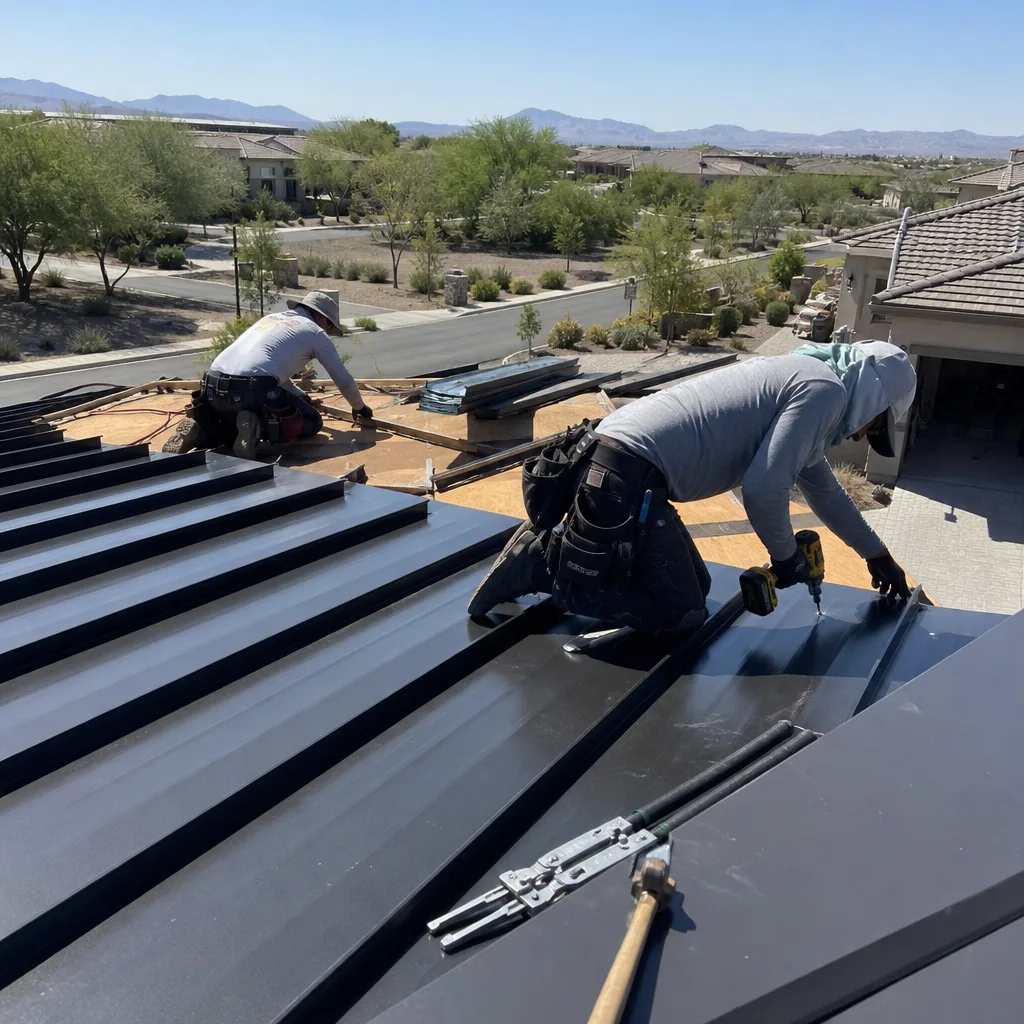
- Fastener backout. Look for a straight line of small raised points or popped screws. Thermal cycling pulls fasteners up over time, and a backed-out screw has stopped holding.
- Panel separation. Gaps opening at the seams or where one panel laps the next. Water gets in through a gap far easier than through the metal itself.
- Rust halos at penetrations. A brown ring around a vent pipe, chimney, or skylight is the classic sign. The metal isn’t the problem – the seal around it is.
- Loosened ridge caps. A visibly lifted ridge cap is an access point for wind-driven rain.
Panels from IKO and Boral are common around here and both hold up well when the install was done right – which brings us to the nailing pattern. The pattern is what earns the wind rating, not the shingle or panel wrapper. If a metal roof on your block has held for years and another one hasn’t, the difference is usually in how it was fastened, not what it was made of. Our metal roofing in Summerlin page goes into that in more detail.
Composite Tile Warning Signs You Can Spot From the Ground
Composite tile is one of the toughest systems you can put on a roof, so when it shows a problem, that problem has usually been building for a while. You can catch most of it from the yard with a pair of binoculars.
- Cracked tiles. Straight-line cracks on individual tiles, often after a hard freeze or foot traffic during a repair. One cracked tile is minor; a cluster is a pattern.
- Slipped tiles. A tile that’s dropped out of line with its neighbors has lost its fastening point.
- Uneven fading or chalky patches. Here’s where wind-driven dust off the mountains plays a role. Normal weather fades a roof evenly. If one slope has gone pale and chalky while the rest hasn’t, that slope is wearing faster.
- Debris in the laps. Needles, leaf litter, and grit packed into the tile laps hold moisture against the underlayment.
Here’s the thing about composite tile: the underlayment beneath it is what actually keeps your deck dry, and it ages faster than the tile does. That’s why a deck that’s 20 years old with beautiful tile on top can still be a wet deck underneath. A full check on that isn’t a DIY call.
Interior Warning Signs That Show Up Before the Roof Does
Most roof damage gets to the attic before it gets to the ceiling. If you want to catch trouble in Spring Valley or The Ridges before you see a water stain, look inside first.
Attic humidity spikes. A humidity reading a few points higher than it was last year, with no change to the house, points to a path for moisture in from above. We get big daily temperature swings here, and that swing drives condensation at exactly the wrong time.
Insulation staining patterns. Here’s what the pattern tells you:
- A stain directly under a vent or pipe – look at the penetration, not the field.
- A stain running in a line across the insulation – look at the deck seam or a valley.
- A broad, dark, damp area away from any penetration – suspect the underlayment under tile.
What a thermal scan shows. An infrared scan reads the surface temperature of the deck. A wet patch of decking holds heat differently than dry decking, so it shows up as a distinct patch. On a foam roof it shows where the coating has thinned. On a tile roof it shows where underlayment has broken down. On metal it shows where fasteners have pulled out of the framing. The scan doesn’t fix anything, but it points the eye to the right spot before anything gets pulled apart. If you’re seeing any of these interior signs, it’s worth having it looked at properly rather than adding more insulation over the top.
Why Flashing Is Always the First Place to Look
No matter what your roof is made of, the flashing is where the leak usually started. Tile, foam, metal, and composite all do their job as a covering. The flashing is what seals the seams where things poke through or change direction, and those seams are the weak points.
On a Summerlin home, three flashing locations fail most often:
- The chimney or vent chase where it meets the roof plane. Factory flashing and the sealant around it break down. The metal or tile covering is fine and the seam is the culprit.
- The valley where two roof planes meet. This is where the most water runs and where a poor detail shows up first.
- The wall-to-roof transition and any skylight curb. Skylights are a classic problem spot, and so is where an addition or bay window meets the roof.
The signature of a flashing leak is an interior stain that appears directly under the flashing line rather than out in the middle of a ceiling. That’s a useful tell. If your stain is ever under a chimney, a skylight, or the base of a valley, the flashing is where we look first.
The Age-Based Warning Sign Framework
Age by itself doesn’t tell you whether a roof is failing, but it changes what you should expect to see. Here’s how to read it on a foam roof and a composite or tile system.
A 10-year-old foam roof. Should still have a full topcoat. You might see thinning on the south slope and at walkways. Blistering at this age is not normal aging. It means moisture got under the coating, and that’s an active warning sign – get it checked.
A 15-year-old foam roof. Expect to see alligatoring starting. This is where another coat is often the right call. If the bare foam is showing through in more than one spot, the coating has done all it can. That’s the point where re-coating isn’t enough.
For a tile or composite roof, the tile itself holds up, but the underlayment is the aging component. Around the 20-year mark, the underlayment is done, and the tile can still look perfect. The tiles can outlast the layer under them. That’s the trap on these systems.
You don’t need a full report to read your own roof – walk it with your eyes, learn its age, and compare what you see against the list above. There are a few materials that hold up well in our climate and few that don’t, and our roof replacement and installation in Summerlin page has more on that. And for anyone thinking a specialty system is out of reach, here’s what to know: our Shepherd & Sons Roofing Summerlin home page goes into the whole scope of what we do.
How to Photograph a Warning Sign So It’s Actually Useful
When a homeowner sends us a photo of a problem before a site visit, the photo tells us a lot about what’s going on. Here’s how to take one that a contractor can actually use – this is the exact sequence we ask for.
- Frame it as a wide shot, then a close-up. The wide shot shows where the problem sits on the roof. The close-up shows exactly what it looks like. Two photos, wide then close, beats one photo every time.
- Shoot in even, indirect light. Mid-morning or late afternoon is best. Harsh midday sun wipes out the surface detail, and shadows hide cracks and rust halos.
- Include a reference object. Lay a coin or a tape measure next to the blister or crack. A blister that’s the size of a quarter and one the size of a dinner plate both look identical in a photo without something to scale them.
- Get one straight-on shot and one from the side. A gap in a metal panel often doesn’t read from straight above; an angle shot usually shows it.
- Photograph the attic and the ceiling, not just the roof. A shot of insulation staining and the ceiling below it completes the picture.
The angle, the lighting, and the reference object are the three things that turn a photo into something useful. Do those, and the first site visit is much more focused.
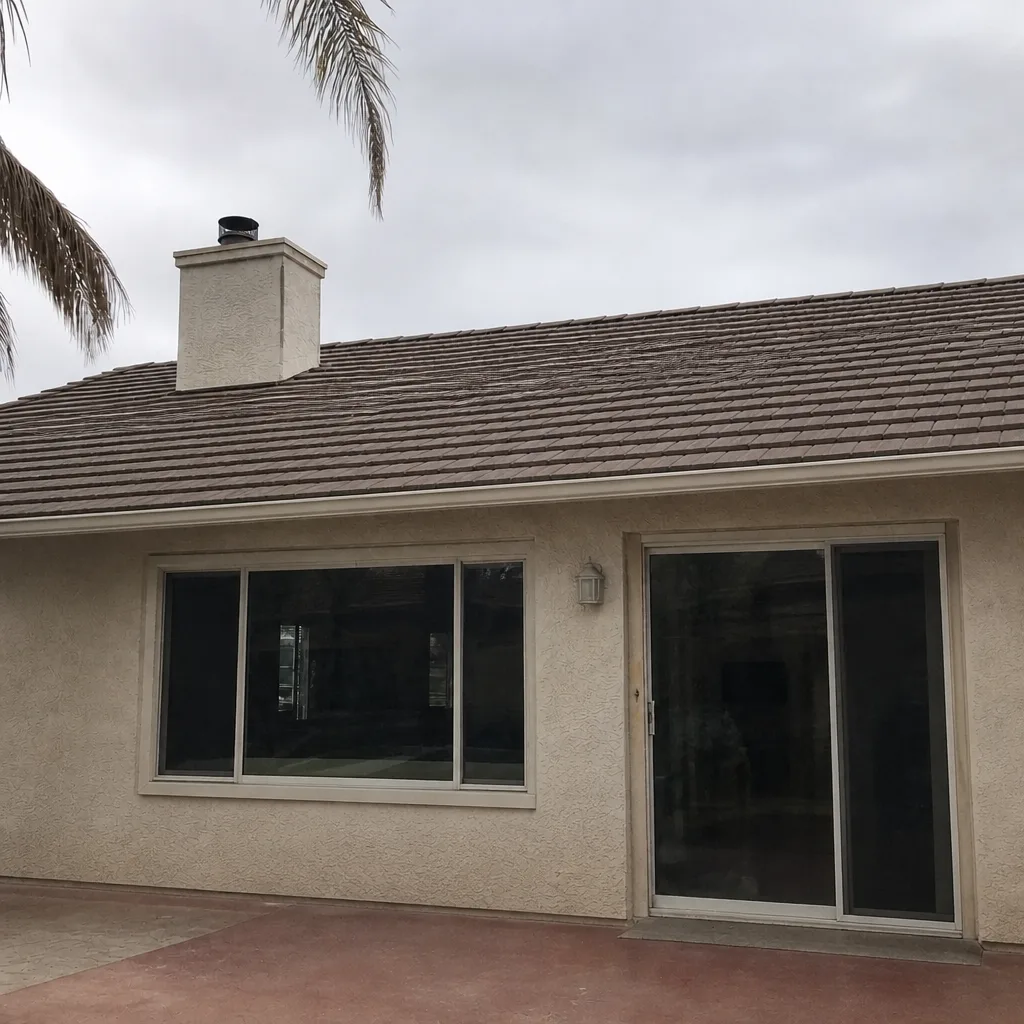
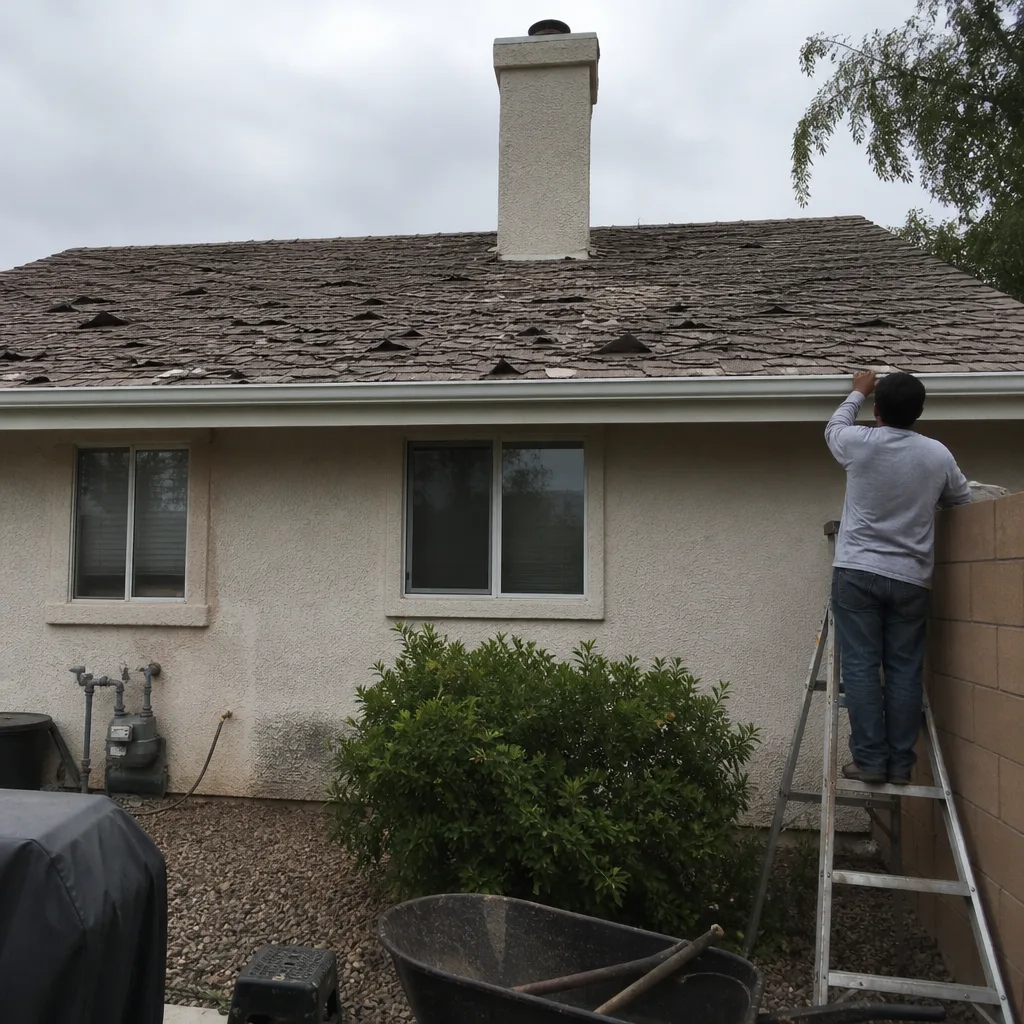
See the difference
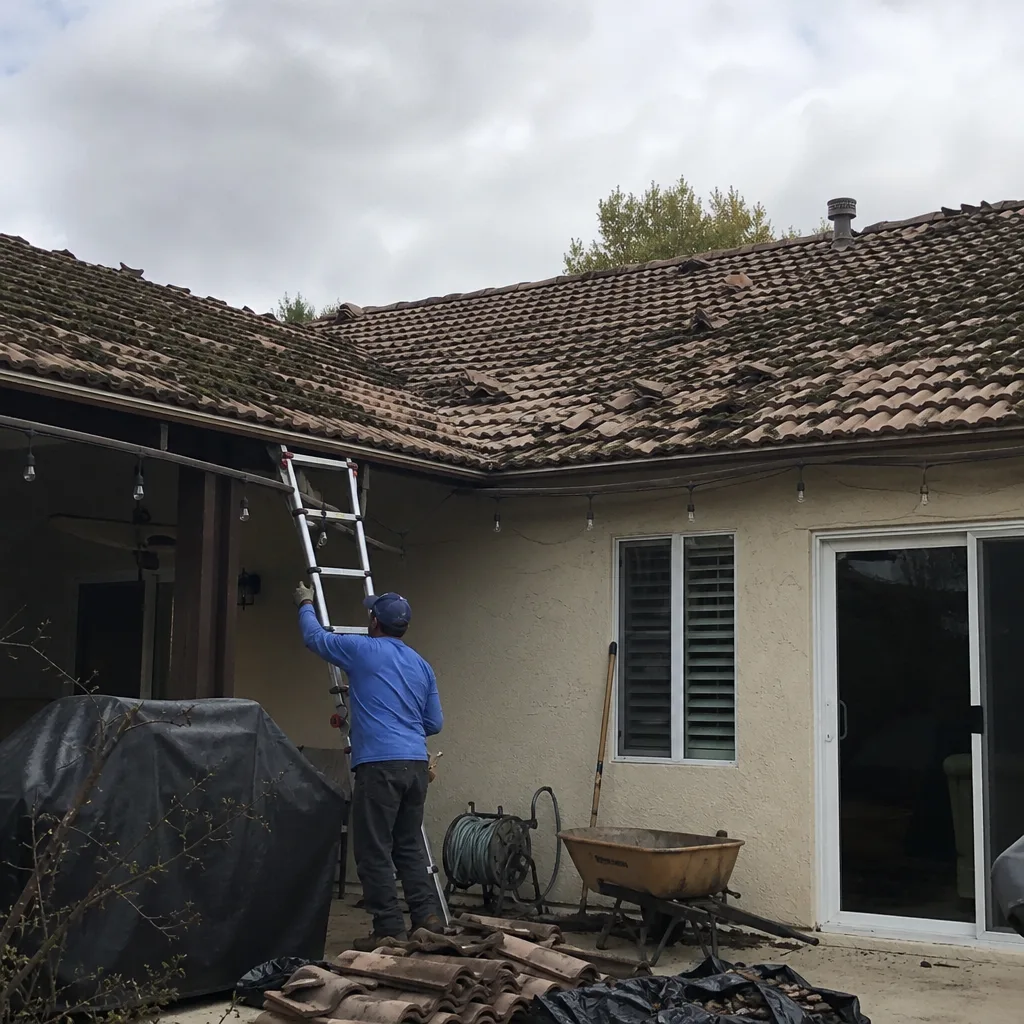 Before
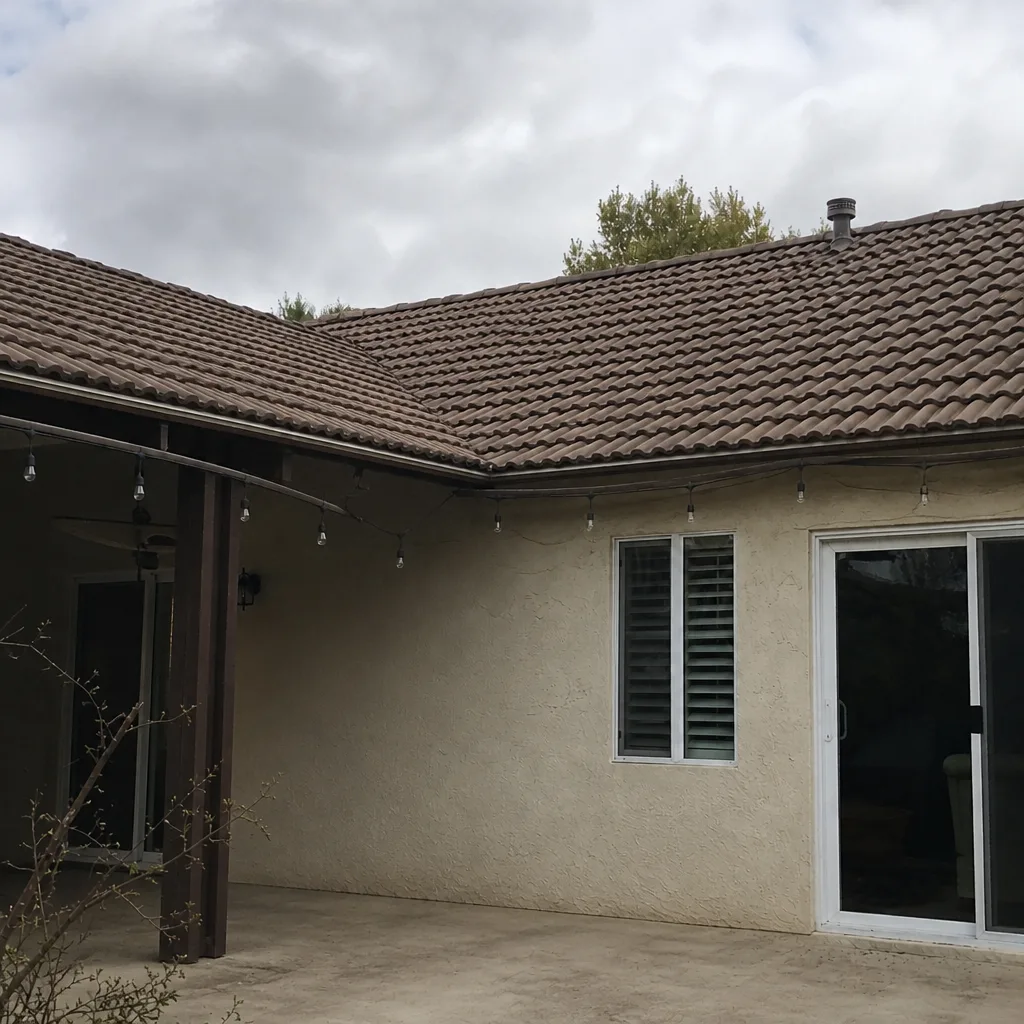 After
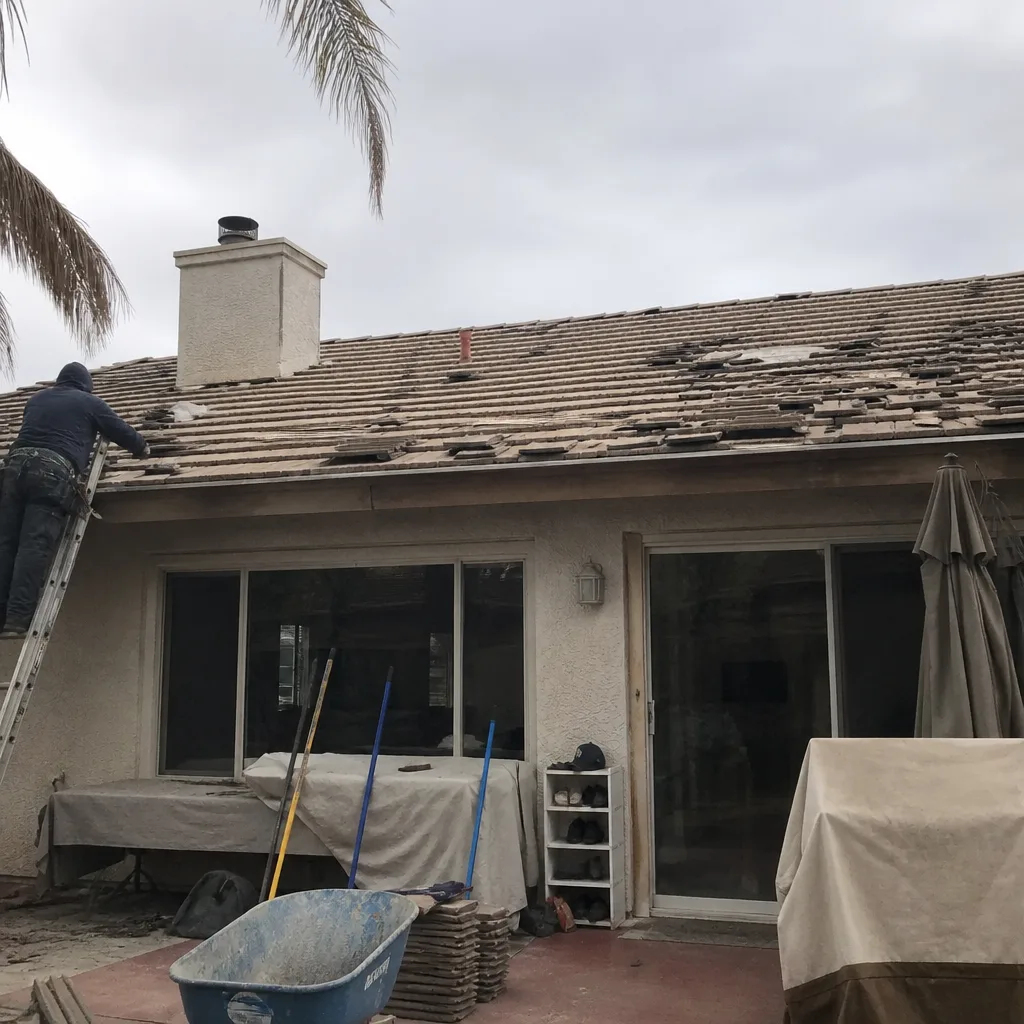 Before
 After
 Before
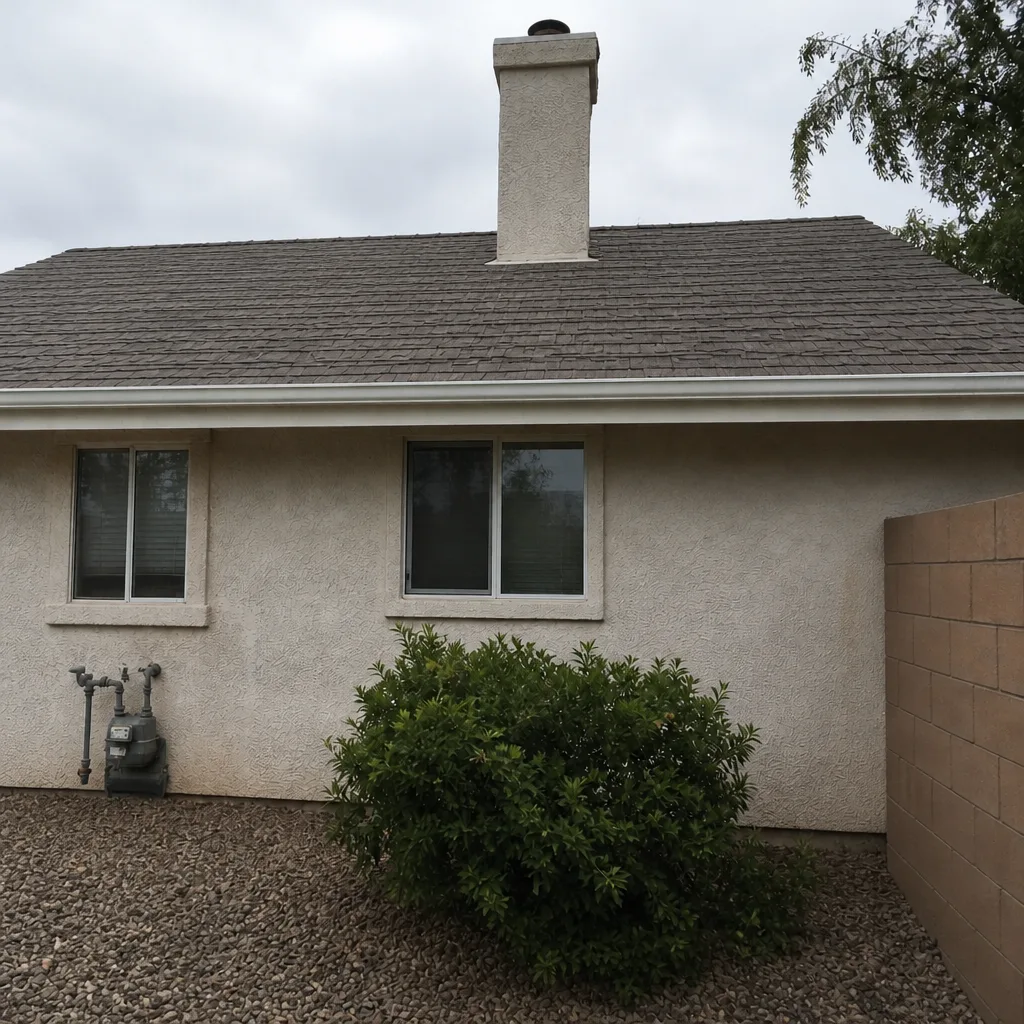 After
Common Mistakes to Avoid
- Judging a specialty roof by appearance alone. A metal tile roof can look perfect while the fasteners have started backing out, and a foam roof can look fine while the coating is gone on the south slope.
- Patching a foam blister without finding the moisture source. A patch that covers trapped moisture doesn’t fix anything. It just hides it until the next wet season.
- Assuming tile means the roof is fine because the tile is fine. The underlayment under tile is what does the sealing, and it ages years ahead of the tile.
- Ignoring a rust halo at a penetration. A ring of rust around a vent is a caught-early warning. Get it checked before it moves into the deck.
- Skipping the attic. Attic humidity and insulation staining show up before a ceiling stain does, and they point you to the right part of the roof.
- Hiring a bidder who can’t name the system. If a roofer can’t tell you how many squares they counted or name the material they’re matching, they’re guessing. A roof is measured in squares for a reason.
When to Call a Professional
Call for a free estimate when you spot any of these: a blister or soft spot on a foam roof, a rust halo around any penetration, a lifted metal panel or popped fastener, more than one slipped tile on a composite roof, or a ceiling stain that appears beneath a flashing line. Also call when you don’t know the age of the roof. In Summerlin, the heat and the temperature swings work on the coating and the seals harder than most homeowners expect, and the shoulder seasons bring the first leaks. Shepherd & Sons Roofing Summerlin offers free estimates in Summerlin, and every roofing job comes with the written 90-Day Done Right Promise. Call us at (844) 951-4545 and we’ll come out and take a look.
Frequently Asked Questions
Start with the four stages: thinning topcoat, blistering, alligatoring, and exposed foam. If you can see bare foam, the coating is gone. If you see blisters, moisture is trapped underneath and it needs to be looked at.
It can be. Metal tile hides its problems behind a uniform face, so look for fastener backout, panel separation, and rust halos at penetrations instead of judging the tiles themselves.
The flashing. Every system fails at the seams before it fails in the field. Chimneys, valleys, wall transitions, and skylights are the three most common leak points on a Summerlin home, and they’re where we start.
Look in the attic. A humidity reading that’s creeping up, insulation staining under a vent or along a seam, and a thermal scan can all show trouble before a ceiling stain appears.
A foam roof is a system, not a paint job, and a coating that goes over trapped moisture comes right back. That’s work for a professional who can confirm the substrate is sound first.
Not necessarily. On a foam roof, a 15-year-old roof with alligatoring often gets a re-coat. On tile, the underlayment ages before the tile, so around 20 years it’s worth having the deck checked. Age tells you what to expect; the warning signs tell you what to do. Call (844) 951-4545 for a free estimate and we’ll give you a straight answer.
The Bottom Line
Specialty roofs don’t fail in the same patterns, and that’s the whole point. Foam tells on itself with blisters and exposed foam. Metal tile hides its trouble in fasteners and rust halos. Composite tile looks perfect while the underlayment underneath goes. Interior signs – attic humidity, insulation staining, a thermal scan – show up before anything outside does, and the flashing is always the first place to look. Learn the signs for your system, photograph them the right way, and you’ll make the call before the deck gets wet instead of after.
Call (844) 951-4545 for a free estimate. We live here, and we’ll be around to answer for it.
Written by the team at Shepherd & Sons Roofing Summerlin.