
Last updated November 18, 2026
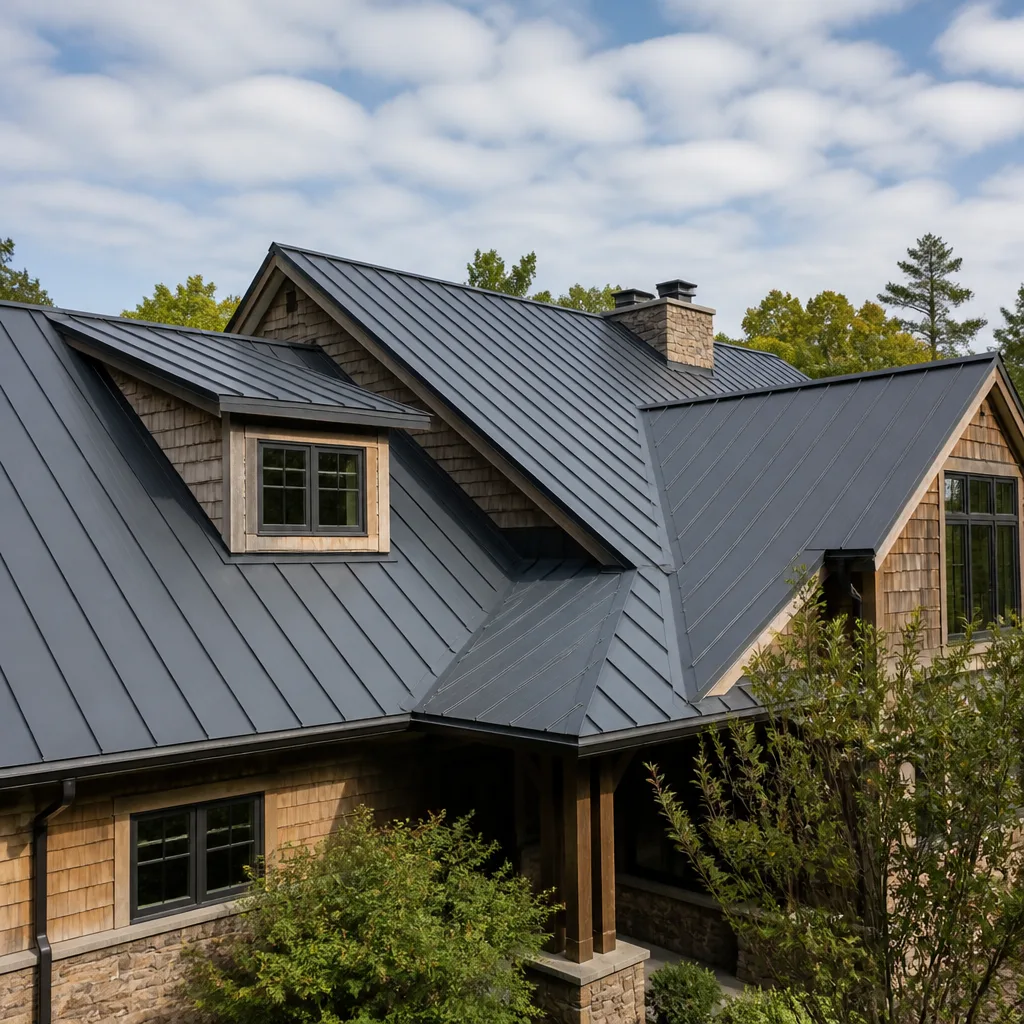 Metal roofing
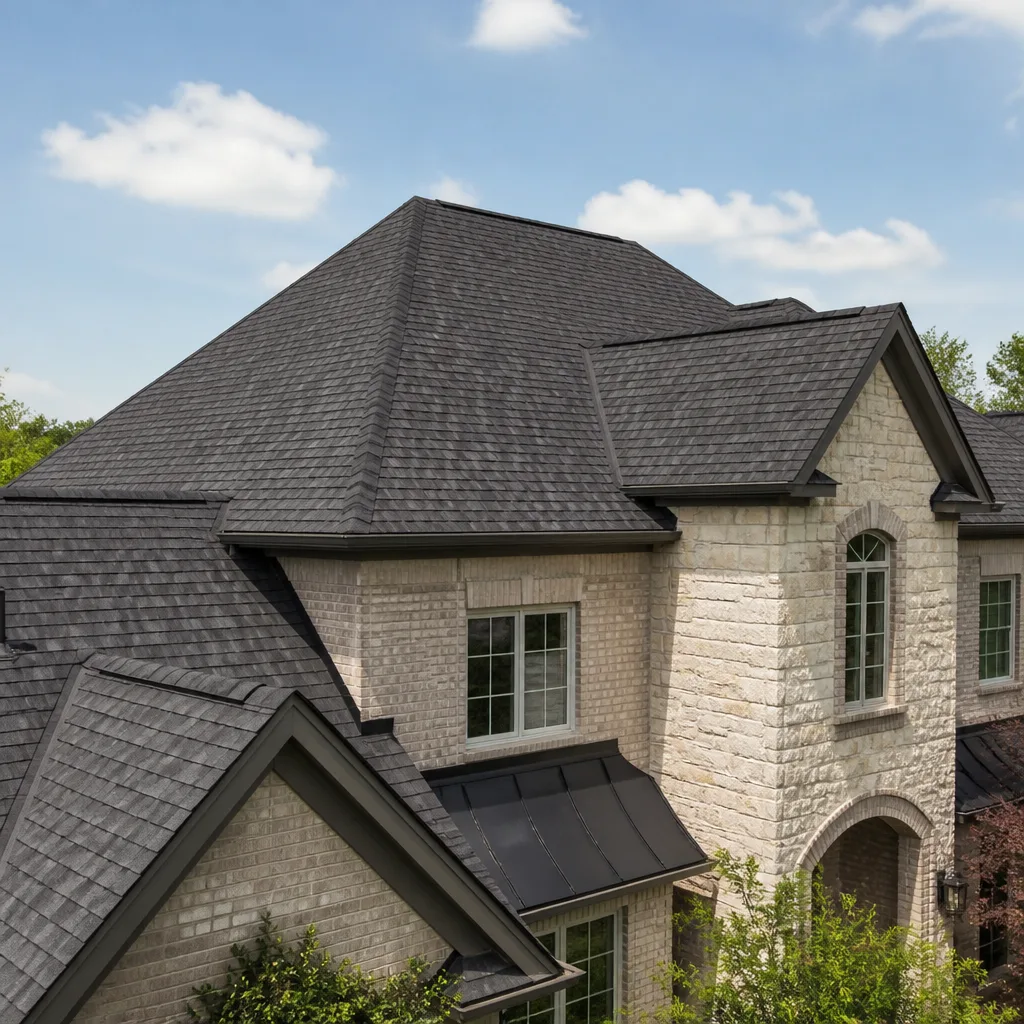 Architectural shingles
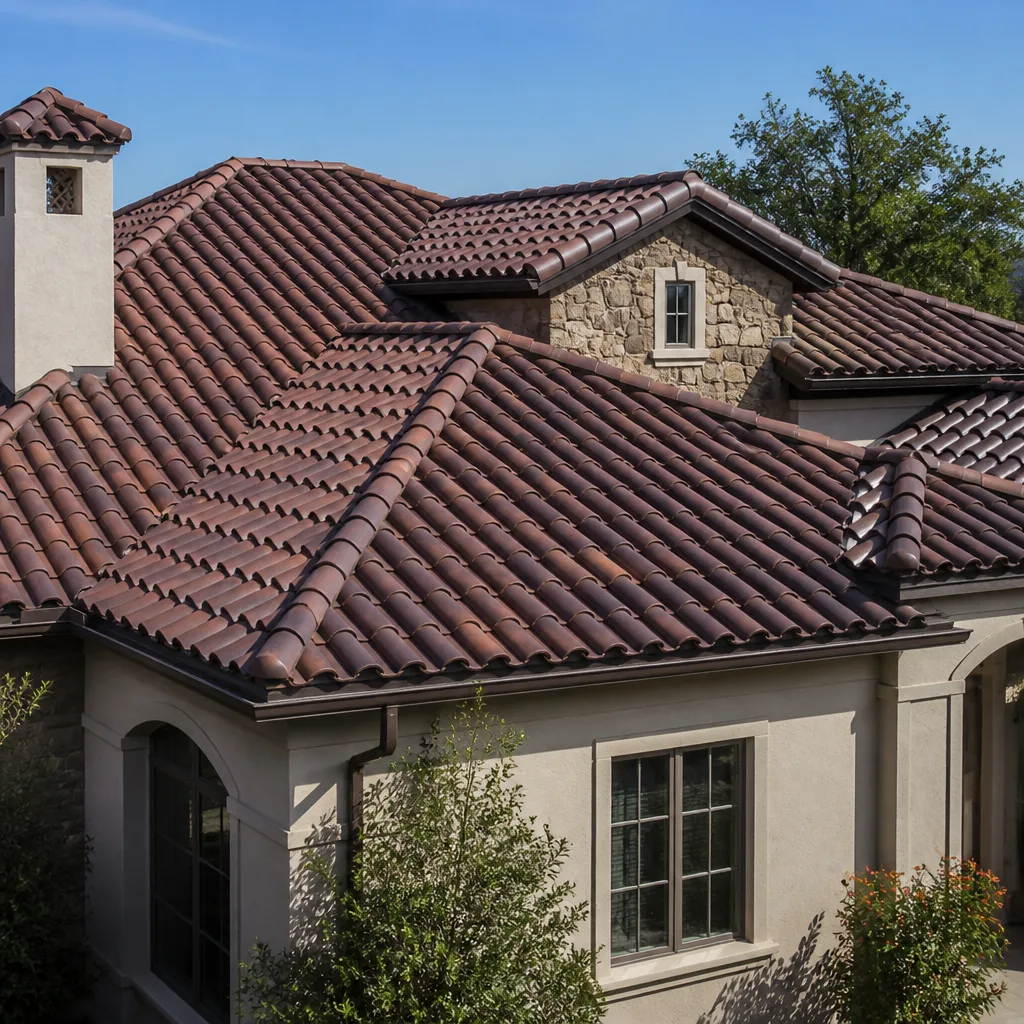 Tile roofing
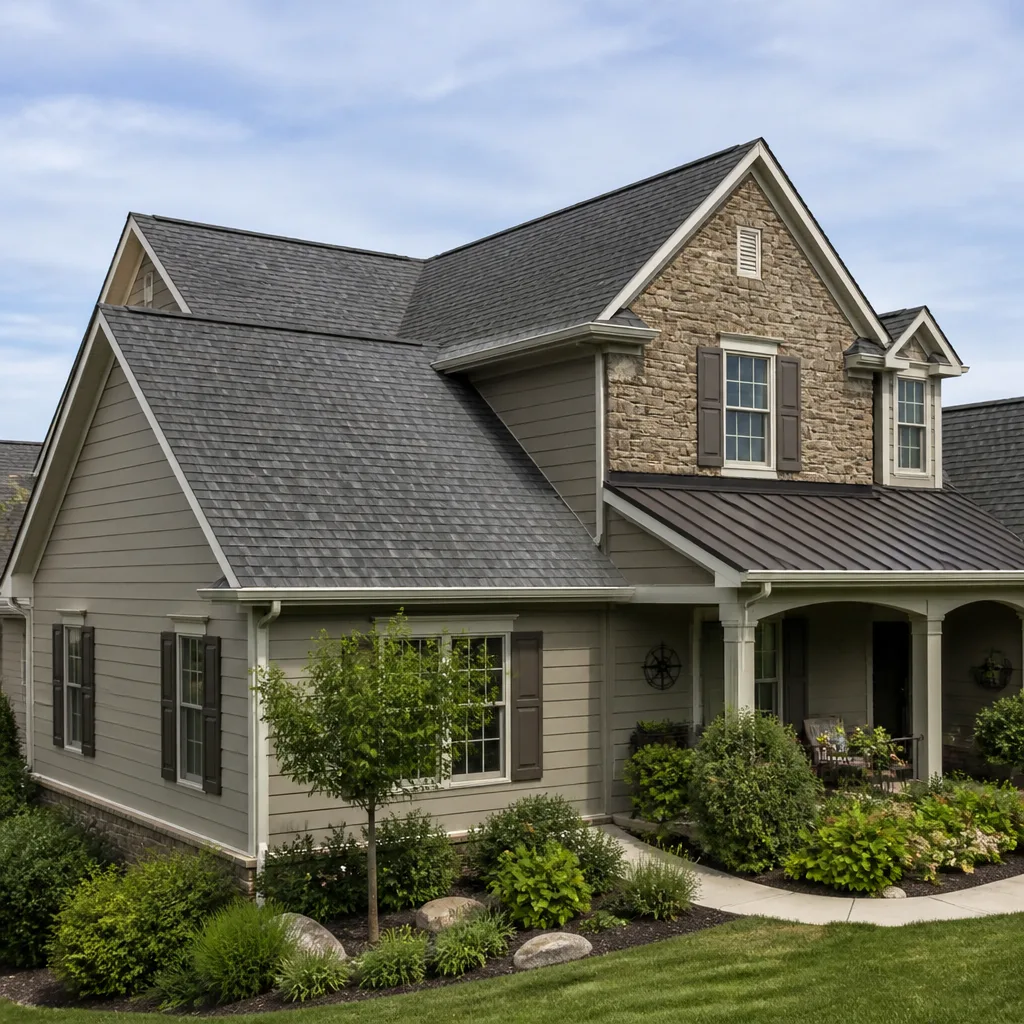 GAF
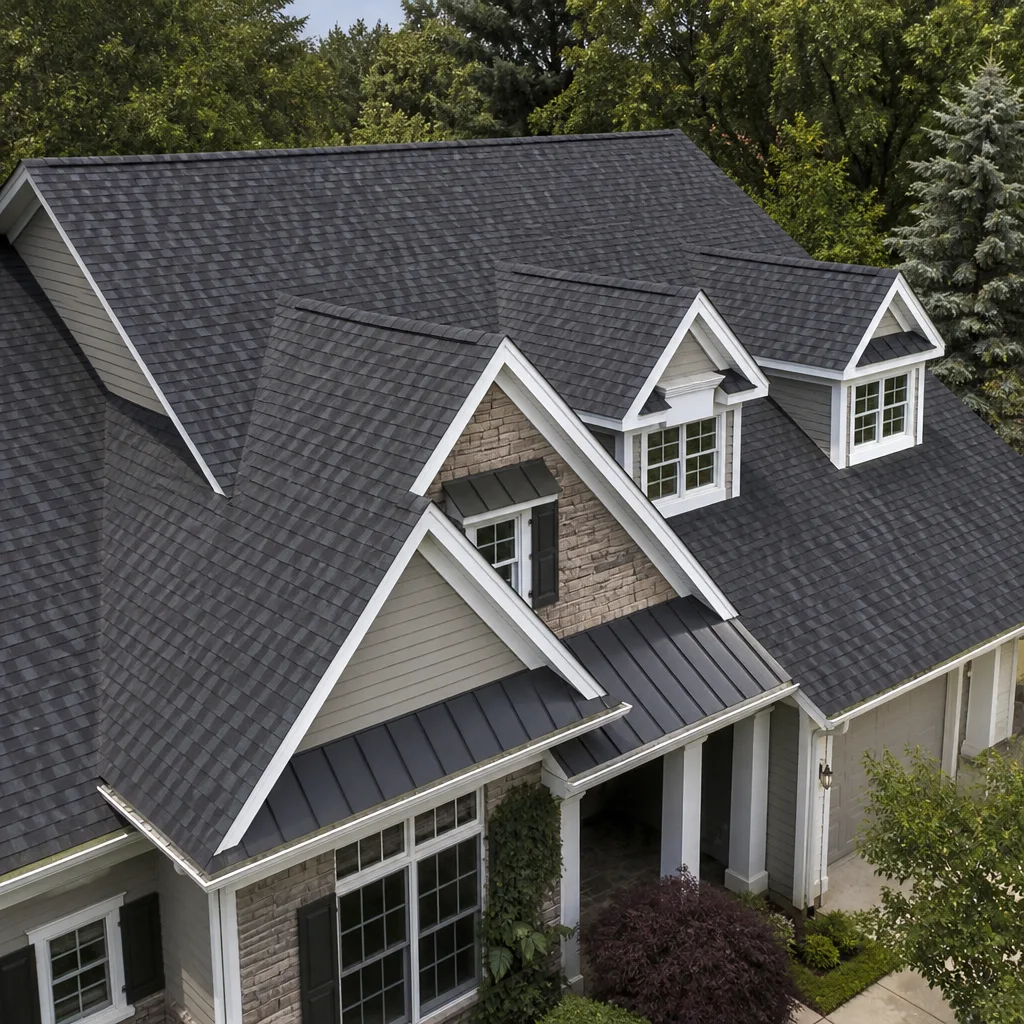 Owens Corning
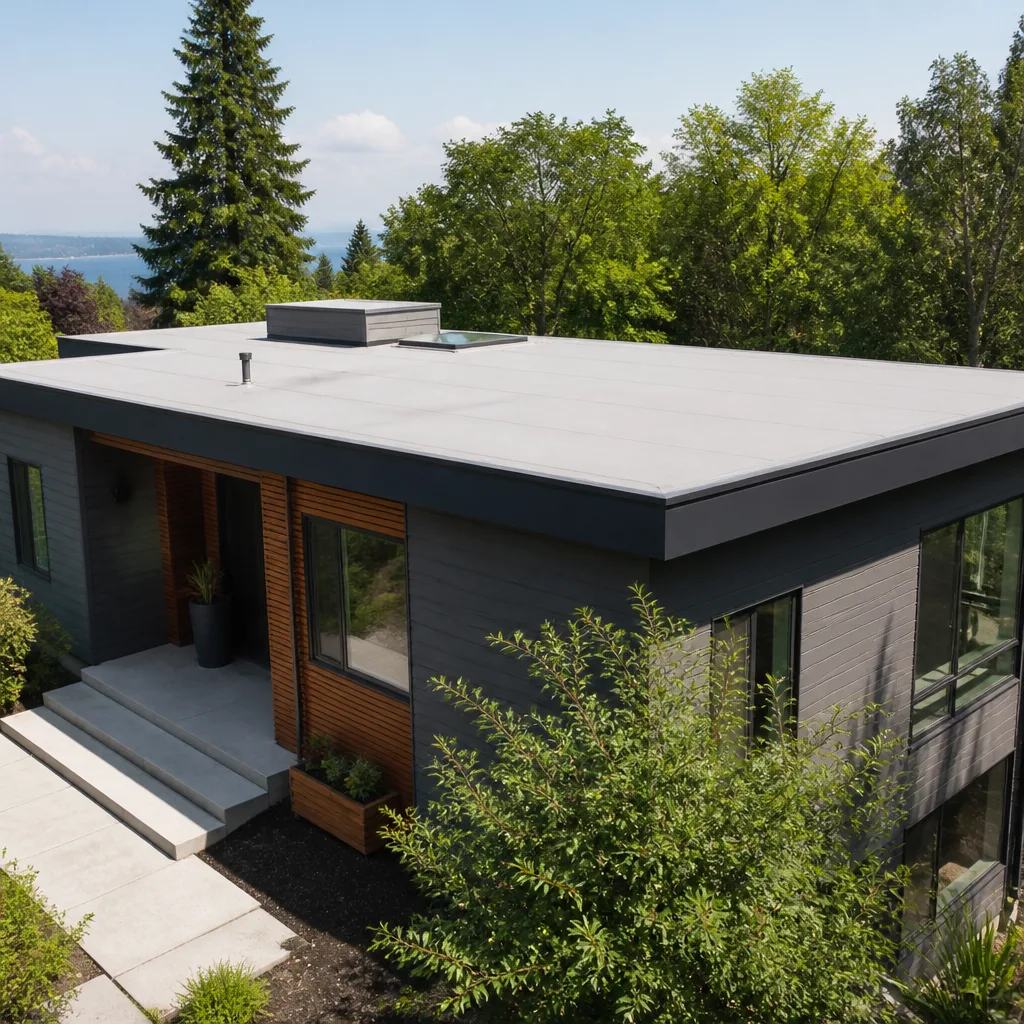 Flat & low-slope
Free roof inspection with deck photos before we talk money - GAF and Owens Corning certified installation
Roofing Emergency Preparedness Guide for Summerlin Homes
The worst decision a Summerlin homeowner makes after a hailstorm isn’t hiring the wrong contractor. It’s signing a direction-of-benefits form handed to them by a storm chaser while standing in their wet driveway, before they’ve even called their insurance company. That one signature can hand away control of the claim before the ice has melted off the sidewalk. Summerlin sits at the base of the Spring Mountains, where hail comes off the high ground fast and monsoon cells stack up in the western valley. This guide walks through what to do in the first four hours after roof damage – who to call, what to photograph, what not to sign, and how to tell a local roofer from a storm chaser who will be gone by Friday.
Quick Answer
After roof damage in Summerlin, do three things in this order: document everything with photos before you touch a thing, get a safe temporary tarp on the damage only if you can do it without stepping on the roof, and call your insurance company before you sign anything from anyone. Never sign a direction-of-benefits form or a repair contract in the driveway after a storm. A licensed local roofer and your adjuster can sort out the claim, but only if you haven’t already signed it away.
Styles & brands we work with
- Architectural shingles
- Metal roofing
- Tile roofing
- GAF
- Owens Corning
- Flat & low-slope
Table of Contents
- The First Four Hours: A Step-by-Step Protocol
- The Two Kinds of Summerlin Roofing Emergencies
- How to Document Storm Damage Before Anyone Touches the Roof
- Tarping a Summerlin Tile Roof Without Making It Worse
- The Direction-of-Benefits Form: What It Is and Why Storm Chasers Push It
- What to Have Ready Before You Call Your Adjuster
- Reaching a Licensed Local Roofer After Hours in Summerlin
- What Emergency Tarping Should Cost vs. What Storm Chasers Charge
The First Four Hours: A Step-by-Step Protocol
The first four hours after storm damage matter more than the first four months. What you do in that window decides whether your claim runs clean or gets denied on a “pre-existing condition” technicality. Here’s the order, and why the order matters.
- Document first, before anything is moved or covered. Photos taken within the first hour are the strongest proof of fresh damage. Insurance adjusters can tell the difference between a clean, fresh impact mark and a scar that’s been weathering for a season. If you tarp first and photograph second, you’ve hidden the evidence and put yourself on the defensive.
- Protect the interior next. If water is coming in, move furniture, set buckets, and pull electronics off the floor. Do not climb the roof in rain or wind – Summerlin’s afternoon cells bring lightning and sudden gusts off the ridges.
- Tarp only what you can safely reach, and only from a ladder at the edge. A tarp is temporary protection, not repair. The point is to stop further water intrusion until a roofer can look at it in daylight.
- Call your insurance company to start the claim. You’re opening a file, not committing to a contractor. Get a claim number and a name. You do not have to use anyone the insurance company recommends, and you can hire your own roofer.
- Call a licensed local roofer for an assessment and proper tarping. A legitimate local outfit will show up, document, tarp safely, and give you a written scope – not a signed contract in the driveway.
That order – document, tarp, call insurance – preserves your claim, protects your home, and keeps you in control. Reversing the order, or letting a stranger do any of it for you before you’ve called anyone, is where Summerlin homeowners lose leverage.
The Two Kinds of Summerlin Roofing Emergencies
Not all roof emergencies look the same, and the two most common in Summerlin need different responses. Knowing which one you have changes your whole plan for the next three days.
The slow monsoon leak. This is the one that starts with a brown ring on the ceiling during a Tuesday storm and goes quiet by Thursday. Everyone relaxes. Then the second storm rolls through 72 hours later and the ring is a waterfall. Summerlin’s monsoon season is a stack of back-to-back events, and the flat sections, valleys, and flashing joints that hold through the first storm usually fail on the second. That’s when the ceiling caves in. The lesson: a leak that “stopped” didn’t stop. The water is already in the attic, and the next storm finds it.
The sudden hailstorm. This one hits Summerlin’s western neighborhoods off the mountains and leaves a fresh field of dinged shingles, dented metal and beat-up tile. Within hours, out-of-state crews are working the streets with the storm season. They know the claim window and they know which neighborhoods got the worst of it. What they don’t have is an address you can look up in six months.
The right response to the slow leak is assessment and repair before the next cell arrives. The right response to the hailstorm is documentation and patience – the storm chaser’s biggest asset is the homeowner’s rush. Take your time on the hail claim. The damage isn’t going anywhere, and neither is a local roofer with a license you can verify.
How to Document Storm Damage Before Anyone Touches the Roof
Photos taken in the first hour beat photos taken in the first week, every time. Adjusters see a lot of claims, and the ones that get paid fast have a clean, timestamped record from before anything was covered or moved. What you want is a sequence that shows fresh damage in context.
- Ground-level wide shots of every roof plane. Walk the perimeter and take a full frame of each slope. These establish which part of the roof the damage came from and that the whole roof was intact before the storm.
- Close-ups of every impact or lifted shingle, in order. Take one wide shot to locate the spot, then a close-up. Number them mentally so you can match them on the phone.
- Interior water damage, with a date reference in the frame. Photograph ceiling stains and any collected water with a newspaper or phone screen in the shot showing today’s date. It looks small. It settles arguments.
- Gutters, downspouts, and any metal. Hail dents show on metal even when shingles look fine. Photograph the downspout dents and the mailbox, because they corroborate the hail size.
- The yard and the ground around the house. Fresh shingle grit in the gutter or on the ground under the downspouts is evidence the roof survived the storm badly.
Keep all of it. Save your photos to the cloud or email them to yourself with a date in the subject line. When the adjuster asks whether a stain was pre-existing, a photo with today’s date is the answer. In our experience with Summerlin hail and monsoon claims, the homeowner with the good photo file almost never loses the argument.
Tarping a Summerlin Tile Roof Without Making It Worse
Here’s the honest answer: tile roofs are the ones you should call a professional to tarp. Summerlin has thousands of tile and concrete-tile roofs, and tile does not forgive a misplaced foot. Step wrong and you crack the tile, break the underlayment, and create the leak you were trying to prevent. It also muddies the claim – if you step on the roof and break extra tiles, it becomes hard to tell the storm damage from the homeowner damage, and the adjuster may decline the whole lot.
So tarp safely, or don’t tarp at all. What that means:
- Do it from a ladder, not the roof, wherever possible. If the damage is near the eave or a valley you can reach safely from the ground, a temporary tarp draped and weighted can stop the water path without anyone walking the pitch.
- Never walk tile in wet or windy conditions. That’s the rule that matters most. Tile is fragile and slick. A fall off a Summerlin roof is a far worse day than a wet ceiling.
- Don’t nail through shingles or tile to “secure” the tarp. Every nail is a new hole. Weighted or tied tarp edges get the job done until a roofer can assess in daylight.
- Keep the tarp small and local to the damage. A tarp that covers half the roof hides original damage from the adjuster and can be read as tampering. Cover the leak, not the evidence.
- If the damage is up-slope or unreachable safely, leave it and call a roofer. Not every emergency needs a homeowner on a ladder. That’s what the after-hours call is for.
If you want a safe assessment instead of a risky climb, our roof repair in Summerlin team handles emergency tarping and gives you a written scope before any repair talk. The point of a tarp is to buy time – not to become the repair.
The Direction-of-Benefits Form: What It Is and Why Storm Chasers Push It
A direction-of-benefits form, sometimes called a “direction to pay,” is a document that authorizes the insurance company to pay the contractor directly for the claim, rather than paying you. Storm chasers push it in the first few hours after a hail event because it locks them into the claim before you have time to think or compare.
When you sign, three things happen at once. The insurance money is routed to the contractor rather than to you. You lose the ability to walk away if the work is shoddy, because the check isn’t yours to withhold. And if the contractor is out-of-state and disappears, recovering the money is a problem you did not have ten minutes earlier.
What it costs you is claim control. A direction-of-benefits form can be legitimate – some established local contractors use a properly explained version, in writing, with the homeowner’s full understanding. The tell is timing. A form pushed at you in the driveway, in the rain, by someone you did not call, before you have called your insurance company, is not there to help you. It’s there to lock a claim down before a competitor or an adjuster can get involved.
The safe rule for Summerlin homeowners: don’t sign anything in the first four hours. Not a bid, not a contract, not a direction-of-benefits. You can always sign tomorrow, and no legitimate local roofer needs your signature tonight. The roof replacement and installation in Summerlin work we do always starts with a written line-item estimate, not with a form in a driveway.
What to Have Ready Before You Call Your Adjuster
Your adjuster appointment is where the document standard either saves you or fails you. Have the file ready before you dial, and the call takes fifteen minutes instead of an hour of scrambling.
Have ready:
- Your policy number, your claim number from the first call, and your deductibles. Both the wind and hail deductible if they differ.
- Your photo file, numbered and dated. Every roof plane, every impact, every ceiling stain, every dented downspout.
- The date and time of the storm. A quick screen grab of a local weather app or news confirms the event.
- Any prior roof documentation. If the roof was replaced or repaired, your receipt and any warranty paperwork. This is the single biggest defense against a “pre-existing condition” denial – you can show the roof was new when it was new.
- A written scope from a licensed local roofer, if you have one. A line-item review with the number of squares, the pitch, and what the adjuster should look for. The bidder who counted the squares and wrote it down is the one worth having in the room.
Why the documentation standard matters: adjusters are trained to separate storm damage from wear and old repairs. The homeowner with dated photos and old receipts wins that comparison almost every time. The homeowner who called two weeks later, after the ceiling was patched and the shingles were moved, has a story the adjuster has heard before – and no proof.
If you want a free second opinion on any written estimate before the adjuster comes out, that’s one of the standing offers we keep. An outside set of eyes on a scope costs nothing and it protects the claim.
Reaching a Licensed Local Roofer After Hours in Summerlin
Storms don’t run on business hours, and that’s the exact problem storm chasers exploit. At 9 p.m. after a hail event, the phone numbers on the flyers in your driveway go straight to a call center in another state. What you want is a local roofer whose phone rings in someone’s pocket. Her
How to tell a legitimate local roofer from a storm chaser, when it’s dark and the street is full of trucks:
- Ask for the license number and look it up. A real local outfit publishes it. A storm chaser will say “we’re registered” and change the subject.
- Ask for a real, local address. Not a P.O. box, not “our office is being set up.” A shop address you could drive past on a Saturday.
- Ask who answers the phone at 2 a.m. If it’s a call center, it’s not a local roofer.
- Ask about the warranty in writing. A written workmanship promise is a local thing. A storm chaser’s warranty is a phone number that rings once you’re out of state.
- Call a name you can look up the next morning. Ask a neighbor whether the name on the truck has been on that truck for years, or whether it just showed up.
Shepherd & Sons Roofing is locally owned and owner-operated, with the same address since 1996 and a live person answering the phone 24/7 – not a call center, not a voicemail box. Our technicians have up to 30 years of experience, and Bill Shepherd’s name is on the work and on the license. If the storm chaser at your door can’t say the same, that tells you what you need to know. For metal and specialty roofs, see our metal roofing in Summerlin page.
What Emergency Tarping Should Cost vs. What Storm Chasers Charge
Emergency tarping is a small, specific job, and it should be priced like one. A legitimate tarping visit in Summerlin is usually a trip and a disposal fee plus the labor for the tarp – often waived or credited back if the homeowner goes on to a repair. A storm chaser charges “emergency” pricing because the homeowner is panicked and it’s dark.
What you should expect on the legitimate side:
- No trip charge inside our own county. A local roofer driving across Summerlin isn’t charging you for the privilege.
- A written line-item for the tarp and any temporary sealing. You know the number before anyone touches the roof, and it doesn’t change unless the scope changes in writing.
- Tarp cost credited toward a repair if the roofer does the repair. Not always, but a fair local outfit will tell you up front.
- A written 90-Day Done Right Promise on the work. If it’s not done right, they make it right, and one call brings them back.
What you should expect from a storm chaser: a quoted number on the phone, a different number at the door, a cash discount that disappears if you ask for a receipt, and a direction-of-benefits form tucked into the paperwork. If it felt wrong at the door, it’s because it was. Ask the storm chasers where their shop address is. If they hesitate, you have your answer.
For the full picture of what a local roofer does and how we handle it, see the Shepherd & Sons Roofing Summerlin home page.
Common Mistakes to Avoid
- Signing anything in the first four hours. A contract, a bid, or a direction-of-benefits form signed at the door is the single biggest mistake Summerlin homeowners make. You can sign tomorrow; you cannot unsign tonight.
- Tarping before photographing. Cover the evidence and you’ve weakened your own claim. Document first, tarp second, every time.
- Climbing the roof yourself in the rain or on tile. Summerlin tile is slick and fragile, and a fall is worse than a wet ceiling. Call a roofer and stay on the ground.
- Waiting for the second storm to “confirm” the leak. The brown ring on the ceiling Monday is the waterfall Thursday. Get it assessed between cells, not after the damage doubles.
- Letting the insurance company pick the contractor. You choose who does the work. A recommendation is not a requirement, and a local roofer you can look up beats a name on a claim list.
- Taking the storm chaser’s cash discount. No receipt, no warranty, no recourse. The discount is priced into the fact that they’ll be three states away by the weekend.
- Skipping the written workmanship promise. If it’s not in writing, it’s not a warranty. Get the promise in writing before the first nail goes in.
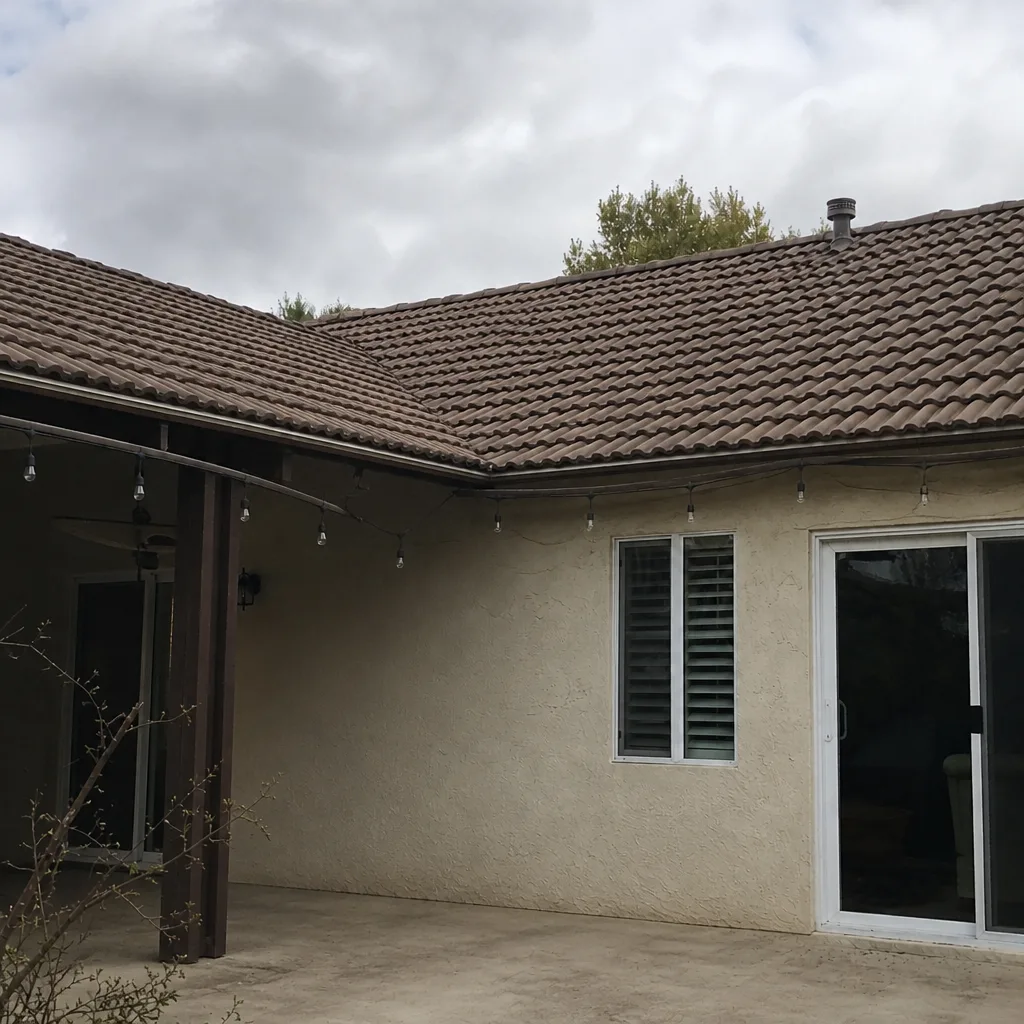
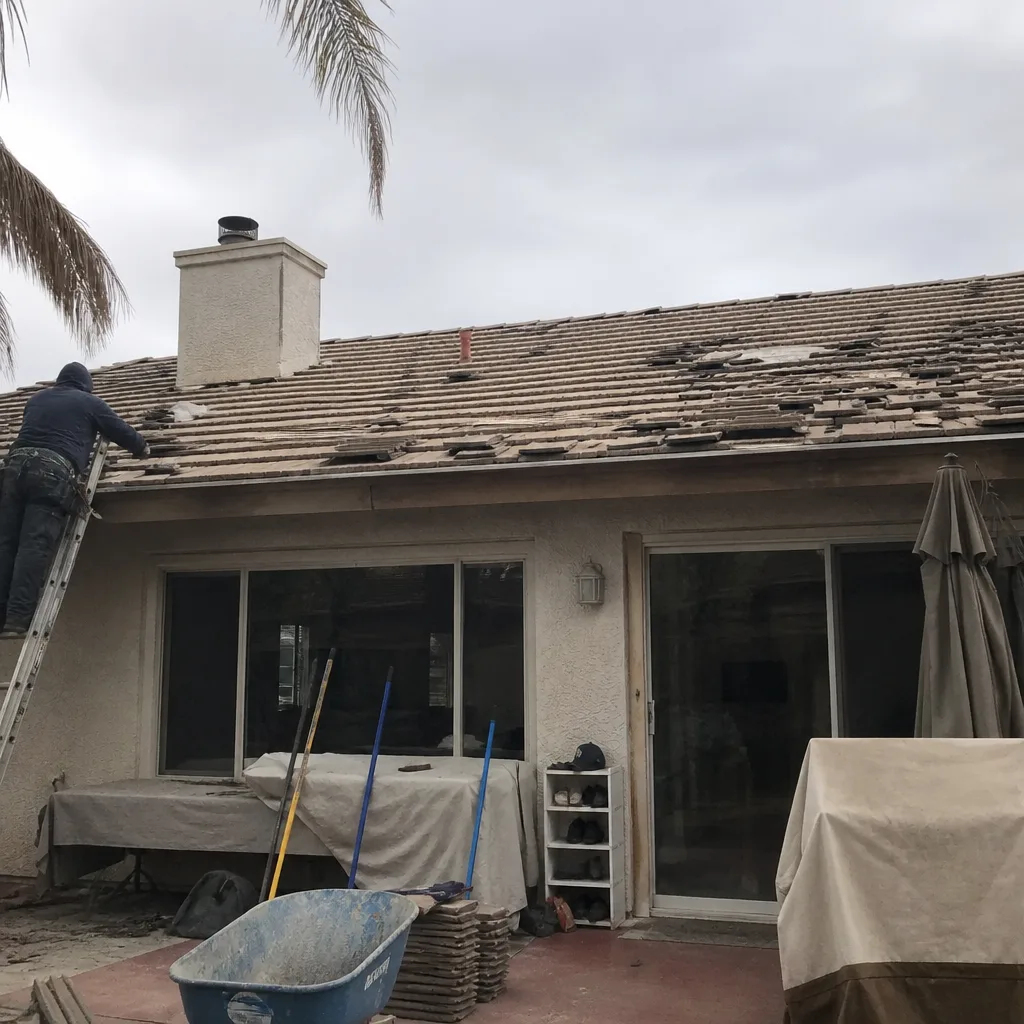
See the difference
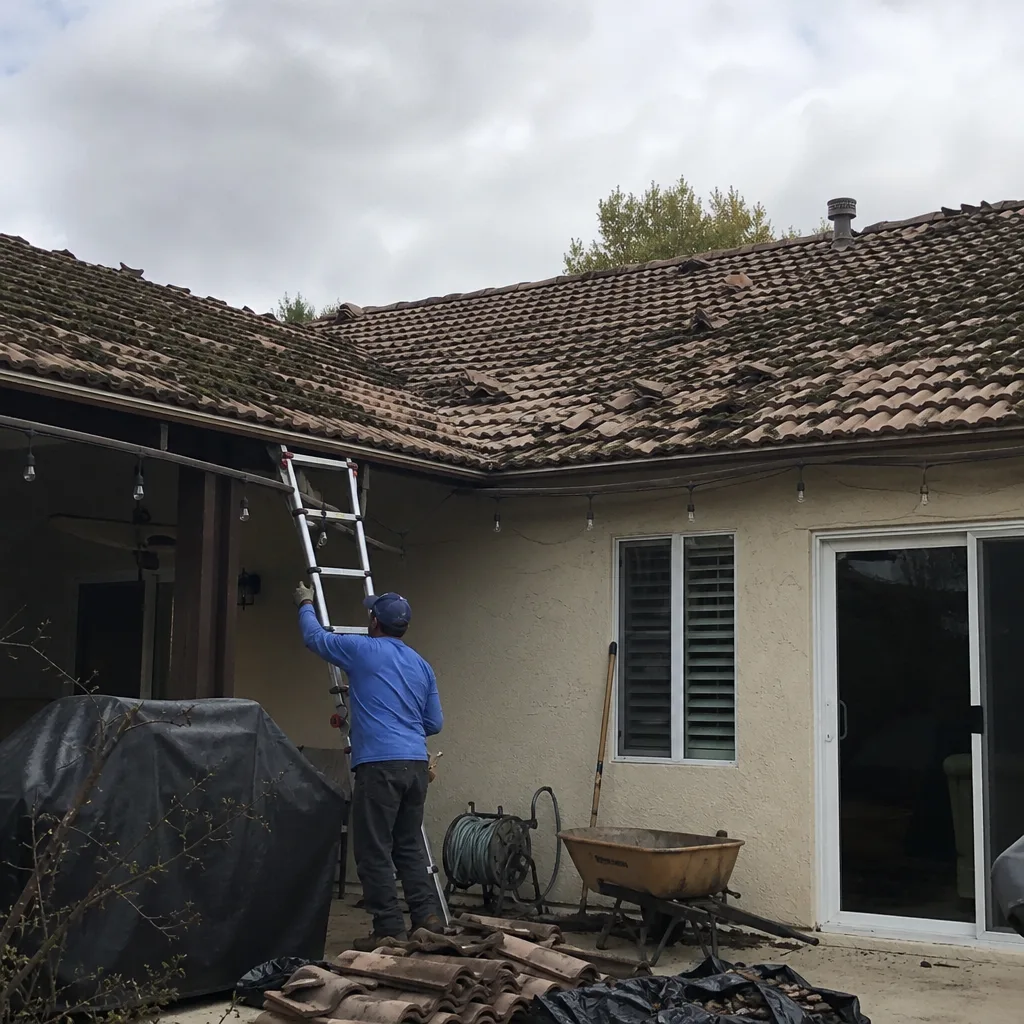 Before
 After
 Before
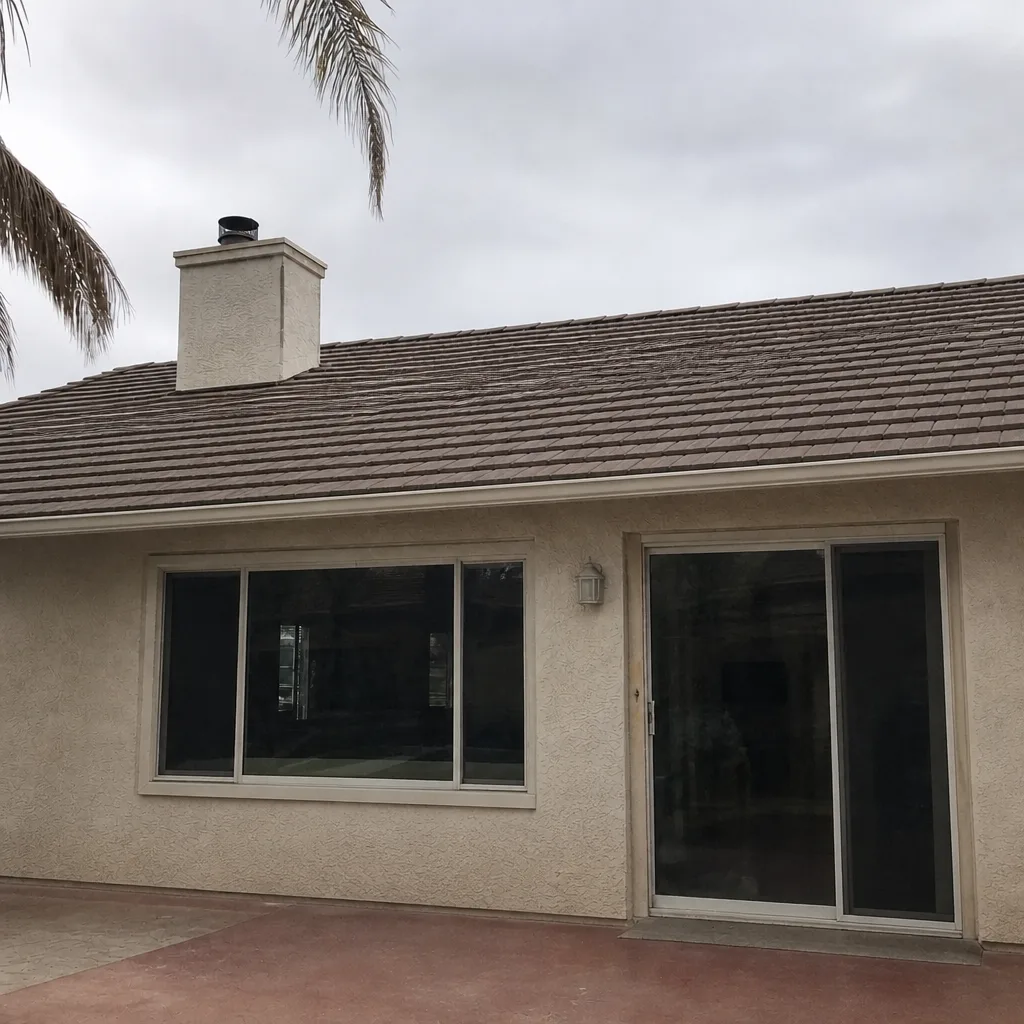 After
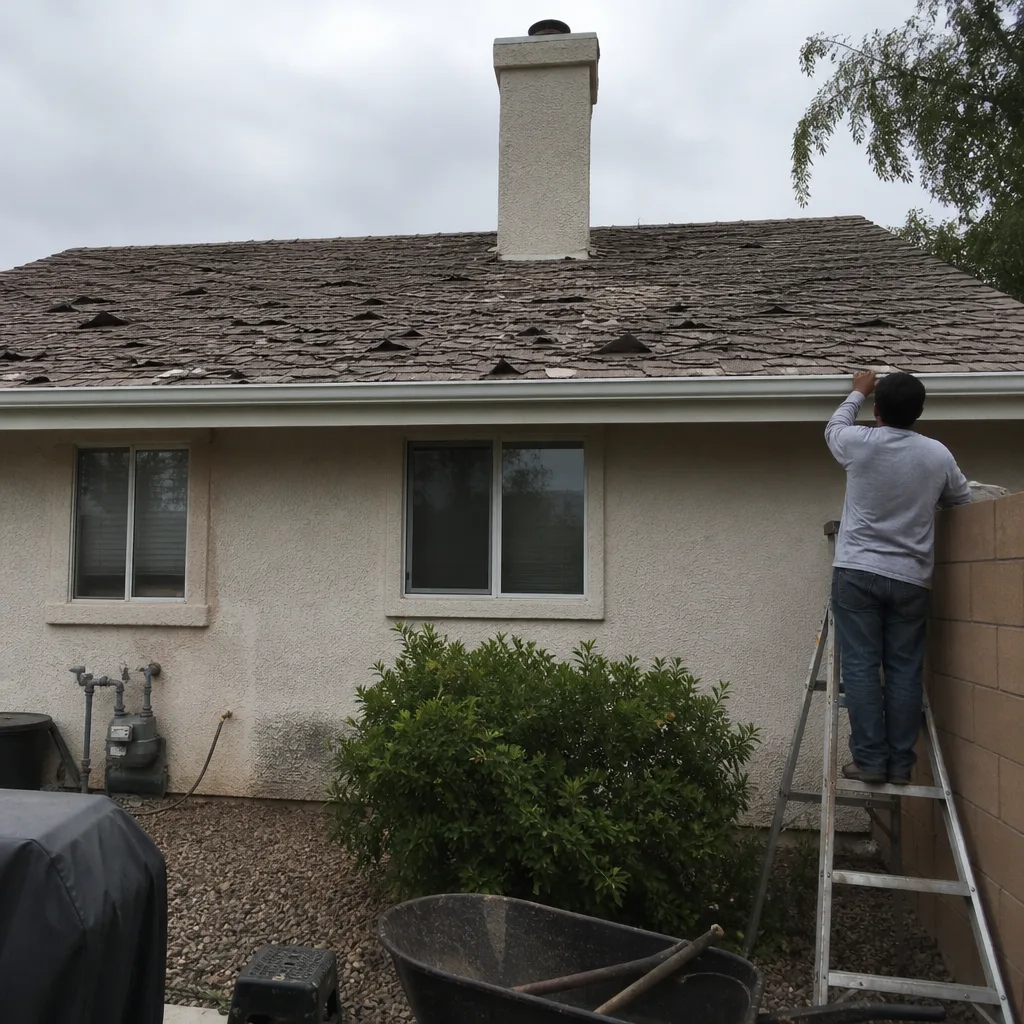 Before
 After
When to Call a Professional
Call a licensed roofer immediately if water is actively coming into the house, if you can see lifted shingles or displaced tile from the ground, or if a tarp you set has already failed. Call if the damage is up-slope or near a valley where you can’t safely reach it, and call if your ceiling is bulging or sagging – that’s a structural report, not a cosmetic stain. Don’t wait for a second storm to confirm what the first one told you. And if someone shows up at your door after a hail event with a form to sign, call us first. Shepherd & Sons Roofing Summerlin offers free estimates in Summerlin – call (844) 951-4545. A live person answers 24/7, and one call brings Bill back if anything isn’t done right.
Frequently Asked Questions
Photograph the damage before you touch or cover anything, then tarp only what you can safely reach from a ladder, then call your insurance company to open a claim. Do not sign any contractor’s paperwork in the first four hours, especially a direction-of-benefits form. The order matters because fresh, dated photos are the strongest proof for your claim. Call (844) 951-4545 for an exact quote on assessment and tarping – estimates are free.
It’s a document that routes your insurance payout directly to a contractor instead of to you, which hands away your control of the claim. Storm chasers push it immediately after hail because it locks them in before you can compare or call your insurer. You can always sign one later, with an established local roofer who explains it. You cannot unsign one in a wet driveway. If a contractor won’t wait for you to call your insurance first, that tells you what the form is for.
Only from a ladder at the edge, and never by walking the tile. Summerlin tile is fragile and slick, and a broken tile from a misplaced foot creates a new leak and muddies the original damage the adjuster needs to see. Tarp small and local to the leak, weight the edges instead of nailing, and leave the up-slope damage to a pro. Call (844) 951-4545 – we tarp safely and give you a written scope before repair talk.
A fair tarping visit is usually a modest trip and disposal fee plus labor, often credited back toward a repair if the same outfit does the work, and there’s no trip charge inside our own county. Storm chasers charge “emergency” pricing in the dark. Ask for a written line-item before anyone touches the roof, and ask where the local shop address is. Call (844) 951-4545 for an exact quote – estimates are free.
Call a number that rings a live person, not a call center. Ask for the license number and look it up, ask for a real local shop address, and ask who picks up at 2 a.m. A legitimate local outfit answers those questions without hesitation. Shepherd & Sons Roofing answers the phone with a live person 24/7 and publishes the license and address – call (844) 951-4545.
They can, if the damage can’t be separated from normal wear, which is exactly why the photo and documentation standard matters. Dated photos taken before anyone touches the roof, plus receipts and warranty paperwork from any prior roof work, are your best defense against a pre-existing condition denial. Have the file ready before the adjuster appointment. If you want a free second opinion on a written estimate before the adjuster comes, call (844) 951-4545.
The Bottom Line
The first four hours after a Summerlin storm decide how the next four months of your claim go. Document before you tarp, tarp only what you can safely reach, call your insurance before you sign anything, and never hand your claim control to a stranger in the driveway with a form. A local roofer with a license you can look up and a shop address you can drive past is worth a phone call from the ground. Storm chasers come off the mountains with the hail and leave with your signature. The name on the truck that’s been on the street for years is the name that comes back when it isn’t done right.
Contact
If a Summerlin storm has left you with a leak, a field of dented shingles, or a driveway full of strangers with forms, call us. We’re locally owned and owner-operated with the same address since 1996, a live person answers the phone 24/7, and every roofing job is backed by our written 90-Day Done Right Promise. We offer a free second opinion on any written estimate, no-hassle upfront pricing, no trip charge inside our own county, and a Senior and Veteran 10% discount. Call (844) 951-4545 to schedule your free estimate.
Written by the team at Shepherd & Sons Roofing Summerlin.