
Last updated November 18, 2026
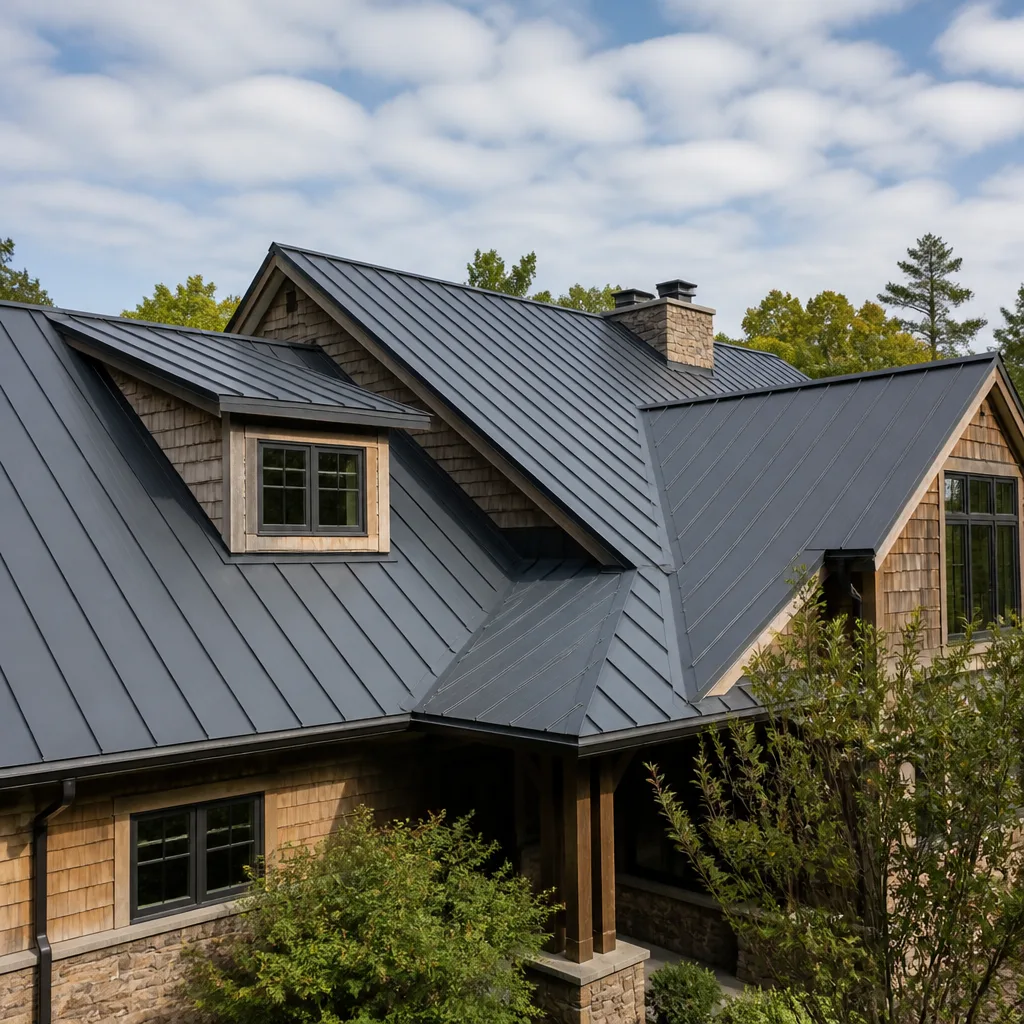 Metal roofing
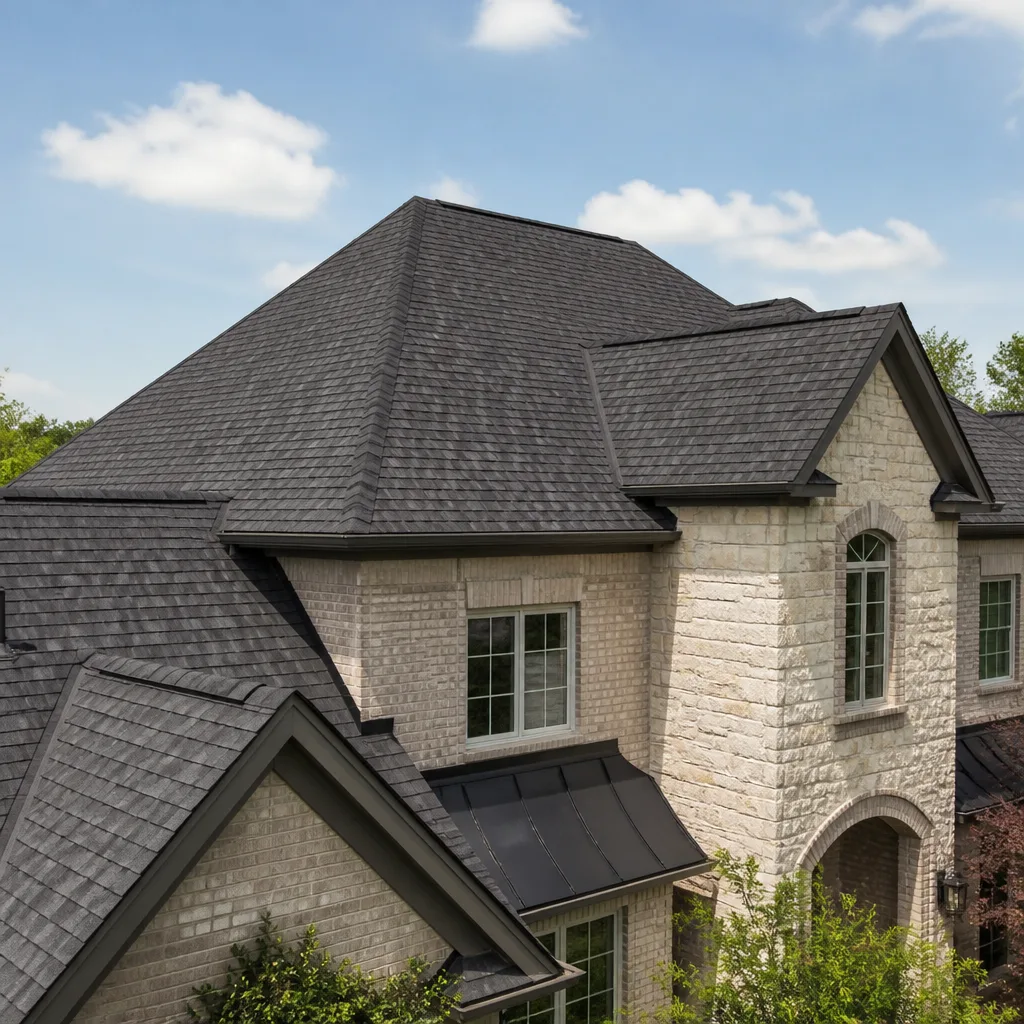 Architectural shingles
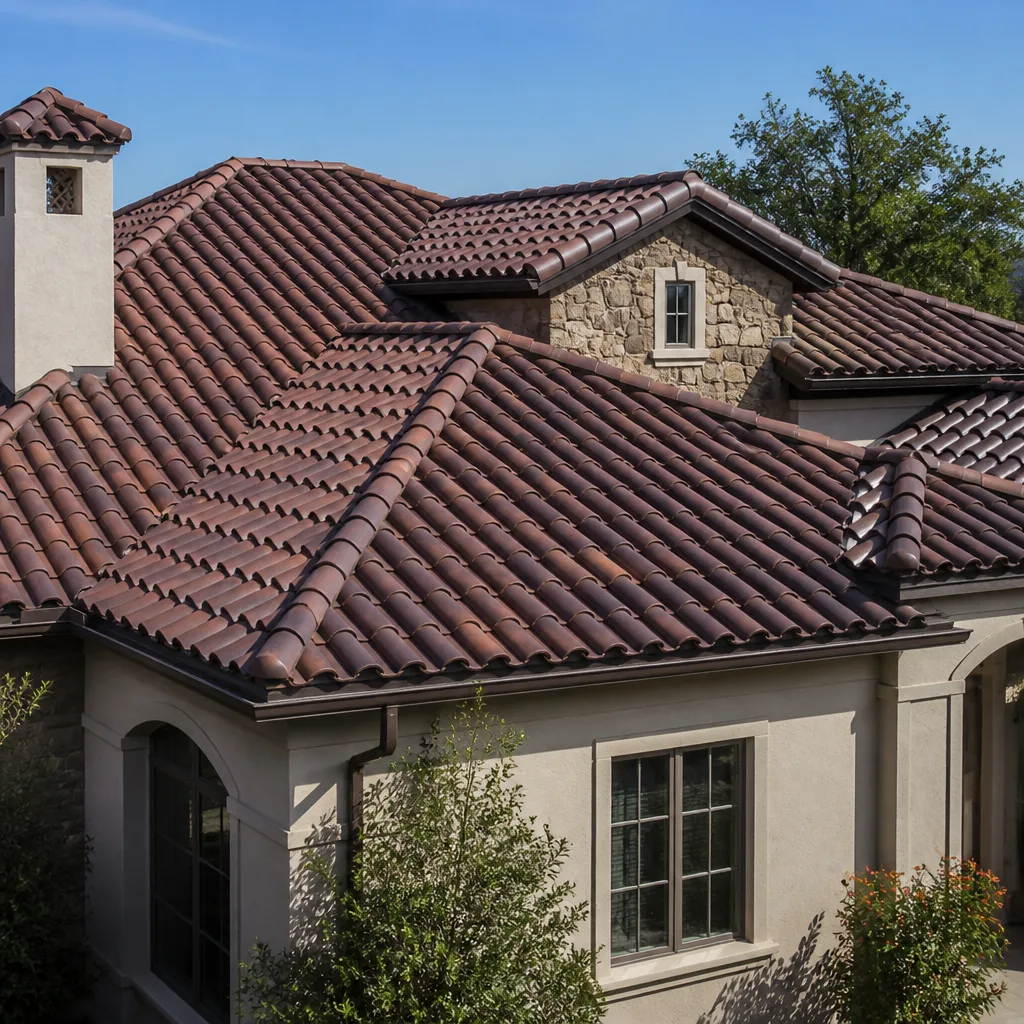 Tile roofing
 GAF
 Owens Corning
 Flat & low-slope
Free roof inspection with deck photos before we talk money - GAF and Owens Corning certified installation
Roofing Permits, Codes & Inspections in NV: What You Need to Know
I’ve watched homeowners pull a Clark County permit for a roof replacement, start work, and then get a stop-work order from their HOA architectural committee – because the county permit doesn’t care what color tile you use, but the HOA absolutely does. That’s the part nobody explains up front. In Summerlin, a re-roof can require three separate sign-offs, and if you handle them in the wrong order you’ll be holding a permit for a color your community won’t allow. This guide walks the actual sequence, explains what Clark County’s residential re-roofing permit truly covers, names the code sections that govern underlayment and tile weight in our high-UV zone, and shows you how to pull your own permit history before a single estimate gets written.
Quick Answer
In Nevada, a standard residential re-roof in Clark County needs a county building permit before work begins, and in Summerlin HOA communities it also needs architectural committee approval – and that HOA approval must come first, before you file with the county. The county permit covers the tear-off, underlayment, and installation to code; it does not approve your tile color, and it is not the same as a contractor’s workmanship warranty. Get the sequence wrong and you can pass inspection while failing your HOA.
Styles & brands we work with
- Architectural shingles
- Metal roofing
- Tile roofing
- GAF
- Owens Corning
- Flat & low-slope
Table of Contents
- The Three-Step Sequence in Summerlin HOA Communities
- What Clark County’s Residential Re-Roofing Permit Actually Covers
- What Triggers a Full Structural Inspection
- The Code Sections That Govern Underlayment and Tile Weight
- What a Final Inspection Involves (and What It Doesn’t)
- How to Retrieve Your Home’s Permit History
- Common Mistakes to Avoid
- Frequently Asked Questions
The Three-Step Sequence in Summerlin HOA Communities
The order is not written in big letters anywhere on the city’s website, and that’s where people get burned. Here is how it actually works in most Summerlin communities.
- HOA architectural approval first. Your community’s architectural review committee has to sign off on the roof material, color, and sometimes the profile – especially on tile. Until you have that written approval, you don’t have permission to install anything visible from the street.
- Clark County building permit second. With HOA approval in hand, the licensed contractor pulls the residential re-roofing permit. The county reviews the scope, the underlayment spec, and the attachment details against the adopted code.
- Work third. Only after both are in hand does anyone walk a crew onto that roof. Then you build to the approved drawings and the approved color.
Reversing steps one and two is the costly mistake. I’ve seen a homeowner pull the county permit, order a pallet of Owens Corning in a color that wasn’t on the approved list, and discover the problem at the HOA’s post-install inspection. Now you’re re-roofing a brand new roof. The county permit is fine. The HOA is not. Different authorities, different rules.
Our technicians have up to 30 years of experience reading both sets of rules, and in Summerlin it saves a finished roof from becoming a redo. If you’re on a corner lot with a prominent street-facing slope, expect the architectural committee to look harder at color and profile. Plan for it early.
What Clark County’s Residential Re-Roofing Permit Actually Covers
A standard residential re-roofing permit is a scope-and-code permit. It covers the tear-off of the old roof covering, the installation of new underlayment, the new covering material, and the flashing and attachments, all to the adopted building code and manufacturer instructions. It is issued against the address and the specific scope on your application.
What it does not cover:
- Color and aesthetic. The county doesn’t care if the tile is charcoal or terracotta. Your HOA does. This is the single most common mismatch.
- Your neighbor’s opinion. No permit review weighs the look of your street. That’s the architectural committee’s job.
- The contractor’s warranty. The permit confirms the work meets code, not that it will still be right five years from now. Those are two different promises.
What it does trigger: if the scope changes mid-job – you discover rotten sheathing, add a skylight, change the covering system – that’s a scope change and often requires a permit revision or a re-inspection. Don’t let a crew “just fix it” without updating the paperwork. In Summerlin, where many homes carry heavier tile systems, a re-roof that uncovers deck issues can turn a simple permit into a bigger one fast. That’s why we don’t quote a number before we check the deck.
What Triggers a Full Structural Inspection
Not every re-roof is a simple covering swap. Some scopes fall out of the standard re-roofing permit and into a full structural review. In our experience, these are the usual triggers:
- A change in the roof covering’s weight. Swapping a light covering for a heavier tile system can raise the dead load, and the county wants the framing checked. Going the other way matters too, but the heavier direction is where the inspections get serious.
- Structural repair or replacement. Replacing rafters, trusses, or significant sheathing isn’t a covering swap – it’s a structural scope.
- Adding openings. New skylights, roof-mounted equipment, or anything that cuts the decking and framing.
- Owner-history red flags. If the permit history shows unpermitted past work, that can surface during review and complicate the current permit. Which is exactly why we pull your history before we write a number.
A full structural inspection isn’t a punishment. It’s the county confirming the roof can safely carry the covering. In Summerlin, where heavy tile is common on two-story homes, that check protects the structure. Better to know before the tile is delivered than after.
The Code Sections That Govern Underlayment and Tile Weight
Southern Nevada’s high-UV, low-humidity climate is brutal on underlayment. The code and manufacturer specs govern what’s allowed, and the details matter:
- Underlayment type and installation. Under the adopted residential code and the manufacturer’s published instructions, the underlayment has to match the covering system and the climate. UV degrades certain materials faster here than in milder zones, so the spec sheet – not a generic bundle from the truck – drives the choice.
- Minimum tile weight. Tile systems are specified by weight per square, and the framing, sheathing spacing, and fastening have to support the stated load. The nailing pattern earns the wind rating, not the shingle wrapper – and it earns the load rating too.
- Attachment and wind. Clark County amendments tighten the fastening and flashing requirements in the wind zones. Coasting through with a generic nailing schedule can fail inspection.
- NV Energy coordination. Roof work near service connections needs the utility coordinated properly. Don’t let anyone drop a mast or move a meter without the utility’s sign-off.
Our contractors install products from GAF, CertainTeed, Owens Corning, IKO, Atlas, Tamko, and Boral – name the shingle and we’ve likely set it. We read the manufacturer spec against the county requirement on every Summerlin job, because the wrapper and the code both have to agree.
What a Final Inspection Involves (and What It Doesn’t)
A final inspection is the county confirming the installed work matches the permitted scope and the adopted code. The inspector looks at the underlayment, the covering, the flashing, the fastening, and the overall workmanship to code. When it passes, you get a signed-off permit.
What a passed inspection is not: it is not a contractor’s workmanship warranty. The county inspects one moment in time against a code standard. It does not warrant the flashing behind the chimney still sheds water a year from now, doesn’t warrant that a valley was detailed to last, doesn’t promise the crew comes back. That’s a separate, private promise between you and your roofer.
This is where a written workmanship promise matters. Our 90-Day Done Right Promise is in writing on every roofing job – if it’s not done right, one call brings Bill back. The county pass and the workmanship promise are two different layers of protection. You want both.
How to Retrieve Your Home’s Permit History
A home’s permit history is the paper trail of everything that’s ever been permitted at that address, and it’s the first thing Bill checks before writing any estimate on a Summerlin roof. Here’s how to pull it yourself:
- Go to the jurisdiction’s online permit portal. If your home is in unincorporated Clark County, that’s the county’s building department records. If it’s within a city boundary, use that city’s portal.
- Search by address or parcel number. The address is easiest; the parcel number is more precise when an address has changed.
- Review every roofing-related permit. Note the scope, the date, and whether it shows a final inspection passed or was left open. An open permit is a red flag.
- Compare the history to what’s on the roof now. If the record shows a tile re-roof but you’ve got asphalt, or the last permit was never closed, that’s a conversation to have before work starts, not after.
Why this matters: unpermitted past work can complicate a new permit and it changes how we scope the job. Same address since 1996 – the county’s records tell the story, and we read them before we talk money. If your history is clean, the estimate is cleaner. If it isn’t, you’ll know what you’re walking into before anyone touches the roof.
Common Mistakes to Avoid
- Getting the county permit before the HOA approval. Two separate authorities. If the county permit comes first and the color isn’t approved, you re-roof a finished roof. Get the architectural sign-off in writing first, every time.
- Assuming code approval means HOA approval. The county doesn’t review color, profile, or street-facing look. Your Summerlin architectural committee very much does. Don’t confuse one approval for the other.
- Skipping the permit history check. Unpermitted or open permits from past work can surface and stall your new permit. Pull the history before you sign anything.
- Letting a crew “just fix” a scope change without updating the paperwork. Added skylights, changed coverings, discovered rot – those need a permit revision or re-inspection. Silent changes can fail the final.
- Treating a passed inspection as the warranty. A county pass is one moment in time. Your workmanship warranty is a separate, written promise. Get it on paper.
- Ordering material before the on-site measure. A roof is measured in squares – ask any bidder how many they counted, and confirm the count against the actual deck before the pallet ships.
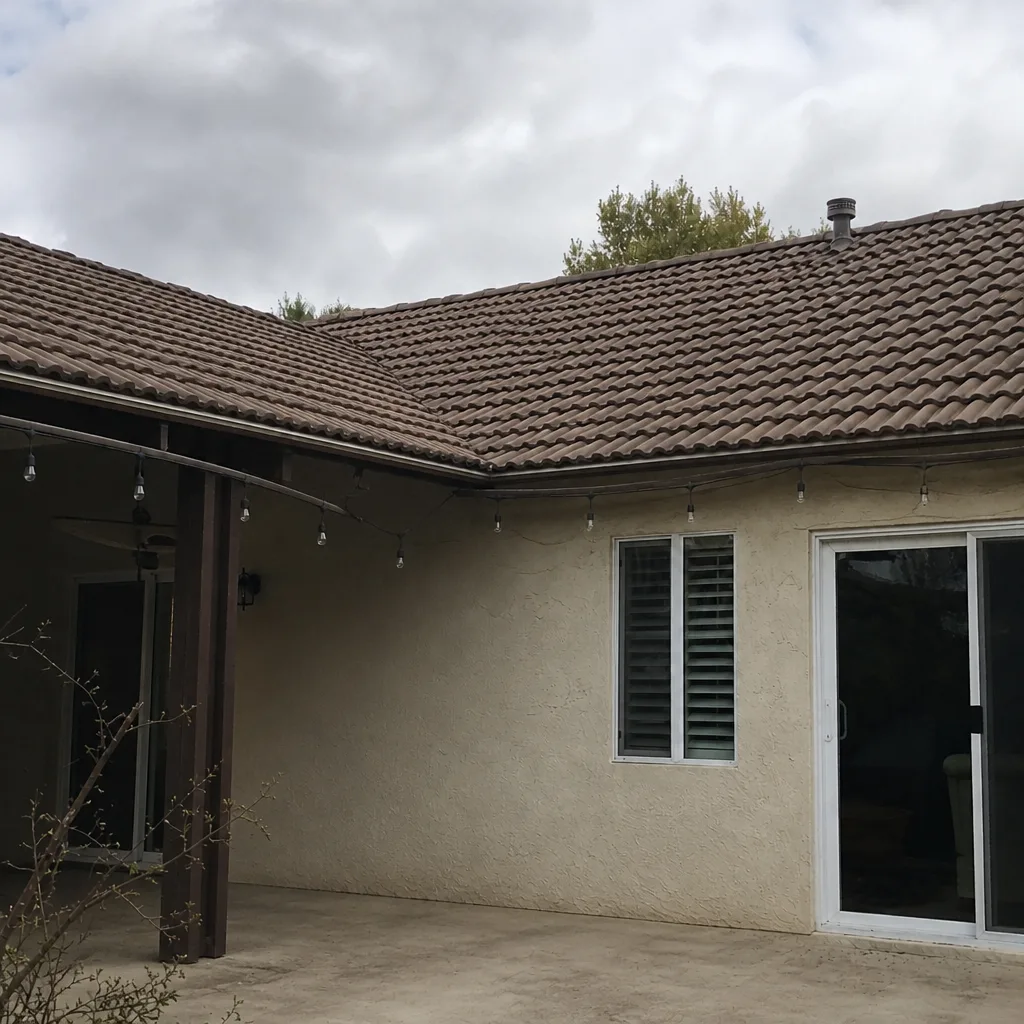
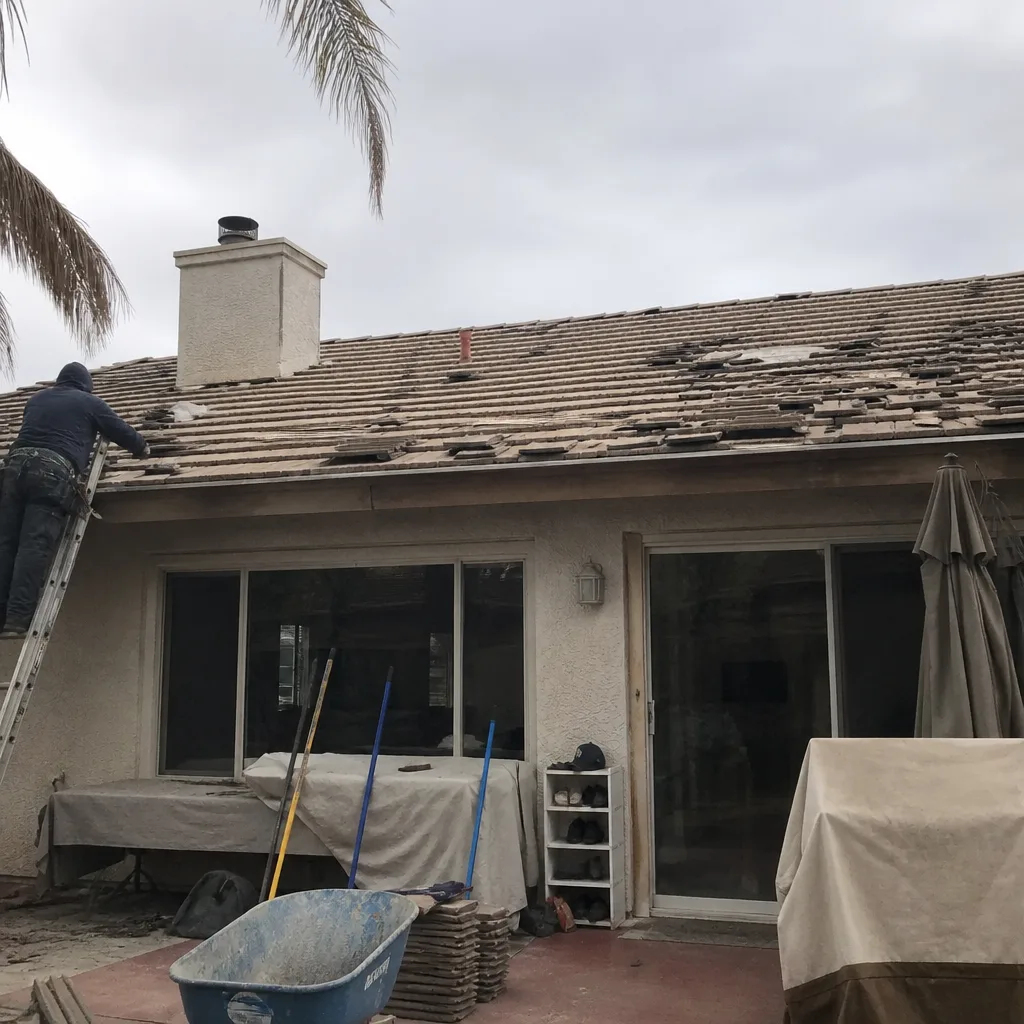
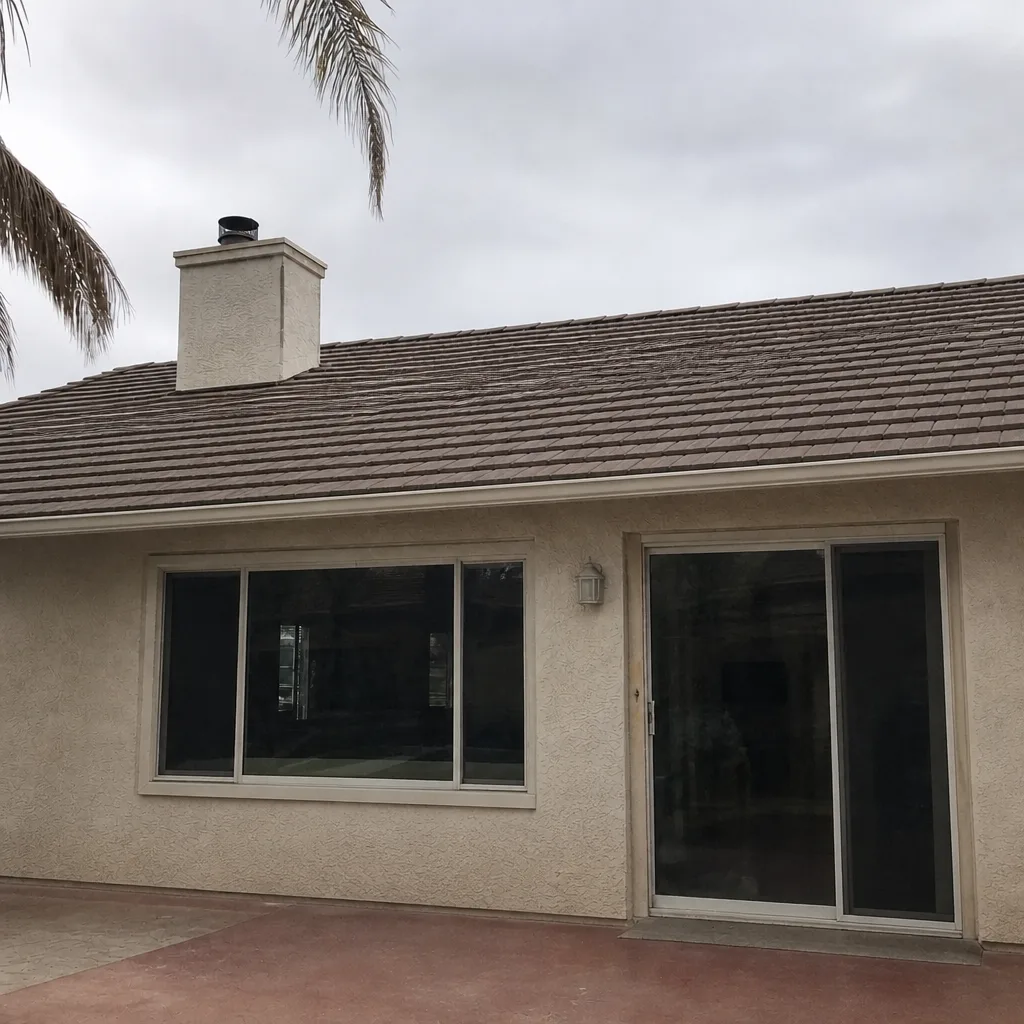
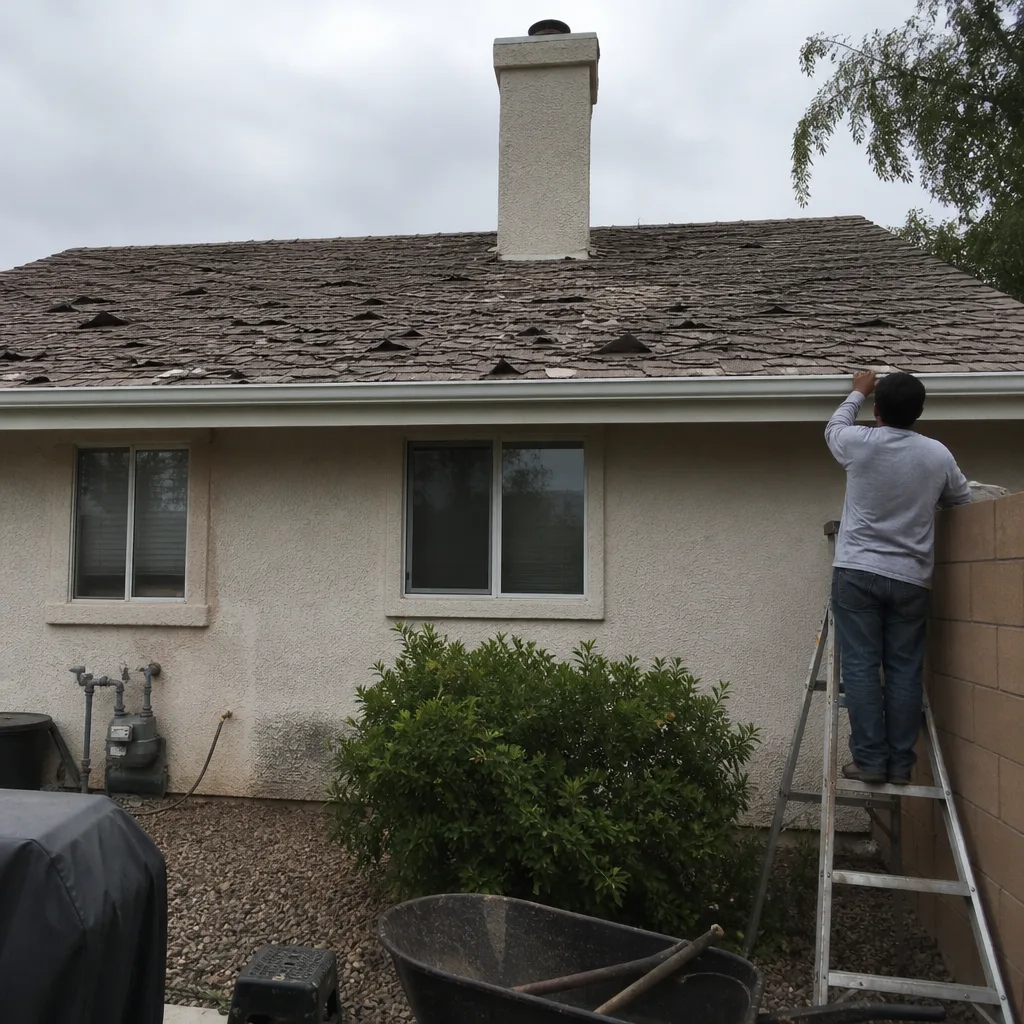
See the difference
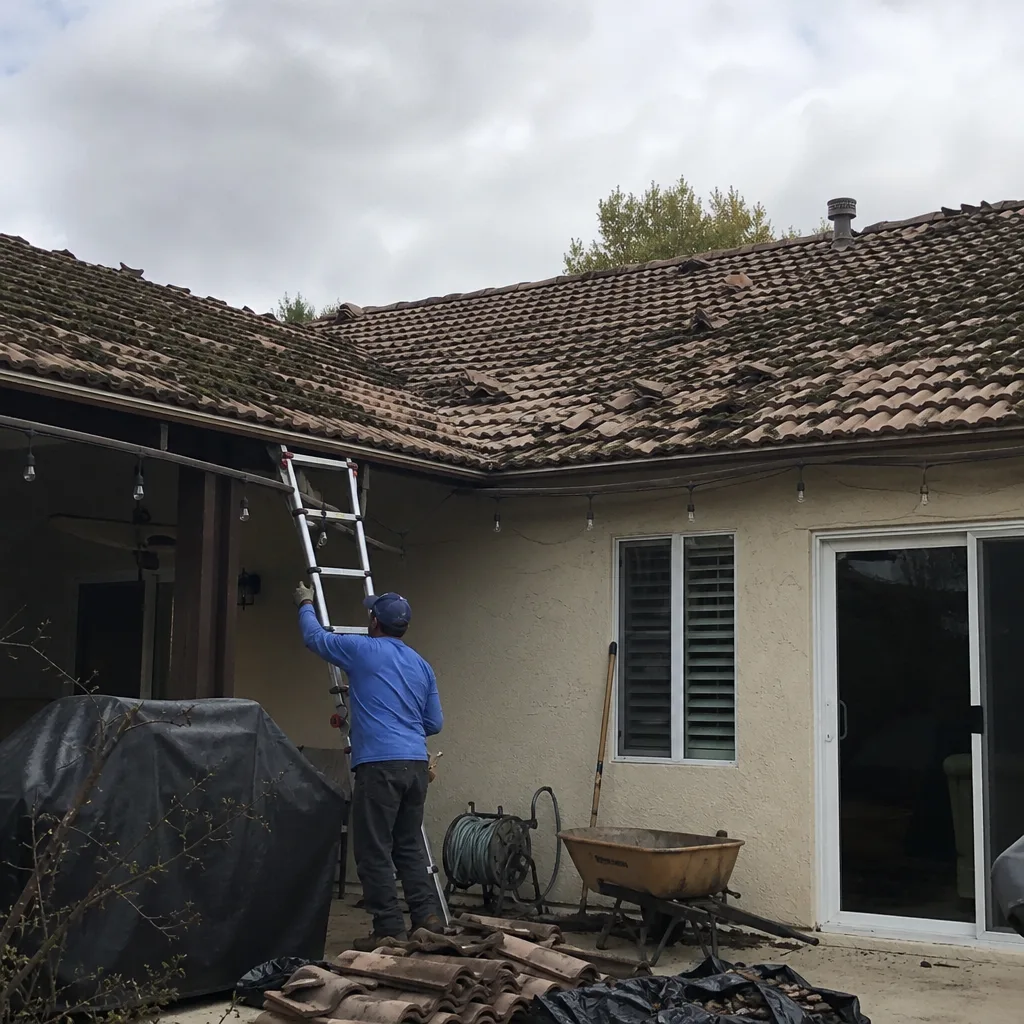 Before
 After
 Before
 After
 Before
 After
When to Call a Professional
Pull in a licensed roofer when the roof is anything beyond a two-shingle patch. That means a full replacement, any structural repair, tile work where weight and fastening matter, or any job that touches a permit. In Summerlin, the HOA layer alone is worth having someone who knows the sequence. If your permit history looks messy, or you’ve got a contractor’s bid you can’t quite trust, that’s when an experienced set of eyes earns its keep. The sequence has to be right, the underlayment spec has to match the climate, and the workmanship promise has to be in writing. Roof Replacement & Installation in Summerlin is where most of our permitted work starts. Shepherd & Sons Roofing Summerlin offers free estimates in Summerlin and a Free Second Opinion on any written estimate – call (844) 951-4545.
Frequently Asked Questions
Yes. A residential re-roof in Summerlin requires a Clark County building permit before work begins, plus architectural committee approval from your HOA community, which must come first. The county permit covers the scope and code; the HOA covers color and appearance. Call (844) 951-4545 to schedule your free estimate and we’ll walk both layers with you.
You can, and that’s the trap. The county permit doesn’t review color, so it can be issued for a tile the architectural committee later rejects. That’s why HOA approval has to come before the county filing. Get the sign-off in writing first, then pull the permit.
A passed inspection means the county confirmed the work met code on the day it was checked. A workmanship warranty is a private promise that the roofer comes back if something fails. They’re two different protections. Our 90-Day Done Right Promise is in writing on every job.
Use the county or city online permit portal and search by address or parcel number. Look at every roofing permit and whether the final inspection passed or was left open. We pull this history first thing before writing any Summerlin estimate, because open or unpermitted past work changes the scope.
It can. A change in roof covering weight can push the scope out of a standard re-roofing permit and into a full structural review, where the framing is checked against the load. Heavy tile on a Summerlin two-story home is exactly the case where that check matters. A licensed roofer will flag it before material is ordered.
Timing depends on the HOA’s architectural review schedule and the county’s review queue, so it isn’t a fixed number. What we can say: the HOA approval step is the one people underestimate, so start there. Call (844) 951-4545 for an exact read on your situation – estimates are free.
The Bottom Line
The sequence is HOA architectural approval, then Clark County permit, then work – in that order. The county permit covers scope and code, not color and not your warranty. Underlayment and tile weight are governed by the adopted code and the manufacturer’s spec, which matters more in our high-UV Summerlin climate than in milder zones. A passed inspection is a moment-in-time code check, and a workmanship promise is a separate, written commitment. Pull your permit history first. When you’re ready to price it, call (844) 951-4545 for a free estimate – your neighbors know the name on the truck, and it matches the name on the license.
Written by the team at Shepherd & Sons Roofing Summerlin.