
Last updated November 18, 2026
 Metal roofing
 Architectural shingles
 Tile roofing
 GAF
 Owens Corning
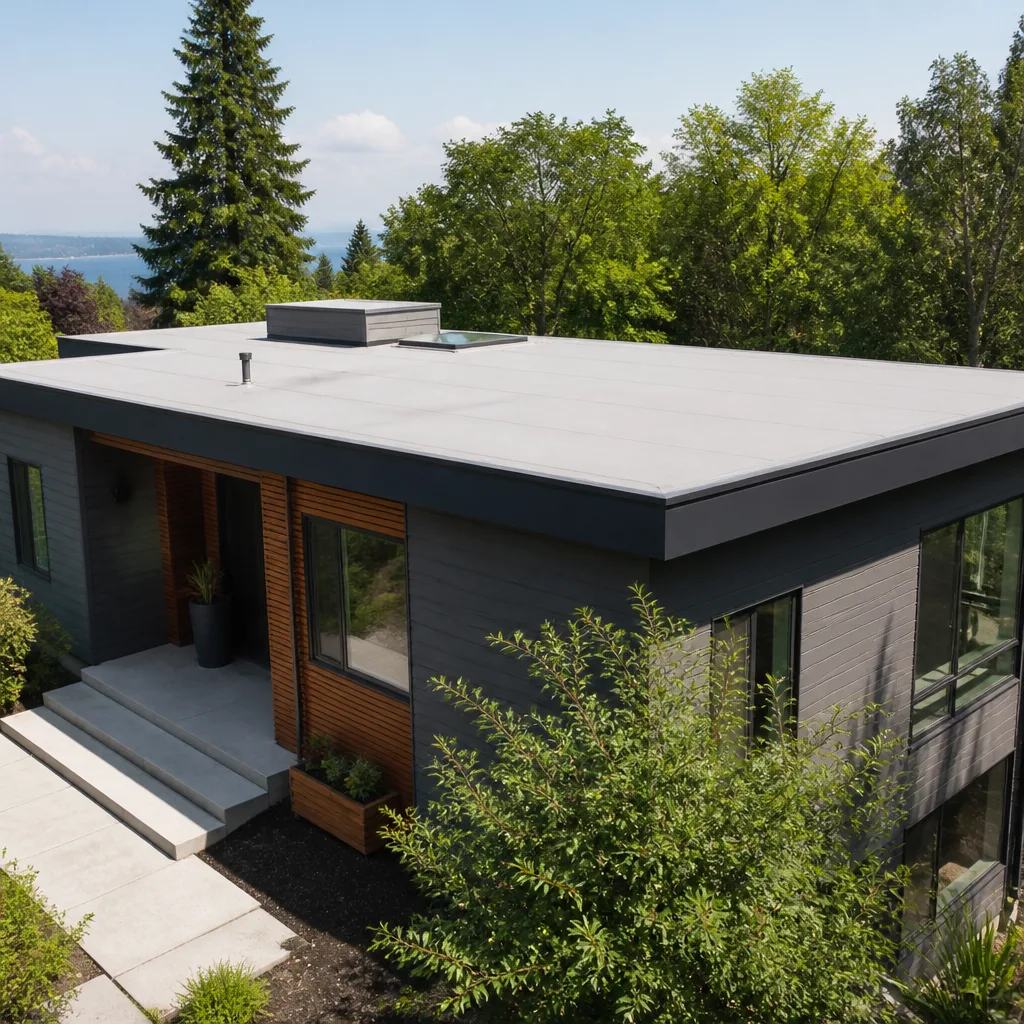 Flat & low-slope
Free roof inspection with deck photos before we talk money - GAF and Owens Corning certified installation
How Long Does Specialty Roofing Take? Timelines and What to Expect
A contractor who quotes you the same timeline for a foam roof and a tile roof is either installing the tile wrong or hasn’t actually looked at your house yet. We’ve been on roofs in Summerlin long enough to know the difference matters. A foam system on a simple garage can wrap in a day; a clay tile replacement on a complex Summerlin home with hip-and-valley architecture, two chimneys, and a solar array can run two full weeks. This guide breaks down honest ranges system by system, explains the complexity multipliers that add days, and shows you what a real written schedule should look like before anyone touches your roof.
Quick Answer
Specialty roofing in Summerlin generally takes 1 – 2 days for foam, 4 – 7 days for metal tile, 6 – 10 days for concrete tile, and 7 – 14 days for clay tile on a standard home. Complexity factors like multiple chimneys, solar panel removal, second-story setbacks, and Clark County inspection hold days can add several days on top of those ranges. A written schedule with named milestones is the only way to know what “on track” actually means for your specific roof.
Styles & brands we work with
- Architectural shingles
- Metal roofing
- Tile roofing
- GAF
- Owens Corning
- Flat & low-slope
Table of Contents
- Timelines by System: Foam, Metal Tile, Concrete Tile, Clay Tile
- Complexity Multipliers on Summerlin Homes
- Why Foam Roofing Is More Weather-Dependent Than Tile
- Permit and Inspection Sequencing in Clark County
- What a Realistic Project Schedule Should Look Like
- The Phases of a Specialty Roof Job, Step by Step
Timelines by System: Foam, Metal Tile, Concrete Tile, Clay Tile
Specialty roofing covers a wide spread of systems, and each one is installed differently. That difference in installation method is what drives the timeline, not the square footage alone. Here are the realistic ranges we see on a standard Summerlin home, best-case to worst-case.
- Foam (SPF) roofing: 1 – 2 days. A simple, open-hip roof can be prepped and sprayed in one day. Complex shapes, heavy prep, or a coating system needing multiple passes push it to two.
- Metal tile: 4 – 7 days. Panel layout and fastener patterns take time, and trim work around valleys and chimneys adds days on complex roofs.
- Concrete tile: 6 – 10 days. This includes tear-off, underlayment, and tile setting. Underlayment replacement on an existing tile roof is often the hidden time cost.
- Clay tile: 7 – 14 days. Clay is the slowest because the pieces are heavy, breakage during handling requires replacement, and laying a proper pattern around hips and valleys is painstaking work.
The spread between systems isn’t small. A homeowner expecting a one-week job who actually needs a two-week clay installation ends up frustrated with a contractor who was being honest all along. That’s why we put system-specific ranges in writing before work starts, not a single number that sounds good on the phone.
For a fuller look at how each system fits a Summerlin home, see our guide to Shepherd & Sons Roofing Summerlin home.
Complexity Multipliers on Summerlin Homes
Summerlin architecture is beautiful, and it’s also harder to roof than a simple gable ranch. The features that make these homes distinctive are exactly the features that add days to a specialty roof job. We’ve seen a job quote turn from five days to nine because nobody measured the chimneys before signing.
Here are the multipliers we account for before we give you a timeline:
- Hip-and-valley architecture: Every hip and valley requires cut tile or bent trim, and each intersection is a place where error costs time. Multiple hips and valleys can add 1 – 2 days on a tile job.
- Solar panel removal and reinstall: Panels have to come off before the roof can be worked and go back after. Depending on the array size, plan on 1 – 2 days of roof time consumed by removal and reinstall alone, plus coordinating with the solar company.
- Multiple chimneys: Each chimney needs flashing detail, and the more of them there are, the more cut work and seal work. Add roughly half a day per chimney on tile systems.
- Second-story setbacks: Setbacks and dormers mean staging, ladders, and safety setup on two levels. This can add a full day of setup and breakdown time on larger homes.
These aren’t padding. They’re real hours on the roof, and a specialty roofer who ignores them is either rushing the work or has not looked at your house carefully enough. When we quote a Summerlin job, we walk the roof and count the chimneys, the valleys, and the setbacks before we put a number down.
Why Foam Roofing Is More Weather-Dependent Than Tile
Foam roofing is the one specialty system most sensitive to conditions on the day of installation. Spray polyurethane foam requires specific humidity and wind conditions to cure properly. Too much wind and the spray drifts. Too much humidity and the foam doesn’t set the way it should. Even in the desert, a single day with the wrong conditions can push a Summerlin foam job by a full day, and there’s nothing to do but wait.
Tile is different. Clay and concrete tile can be laid in a much wider range of conditions. The underlayment has its own requirements, but once it’s down, tile setting can generally proceed unless the weather turns genuinely severe. That means a tile job’s timeline is mostly driven by the labor and complexity, while a foam job’s timeline is driven by labor, complexity, and the morning forecast.
What this means for you as a homeowner: if a foam contractor promises a hard date with no weather caveat, ask what happens if the humidity spikes. A straight answer is “we bump a day and we tell you the moment we know.” A runaround is a bad sign. For more on how each system lives in the local climate, see Metal Roofing in Summerlin and our broader Roof Replacement & Installation in Summerlin pages.
Permit and Inspection Sequencing in Clark County
Permits and inspections create mandatory hold days on a specialty roof job, and those hold days are not the contractor’s fault. They’re a normal part of working in Clark County, and a realistic timeline has to account for them.
Here’s how the sequencing typically unfolds:
- Permit application and issuance: Before any work, the permit has to be pulled. In Clark County this can take anywhere from a few days to a couple of weeks depending on the system and the backlog.
- Dry-in or underlayment inspection: Many specialty systems require an inspection after tear-off and underlayment but before the finish material goes on. The inspector has to sign off before the contractor can proceed.
- Final inspection: After the roof is complete, a final inspection confirms the system meets code. You can’t close the job until it passes.
Each inspection is a scheduled appointment, and if the inspector’s calendar is full, your job sits. That’s a hold day. When you’re comparing quotes, ask each contractor how they sequence inspections and how they account for them in the schedule. A bidder who claims no inspection delays has not done many specialty jobs in Clark County. For repair-only work that doesn’t require a full re-roof permit, see our Roof Repair in Summerlin page.
What a Realistic Project Schedule Should Look Like
The most useful thing you can ask for before a specialty roof job begins is a written project schedule with named milestones. Not a fuzzy “about a week and a half.” A document that says what happens on which day, and what “on track” means at each stage. Here are the milestones we put in writing so both sides know where the job stands.
- Material delivery date: The day tile, foam, or metal arrives on site. Material delays are the most common source of slippage, and knowing the date means you know if it’s on track.
- Tear-off and deck inspection: The day old material comes off and we photograph the deck. If rot or structural issues turn up, this is the day we tell you, not later.
- Underlayment and dry-in inspection: The date set for the county inspector to sign off before finish material goes down.
- Finish installation window: A range, not a single day, with the system-specific spread built in.
- Final inspection date: The scheduled final inspection, with the understanding that the county calendar drives this one.
- Punch-list and walkthrough: The day we walk the roof together and confirm nothing is left open.
Every roofing job we do carries the written 90-Day Done Right Promise: if something isn’t done right, we come back and make it right. That promise is only meaningful if you know what “done right” was supposed to look like, and the schedule is where that starts. It’s the same approach we take on every replacement and metal roofing job across Summerlin.
The Phases of a Specialty Roof Job, Step by Step
Beyond the schedule, it helps to understand the phases a specialty roof job moves through. Each phase has its own time cost, and knowing them makes the schedule make sense.
- Design and material selection: Choosing the system (foam, metal tile, concrete, clay) and the specific product. We install systems from Boral, GAF, and CertainTeed, among others, and the choice of material affects the timeline.
- Permit and ordering: The permit is pulled and materials are ordered. This phase runs mostly off the roof and off your time.
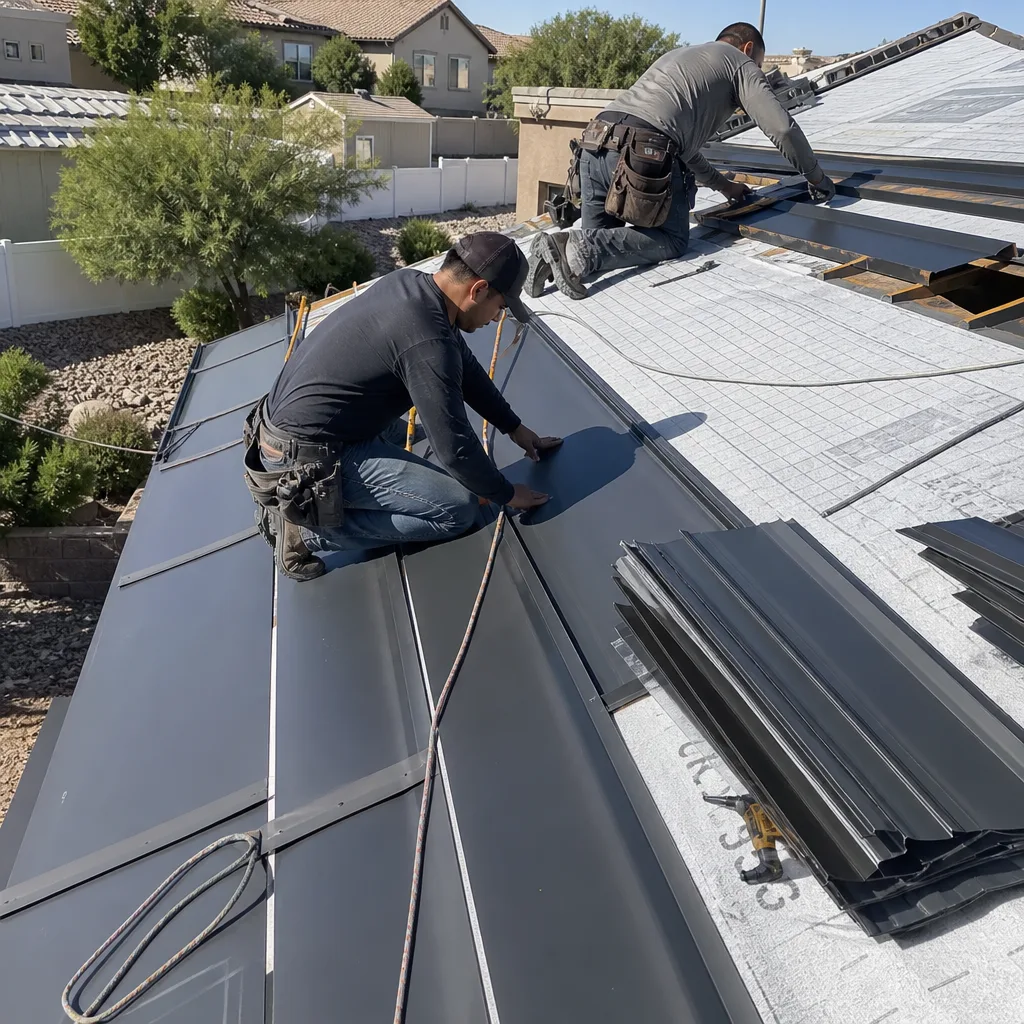
- Prep and tear-off: Removal of the old roof, inspection of the deck, and any structural repair. On a Summerlin home with a complex roof, this is often a full day or more.
- Underlayment and dry-in: The water barrier goes down and the county inspection happens.
- Finish installation: The tile or foam goes on. This is the longest phase on tile jobs and the shortest on foam.
- Detail and flashing: Chimneys, valleys, vents, and edges are sealed. This is the work that earns the leak-free result and where careless crews cut corners.
- Final inspection and walkthrough: The county signs off and we walk the roof with you.
In our experience, homeowners who understand these phases ask better questions and get fewer surprises. The phases don’t change; only the days inside each phase do.
Common Mistakes to Avoid
- Accepting a single timeline for any system. A contractor who quotes one number for a foam roof and a clay tile roof hasn’t looked at your house. Ask for the system-specific range in writing.
- Forgetting to ask about solar panels. If you have solar, removal and reinstall adds real days. A quote that doesn’t mention them isn’t complete.
- Not counting the chimneys. Multiple chimneys mean more cut work and flashing. Point them out and ask how they affect the schedule.
- Assuming inspections run on the contractor’s clock. Clark County inspection hold days are real. Ask how they’re built into the schedule.
- Letting a phone quote become a door quote. A number given sight-unseen by a storm chaser and then inflated at the door is the oldest trick in the business. Get it in writing, on paper, after a roof walk.
- Confusing foam’s weather sensitivity with unreliability. Foam is an excellent system in the desert. It just needs the right conditions on install day, and an honest roofer will tell you that up front.
- Skipping the deck photos. Ask to see the deck before the finish goes on. If something’s wrong, you want to know before the tile covers it up.
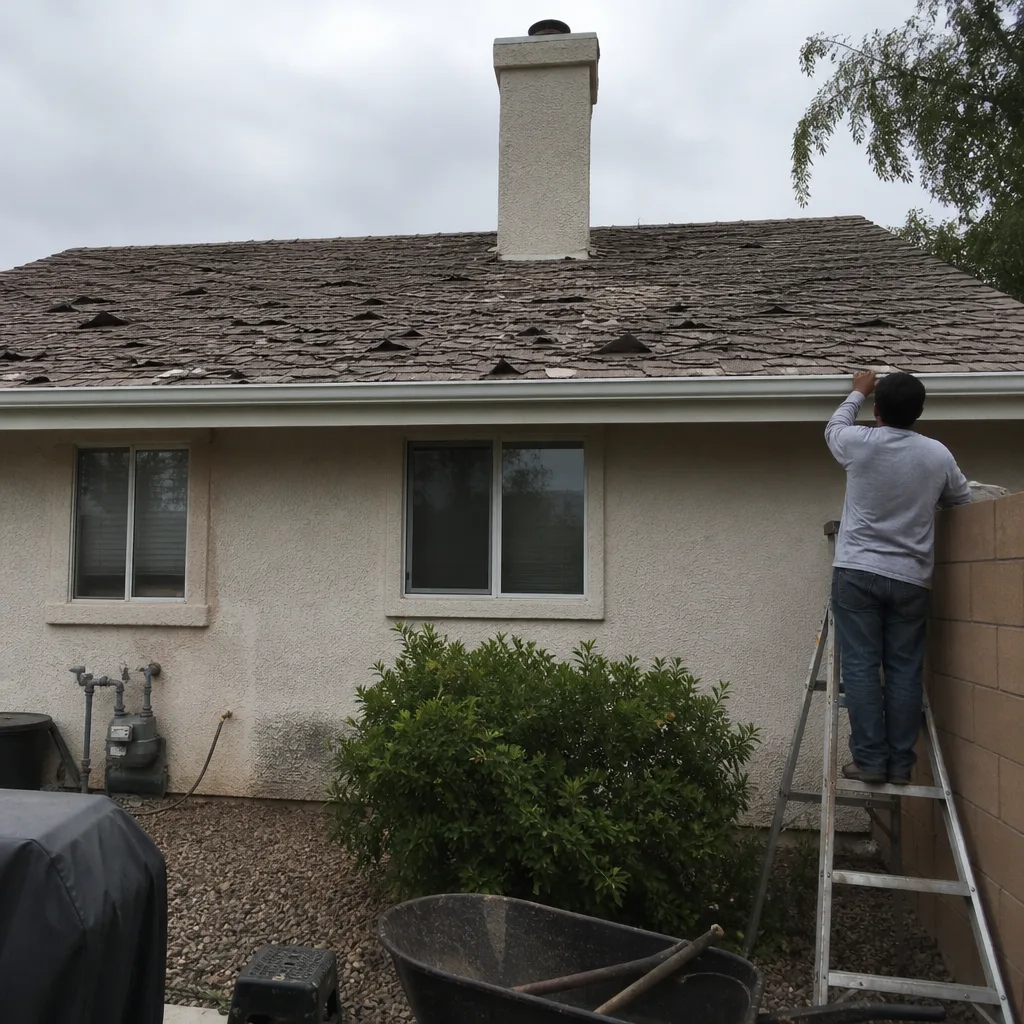
See the difference
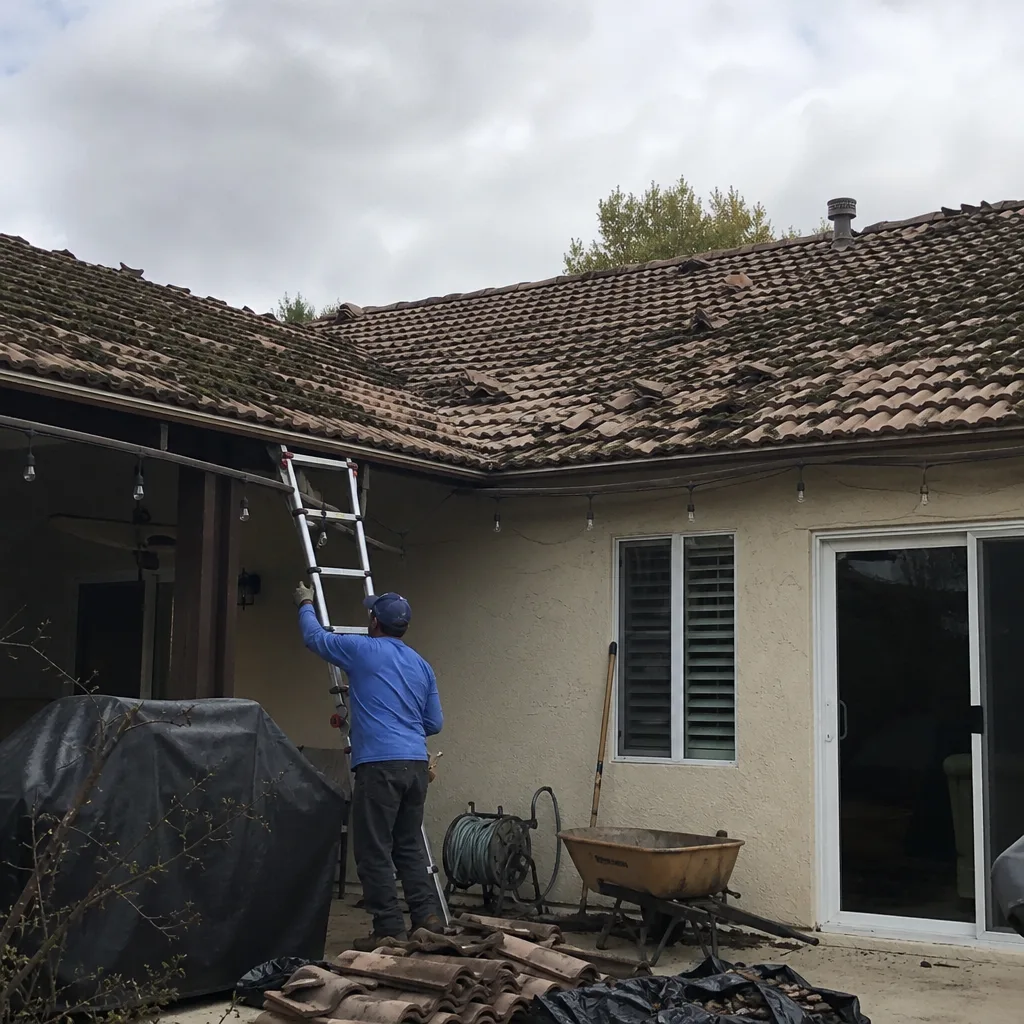 Before
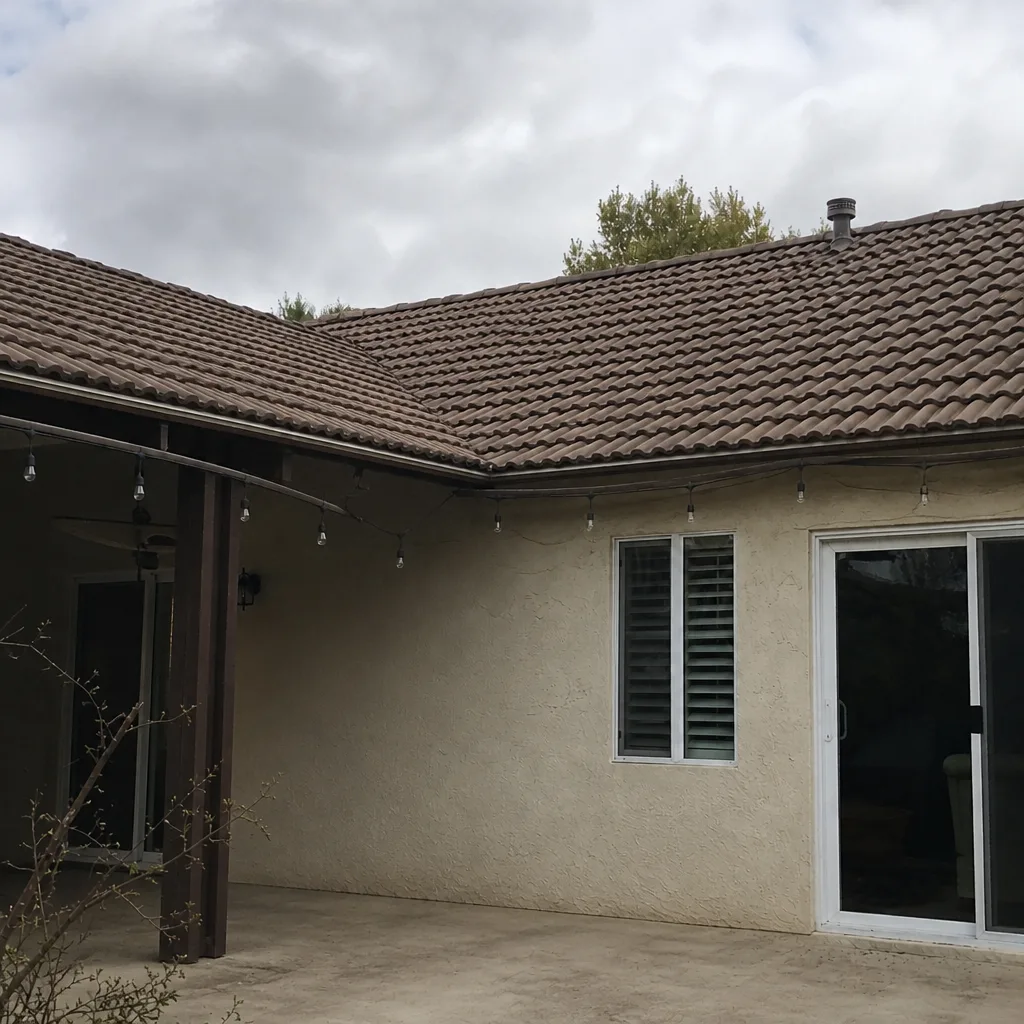 After
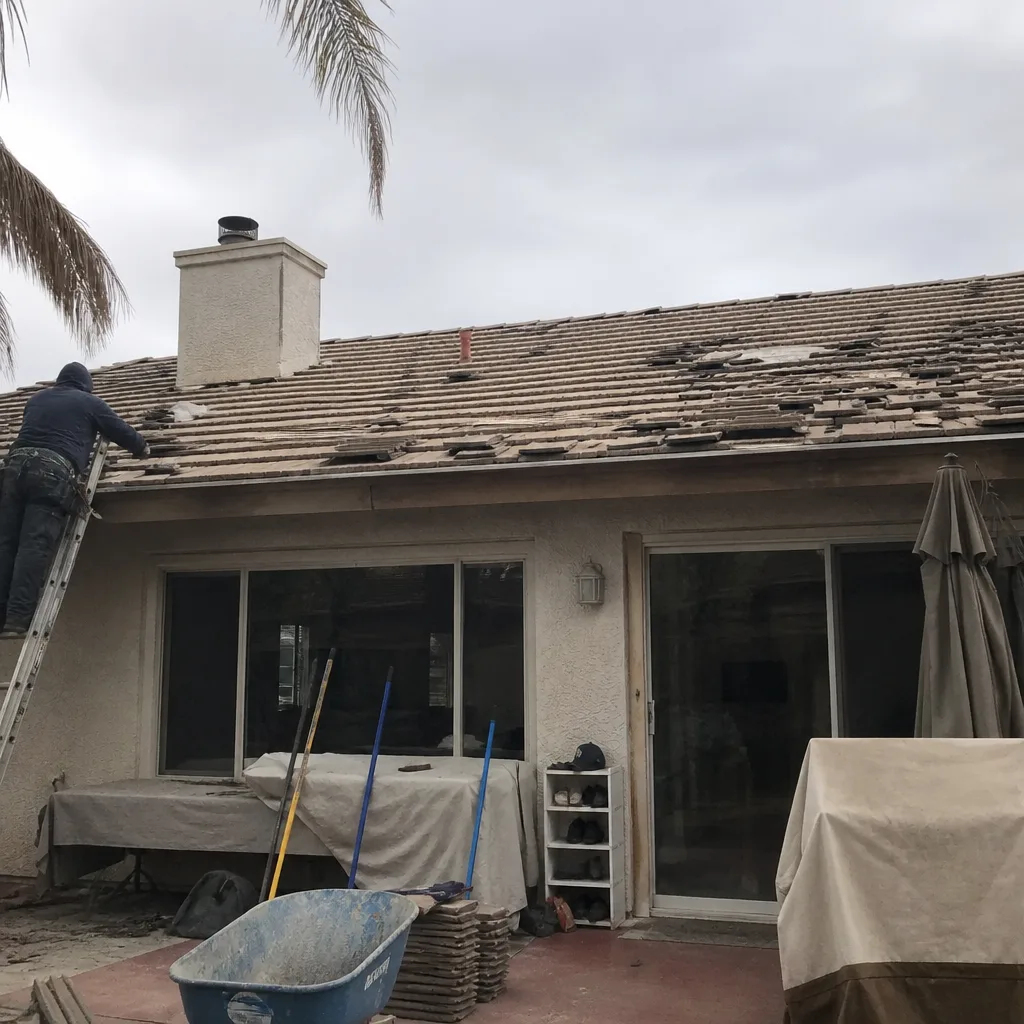 Before
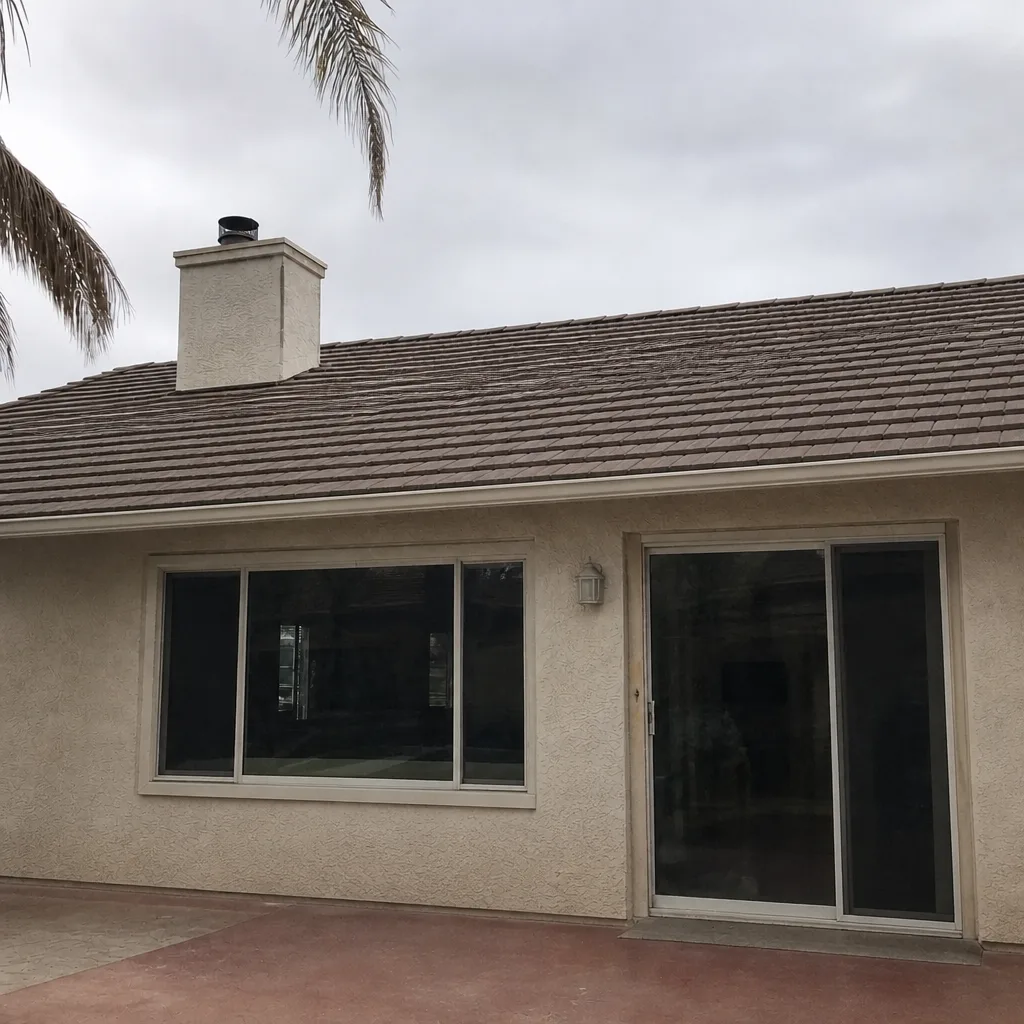 After
 Before
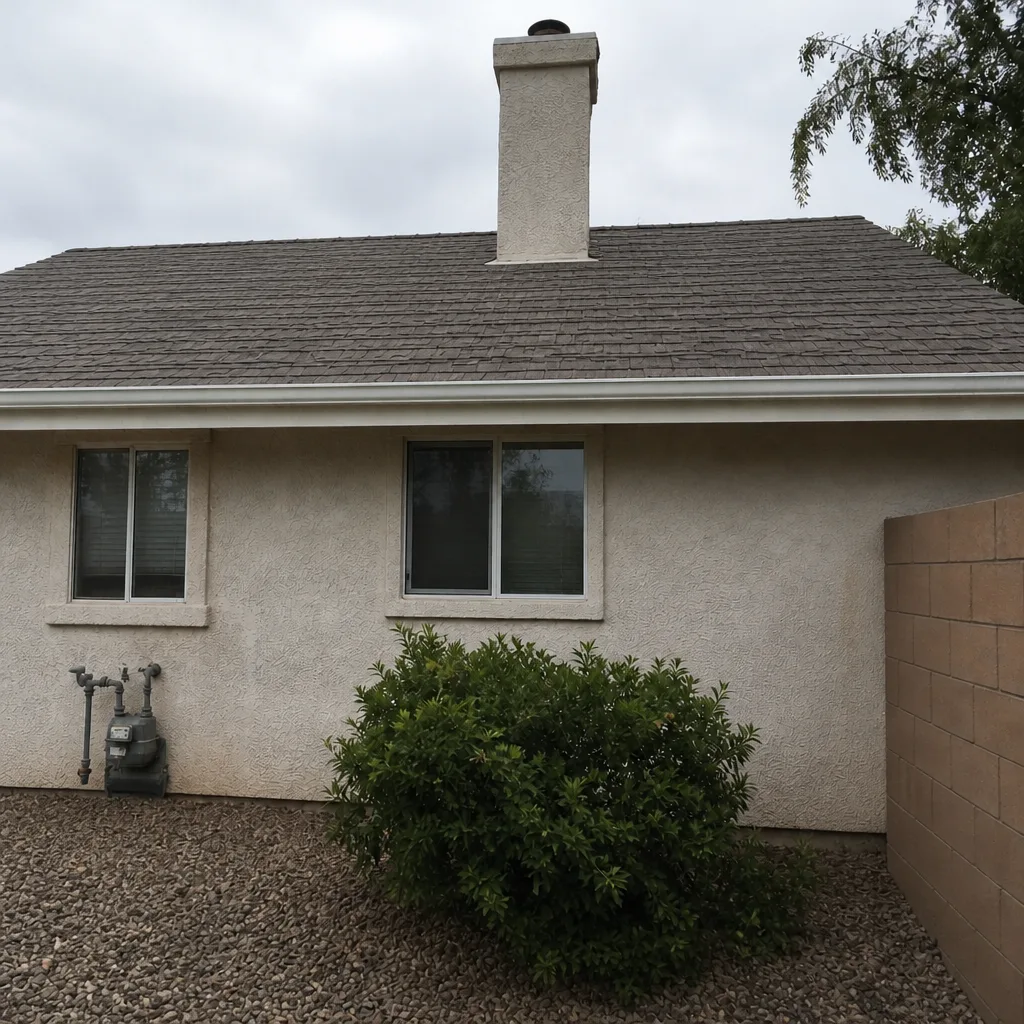 After
When to Call a Professional
Some roofing decisions are yours to make on your own time. Others need a trained eye. Call a professional if you’re seeing more than a handful of cracked or slipped tiles, if foam is bubbling or separating from the deck, if you have active leaks after a monsoon, or if a storm chaser knocked on your door with a number that doesn’t make sense. Specialty systems fail in ways that are easy to misdiagnose without experience, and a small repair caught early is far cheaper than a full replacement caught late. Our technicians have up to 30 years of experience with foam, metal, concrete, and clay, and we’ll tell you plainly whether you need a repair or a replacement. Shepherd & Sons Roofing Summerlin offers free estimates in Summerlin; call (844) 951-4545 to schedule yours.
Frequently Asked Questions
On a standard Summerlin home, plan on 1 – 2 days for foam, 4 – 7 days for metal tile, 6 – 10 days for concrete tile, and 7 – 14 days for clay tile. Complexity features, solar panel removal, and inspection hold days can add more. Call (844) 951-4545 for an exact schedule on your roof; the estimate is free.
Clay tile is slow because each piece is heavy, handling breakage requires replacement, and setting a proper pattern around hips and valleys is painstaking work. Foam is sprayed in large passes, so a simple roof can be done in a day. The gap between 1 – 2 days and 7 – 14 days is real, not padding.
Yes. Spray foam needs specific humidity and wind conditions to cure properly, and even in the desert a single bad morning can push a job by a full day. Tile jobs are less weather-sensitive once the underlayment is down. Any foam contractor who promises a hard date with no weather caveat is overselling.
They can. Many specialty systems require an underlayment or dry-in inspection before the finish material goes on, and a final inspection after completion. Each is a scheduled appointment, and a full inspector calendar means a hold day. A realistic schedule builds those in.
Specialty roofing runs higher than standard asphalt shingle work because the systems and labor are more involved. The exact number depends on the system, roof size, and complexity. Call (844) 951-4545 for an exact quote; estimates are free and we’ll show you the deck and a written line-item before you commit.
Not on our jobs. We give you a written line-item estimate after walking the roof, and the number stands. The only thing that changes a price is something we couldn’t see until the deck was open, and we stop and show you before we touch it. Call (844) 951-4545 to get your estimate started.
The Bottom Line
Specialty roofing timelines vary more than any other roofing category, and the difference comes down to how each system is installed. Foam wraps in 1 – 2 days, metal tile in 4 – 7, concrete tile in 6 – 10, and clay tile in 7 – 14 on a standard Summerlin home. Complexity features add days, foam is weather-sensitive in ways tile isn’t, and Clark County inspections create hold days nobody controls. The one thing you do control is asking for a written schedule with named milestones. That’s what separates an honest timeline from a guess.
If you’re considering a specialty roof in Summerlin, we’d be glad to walk your roof, count the chimneys and valleys, and put the timeline in writing. Written by the team at Shepherd & Sons Roofing Summerlin.