
Last updated November 18, 2026
 Tile roofing
 Architectural shingles
 Metal roofing
 GAF
 Owens Corning
 Flat & low-slope
Free roof inspection with deck photos before we talk money - GAF and Owens Corning certified installation
DIY vs Professional Tile Roofing: What’s Safe to Do Yourself
One misstep on a concrete tile roof doesn’t just break the tile under your foot. It can crack two or three tiles below the surface, and those hairline cracks won’t show a drip for 18 months. By the time the stain shows up on your ceiling, nobody connects it to the Saturday you climbed up to clear the gutters. That lag is what makes tile roofing different from almost any other home repair. The damage hides. We’ve walked Summerlin roofs where a homeowner’s one careless afternoon turned into a $2,400 deck repair that saved them maybe $150 in labor.
This guide draws a hard line. Five things you can safely do yourself. Three that have put people in the emergency room and cost twice as much to fix later. And the walking technique that matters if you insist on getting up there at all.
Quick Answer
You can safely clear gutters from a ladder, inspect from the ground, photograph damage, blow debris from valleys at the roof edge, and check your attic for daylight. You should never walk a tile field to reseal ridge caps, attempt to replace cracked tiles yourself, or chase a leak by pulling tiles up. Those three jobs require knowing what’s underneath, and on a Summerlin tile roof, the deck underneath is where the real story usually lives.
Styles & brands we work with
- Architectural shingles
- Metal roofing
- Tile roofing
- GAF
- Owens Corning
- Flat & low-slope
Table of Contents
- The Two Kinds of Danger on a Tile Roof
- How to Walk on Tile If You Must (and Why You Probably Shouldn’t)
- The Five Tasks That Are Genuinely Safe to Do Yourself
- The Three Jobs That Put People in the ER
- Why Resealing Ridge Caps Isn’t a DIY Job in Summerlin
- The Insurance Angle Nobody Tells You About
- How We Qualify a DIY Attempt When We Show Up
- Common Mistakes to Avoid
The Two Kinds of Danger on a Tile Roof
Most DIY advice lumps roof danger into one bucket: falling off. That’s real, and we’ll get to it. But tile roofing has a second hazard category that doesn’t show up in any safety video, and it’s the one that costs Summerlin homeowners the most money.
The first hazard is physical. Concrete tile is heavy, brittle, and unforgiving. A barrel tile or a flat S-tile under your heel doesn’t flex the way asphalt shingles do. It either holds or it snaps, and when it snaps under a moving foot, your balance goes with it.
The second hazard is hidden structural damage. Tile roofs are installed over an underlayment, and that underlayment sits on a wood deck. When a tile cracks, water gets past the tile surface and starts working on the layer below. The tile above looks fine from your ladder. The felt underneath is already compromised. We’ve pulled tiles in Summerlin where the homeowner pointed at an intact surface and said “see, no cracks,” and found the underlayment disintegrated under two of them. That’s the part that only shows up when someone gets on the roof and lifts a tile to look.
Both hazards share one trait: they’re invisible from the ground. Which is exactly why ground-level inspection is the safest thing you can do, and we’ll cover that in a minute.
How to Walk on Tile If You Must (and Why You Probably Shouldn’t)
We’re not going to give you a step-by-step course in tile walking, because the honest answer is that most homeowners shouldn’t be on the roof at all. But you asked, and a contractor who won’t answer a direct question isn’t worth your time. So here’s the technique the guys on the roof actually use, with the caveat that reading it is not the same as having done it a thousand times.
- Foot placement on the lower third. On a barrel or S-tile, the strongest part of the tile is the lower third, right above where it overlaps the next course. Step there. Never step on the raised center of a barrel tile or the thin upper lip. Those snap.
- Weight distribution, not weight placement. Walk flat-footed with your weight spread across the whole sole, not on your heel or ball. Soft knees, low center of gravity. If a tile starts to give, you want to roll off it, not stomp through it.
- Wear soft-soled shoes with deep tread. Running shoes or soft rubber work boots. Not leather-soled work boots, not bare feet, not flip-flops. The grip matters as much as the softness, because tile dust and Summerlin’s windblown grit make the surface slick.
- Stay on the valley lines and ridges when you can. Those are reinforced. A valley is the V where two roof planes meet, and the tiles there sit on extra framing.
- Never walk a wet roof. Tile after a monsoon is greased glass. Wait two full days of Summerlin sun before you even think about it.
Even done perfectly, walking a tile roof puts stress on the tiles you step on and the ones adjacent. That’s not a technique problem. It’s physics. Tile is designed to shed water, not to be a walking surface, and every trip up the roof shortens its life a little.
The Five Tasks That Are Genuinely Safe to Do Yourself
Here’s the good news. Most of what actually needs doing on a tile roof doesn’t require you to be on it. These five tasks are safe, useful, and won’t void anything.
- Clear gutters from a ladder. Set the ladder on solid ground, not on the landscaping, and keep your hips between the rails. Scoop the debris, don’t blast it, so you don’t push a clog down the downspout. Wear gloves. This is the single most useful thing a homeowner can do.
- Ground-level visual inspection. Walk the perimeter of the house with binoculars once a season. Look for tiles that are out of line, cracked, or missing. Look for granules in the gutter (a sign of underlayment wear). Look at the ridgeline for gaps. You’ll spot 80% of real problems from the grass.
- Photograph cracked tiles for a quote. If you see damage, get a phone shot from the ground with the zoom, and a closer one only if you can safely reach it from a ladder. A good photo shortens the estimate conversation and helps a contractor tell you whether they need to bring a replacement tile match.
- Clear debris from valleys with a leaf blower from the edge. Stand at the roof edge on a solid platform, or on the ground with a long-reach blower. Aim down the valley. Get the leaves and the pine needles and the blown-in Summerlin dust out before it dams water. Don’t walk up the valley to do it. Blow from the bottom.
- Check the attic for daylight. This is the best diagnostic in the house. On a sunny morning, walk the attic with a flashlight off and look for pinholes of light coming through the deck. Anywhere you see daylight, you have a pathway for water. It’s free, it’s safe, and it tells you more than a roof-level inspection can.
Everything on that list keeps your feet where they belong and your eyes on the parts of the roof that actually reveal what’s happening.
The Three Jobs That Put People in the ER
Here’s the hard line. Three jobs that YouTube makes look easy and that we’ve seen go wrong enough times to say, plainly, don’t do them.
One: resealing ridge caps. The ridge cap is the row of tiles along the very top of your roof, and it takes the full brute force of Summerlin sun and wind. Resealing it means mixing mortar, setting tile, and getting the bond right, on the highest, most exposed part of the roof. We’ll get into why this is a Summerlin-specific problem in the next section, but the short version is that the wrong mortar mix fails in one season, and the person mixing it is standing on the ridge with a bucket.
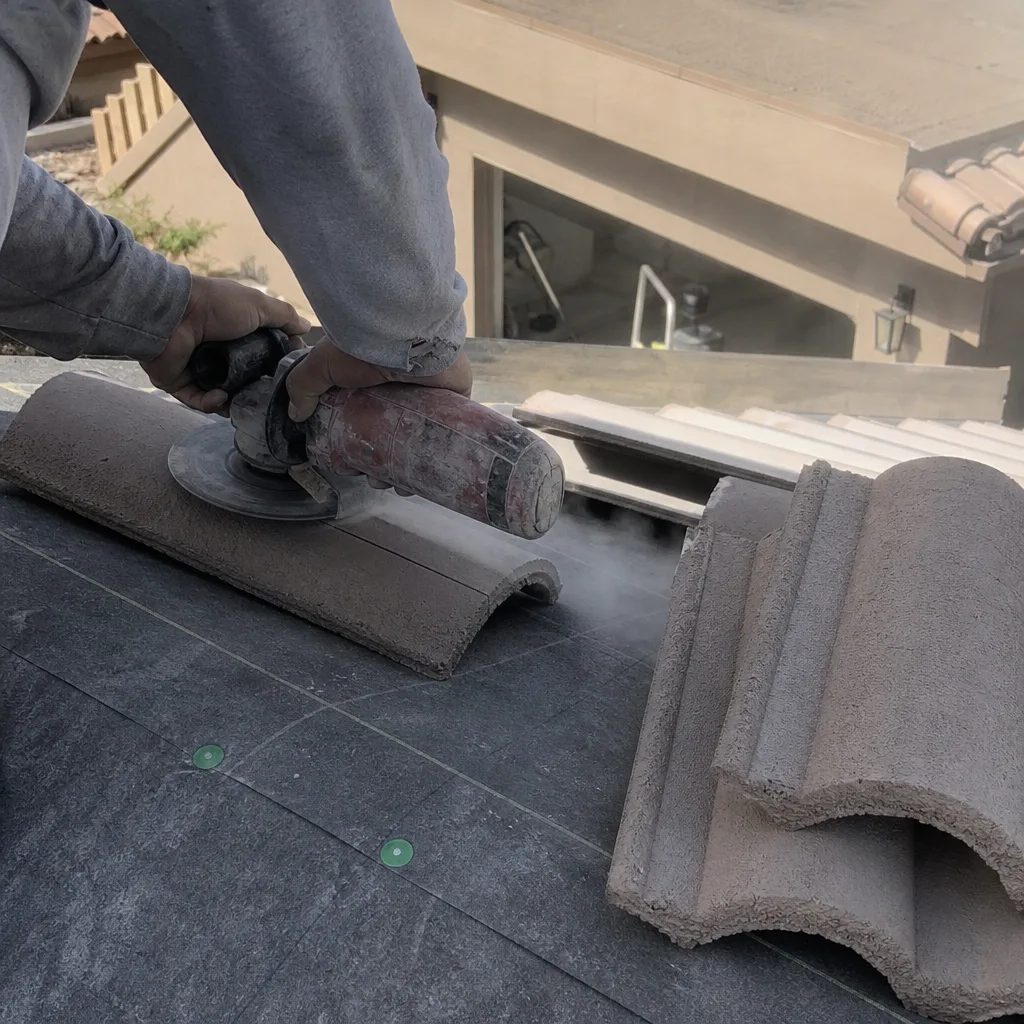
Two: replacing cracked tiles yourself. It looks simple. Lift the two tiles above the broken one, slide a new one in, set it back down. It isn’t simple. Lifting tile without the right technique cracks the ones you’re lifting. Sliding a new tile in without the right underlayment patch leaves a bare spot that water will find. And you need to match the tile, because Boral and other manufacturers have color batches that vary by year. We’ve seen homeowners spend half a Saturday on this and end up with three more cracked tiles and a new leak.
Three: chasing a leak by pulling tiles up. This is the worst of the three. A leak shows up on the ceiling, so the homeowner climbs up, pulls the tiles around the wet spot, and looks for the hole. They never find it, because the water entry point is almost always uphill from the stain, sometimes five or ten feet. Meanwhile the pulled tiles are cracked and the underlayment is torn open to the weather. A small leak just became a large one.
None of these are about whether you’re handy. They’re about danger and about the inspection underneath the tile that only happens with experience.
Why Resealing Ridge Caps Isn’t a DIY Job in Summerlin
Ridge cap mortar is a chemistry problem before it’s a roofing problem. In Phoenix or Riverside, the same mortar mix that fails here can hold for years. In Summerlin, it fails fast, and the reason is the swing between our dry heat and our monsoon season.
Summerlin sits on the west edge of the Las Vegas Valley, and our summers push 110°F on the ridgeline. Concrete mortar cures in that heat, and if the mix is even slightly off on water ratio or cure time, it flashes dry and cracks. Then in July and August the monsoon rolls in, driving rain hits the cracked mortar, water gets behind it, and the whole cap lifts. We’ve seen DIY ridge caps fail within one monsoon season. We’ve pulled caps where the mortar was still soft under the surface after eight weeks. That’s a mix problem, and it’s why the brands we trust, and the experience our technicians have (up to 30 years of it), matters more than the tile itself.
On top of the mortar, the ridge cap is on the highest, steepest part of the roof. That’s where the fall risk is worst and where the wind is strongest. Resealing it yourself means standing on the crown of the roof with a mortar bucket and a trowel. That’s not a home improvement project. That’s a professional’s job. If you want to know what keeping a ridge cap right actually looks like over time, our page on Roof Repair in Summerlin walks through the repairs that come up most often on Summerlin tile roofs.
The Insurance Angle Nobody Tells You About
Here’s the part almost no DIY guide mentions. A homeowner-caused crack is not a covered loss on most Nevada policies.
Homeowner’s insurance covers sudden, accidental damage from a peril your policy names: wind, hail, a fallen tree. It does not cover wear and tear, poor workmanship, or damage caused by the homeowner’s own maintenance attempt. And adjusters know exactly what walk damage looks like. A cracked tile with a clean break in the middle of the field, surrounded by intact tiles, with no debris impact marks and no wind lift evidence, reads like what it is: a foot. Your adjuster has seen a thousand of those.
That’s the real cost of an afternoon of DIY. It’s not just the damaged tiles. It’s that the damage is uninsured and uncovered. We’ve had Summerlin homeowners call us after a leak and assume insurance will handle it, and then find out the damage traces to a footstep from six months earlier. That’s a check they write themselves. The preventive move is to spend the fix-it money now, before the small thing becomes a claim you can’t file.
How We Qualify a DIY Attempt When We Show Up
When we get called out to a Summerlin roof after a homeowner tried something, we don’t walk up and start lecturing. We ask questions. Our technicians have up to 30 years of experience and they’ve heard every version of “I just replaced a couple tiles myself,” so the questions are about what to look for, not about telling you off.
Here’s what we ask and what we look at:
- Where exactly did you step? If we know which section, we focus our tile-lift inspection on that area and the two courses below it.
- What did you use to seal it? Roofing cement or caulk instead of a proper underlayment patch is the most common issue. It doesn’t fail today. It fails six months from now.
- Did you replace a tile or just patch one? A patch over a broken tile is a temporary band-aid and we’ll want to know it’s there.
- Did anything feel soft under your foot? This is the one that changes what we recommend. A soft spot means the deck has already taken water, and that’s a bigger job than a tile swap.
- Did you notice any lifted tiles or gaps after you got down?
Then we lift the tiles and look at the deck. What we’ve found under “I just replaced a couple tiles myself” ranges from a harmless slightly-off tile to a torn underlayment patch that had been leaking for months into the sheathing. The lift is the only way to know. Our page on Roof Replacement & Installation in Summerlin covers what a deck-level inspection leads to when the damage is more than a tile. And if you’re wondering about the deck panels themselves and how they hold up under tile, our guide to Metal Roofing in Summerlin covers a different roof type where the same “what’s underneath matters most” rule applies.
Common Mistakes to Avoid
- Walking a wet tile roof after a monsoon. Two days of Summerlin sun before you even think about it. Wet tile is the single most common cause of the falls we hear about.
- Setting a ladder on landscaping or loose gravel. The ladder base needs solid, level ground. If it doesn’t have that, don’t go up.
- Mixing your own ridge cap mortar without the right cure time. The mix is half the job. The Summerlin heat will fail a fast cure within one season.
- Replacing a tile without patching the underlayment. New tile over torn felt is a leak waiting for the first real rain.
- Pulling tiles to chase a leak. The entry point is almost always uphill from the ceiling stain. Pull the wrong tiles and you’ve opened the roof.
- Assuming insurance will cover walk damage. Most Nevada policies won’t. Check before you climb.
- Blowing debris down a valley while standing above it. You’ll pack the leaves against a low point, not clear them. Blow from below, downward.
See the difference
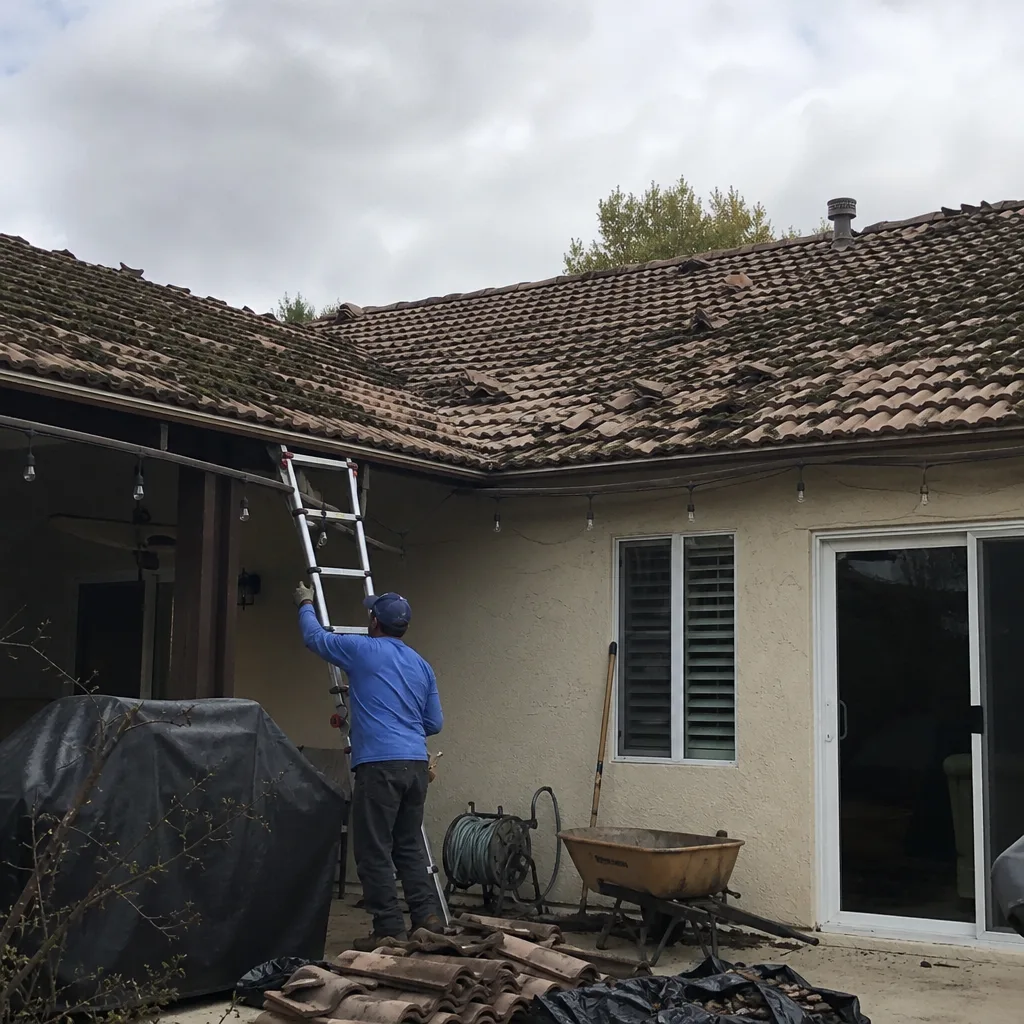 Before
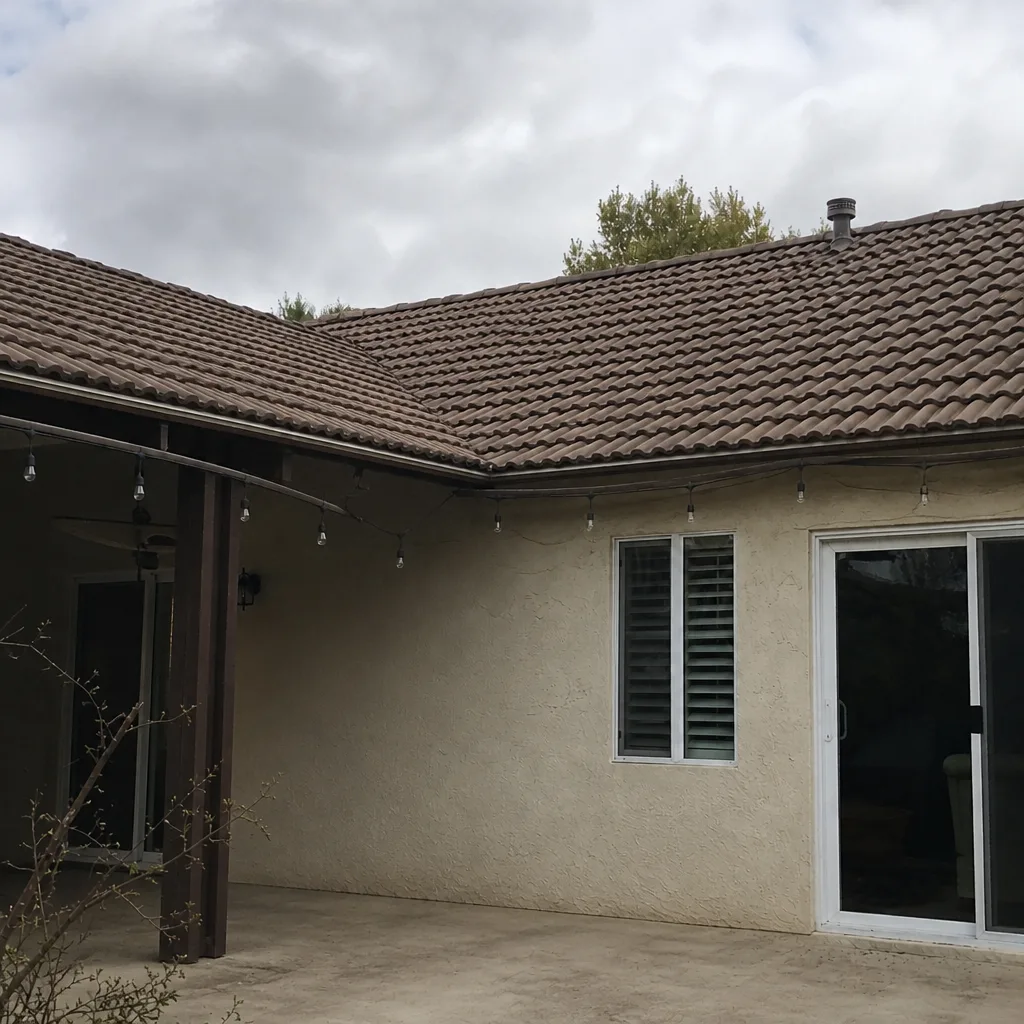 After
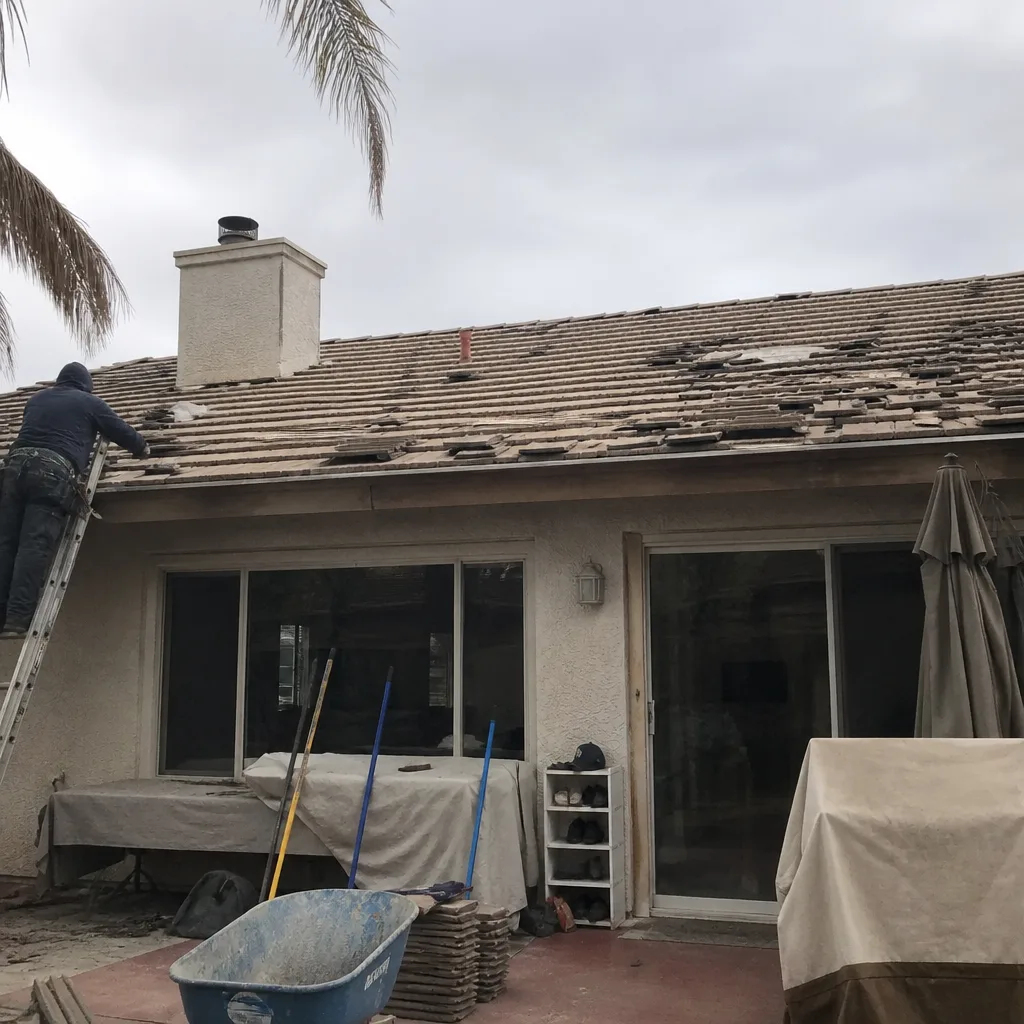 Before
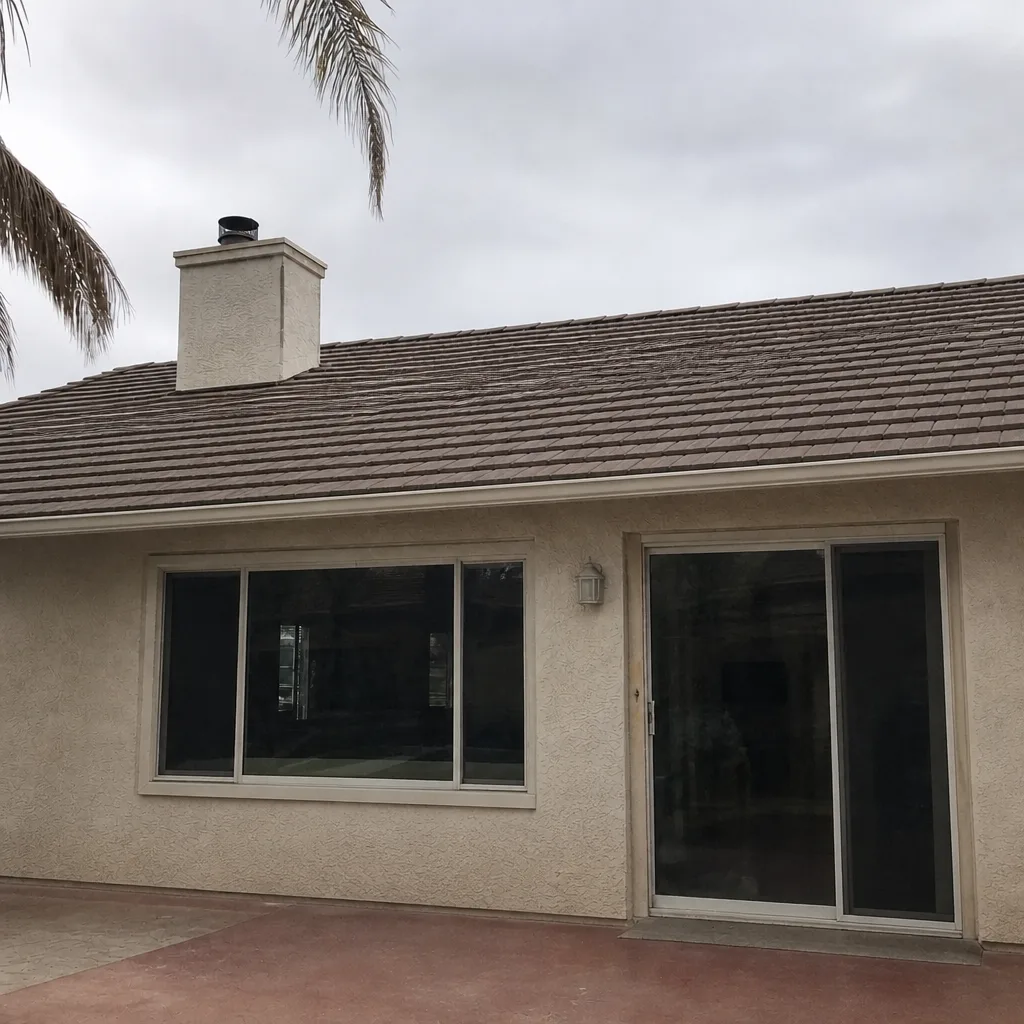 After
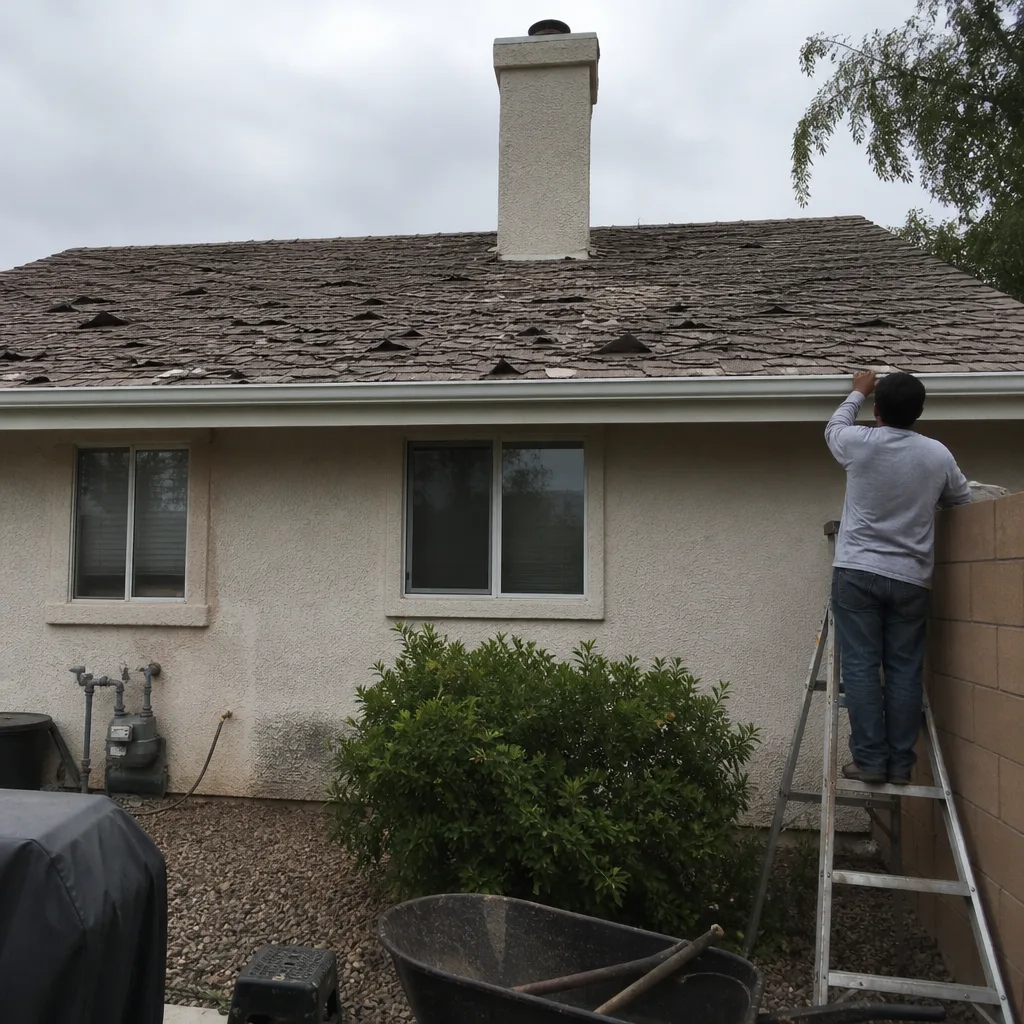 Before
 After
When to Call a Professional
Call a professional if you see daylight in the attic, if a tile is cracked or missing and you can’t safely reach it from a ladder, if the ridgeline has gaps, or if a leak has shown up on a ceiling and you can’t trace it to a window, vent, or plumbing line. Call before you try to fix any of those yourself. The one that surprises people most is a soft spot underfoot. If you step on a tile and it feels spongy, stop and call. That’s a deck problem, not a tile problem, and no amount of new tile will fix it. Shepherd & Sons Roofing Summerlin offers free estimates in Summerlin and no trip charge inside our own county. Call (844) 951-4545 and a live person will pick up, including nights and weekends. We’ll come out, may find it’s a two-tile fix, and we still charge you nothing for the visit.
Frequently Asked Questions
You can, but you probably shouldn’t need to. Most roof-level debris clearing can be done from a ladder at the edge or with a long-reach leaf blower from the ground. If you do get up there, stay on the lower third of each tile, walk flat-footed, and never walk wet tile. And keep in mind that every step stresses the tiles below, which is why we recommend ground-level gutter clearing instead.
The best test is the attic. On a sunny morning, turn the attic light off and look for pinholes of daylight through the deck. Any light coming through is a pathway for water. From the ground, look for staining on the fascia or soffit, dark streaks on the exterior walls, and granules in the gutters. If you see any of those, call (844) 951-4545 for a free estimate so we can lift tiles and find the source before it spreads.
We don’t recommend it. Ridge cap mortar is a chemistry problem in Summerlin heat. Get the mix or cure time slightly wrong and it fails within one monsoon season. On top of that, the ridge is the highest, most exposed part of the roof, and that’s where the fall risk is worst. This is one of the jobs where the tile work itself is the smaller part of the challenge.
Most Nevada policies do not cover homeowner-caused damage or damage from poor workmanship. They cover sudden accidental perils like wind and hail. If an adjuster can see that a crack came from a footstep, that damage is almost certainly not covered. That’s the key reason to treat the three dangerous jobs as no-go. The cost of the damage comes out of your pocket, not the insurer’s.
Sometimes a two-tile fix is cheaper to hire than to attempt yourself, and it’s a fraction of the cost of a failed DIY attempt. A professional fix is a known number up front. A DIY fix that goes wrong is an open-ended number that can include new decking. We give you a written line-item quote before we touch anything, so you can compare the number against what the DIY path is likely to cost you if something slips.
Tell us exactly what you did and what you used. Then let us lift the tiles and look at the deck underneath. That’s the only way to know whether the job held. If it was a patch, we’ll tell you. If it was a full tile replacement, we’ll tell you that too. Call (844) 951-4545 and we’ll come out with the same free second-opinion offer we give any homeowner in Summerlin.
If you’re looking for the full picture of what we do on Summerlin roofs, start at our Shepherd & Sons Roofing Summerlin home page.
The Bottom Line
The line between safe and unsafe on a tile roof isn’t about your skill set. Five things are genuinely safe: ladder-level gutter clearing, ground-level inspection, photographing damage, blower-clearing from the edge, and attic checks for daylight. Three are not: resealing ridge caps, replacing tiles, and chasing leaks. The dangerous ones share two things. They put you on the highest, most exposed part of the roof. And the damage they cause hides under the tile until the water reaches your ceiling. On a Summerlin tile roof, the deck underneath is almost always the real story.
If you’re unsure which side of the line a job falls on, call Shepherd & Sons Roofing Summerlin at (844) 951-4545 for a free estimate. We’ll walk the roof, show you what we see, and tell you plainly whether it’s a task you can handle or one where you’re better off letting the guys on the roof take it.
Written by the team at Shepherd & Sons Roofing Summerlin.