
Last updated November 18, 2026
 Tile roofing
 Architectural shingles
 Metal roofing
 GAF
 Owens Corning
 Flat & low-slope
Free roof inspection with deck photos before we talk money - GAF and Owens Corning certified installation
The Complete Tile Roofing Guide for Summerlin Homeowners
Summerlin has more tile roofs per capita than almost anywhere in Nevada, and we re-roof more of them than any other material. Almost every one of those jobs starts the same way: a homeowner who was told they were buying a 40-year tile roof, and a contractor who quietly put that tile over a 15-year underlayment. The tile was fine. The waterproofing underneath it was not. This guide covers what actually determines whether a tile roof in Summerlin lasts 20 years or 50: weight clearance, underlayment selection, the concrete-versus-clay call in desert UV, and HOA color approval. Read it before you sign anything.
Quick Answer
Tile is the right roofing material for most Summerlin homes, but the tile itself is rarely what fails. The underlayment beneath it is your actual waterproofing, and it has a much shorter life than the tile. Most tile re-roofs in Summerlin happen because a 15-to-20-year underlayment wore out under 40-year tile, not because the tile wore out. Get the underlayment spec, the weight calculation, and the HOA color approval in writing before work starts.
Styles & brands we work with
- Architectural shingles
- Metal roofing
- Tile roofing
- GAF
- Owens Corning
- Flat & low-slope
Table of Contents
- Why Tile Dominates Summerlin Roofs
- The Underlayment Problem Nobody Tells You About
- Clay vs. Concrete Tile in Desert UV
- Structural Weight: What Summerlin Homes Can Carry
- HOA Color Pre-Approval in Summerlin
- What Tile Roofing Costs in Summerlin
- 30-Year True Cost: Tile vs. Metal vs. Asphalt
- What to Check Every Year
Why Tile Dominates Summerlin Roofs
Tile covers a large share of the rooftops in Summerlin, and the reasons go beyond curb appeal. Tile handles the Las Vegas Valley’s thermal swing better than almost any other material. A Summerlin roof can sit at 160°F on an August afternoon and drop to the 40s on a clear January night. That daily and seasonal cycling is punishing on materials that expand and contract sharply. Tile absorbs it well because it’s installed as individual overlapping pieces with room to move.
Tiles also do something asphalt shingles in Summerlin struggle with: they don’t dry out and crack from UV the way organic shingles do. We see shingle roofs in the valley fail on the sunny south and west slopes first, sometimes 5 to 8 years ahead of their rated life, simply because sun exposure here is relentless. Tile doesn’t care.
What Summerlin got from the building boom of the 1990s and early 2000s is a lot of tile roofs installed in a particular way. Concrete tile was the workhorse material, and the underlayment under it was often the standard of the day – a felt or a first-generation synthetic that was never meant to last as long as the tile on top of it. That single decision is why so many Summerlin tile roofs are now due for re-roofing two decades after they went on. If you’re weighing options for a whole new roof, our roof replacement and installation in Summerlin page walks through how we scope these jobs.
The Underlayment Problem Nobody Tells You About
Here’s the thing we wish every Summerlin homeowner understood before they sign a tile bid: the tile is not your waterproofing. The underlayment is. Tile sheds the bulk of the water, but wind-driven rain and the water that gets behind broken or shifted tiles are stopped by the layer beneath – the underlayment. And the underlayment has a much shorter life than the tile does.
A well-made concrete or clay tile can last 50 years or more. The underlayment under it, depending on what was installed, may last 15 to 25. When the underlayment fails, water gets to the deck, and you get leaks on a roof where the tile looks perfectly fine from the street. That’s the trap.
What we see on most tile re-roofs in Summerlin:
- Original felt underlayment from 1990s construction, now brittle and cracked, with the tile still intact.
- First-generation synthetic that dried out and tore at the fasteners while the tile on top held up.
- Displaced tiles from monsoon wind or foot traffic that let water behind the field without the homeowner noticing for months.
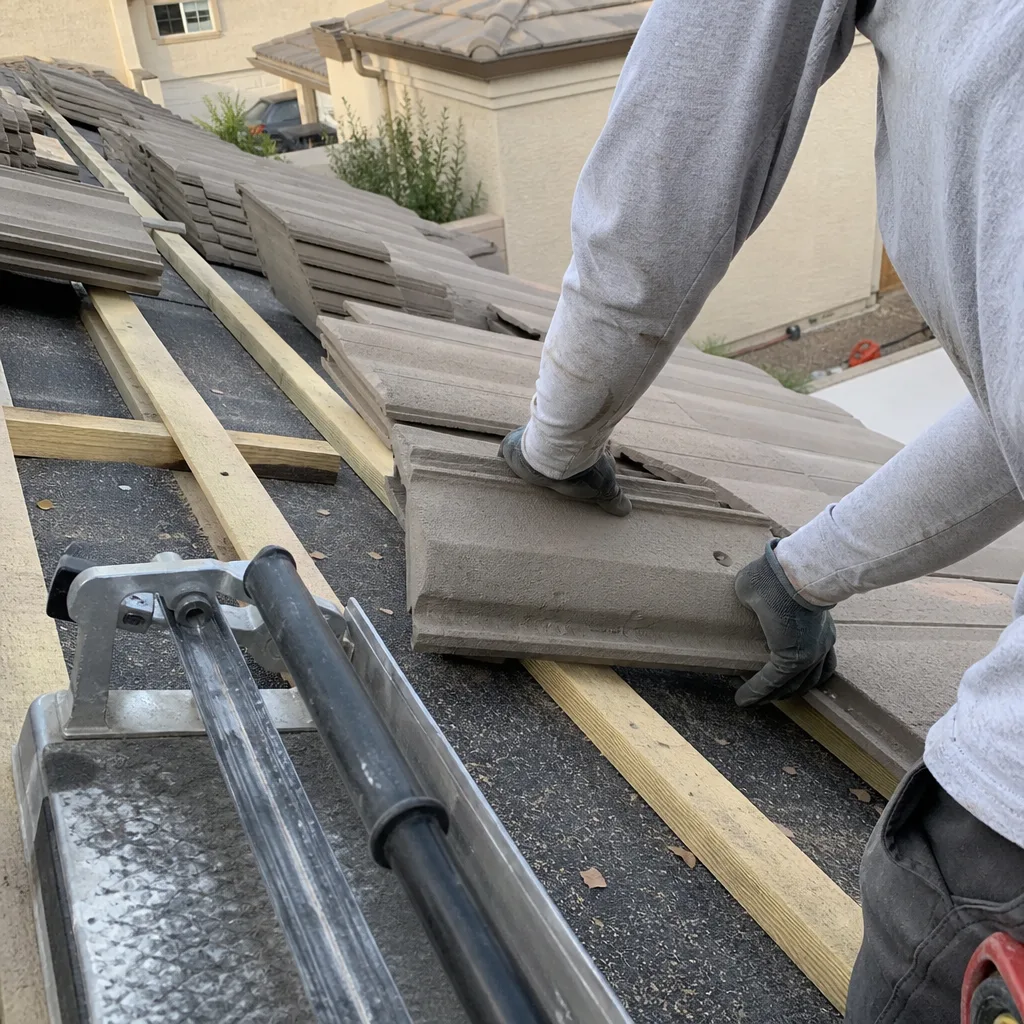
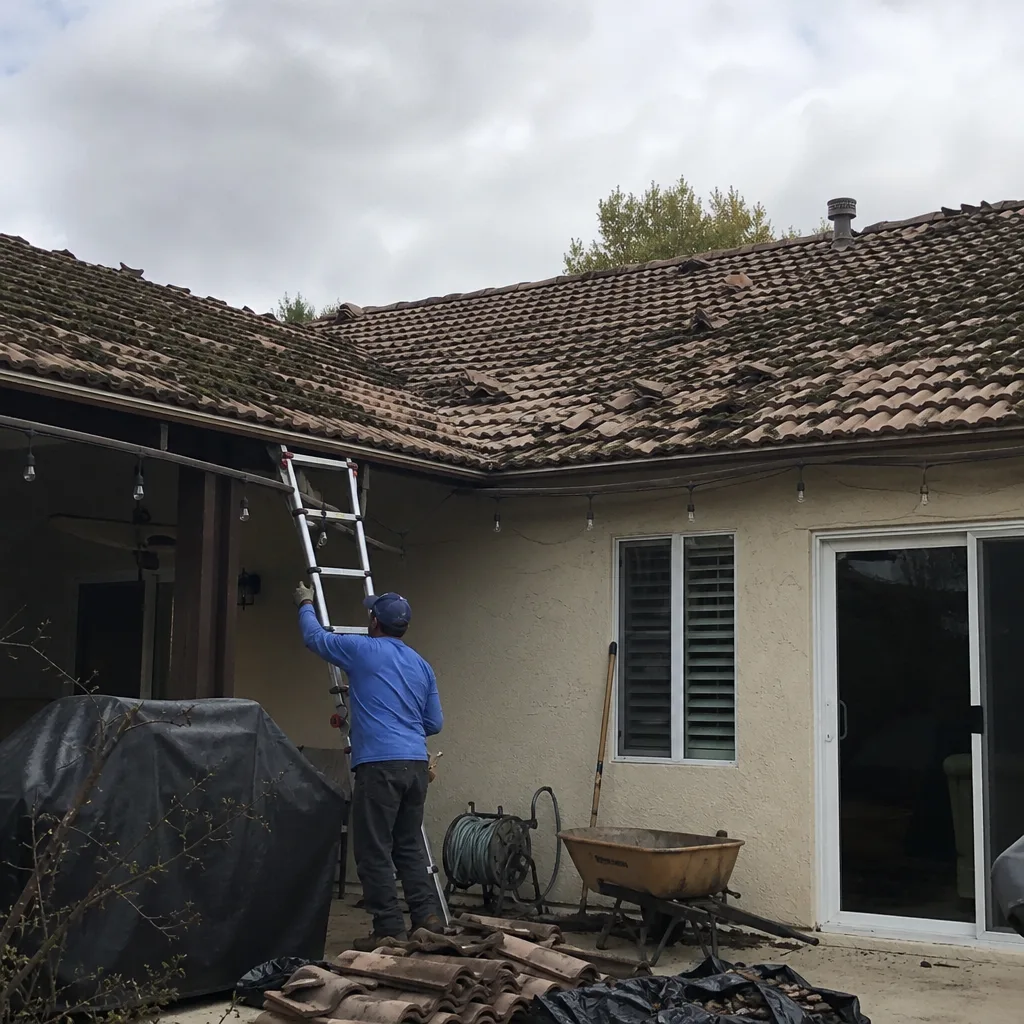
The fix isn’t to replace the tile. On a sound tile roof, we lift the tile, replace the underlayment with a modern high-temp synthetic rated for desert heat, and relay the original tile where it’s still good. That’s a smaller job than a full replacement and it buys you decades. Ask any bidder what underlayment they’re installing and get the product name and rating in writing. This is the single most consequential line item on a tile roof, and it’s the one most likely to be left vague.
Clay vs. Concrete Tile in Desert UV
Most tile marketing you’ll read was written for the California coast or the Pacific Northwest. Las Vegas is not that climate, and the clay-versus-concrete decision plays out differently here. Both materials work in Summerlin, but they age in ways the coastal brochures don’t mention.
Concrete tile
Concrete tile is the more common choice on Summerlin homes, and it’s a sensible one. It’s heavier, so it holds up to wind, and it can be sealed and pigmented to hold color. In desert UV, unfaded concrete with a quality sealer will hold its color for a long time, but the sealer degrades and needs re-application every several years. Skip that and you’ll see chalking and a washed-out, powdery look on the sun-facing slopes – a pattern that shows up faster in Las Vegas than on the coast because our UV index is higher year-round.
Clay tile
Clay is the more color-stable of the two. Its color is fired into the material, so UV doesn’t bleach it the way it can bleach a concrete surface. But clay is a different animal in the desert, and it behaves in ways coastal buyers aren’t warned about. Clay’s color and finish can be affected by the mineral content in local water and by the salts that wick through the material, which shows up as a white, chalky film called efflorescence – most visibly on the shaded north-facing slopes that dry out slowly after a rain. We see efflorescence on Summerlin clay roofs after the late-summer monsoon, and it’s more of a maintenance nuisance than a structural problem, but it’s real and it surprises people.
The bottom line on material
Concrete gives you more color-on-demand options, easier HOA matching, and a lower price. Clay gives you better long-term color stability at a higher price and with a bit more maintenance attention. Neither is “best.” The right call depends on your HOA palette, your budget, and whether the framing under your roof can carry the extra weight – which brings us to the question most homeowners never ask.
Structural Weight: What Summerlin Homes Can Carry
Tile is heavy. Concrete tile runs roughly 6 to 10 pounds per square foot installed, clay a bit more in some profiles, compared with asphalt shingles at about 2 to 3 pounds per square foot. On a roof measured in squares (100 square feet each), that adds up to tens of thousands of pounds. For most Summerlin homes built for tile, that’s fine. But not every home here was.
Some Summerlin-area tract homes from the 1990s and early 2000s were framed and sheathed to carry lightweight shingle. If a previous owner – or a contractor working for one – converted one of those roofs to heavy tile without checking the framing, you can be looking at a roof that’s sagging or that has deflected more than it should. We see this on older sections of Summerlin where the neighborhood mix is a combination of original shingle roofs and later tile conversions.
Before we quote a tile re-roof or a shingle-to-tile conversion, we check:
- Rafter size and span against the loaded weight of the tile profile you want.
- Sheathing condition and nailing – whether the deck can hold the fasteners the tile and underlayment need.
- Existing deflection – any sag in the roof plane that suggests the framing is already working hard.
- Any engineered or permitted changes made to the roof since original construction.
If the framing needs reinforcement, that’s a real cost, and it’s better to know it up front than to discover it after the tile is stacked on the driveway. Ask your bidder directly whether they’re checking structural capacity for tile weight. If the answer is “the shingle on there now was heavy enough,” that’s not a real answer. For repairs short of a full replacement, our roof repair in Summerlin team handles everything from broken tiles to the leaks that come with them.
HOA Color Pre-Approval in Summerlin
Summerlin’s master-planned communities come with HOA architectural review, and roof color is one of the things they care about. Skipping pre-approval is one of the most common ways a Summerlin tile project gets delayed. Get the color signed off by your HOA before you order tile, not after it’s stacked in the driveway.
What actually speeds up approval:
- Stay within your community’s established palette. Many Summerlin HOAs publish approved tile profiles and color ranges. Pick from that list and the review is usually straightforward.
- Match the surrounding streetscape. Committees are more comfortable approving a color that already appears on nearby homes in your village.
- Bring real product samples and the manufacturer’s spec sheet, not a photo of a roof. Boral and other tile makers publish color and profile documentation the committee can review.
- Avoid discontinued or custom profiles unless you’re ready for a longer review. A profile with no track record in your community can stall in committee for weeks.
The profiles and brands with the deepest approval history in Summerlin are the ones you already see across the valley: standard flat and low-profile concrete tiles in the earth-tone range that matches the desert landscape. Ask your contractor which profiles they’ve had approved in your specific community before. That question alone tells you whether they’ve actually worked in Summerlin or are just driving up from somewhere else.
What Tile Roofing Costs in Summerlin
Tile roofing in Summerlin typically runs higher than asphalt and lower than a full standing-seam metal system, and the range is wide because the underlayment decision and structural work move the number more than the tile itself does. Here’s the honest breakdown of what drives the price. These are typical ranges for the Summerlin market – your exact number depends on your roof’s square count, pitch, and what we find under the tile.
| Line item | Typical Summerlin range |
|---|---|
| Underlayment replacement only (tile lifted and relayed) | $450 – $750 per square |
| Full tile re-roof, concrete tile | $900 – $1,400 per square |
| Full tile re-roof, clay tile | $1,200 – $1,800 per square |
| Structural reinforcement, if needed | Priced per job after inspection |
| Broken tile repair, per tile | $35 – $90, depending on access |
A “square” is 100 square feet of roof. A typical Summerlin single-family roof is somewhere in the 25 to 45 square range, which is why the total can land anywhere from the mid-teens to the forties of thousands of dollars. The number that matters is the square count. Ask any bidder how many squares they counted and how they measured. A roof is measured in squares – if they can’t tell you the count, they can’t defend the number.
One thing we’re firm about: you should see the deck photos before anyone talks money. If a bidder won’t get on the roof, photograph what’s under the tile, and show you what they found, that’s a warning sign. We put the number in writing up front so there’s nothing to argue about later, and we offer a free second opinion on any written estimate you’ve already got. Call (844) 951-4545 for an exact quote on your Summerlin roof – estimates are free.
30-Year True Cost: Tile vs. Metal vs. Asphalt
Comparing roofs on the day-one price alone is how homeowners end up paying twice. What matters is what each material costs you over 30 years, counting replacement cycles and the underlayment reality that tile always carries. Here’s how the three main options track in Summerlin:
- Asphalt shingle: Lowest up-front cost, shortest life. In Summerlin’s UV and heat, expect a replacement roughly every 15 to 20 years. Over 30 years you’re looking at one full replacement, sometimes two if the roof gets heavy sun exposure. That’s two sets of labor at Summerlin rates.
- Tile: Highest up-front among the three, longest tile life. The tile may last 50 years, but the underlayment typically needs replacing once in a 30-year window. Budget for that underlayment job – it’s the cost tile owners forget. Even so, tile’s long life usually makes it the cheapest per year over 30 when the underlayment is done correctly.
- Metal: Middle to high up-front, long life, and no underlayment-replacement cycle to speak of the way tile has. In desert heat, metal performs well and reflects sun. It’s a strong choice if you want to avoid the lift-and-relay tile job down the road. Our metal roofing in Summerlin page covers the desert-specific details.
The pattern holds: asphalt wins on day one, tile wins on decades, metal sits in between with less mid-life disruption. If you’re staying in your Summerlin home long term, tile or metal usually pays you back. If you’re selling in five years, the math can flip. A reputable contractor will tell you which way your specific situation leans instead of pushing whatever they install most.
What to Check Every Year
Tile roofs don’t ask much, but a little annual attention goes a long way in the desert. Here’s a simple walk-around you can do yourself, plus what to leave to the pros:
- Look for displaced or cracked tiles after monsoon season and high-wind events. A single slipped tile opens a path for water. Note where it is and have it addressed.
- Check the flashings at valleys, vents, and the chimney from the ground with binoculars. Flashing failures cause more tile-roof leaks than tile failures do.
- Look for efflorescence – the white, chalky bloom – on clay, especially on shaded slopes after rain. It’s cosmetic but worth monitoring.
- Clear debris from valleys and behind the tile edges. Wind-blown seed pods and leaves trap moisture against the underlayment.
- Have the underlayment assessed if your roof is approaching the 15-to-20-year mark. A pro can check it without a full teardown.
What you shouldn’t do yourself is walk a tile roof. Tiles crack under foot traffic, and a fall from a Summerlin roofline is a serious injury. Leave the roof walking to the people who do it every week.
Common Mistakes to Avoid
- Buying the tile and forgetting the underlayment. The 40-year tile is worthless over a 15-year underlayment. Get the underlayment product and rating in writing before you sign.
- Not checking structural weight. A Summerlin home framed for shingle can’t always carry heavy tile. Insist on a structural check before conversion.
- Ordering tile before HOA approval. Skipping pre-approval in a master-planned Summerlin community can stall the job for weeks. Get the color signed off first.
- Choosing coastal-designed tile for a desert climate. Color fade and efflorescence behave differently in Las Vegas UV than on the California coast. Pick for this climate, not the brochure.
- Hiring a traveler after a storm. Out-of-state crews blow through after every hail event. Ask where the shop’s address is – and whether it’ll still be there next year.
- Accepting a phone quote. A price given without anyone on the roof is a guess. The real number comes from inspecting the deck and the underlayment.
- Paying for a “full replacement” when the tile is sound. On many Summerlin roofs, the tile is fine and only the underlayment needs work. Confirm which you actually need.
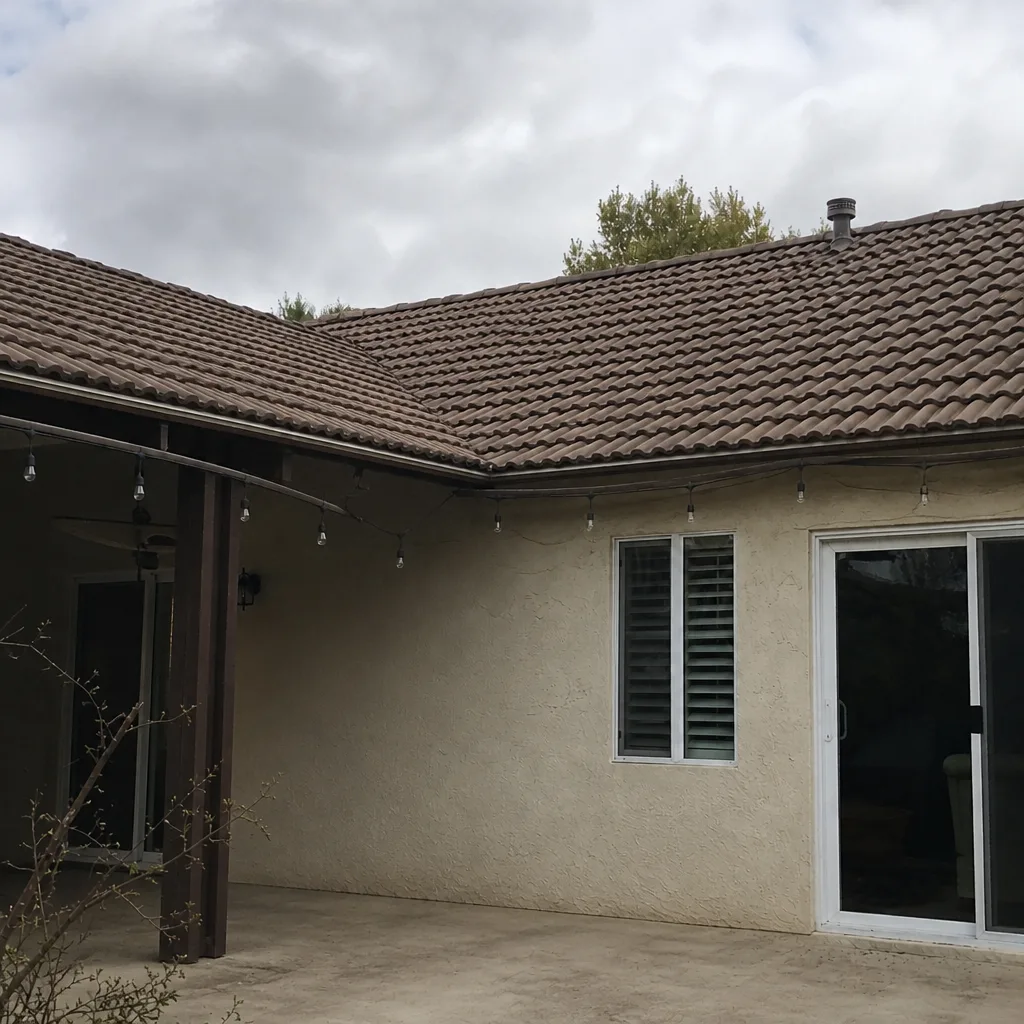
See the difference
 Before
 After
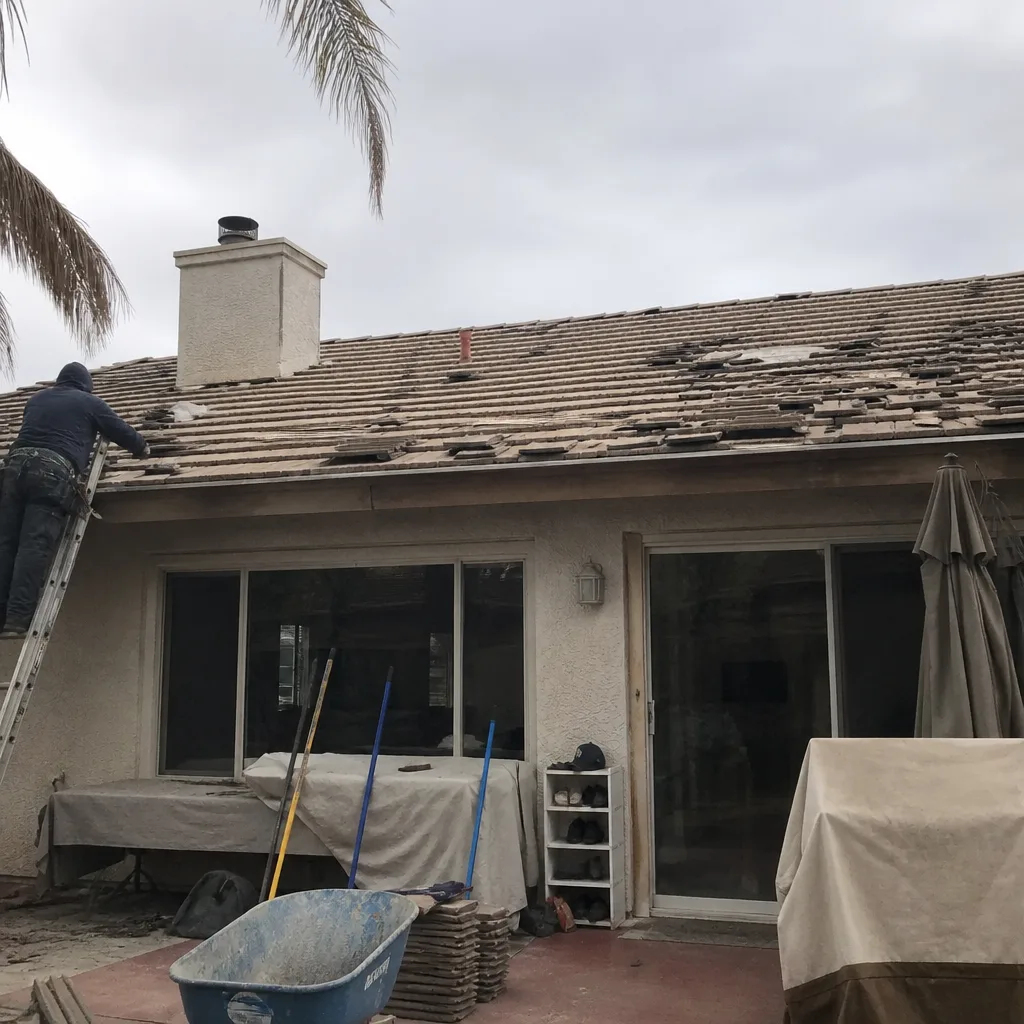 Before
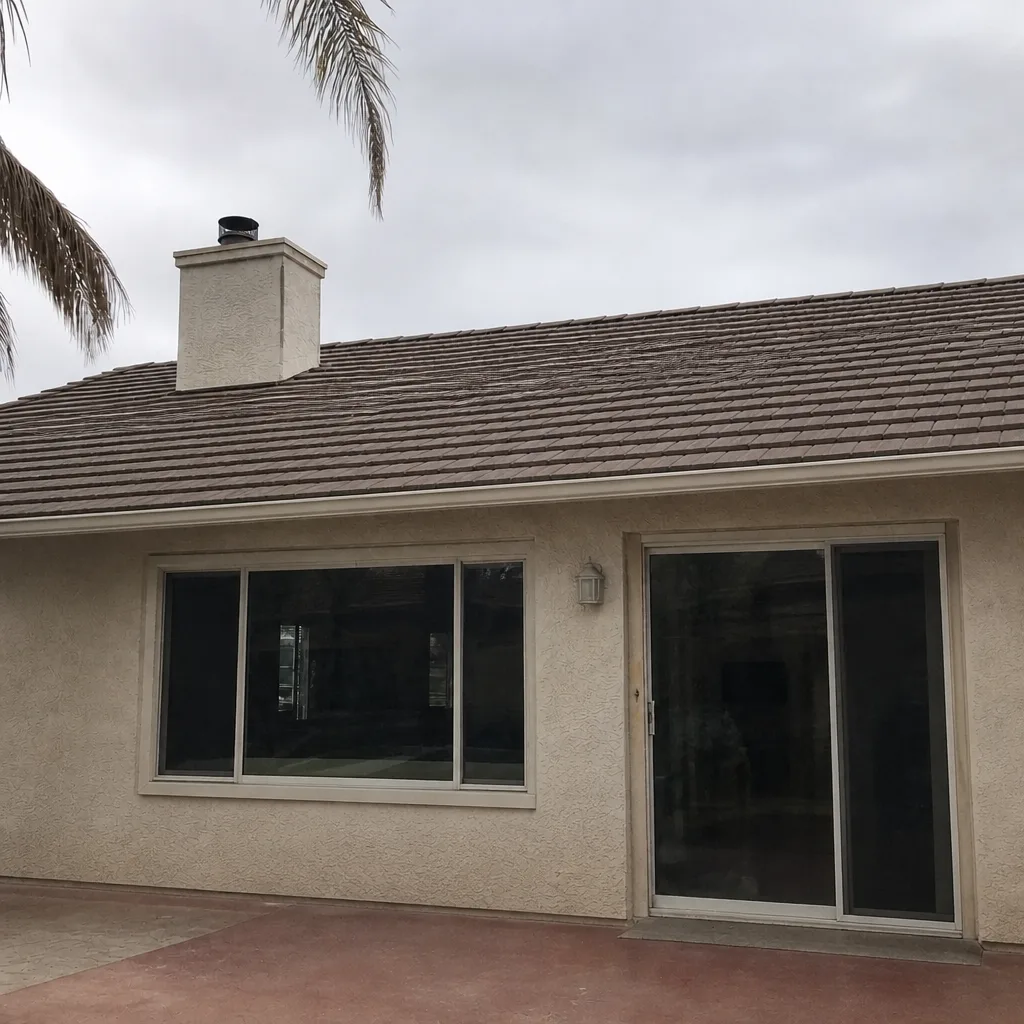 After
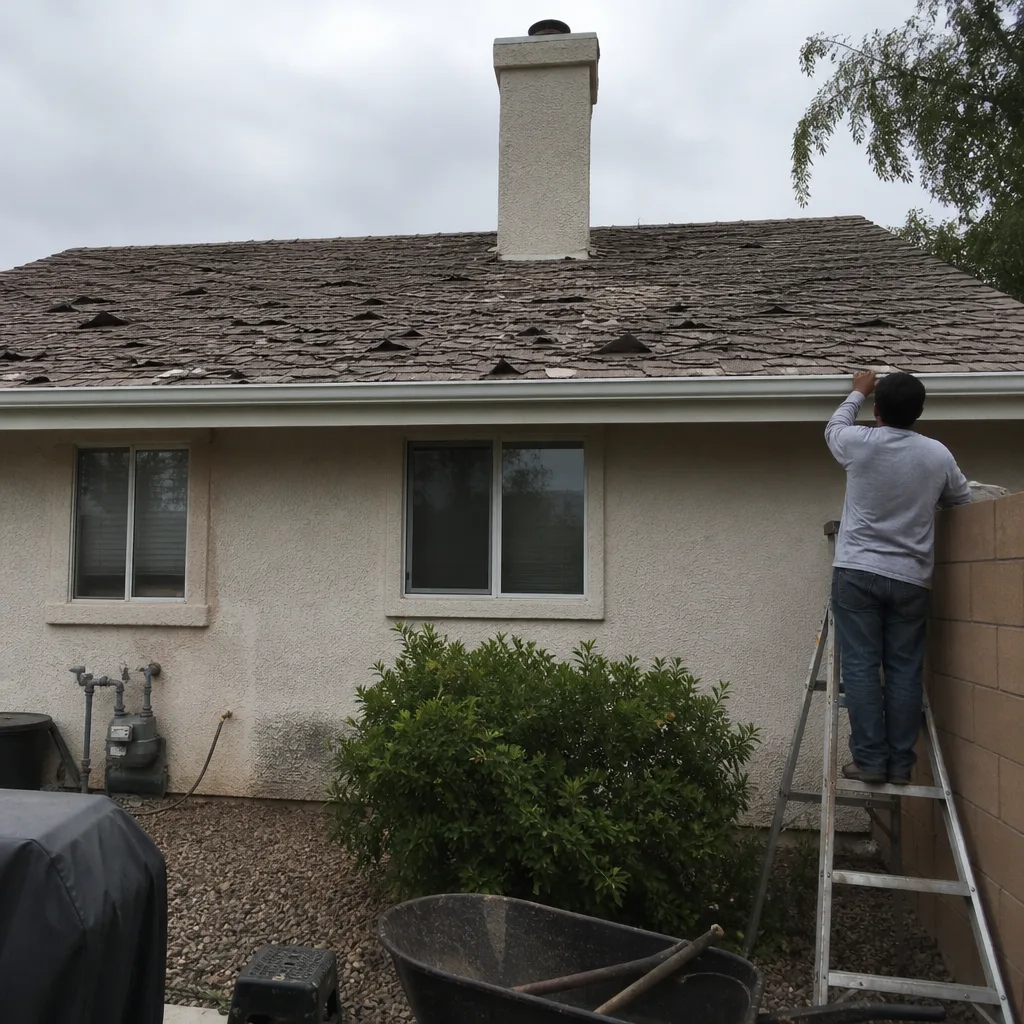 Before
 After
When to Call a Professional
Some tile issues are cosmetic and can wait for a scheduled visit. Others need a call now. Call us if you see water staining on a ceiling below a tile roof, a sag in the roof plane, cracked or missing tiles after a storm, or white efflorescence spreading across clay you suspect is wicking moisture. Call if your roof is 15 to 20 years old and you’ve never had the underlayment checked, or if you’re seeing leaks where the tile looks perfect – that’s the classic underlayment signal. And call if a bidder is pushing a full replacement without showing you the deck photos. Shepherd & Sons Roofing Summerlin offers free estimates in Summerlin – call (844) 951-4545. A live person answers, day or night, and there’s no trip charge inside our own county. Visit our Shepherd & Sons Roofing Summerlin home page to see everything we handle.
Frequently Asked Questions
The tile itself can last 50 years or more, but the underlayment beneath it usually lasts only 15 to 25 years. That means the underlayment is what determines your real re-roof timeline in Summerlin, not the tile. Budget for an underlayment replacement before the tile’s life is up.
A full concrete tile re-roof in Summerlin typically runs about $900 to $1,400 per square, and clay runs $1,200 to $1,800 per square. An underlayment-only job with the tile lifted and relayed is usually $450 to $750 per square. Call (844) 951-4545 for an exact quote – estimates are free.
The underlayment is your waterproofing. Tile sheds most water, but the layer beneath it stops what gets behind the tile, and it’s what fails first on most Summerlin tile roofs. When the underlayment goes, you get leaks even though the tile still looks fine from the street.
Yes, in most Summerlin master-planned communities you need architectural review and color approval before work begins. Pick a color from your community’s established palette and bring real product samples and spec sheets to the committee. Get the approval in writing before ordering tile.
Most homes built for tile can, but some Summerlin tract homes from the 1990s and early 2000s were framed for lightweight shingles and may need reinforcement before a tile conversion. Ask your contractor whether they’re checking structural capacity for tile weight, and get that check in writing.
Concrete is more common in Summerlin, offers more color options for HOA matching, and costs less. Clay holds its color better under UV but runs higher and can show efflorescence on shaded slopes. Both work here – the right pick depends on your HOA palette, budget, and roof structure. Call (844) 951-4545 to talk through your specific roof.
The Bottom Line
Tile roofs in Summerlin live or die on decisions most homeowners never get asked about: the underlayment spec, the structural weight check, the HOA color approval, and whether concrete or clay suits this climate. The tile on top can last 50 years, but the layer beneath it is what keeps your house dry, and it fails first. Get those fundamentals in writing before anyone touches your roof, insist on deck photos, and ask any bidder how many squares they counted. If you want that conversation with someone whose name is on the license and who answers the phone, call Shepherd & Sons Roofing Summerlin at (844) 951-4545. Free estimates, no trip charge inside our county, and a live person on the line day or night.
Written by the team at Shepherd & Sons Roofing Summerlin.